

A UV poncho is more than just a practical cover-up for the beach. It combines freedom of movement with effective protection against harmful UV radiation and accompanies you through long days by the water without making you feel restricted. Whether after swimming, strolling along the coast, or lingering in the midday sun, a well-designed poncho protects your skin without requiring constant reapplication of sunscreen. Families with children, in particular, appreciate this uncomplicated protection, as children move a lot and often forget about sun protection. In this article, you will learn what really matters in a UV poncho, which materials prove reliable, and how to find a model that fits your lifestyle.
What makes a UV poncho special
A UV poncho differs from a conventional swim poncho primarily due to its integrated sun protection. While classic ponchos primarily serve as towel substitutes, UV models are designed to provide a measurable Ultraviolet Protection Factor. This is usually indicated as UPF (Ultraviolet Protection Factor) and describes how much UV radiation penetrates the fabric.
How the UPF value works
The UPF value indicates how strongly a fabric blocks UV rays. A UPF 50+ means that only about one-fiftieth of the harmful radiation reaches the skin. The test methods for this are standardized and precise, so you can rely on the information.
Typical UPF categories:
- UPF 15–24: Good protection
- UPF 25–39: Very good protection
- UPF 50+: Excellent protection
Most high-quality UV ponchos aim for UPF 50+ because they meet the highest standard. It is important that the protection remains consistent across the entire surface – even at seams and thinner areas.
Material and weave are decisive
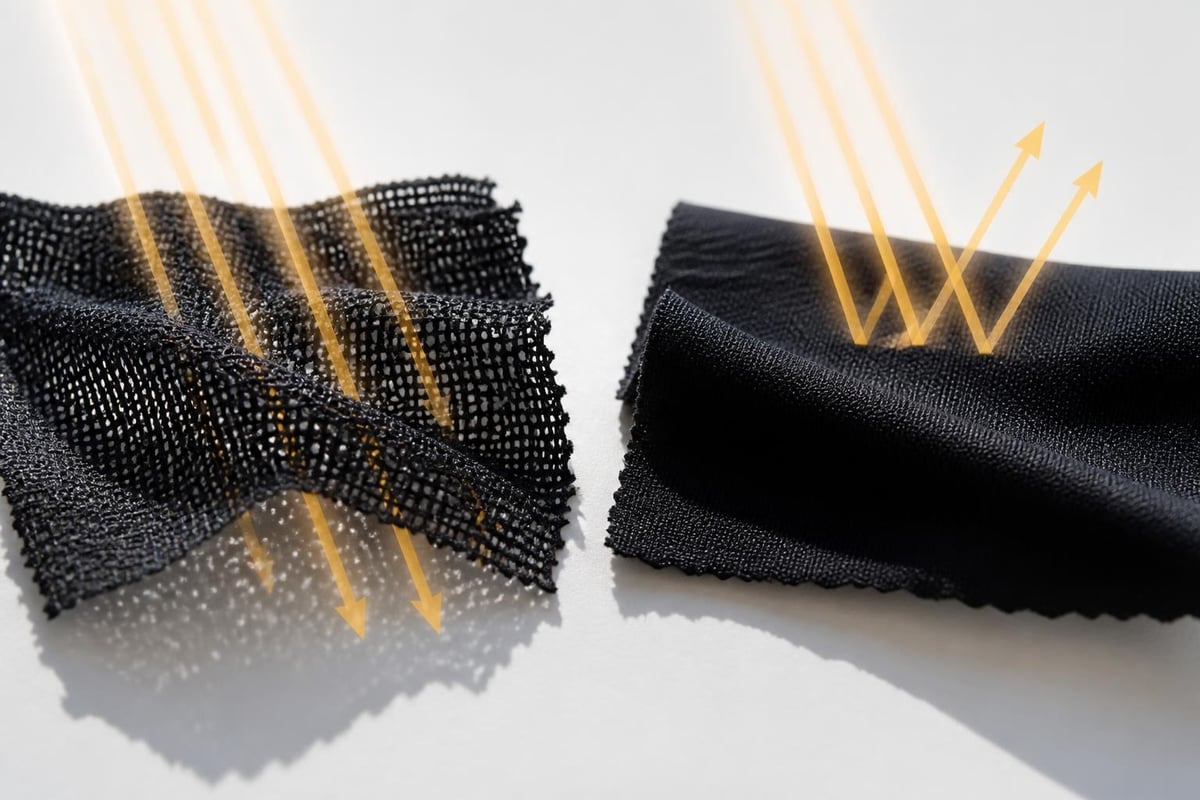
Not every material naturally offers the same UV protection. Synthetic fibers such as polyester or polyamide made from recycled material often perform better than cotton because they can be more densely woven and leave fewer gaps in the fabric. Color also plays a role: dark tones absorb more UV radiation than light ones, although this has less of an effect with densely woven fabrics.
When and where you need a UV poncho
A UV poncho shows its strengths wherever you spend a long time outdoors and sunscreen alone is not enough or becomes impractical. Especially with children who are wet after swimming and constantly moving, a poncho offers uncomplicated protection.
Beach and swimming trips
At the beach, you often spend hours in direct sun. A UV poncho can be quickly pulled over as soon as the little ones come out of the water. It dries quickly, protects shoulders and back, and gives you the freedom to move without the fabric slipping or restricting you. Especially practical: you can wear swimwear underneath without getting too warm if the material is breathable.
Situations at the beach:
- After swimming, when the skin is still damp
- While playing in the sand, when children don't sit still
- During lunch break, when the sun is strongest
- When walking along the coast
Many families also use the UV poncho as a light blanket or sitting mat – a versatile essential that takes up little space.
Lake, pool, and outdoor pool
You'll also benefit from a UV poncho at the lake or in the outdoor pool. Here, you often spend the whole day, constantly getting in and out of the water, and quickly forget to reapply sunscreen. A poncho that drapes loosely over the shoulders protects the most sensitive skin areas effortlessly.
| Location | Advantage of a UV poncho | What to look out for |
|---|---|---|
| Beach | Protection from wind and sun, quick-drying | Loose fit for freedom of movement |
| Lake | Lightweight, packable, dries quickly | Breathable material |
| Pool/Outdoor pool | Easy to put on and take off | Chlorine resistance of the fabric |
| Boat/Sailing | Wind protection and UV protection combined | Saltwater resistance |
On a boat or while sailing, you'll appreciate the additional wind protection a poncho offers. The reflection of the sun on the water increases UV exposure, which is why good protection is particularly useful here.
Everyday life and travel
A UV poncho doesn't just have to work by the water. Many models are designed so that you can wear them in everyday life – for example, when walking, traveling to sunny regions, or picnicking in the park. The loose silhouette fits over almost anything, takes up little space in luggage, and weighs little. If you're exploring cool vacation spots with your family, a versatile poncho is worth its weight in gold.
Materials and their properties
The choice of material influences not only UV protection but also wearing comfort, ease of care, and environmental compatibility. A closer look here is worthwhile.
Synthetic fibers: Polyester and Polyamide
Most UV ponchos rely on polyester or polyamide because these fibers naturally offer higher UV protection. They can be densely woven, dry quickly, and remain dimensionally stable even after many washes. Recycled polyester offers the same UV protection as new material but conserves resources and reduces waste.
Advantages of synthetic fibers:
- High UPF value possible (often 50+)
- Quick-drying and easy to care for
- Durable, retains shape and color
- Recycled variants available
One aspect many overlook: synthetic fabrics can release microfibers when washed. Studies show that the amount depends heavily on the washing method. With a washing bag or a gentle program, the discharge can be significantly reduced.
Natural fibers: Cotton and linen
Cotton and linen feel pleasant on the skin and have a cooling effect, but naturally offer lower UV protection. A densely woven cotton fabric still achieves a solid UPF value, but usually in the range of 15 to 30. This is sufficient for short outdoor stays, but for intense sunny days at the beach, higher protection is more sensible.
| Fiber | UPF range (typical) | Drying | Sustainability | Wearing comfort |
|---|---|---|---|---|
| Recycled Polyester | 50+ | Very fast | High (recycled) | Light, breathable |
| Polyamide | 40–50+ | Fast | Medium | Soft, elastic |
| Cotton (densely woven) | 15–30 | Slow | High (organic/OEKO-TEX) | Very comfortable |
| Linen | 20–35 | Medium | High (natural) | Cooling, structured |
For children, a cotton poncho may be more comfortable because it is softer and does not have a synthetic feel. However, you should then also use sunscreen and limit the wearing time in direct sun.
Hybrid fabrics and innovative materials
Some manufacturers combine natural fibers with synthetic components to leverage the benefits of both worlds. For example, a cotton-polyester blend can combine the wearing comfort of cotton with the UV protection and quick-drying properties of polyester. Such hybrid fabrics are particularly interesting for families who value sustainability but do not want to sacrifice functionality.
Fit, cut, and wearing comfort
A UV poncho should protect you but not restrict you. The fit determines how much you enjoy wearing it and how well it functions in everyday life.
Oversized versus close-fitting
Most ponchos are deliberately cut wide to allow air to circulate and for you to move freely. This loose cut is ideal for hot days because it doesn't stick to the body and you can quickly put it on or take it off. Make sure the arm openings are large enough so you don't get snagged, but not so wide that the fabric constantly slips.
What makes a good fit:
- Shoulders and back fully covered
- Enough width to allow air circulation
- Arm openings that allow freedom of movement
- Length that reaches at least to the hips
A close-fitting cut is less common but can be useful if you wear the poncho for sports or on the water. In this case, the material should be elastic so that it stretches and still fits snugly.
Hood, pockets, and details
Some UV ponchos come with a hood, which offers additional protection for the neck and head. This is particularly practical for children, as they often don't enjoy hats or caps. Pockets are a nice extra, especially if you want to store small items like keys or sunscreen without carrying a separate bag.
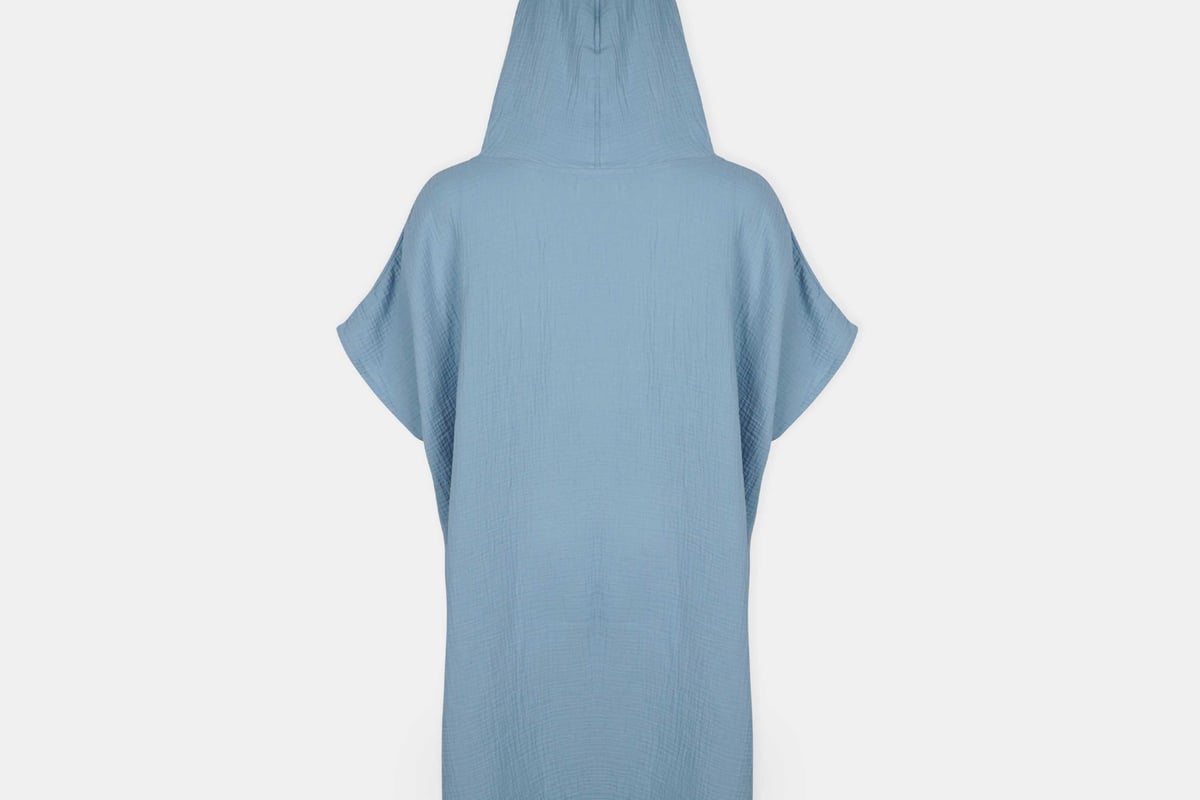
The Breeze Poncho, for example, combines a loose fit with soft cotton and is ideal as a companion for relaxed days by the water or at home. Its earthy tones can be effortlessly styled with swimwear and everyday looks, and the breathable quality ensures comfortable wear.
Care and longevity
To ensure a UV poncho retains its protection and lasts a long time, proper care is essential. UV protection can diminish due to frequent washing or heavy use – but with a few simple measures, it remains stable.
Washing without loss of quality
Synthetic UV ponchos generally tolerate machine washing but should be washed at a low temperature (30°C) on a gentle cycle. Use a mild, bleach-free detergent, as harsh chemicals can damage the fibers. Research shows that UV protective clothing maintains its UPF value even after many washes, provided it is cared for correctly.
Care tips for maximum durability:
- Use a wash bag to reduce microfiber release
- Air dry instead of tumble drying to protect fibers
- Do not use fabric softener, which can clog the fabric's pores
- Treat stains immediately to avoid harsh detergents
- Rinse immediately after contact with chlorine or saltwater
Cotton ponchos require a bit more attention because they take longer to dry and can shrink if washed too hot. Here, the rule is: wash cold or lukewarm and hang to dry.
Storage and transport
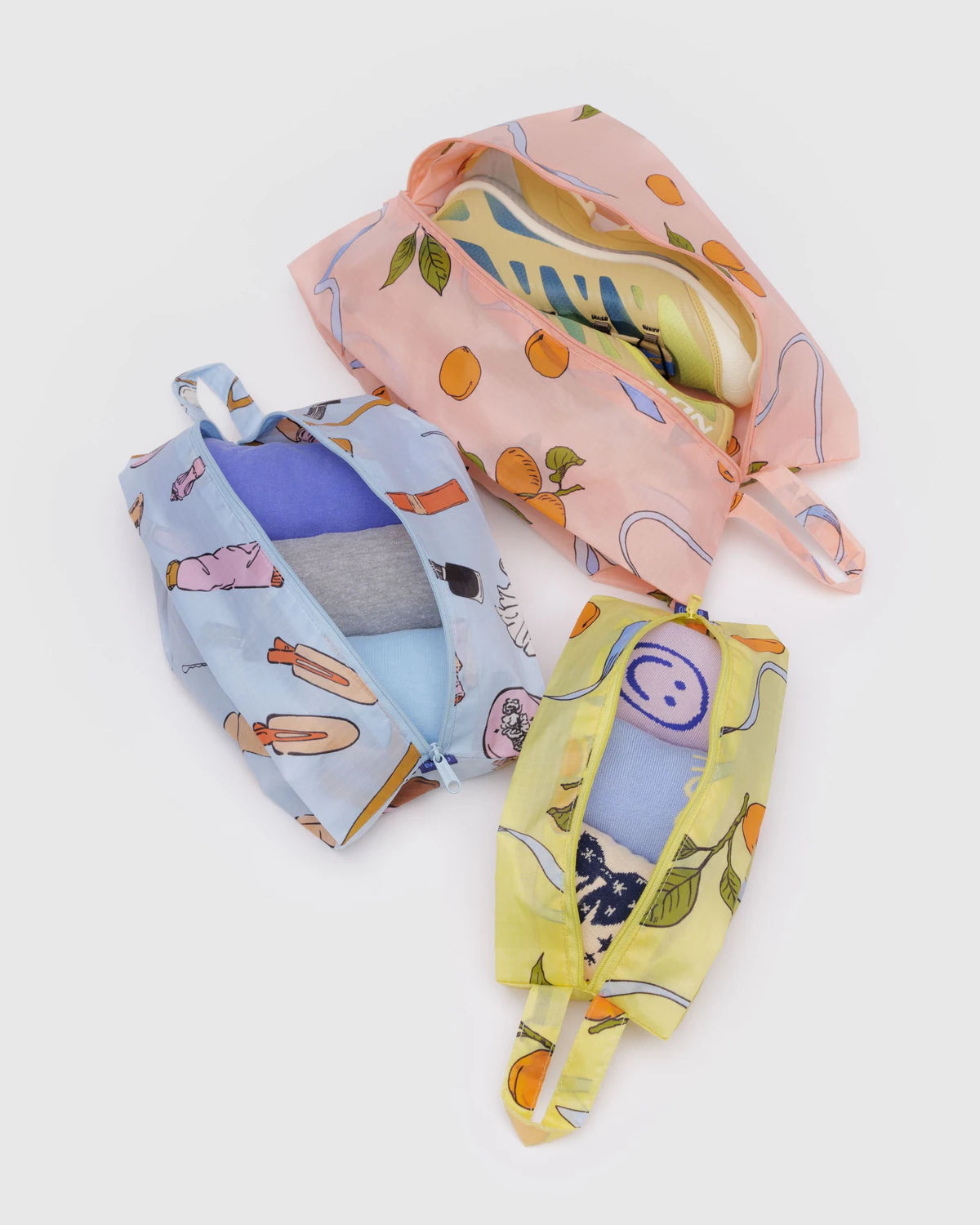
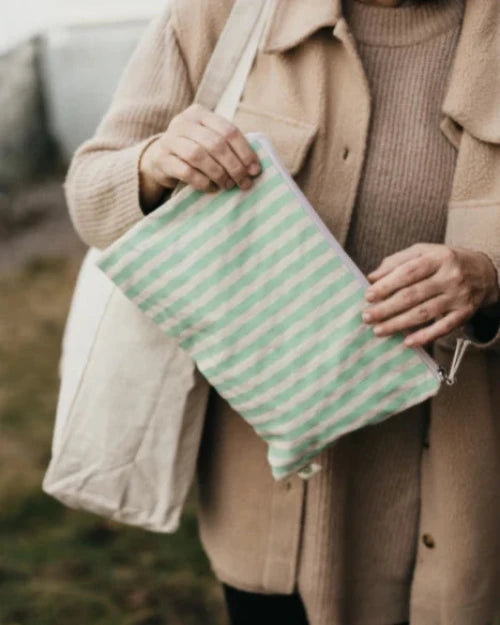
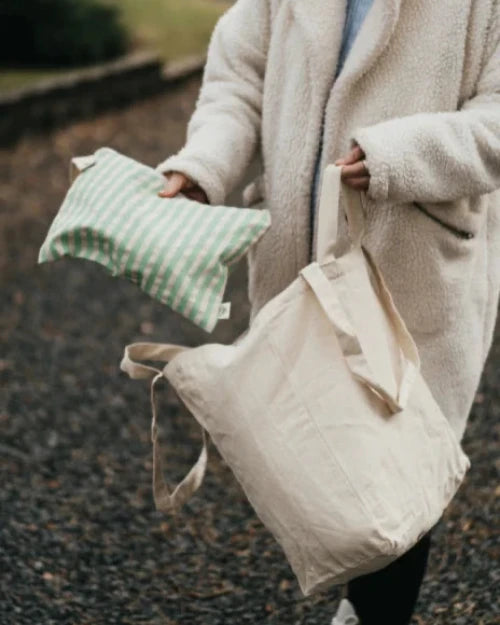
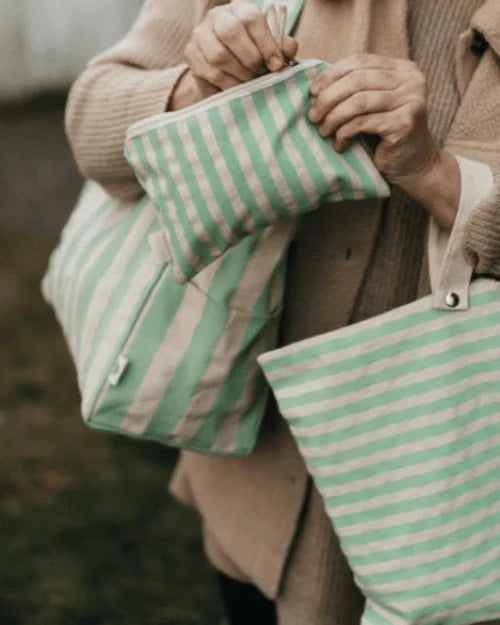
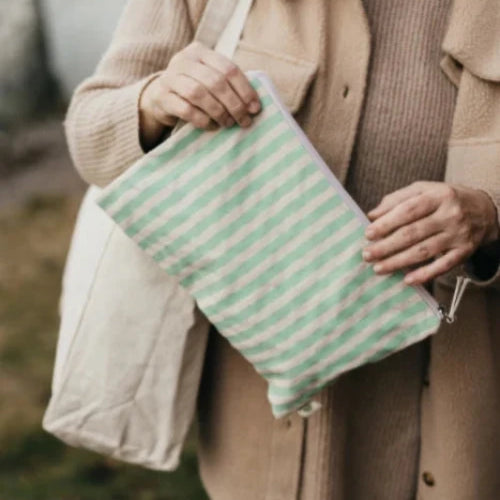
A UV poncho takes up little space and can be folded small. Store it in a dry place to prevent moisture and odors. When traveling, you can simply pack it in a reusable fabric bag – this keeps it clean and doesn't wrinkle too much.
Sustainability and environmental aspects
Those who live consciously pay attention not only to their own protection but also to what their clothing does to the environment. A UV poncho made from recycled materials is the natural choice here.
Recycled fibers instead of new production
Recycled polyester is often obtained from PET bottles or old textiles. The production process saves raw materials and energy compared to manufacturing new fibers. At the same time, recycled material offers the same quality and UV protection as new polyester. Brands that rely on deadstock materials go a step further and use surpluses from the textile industry.
Microplastics and washing behavior
A topic that is receiving increasing attention is the release of microfibers during washing. Synthetic fabrics can release fine particles that enter wastewater. Using a wash bag that catches fibers or washing less frequently can significantly reduce the discharge. Environmental assessments indicate that the longevity of a garment is often more important than the material alone – a poncho that you wear for years is more sustainable than one that needs to be replaced after a season.
Social responsibility and fair production
Sustainability doesn't stop at materials. Production conditions also matter. Certifications like OEKO-TEX® guarantee that textiles are free of harmful substances, and many manufacturers value fair working conditions. When you buy a UV poncho that has been transparently manufactured, you support a supply chain that respects people and the environment.
UV poncho for children: What parents should look for
Children's skin is particularly sensitive and needs more protection than adults'. A UV poncho for children must therefore meet the highest standards – and at the same time be so uncomplicated that children actually want to wear it.
High UPF value as a basic requirement
For children, the UPF value should be at least 50+ because their skin has less natural protection. Make sure the poncho also fully covers the shoulders and neck, as these areas are often forgotten when playing. A hood is a great advantage because it also protects the head and ears.
Must-haves for children's ponchos:
- UPF 50+ across the entire surface
- Soft, skin-friendly materials (OEKO-TEX®)
- Quick-drying so children don't get cold
- Fun colors or patterns that children like to wear
- Easy to put on and take off without complicated closures
Many parents opt for models that can be used in a variety of ways – not just at the beach, but also after swimming lessons or in the garden. A good children's UV poncho grows with them for a while because the fit is generous.
Safety and harmful substances
Children often put textiles in their mouths or have intensive skin contact for hours. Therefore, it is important that the fabric does not contain any harmful chemicals. OEKO-TEX® certified materials are tested for harmful substances and are considered safe. You should also pay attention to pollutant-free prints for colors.
Practical extras for everyday life
Children move a lot and don't want to be slowed down. A poncho that can be quickly put on and doesn't slip is worth its weight in gold. Some models have a small pocket for shells or stones – such details make the difference and increase acceptance among the little ones.
Styling and combination possibilities
A UV poncho doesn't just have to be functional – it can also look good. With the right combination, it becomes a casual companion for the whole day.
Colors and patterns
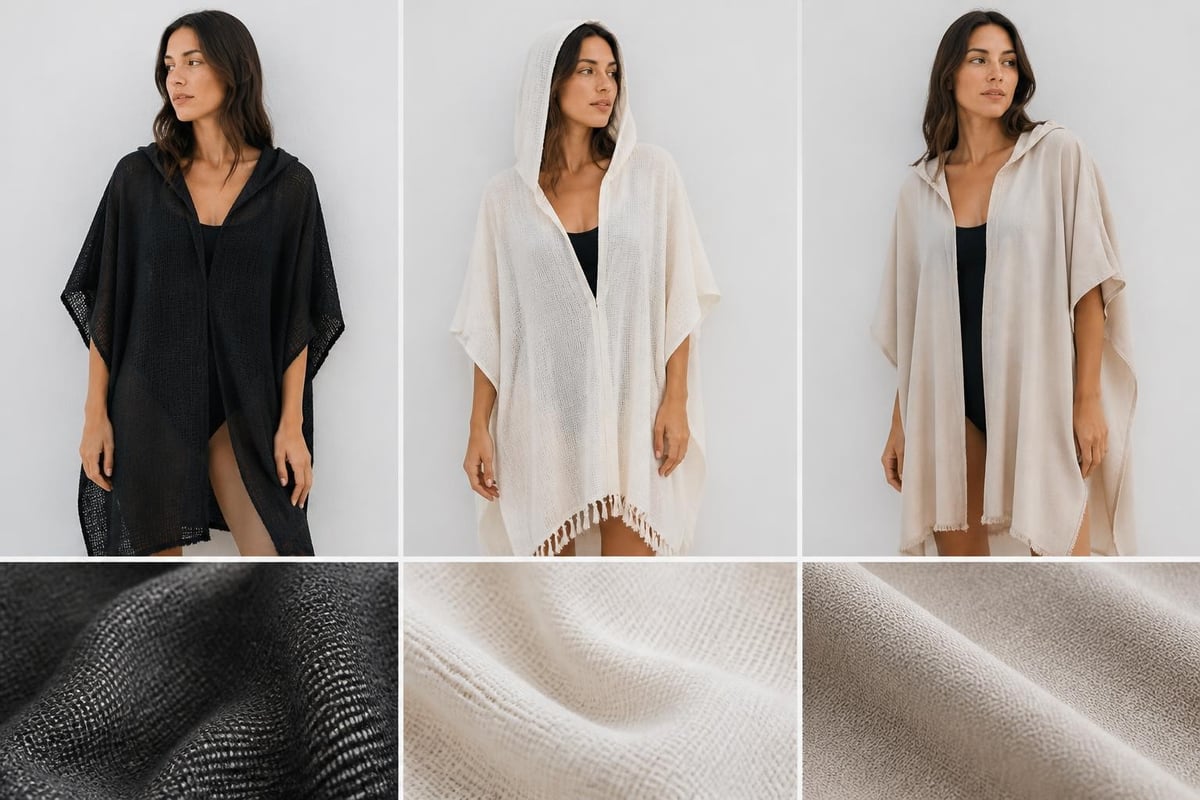
Earthy tones like sand, beige, or light gray go with almost anything and look timeless. They can be combined with colorful swimwear without looking busy. If you prefer bright colors, stripes or subtle patterns are a good choice – they add color without being too dominant.
| Style | Color palette | Goes with | Mood |
|---|---|---|---|
| Minimalist | Sand, Beige, Grey | Everything | Calm, clear |
| Fresh | Blue, Turquoise, White | Sea tones | Light, summery |
| Natural | Olive, Terracotta | Earth tones | Grounded, warm |
| Playful | Coral, Yellow, Patterns | Solid colored swimwear | Lively, positive |
For Mom and Daughter Outfits, coordinated colors are a nice way to create a harmonious overall look without being too matchy.
Layering and versatility
A UV poncho can be worn over a bikini, swimsuit, or even a light shirt. On cooler evenings, you can combine it with shorts or light trousers – transforming it from a beach companion into a relaxed leisure outfit. Models that work both on the beach and in the city and don't just look like pure sportswear are particularly practical.
Accessories and additions
A UV poncho doesn't need much fuss, but a few well-chosen accessories complete the look. A light shoulder bag, a sun hat, or high-quality sandals fit perfectly. If you frequently go on Beach Resort Holidays, these basics are indispensable.
Buying decision: What matters
When choosing a UV poncho, several factors come into play. Here's a checklist to help you make your decision.
Quality and workmanship
Seams should be flat and cleanly finished so that nothing chafes or unravels quickly. Look for double seams in high-stress areas like arm openings or the hem. A high-quality UV poncho feels premium – the material is even, there are no loose threads or uneven colors.
Quality features at a glance:
- Even, dense fabric without thin spots
- Clean, flat seams
- Colorfastness even after several washes
- Certifications (OEKO-TEX®, UPF proof)
- Durable materials that retain their shape
Price-performance and durability
A cheap poncho may be tempting, but if it fades after one season or the UV protection diminishes, you ultimately pay more. It's better to invest in a model that lasts for several years and retains its protection. Sustainable brands often offer guarantees or transparent information on materials and production – a good sign of quality.
Versatility in everyday life
A UV poncho that you only wear at the beach has limited uses. Models that can also be used in everyday life – for example, as a light jacket, for sports, or when traveling – offer more value. Consider where and how often you will wear the poncho and choose accordingly.
A UV poncho protects you and your family naturally, without you having to constantly think about sunscreen. With the right material, a well-thought-out fit, and conscious care, it becomes a reliable companion for many summers. At MAIN Design, you'll find ponchos and other essentials that combine style, function, and sustainability – made from recycled materials, with every purchase contributing to ocean protection. Discover the collections and find your new favorite item.