

Creative design will undergo a real transformation in 2026, influencing how you make your everyday life, your projects, and your brand visible. Trends such as sustainability, digitalization, and new technologies will present you with exciting challenges and opportunities.
The maindesign Guide 2026 provides you with a practical and inspiring roadmap. You'll learn how innovative design ideas, modern design principles, and sustainable creative processes will future-proof your projects.
From current design trends and sustainable materials to concrete implementation steps – this guide provides you with all the tools, methods, and resources you need for your creative journey. Get inspired and embark on a new era of design now.
What is Maindesign? Fundamentals and Philosophy
Maindesign represents a creative approach that goes far beyond traditional design. Originally, the term arose from the fusion of mainstream and individual design and has evolved steadily in recent years. In contrast to traditional design approaches, maindesign emphasizes a personal touch, functionality, and aesthetics that adapt to global trends. Influential currents from architecture, graphic design, and fashion shape this style and make it unique. Those wishing to delve deeper into the philosophy can find further background information on the About Us – Maindesign Philosophy page.

Definition and origin of main design
Maindesign describes a creative style that consciously distinguishes itself from classic design concepts. It originated from the desire to place greater emphasis on individuality and functionality. The focus is always on the connection between personal style and global design trends. Maindesign has established itself as a versatile approach in architecture, graphic design, and fashion. Aesthetics always remains a central element. Maindesign combines proven methods with innovative ideas, thus providing a broad foundation for creative projects.
Central principles and values
At the heart of maindesign are values such as user-centricity, empathy, and sustainability. Creative processes are designed to be resource-efficient and to put people first. Another principle is the conscious interplay between minimalism and maximalism: depending on the project, one approach or the other may be more suitable. Interdisciplinarity and collaboration are integral components that foster creative exchange. Openness to new technologies and a spirit of innovation continuously drive maindesign forward.
| principle | Meaning |
|---|---|
| User-centricity | Focus on user needs |
| sustainability | Resource-efficient work |
| collaboration | Interdisciplinary exchange |
| innovation | Openness to new things |
Relevance of Maindesign in 2026
In 2026, maindesign will shape the creative industry like never before. One reason for this is the increasing demand for sustainable design projects, which has grown by 35 percent since 2022. Cultural and societal factors such as digitalization and climate change are reinforcing this trend. For companies, freelancers, and creative teams, maindesign offers a solution to current challenges. Forecasts from leading design institutes show that innovative approaches and sustainable materials will become increasingly important. This ensures that maindesign will remain relevant in the future.
Maindesign as a guide for creative minds
Maindesign helps you find your way through the daily flood of ideas. Using methods like mood boards and design sprints, you develop your own identity within the creative process. Numerous successful projects demonstrate the versatility of maindesign. For beginners, we recommend starting with small, practical projects and regularly seeking feedback from the community. This way, you'll learn to develop your skills in a targeted way and benefit from the expertise of others.
Challenges and opportunities
Especially when getting started with maindesign, there are typical pitfalls. Trends are often adopted uncritically, or creative blocks slow down the process. But this is precisely where opportunities lie: diversity and inclusion enrich the design process and foster innovative solutions. The fast pace of current trends demands flexibility but also offers room for experimentation. With the right tools and continuous development, you can design your projects sustainably and successfully.
The most important main design trends of 2026
Creative design is changing rapidly, and maindesign is at the heart of this development. By 2026, new values and technologies will determine how we experience products, spaces, and brands. Those who recognize trends today are actively shaping the future.

Sustainability and ecological materials
Sustainability will remain at the heart of maindesign in 2026. More and more designers are relying on recycled and biodegradable materials such as bamboo, recycled plastic, and innovative textiles. According to recent studies, 65% of creatives prefer sustainable materials. Certifications and labels help them make the right choice and build trust with customers.
Eco-design projects that combine resource-saving processes with modern aesthetics are particularly inspiring. Those who want to delve deeper will find practical insights and everyday tips on sustainability at Maindesign .
Whether packaging, furniture or fashion – sustainable solutions at maindesign set new standards and shape the industry in the long term.
Digital Transformation and AI in Design
Digital transformation has revolutionized main design. By 2026, around 40% of design agencies will use AI tools for mood boards, prototypes, and color selection. Automated processes like generative design simplify development and create space for creative ideas.
AI-based applications generate logos, design adaptive websites, and assist with trend analysis. Nevertheless, humans remain indispensable in main design, as empathy and intuition are crucial for innovative solutions.
The limitations of technology become apparent in complex, emotionally charged projects. Here, maindesign excels through its balance of digital power and human creativity.
Colors, shapes and typography: The visual language of 2026
By 2026, dynamic color palettes and variable fonts will become dominant in main design. According to Pantone and Adobe Color, vibrant, high-contrast tones will define the look. Brands will strategically choose between geometric or organic shapes to strengthen their identity.
Experimental typography and flexible fonts allow for the individualized communication of messages. 70% of companies rely on changing color schemes to respond flexibly to trends and target groups.
Best-practice examples from advertising and branding show how maindesign creates recognition and emotional appeal through bold visual language.
User Experience and Emotional Design
In 2026, user experience will be at the heart of maindesign. Intuitive operation, microinteractions, and personalized user guidance will create an emotional connection. Statistics show that UX optimization increases conversion rates by 33%.
Methods such as persona development and user journeys help to embed empathy in the design process. Successful UX campaigns demonstrate how maindesign inspires not only aesthetically, but also functionally.
Those who focus on emotionality in their main design gain loyal users and create lasting impressions.
Cross-media and interactive design
Maindesign 2026 combines print, digital, and spatial design into holistic experiences. Interactive installations as well as AR and VR applications are enjoying increasing popularity. The market for interactive trade fair stands is growing by 50%.
Hybrid events and immersive brand experiences make maindesign tangible and create new avenues for communication. Tips for implementing cross-media projects: target group analysis, technical planning, and creative staging.
By combining different media, maindesign creates innovative formats that impress and inspire.
Individualization and Customization
Personalization is a megatrend in main design. 80% of consumers want customized products and services. Tools like 3D configurators and print-on-demand make personalized design accessible to everyone.
Examples from fashion, interior design, and digital commerce show how small brands and startups can grow through customization. Maindesign offers opportunities to develop a distinctive style and cater to individual needs.
In this way, maindesign will become the key to personal experiences and strong customer loyalty in 2026.
The creative process: Step-by-step to the main design project
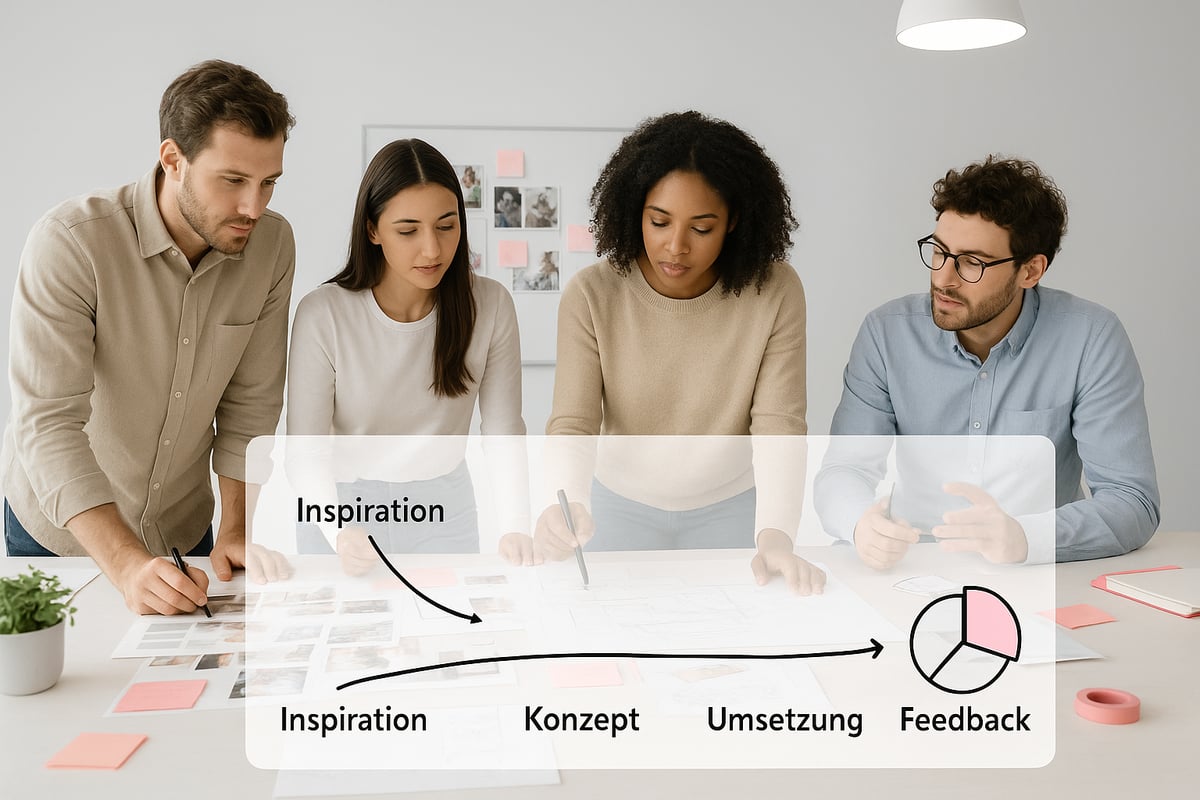
Creativity needs structure: The path to an outstanding maindesign project is not a matter of chance, but the result of a clear process. Every phase – from the initial idea to the final presentation – contributes to success. With a well-thought-out workflow, you get the most out of your creativity and create results that inspire.
Inspiration and idea generation
Every maindesign project begins with the search for inspiration. Use creativity techniques like mind mapping, brainstorming, or design sprints to discover new approaches. Let yourself be inspired by social media, design platforms, or nature.
- Moodboards help to visualize ideas.
- Trend reports show current developments
- Tools like Pinterest, Behance, and Dribbble provide fresh inspiration.
Trend scouting is a key component of the main design process. Document your findings to develop them further in a targeted manner and to create a consistent theme from the outset.
Concept development and planning
The next step is to develop a concrete concept for your maindesign project from the multitude of ideas. Analyze your target audience and create a detailed briefing.
- Storyboards and wireframes help to plan the process.
- Prototypes allow you to test initial concepts.
- Structured time and resource planning ensures efficiency.
A best-practice approach is to consider sustainable packaging designs early in the concept phase. This allows you to establish a clear direction from the outset and respond flexibly to new requirements.
Material and tool selection
Choosing the right materials and tools is crucial for the success of your maindesign project. Focus on sustainability and innovation. Digital tools like Adobe CC, Figma, or Blender offer you a wide range of possibilities.
Checklist for material and tool selection:
| criterion | Example | Evaluation |
|---|---|---|
| sustainability | Recycled fabrics | High |
| Usability | Figma | Very good |
| Cost | Open Source | Cheap |
| compatibility | Adobe CC | Industry standard |
Test different material combinations, especially in interior design, to find the right setup for your main design.
Implementation: From design to realization
Now the concept is becoming reality. Work iteratively and use agile methods to react flexibly to changes. Focus on close collaboration with your team and stakeholders.
- Prototyping and testing are indispensable.
- Feedback loops help to identify errors early.
- Document every step for maximum traceability.
A common pitfall in main design is starting testing too late. Therefore, start early to save time and resources.
Anchoring sustainability in the process
Sustainability is a guiding principle in the maindesign process. Integrate ecological responsibility into every phase, for example by choosing sustainable materials or adhering to zero-waste principles.
- Upcycling projects showcase creative solutions
- Tools for measuring the ecological footprint help with monitoring.
- Certifications provide security
Answers to frequently asked questions about eco-certificates and materials can be found in this FAQ on eco-certificates and materials . This will ensure that your maindesign project is not only innovative but also responsible.
Presentation and communication
A compelling main design thrives on a strong presentation. Tell the story of your project through storytelling, use pitch decks, mockups, or prototypes.
- Actively seek feedback
- Communicate clearly with customers and team.
- Tailor your presentation to the target audience.
Good communication is the key to sustainably increasing the impact of your maindesign project and setting new trends.
Reflection and further development
After one project ends, the next one begins. Analyze what went well and where there is room for improvement. Document your results in your portfolio.
- Learn from successes and mistakes
- Connect with design communities
- Take advantage of further training opportunities and stay active in trend scouting.
This way you can continuously develop your maindesign style and be ideally equipped for the next challenges.
Main design in practice: Inspiring examples & best practices
Practice shows how powerful maindesign can be when innovative principles meet real-world projects. Whether architecture, fashion, or digital design – outstanding solutions are created everywhere, shaping our everyday lives and brand perception.
Successful Maindesign projects 2026
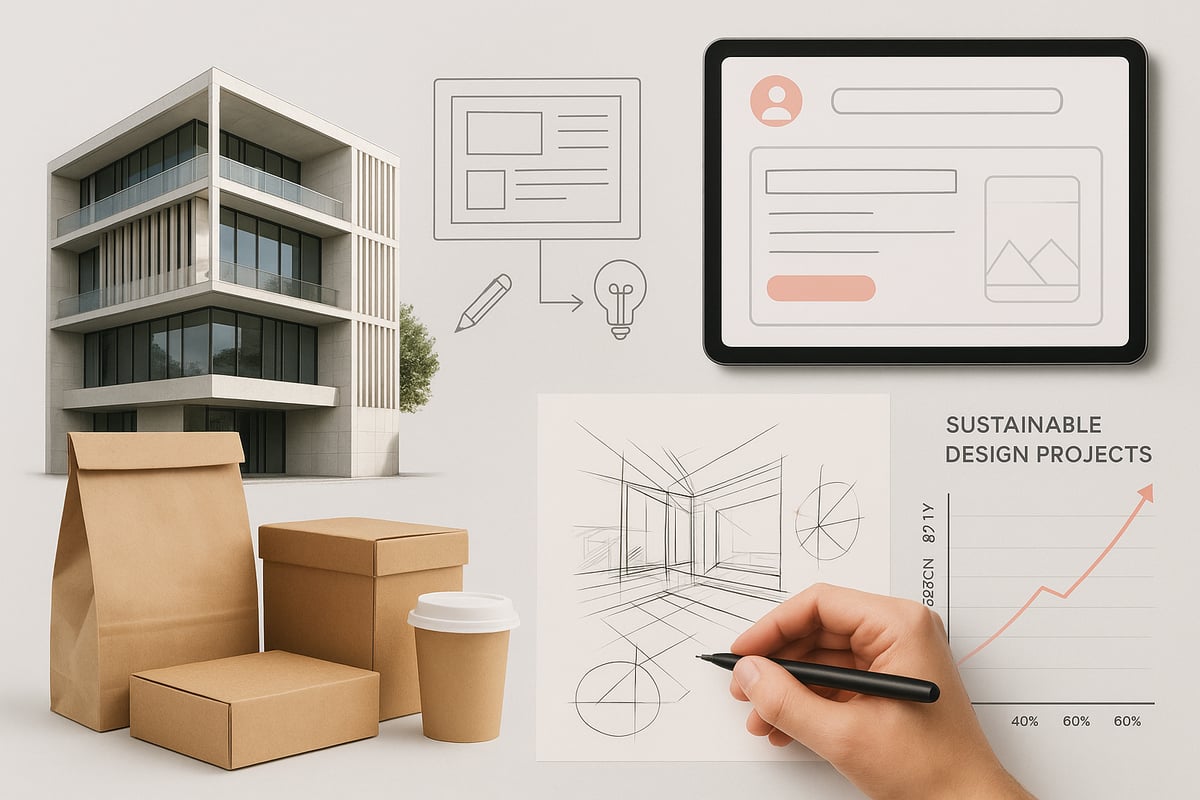
In 2026, numerous maindesign projects will set new standards. In architecture, buildings like the "Green Atrium" will impress with their resource-efficient construction and flexible usage concepts. In the fashion industry, collections will be created that combine innovative materials and authentic storytelling. Digital design teams will develop adaptive websites that emotionally engage users while also functioning efficiently.
A key element of many successes is the close collaboration of creative minds. Those interested in learning more about collaborative processes at maindesign will find fascinating insights under Our Team and Creative Process . The most important lessons learned: the courage to embrace new approaches, openness to feedback, and a clear focus on user needs.
Sustainability as a success factor
Sustainability remains a crucial success factor in maindesign. Packaging designs made from recycled paper or bioplastics are setting new standards. Companies like EcoPack are increasing their sales through consistent positioning as a sustainable brand and reaching new target groups.
Certified materials and transparent production processes build trust. A remarkable story: A start-up transforms conventional product packaging into fully compostable designs, resulting in a 20 percent increase in sales. The maindesign principle of holistic sustainability is convincing more and more consumers.
Digitalization and smart tools in use
In the digital realm, smart tools are revolutionizing main design. Creatives are using AI-based software to create mood boards in seconds or automatically generate color schemes. Projects like interactive web design for virtual events demonstrate how automation and creative control can go hand in hand.
According to current data, design teams save up to 30 percent of their development time through digital tools. Those interested in learning which digital trends and technologies will shape maindesign in 2026 will find fascinating insights in the article "Design Trends 2026: Typography, AI & Liquid Glass ." The integration of AR/VR and generative AI opens up new possibilities and increases efficiency.
Cross-media campaigns and brand staging
Cross-media main design unites print, social media, and events to create holistic brand experiences. Successful campaigns tell stories that unfold across various channels. A good example: the launch of a product line, accompanied by interactive installations, social media challenges, and emotional print ads.
The reach of such campaigns increases significantly when design, storytelling, and technology work together seamlessly. Challenges arise when integrating different media, but with a clear strategy and a core design approach, impressive synergies can be generated.
Design for social impact and inclusion
Maindesign unfolds its full potential when social value and inclusion are the focus. Projects that prioritize accessibility are gaining in importance – for example, websites optimized for screen readers, or packaging designed to be understandable for everyone.
Statistics show that 60 percent of users prefer inclusive design. Initiatives such as inclusive campaigns or design projects for social organizations create lasting impact. With maindesign, you can not only create visually stunning designs but also initiate real social change.
Tools, resources and further education for creative main design
Innovative maindesign thrives on the right tools, up-to-date resources, and a strong network. In 2026, you'll have more opportunities than ever before. Whether you want to implement your projects digitally, cross-media, or sustainably – with the right set of tools, you'll be equipped for any challenge.
Essential Design Tools 2026
To succeed in maindesign in 2026, you need powerful tools that combine creativity and efficiency. The industry favorites are:
| Tool | Application | Special feature |
|---|---|---|
| Adobe CC | Graphics, Layout | Industry standard |
| Figma | UI/UX, Collaboration | Cloud-based, AI features |
| Blender | 3D, Animation | Open Source |
| Canva | Social media, print | Beginner-friendly |
AI-powered solutions, like those featured in this design trends report , demonstrate how automation can optimize your workflow in main design. Always check usability, compatibility, and costs before making a decision.
Sources of inspiration and design platforms
Digital platforms are essential for generating fresh ideas in main design. The most important starting points are:
- Behance : Portfolio Showcase and Trends
- Dribbble : Focus on UI/UX and visuals
- Pinterest : Moodboards, collections and inspiration
- Instagram : Daily updates and community insights
Supplement these sources with podcasts, blogs, and online magazines. Use targeted search functions and follow relevant hashtags to find inspiration for your next maindesign project.
Further education and trend scouting
Continuous professional development is a must for maindesign. Popular methods:
- Online courses and webinars on current design trends
- Certificate programs, for example in Sustainable Design
- Visits to design conferences and trade fairs
- Mentoring and masterclasses
According to industry statistics, 75 percent of designers regularly participate in continuing education. Use trend reports, such as those presented in the Design Trends Report , to stay up-to-date with the latest developments in maindesign.
Networking and community building
Success in main design often arises from exchange and collaboration. Strategically expand your network:
- Participate in local meetups and global online events.
- Become a member of design forums and communities
- Share your own projects for feedback and inspiration
- Collaborate with creatives from other disciplines
A strong network opens up new perspectives for you and promotes further development in maindesign.
Future prospects and career opportunities
Career paths in maindesign will be more diverse than ever in 2026. In-demand skills:
- UX/UI design and sustainable design
- Digital skills and AI understanding
- Storytelling and visual communication
Job profiles such as Sustainable Designer, Digital Artist, or UX Expert are gaining in importance. Thanks to maindesign, career changers can also find attractive entry-level opportunities in the creative industry.
You're ready to take creative design to the next level – and the Maindesign Guide 2026 provides you with exactly the inspiration, trends, and tools you need. Whether you want to use sustainable materials, utilize innovative design processes, or simply breathe new life into your projects, you'll find sound guidance and practical tips for your individual path. Discover how quality, minimalist style, and environmental awareness go hand in hand today and how you can create real added value through responsible creativity.
If you want to delve even deeper and experience our sustainable design approaches, you can discover more .