

Have you ever wondered about the origin of the word "bikini" and why this garment has caused such a stir? The story behind the bikini is full of surprises and exciting twists.
This guide takes you deep into the origins of the term. You'll learn how the bikini became a symbol of modern swimwear and what social debates it sparked.
We'll explore its linguistic origins, historical milestones, controversial discussions, influence on pop culture, and offer a glimpse into upcoming trends up to 2026. Get inspired and discover what lies behind one of the most recognizable words in the fashion world.
The linguistic origin of the term "bikini"
Where does the word "bikini" actually come from, and why is it known worldwide today? The etymology of "bikini" is not only a fascinating linguistic topic but also rich in historical and cultural significance. In this section, you'll learn how the word originated, what the Bikini Atoll has to do with it, how the term spread linguistically, and what myths surround the name.
The origin of the word
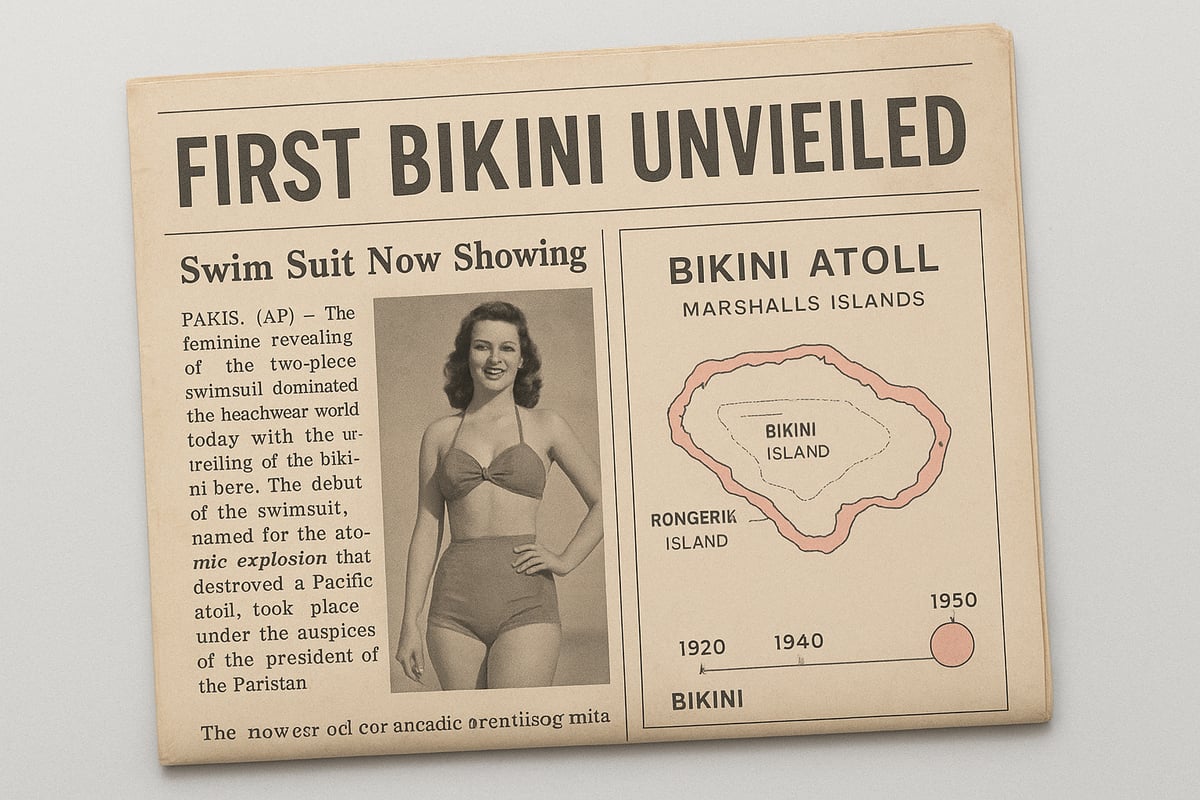
The origin of the word "bikini" begins in 1946, when the French engineer Louis Réard presented a revolutionary garment: the bikini. Réard named his design after Bikini Atoll in the Pacific, which at that time was in the global spotlight due to American nuclear tests. His idea was that the name "bikini" should have a similarly "explosive" effect on the fashion world as the atomic bombs on the island.
The first international media reports about the bikini appeared shortly after its presentation in Paris. The linguistic origin of the word "bikini" is interesting: the word originated in French but quickly found its way into English and other languages. You can find even more background information on the naming in the article "Why is the bikini called a bikini? "
Historical significance of Bikini Atoll
Bikini Atoll lies in the central Pacific Ocean and consists of over 20 small islands. After World War II, it was used by the USA as a testing ground for nuclear weapons. The Bikini Atoll tests of 1946 attracted worldwide media attention, reinforcing the connection between fashion and current events.
Réard deliberately chose the name as a metaphor for social upheaval. The etymology of "bikini" thus became a symbol of change and sensation. Contemporary media and critics debated the choice of name, as it aroused both fascination and criticism.
Language development and spread
Shortly after its initial presentation, the word "bikini" was adopted by various languages. It became synonymous with a two-piece swimsuit and displaced other terms. The etymology of "bikini" also influenced related terms such as "monokini" (one-piece) and "tankini" (with a top).
In fashion journalism and advertising, "bikini" quickly became the standard term. The following table shows the development of selected swimwear terms:
| Expression | Meaning | Origin |
|---|---|---|
| bikini | Two-parter | French |
| Monokini | One-piece (modern) | Italian |
| Tankini | Top + Panties | English |
Facts and myths surrounding the name
Many myths surround the origin of the word "bikini." A common misconception is that the name originally comes from an exotic language. In fact, the name was a deliberate marketing decision by Réard.
The documented facts include:
- The term was first mentioned in French newspapers in 1946.
- The term "bikini" appeared in encyclopedias as a fashion term from the 1950s onwards.
- Fashion archives show that the bikini was initially banned in many places.
Popular myths and misunderstandings can usually be refuted by historical sources.
The history of the bikini: From its beginnings to the present day
The evolution of the bikini is a fascinating journey through different eras, cultures, and social upheavals. Anyone interested in the origin of the word "bikini" will quickly discover that this garment is far more than a simple fashion phenomenon. Below you will find a structured overview from its earliest precursors to its global spread.
Precursors of the bikini in antiquity
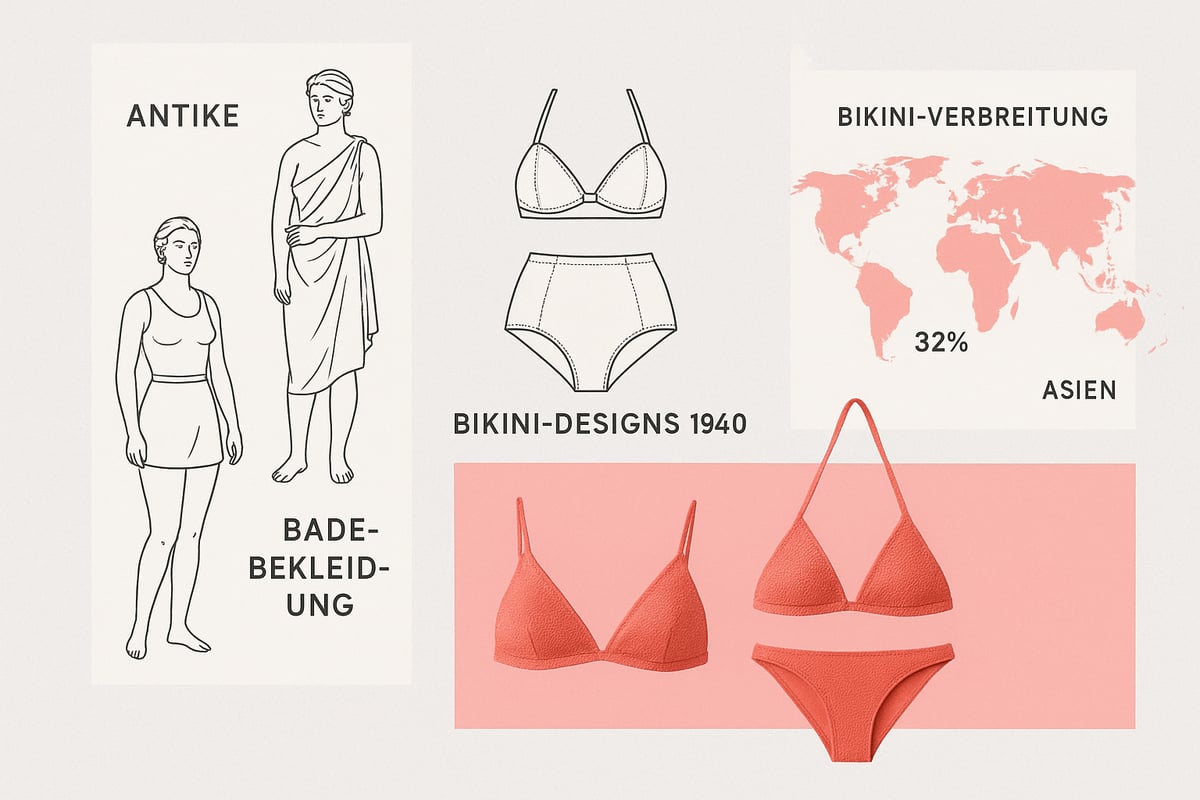
Even in ancient times, there were garments reminiscent of today's bikini. Roman mosaics from the 4th century depict women in two-piece outfits, often engaged in sporting activities such as ball games.
These ancient two-piece swimsuits primarily served practical purposes and differed significantly in material and cut from modern swimwear. Nevertheless, it's fascinating that the word "bikini" originates from a concept that existed centuries ago.
Such findings prove that the desire for functional, body-hugging clothing is not a new phenomenon.
The path to the modern bikini (19th–20th centuries)
In the 19th century, bathing suits were still modest and covered the entire body. With societal changes and new leisure activities, swimwear gradually evolved.
From the 1920s onwards, the cuts became shorter and bolder. The etymology of "bikini" gradually took on a new meaning, as the two-piece swimsuit came to be perceived as a symbol of freedom and self-determination.
Even before 1946, there were initial attempts at a two-piece swimsuit, but social norms initially prevented its breakthrough.
The invention of the bikini in 1946
In the summer of 1946, Louis Réard presented the first official bikini in Paris. He drew his inspiration from Bikini Atoll, where atomic tests had recently been conducted. The name was intended to allude to the "explosive" effect of the new design.
The first model, Micheline Bernardini, caused a scandal and made headlines worldwide with her appearance. The word "bikini" thus became closely linked to innovation, provocation, and change.
The media attention led to the bikini quickly becoming a symbol of modern femininity.
International spread and acceptance
After its presentation in Paris, the bikini initially met with resistance. In many countries, including Spain and Italy, wearing the bikini was temporarily banned.
However, Hollywood stars like Brigitte Bardot and Ursula Andress played a crucial role in popularizing the bikini. The origin of the word "bikini" became internationally known, and the bikini evolved into a symbol of freedom and emancipation.
Over time, the bikini became popular worldwide and part of everyday culture.
Social controversies and debates
Few articles of clothing have sparked as much controversy as the bikini. In the 1950s and 1960s, debates raged about decency, morality, and the image of women.
The bikini became a symbol of self-determination, but also of transgressing societal boundaries. The etymology of the word "bikini" today represents a long struggle for acceptance and diversity in swimwear.
Discussions about body ideals and female freedom continue to accompany the bikini to this day.
Statistics and facts on distribution
Since the 1960s, bikini sales have steadily increased. According to market analyses, bikinis account for a large proportion of global swimwear sales.
The fashion industry sets trends, for example in colors and patterns – you can find current developments in the article on popular bikini colors and patterns . The origin of the word "bikini" has evolved from a scandalous object to a mass phenomenon.
Today, bikinis are available in all styles and price ranges, which underlines their global importance.
The bikini as a reflection of societal changes
The bikini is far more than just a summer garment. Its evolution demonstrates how closely fashion and social change are intertwined. The etymology of the word "bikini" reflects self-determination, media presence, sport, sustainability, and innovation.

The bikini and the women's movement
The etymology of the word "bikini" is closely linked to female self-determination. Since its introduction, the bikini has stood for the right to control one's own body and to redefine beauty ideals. In the 1960s, it became a symbol of emancipation.
Many discussions revolved around the question of whether the bikini liberates women or places them under new constraints. The diversity of today's cuts and styles shows that individual freedom and self-confidence are paramount.
Pop culture and media presence
No other garment has shaped pop culture as much as the bikini. The origin of the word "bikini" appears in iconic film moments, such as with Ursula Andress in James Bond or on the covers of Sports Illustrated.
Social media has further increased the visibility of swimwear. Celebrities and influencers use bikinis to make statements and establish trends. In this way, the bikini becomes a symbol of lifestyle and zeitgeist.
The bikini in sports
The bikini has also taken on a special role in sports. The origin of the word "bikini" is evident in sports such as beach volleyball, swimming, and surfing, where bikinis were specifically designed for performance and freedom of movement.
The sporting achievements of prominent female athletes have turned the bikini into a symbol of strength and equality. At the same time, there are debates about dress codes and how much skin is acceptable to show.
Sustainability and ethical aspects
The origin of the word "bikini" is now also linked to responsibility for the environment and society. Criticism of fast fashion and resource consumption has led to a greater emphasis on sustainable materials and fair production.
More and more brands are opting for eco-friendly alternatives. If you want to learn more about how sustainable swimwear is changing the industry, you'll find exciting insights at Discover Sustainable Swimwear . Awareness of ethical consumption is constantly growing.
Technological innovations
Innovation plays a crucial role in the further development of the bikini word origin. New fabric technologies ensure greater comfort, UV protection and quick-drying materials.
3D design and digital tools enable individual fits and creative cuts. Statistics show that technological innovations are having a lasting impact on the swimwear industry and making the bikini fit for the future.
Bikini trends and developments until 2026
The world of swimwear is constantly evolving – and the bikini remains at the heart of it all. Those who delve into the origins of the word "bikini" will discover how innovation and tradition are merging. Up until 2026, you can expect numerous exciting developments, from new styles to societal shifts. What will define the bikini of tomorrow? Here's an overview of the most important trends.
Fashion innovations and styles
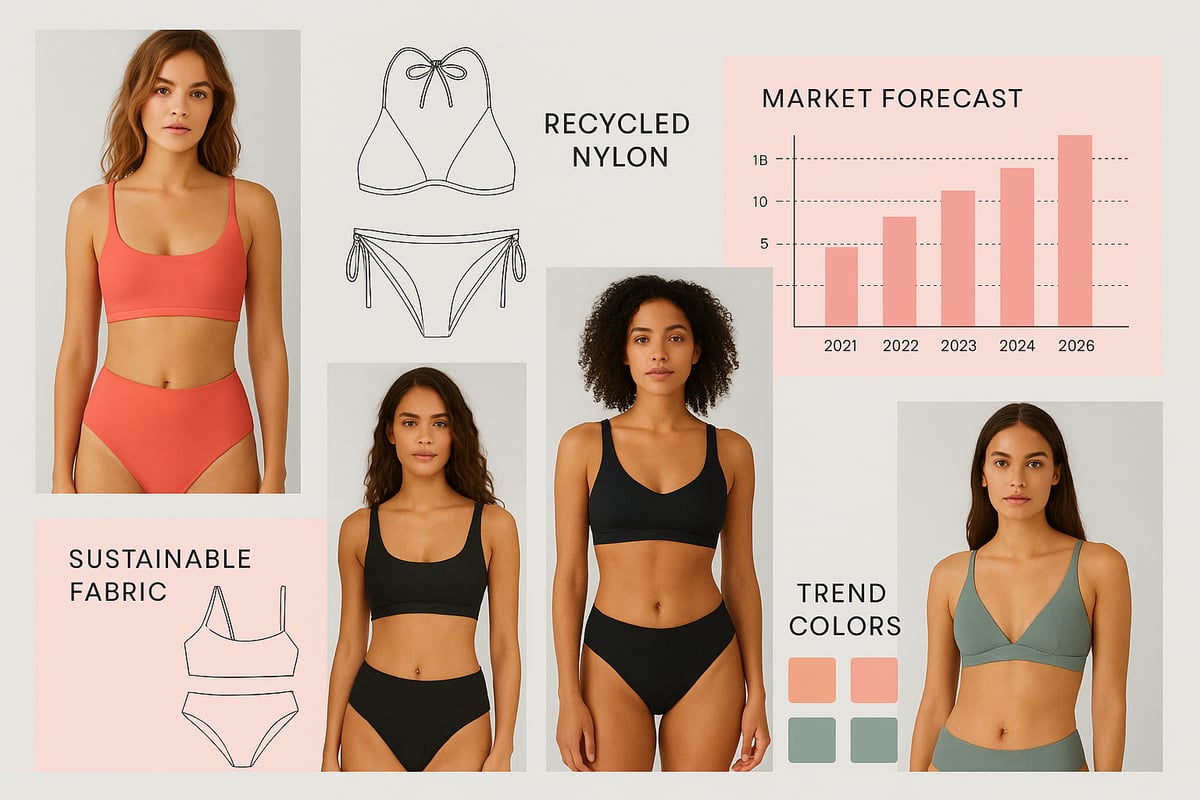
By 2026, bold cuts, high-waisted designs, and cut-outs will define swimwear. Retro influences like the Y2K aesthetic are making a major comeback, while designers experiment with new materials and surprising color combinations. The etymology of the word "bikini" illustrates how trends are constantly reinventing themselves. Inspiration comes from major runways and events like Gran Canaria Swim Week. Models with asymmetrical straps or eye-catching prints are particularly popular. Anyone looking for a glimpse into the hottest styles should definitely check out the Top 10 Trends at Gran Canaria Swim Week 2026. Thus, the bikini remains a symbol of change and individuality.
Sustainability as a guiding principle
Sustainability remains a central theme in the swimwear industry. More and more labels are using recycled fabrics in their production, such as Econyl or organic cotton. The origin of bikinis is now closely linked to environmental awareness. Consumers are increasingly paying attention to origin, transparency, and ethical standards. Many brands are working with NGOs to ensure fair working conditions and resource-conserving processes. Innovative dyeing techniques and durable materials are also gaining importance. Those who want to delve deeper into the topic will find exciting insights into sustainable trends and developments in Bikini Design Styles 2026 .
Digitalization and individualization
Digitalization is opening up new possibilities for bikini shopping. Thanks to online configurators, customers can design their favorite bikini themselves, choosing the perfect cut, pattern, and color. The etymology of the word "bikini" is thus reflected in a personalized shopping experience. Virtual fittings with augmented reality make selection easier and increase customer satisfaction. Statistics show that by 2026, over 60 percent of all swimwear purchases will be made online. Digital collections and 3D designs are also gaining traction. The future of swimwear is therefore becoming more individualized and technology-driven, appealing to new target groups.
Diversity and inclusivity
By 2026, brands will increasingly focus on diversity in fits, sizes, and styles. The word "bikini" now represents inclusion and body positivity. More and more labels are presenting campaigns featuring a wide range of body types, skin tones, and age groups. This makes more people feel included and represented. Size charts are being expanded, cuts optimized, and customer service personalized. Unisex styles are also gaining in importance. The bikini is thus becoming an expression of self-confidence and acceptance, regardless of societal norms.
Social trends and changing values
The bikini remains a reflection of societal developments. The etymology of "bikini" connects lifestyle, identity, and current values. Social media and influencers drive trends, while discussions about self-determination and authenticity are gaining importance. More and more customers demand transparency from brands and pay attention to ethical aspects. Forecasts indicate that sustainable consumption and diversity will continue to shape the industry. Today, the bikini is more than just a garment – it represents freedom and change.
Figures and forecasts for the swimwear market
The global swimwear market is growing steadily and is expected to reach €25 billion by 2026. The origin of the word "bikini" remains relevant worldwide and influences consumer behavior and brand strategy. Sustainable products and digital shopping experiences are particularly in demand. Europe and North America lead the market, followed by Asia. Studies show that approximately 70 percent of consumers value environmental friendliness. Innovations and social trends continue to drive growth, while the bikini remains a symbol of modern swimwear.
Bikinis worldwide: Cultural differences and global perspectives
The bikini has become a global symbol of modern swimwear, but its perception and design vary greatly from continent to continent. Understanding the etymology of "bikini" not only explains the name but also helps to better understand the cultural backgrounds and global developments surrounding this garment.
Regional differences in design and acceptance
Remarkable differences in bikini design and social acceptance exist worldwide. In Europe, classic cuts and fashionable experiments dominate, while in the USA, sporty styles and striking colors are popular. In many Asian countries, bikinis are often more discreetly cut or complemented by additional clothing. African designs frequently incorporate traditional patterns and local fabrics. Particularly minimalist styles, such as the microkini (see Wikipedia) , regularly spark discussions about the boundaries between fashion and culture. The etymology of the word "bikini" illustrates just how differently this garment is interpreted around the world.
The bikini and local legislation
The etymology of the word "bikini" is closely linked to social norms and laws. In some countries, wearing bikinis on public beaches is perfectly normal, while in other regions strict regulations apply or wearing them is even prohibited. For example, parts of the Middle East, India, and North Africa have regulations that severely restrict swimwear. In Europe and North America, on the other hand, many previous bans have been gradually lifted. Debates about public morality and individual freedom flare up time and again. The evolution of the word "bikini" demonstrates the extent to which swimwear is influenced by legal frameworks.
International icons and inspirations
International stars and designers significantly shape the perception of the bikini. Names like Brigitte Bardot, Rihanna, and Naomi Campbell represent iconic bikini moments that have set trends worldwide. The bikini is also constantly reinterpreted and used as a statement on international runways. Pop cultural references from music, film, and art contribute to the bikini's established place in the global fashion industry. Through these icons, the bikini becomes a symbol of style, emancipation, and cultural exchange.
Global sustainability initiatives
With growing environmental awareness, sustainability in swimwear is increasingly coming into focus. Projects and brands specializing in environmentally friendly materials and fair production are emerging worldwide. NGOs are working with labels on transparent supply chains and recycling initiatives. According to current statistics, interest in sustainable bikinis is steadily rising. The etymology of "bikini" is thus evolving and now also represents responsibility and innovation in a global context. Consumers are increasingly paying attention to whether their bikini is not only fashionable but also ethically sound.
Now that you've learned about the fascinating history and cultural significance of the bikini up to 2026, you know just how much more there is to this iconic garment. The development of sustainable materials and minimalist designs demonstrates that fashion and environmental awareness can go hand in hand. If you're inspired to become part of this modern swimwear movement and value quality and sustainability, you can now delve even deeper and discover more .
Discover swimwear that makes history and protects our oceans.