

Finding the perfect swimwear for children is more than just shopping. It's about barefoot moments by the lake, freedom of movement in the water, and fabrics that feel wonderful against delicate skin. If you're looking to buy children's swimwear in Switzerland , you'll be faced with a wonderful selection – and an important decision. Because what our children wear touches not only their skin, but also the world they grow up in. Sustainable swimwear made from recycled materials combines quality with responsibility. It protects sensitive children's skin, lasts summer after summer, and helps keep our lakes and seas cleaner.
Why sustainable swimwear for children is important
Children's skin is thinner, more sensitive, and more reactive than adults'. It needs fabrics that are soft, dry quickly, and do not contain harmful chemicals.
Conventional swimwear often contains synthetic fibers made from petroleum and is treated with chemicals that can irritate sensitive skin. Sustainable alternatives rely on recycled materials – such as those made from collected PET bottles or old fishing nets. These fabrics are not only more environmentally friendly but also gentler on the skin.
The advantages of sustainable children's swimwear at a glance:
- Recycled materials reduce plastic waste in the oceans.
- Soft, quick-drying fabrics are gentle on children's skin.
- Durable quality lasts for several summers
- No harmful chemicals or dyes
- Production under fair conditions
Recycled materials – good for skin and the sea
Most sustainable swimwear collections for children are made from Econyl or recycled polyester. Econyl is made from old fishing nets, carpet remnants, and industrial waste. The fabric is just as durable as conventional nylon, but its production saves resources and removes waste from the ocean.
Recycled polyester is made from PET bottles. Approximately five to six bottles are used per swimsuit. The material is lightweight, stretchy, and chlorine-resistant – perfect for long days at the pool or lake.
What you should pay attention to when buying
Not all swimwear that calls itself "sustainable" lives up to its promises. It's worth taking a closer look.
| criterion | What to look out for | Why it's important |
|---|---|---|
| material | Recycled nylon (Econyl) or polyester | Reduces plastic waste, skin-friendly |
| Certifications | Oeko-Tex Standard 100, GOTS | Guaranteed pollutant-free production |
| Fit | Adjustable straps, elastic waistband | Grows with your child, sits comfortably |
| UV protection | UPF 50+ | Protects against sunburn |
| Production | Fairly produced in Europe | Short transport routes, fair wages |
When buying children's swimwear in Switzerland, you should pay attention to the size. Many brands give their children's sizes in years. A look at the children's size chart will help you find the right fit. Adjustable straps or ties at the back ensure that the garment fits well for several months.
Cut and comfort for active children
Children are active. They jump, dive, run, and climb. Swimwear has to keep up.
A good swimsuit or bikini for children stays in place – even when jumping off the jetty. Flat seams prevent chafing. Elasticated cuffs provide support without digging in. And the fabric should feel like a second skin, not a costume.
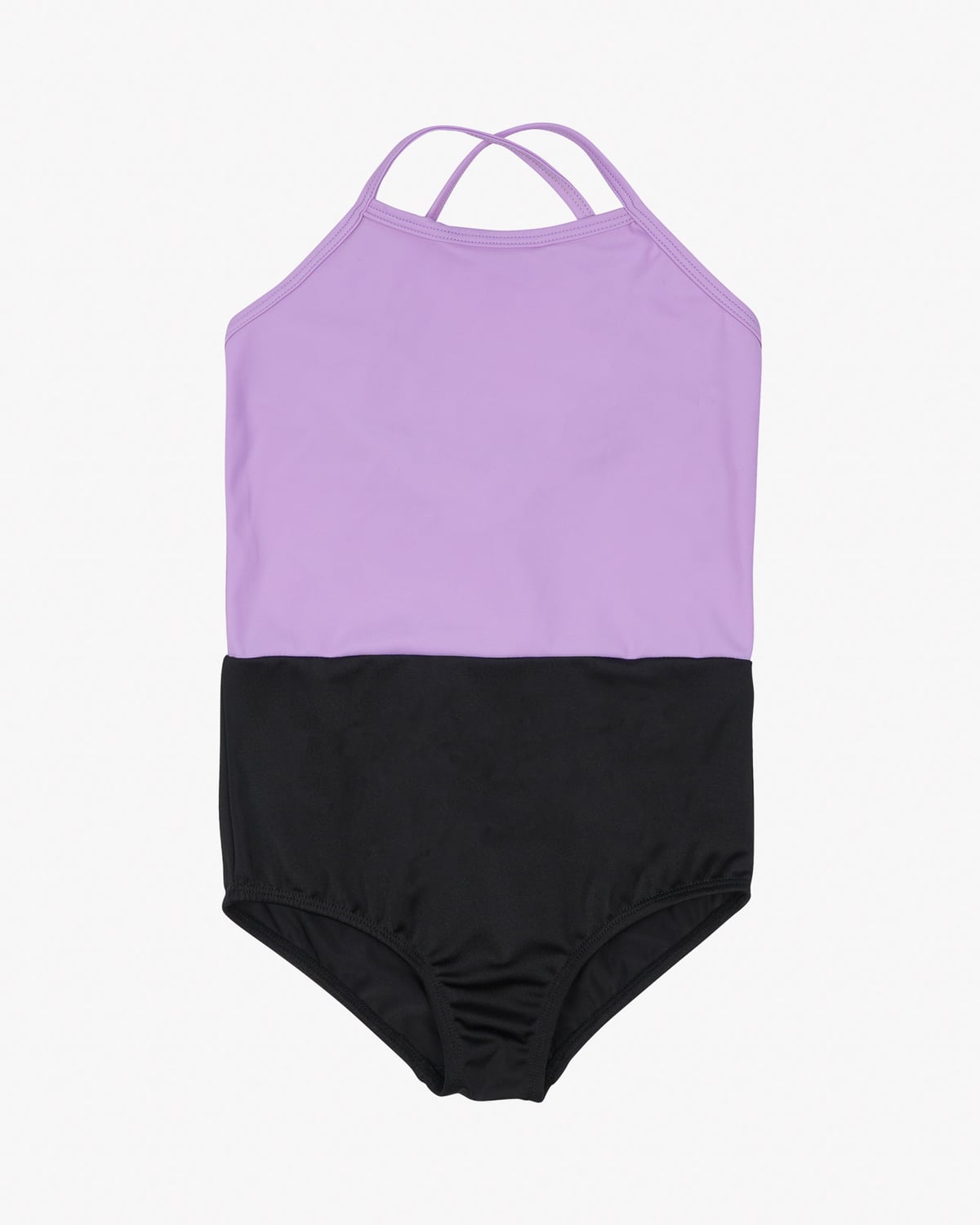
Models with knots or adjustable straps are particularly practical. They grow with the child and adapt to different body shapes. The Lena girls' swimsuit combines exactly these features: The shoulder straps are knotted at the back, ensuring a perfect fit. The fabric is high-quality, soft, quick-drying, and very comfortable against the skin.
Swiss quality meets sustainable values
In Switzerland, there is a growing scene of brands that develop children's swimwear with care and responsibility. They focus on local production or work with European partners who guarantee fair working conditions.
Anyone looking to buy children's swimwear in Switzerland will find pieces here that are more than just functional clothing. They tell a story – of clean oceans, fair wages, and materials given a second life. And they look good without being flashy.
Color-coordinated collections for the whole family
Many sustainable brands offer collections with color-coordinated swimwear for adults and children. This creates a harmonious overall look – at the beach, on family outings, and while traveling.
It's not about matching outfits in the traditional sense, but about a calm, thoughtful design. Colors that complement each other. Cuts that work. Fabrics that last. This makes choosing easier and the enjoyment greater.
You can find out more about the sustainable philosophy and the materials used on the sustainability page.
UV protection in swimwear – a must for children's skin
The sun in the Alps and by the water is more intense than many people think. Children's skin needs protection – not only through sunscreen, but also through appropriate clothing.
High-quality swimwear for children offers UV protection of UPF 50+ . This means that only one-fiftieth of the UV radiation penetrates the fabric. This is roughly equivalent to a sun protection factor of 50 for sunscreen.
Important sun protection tips for children:
- Choose swimwear with UPF 50+
- Cover shoulders and back
- Apply additional sunscreen to exposed areas.
- Take advantage of the shaded periods between 11 a.m. and 3 p.m.
- Don't forget your head covering!
Choosing the right swimwear is crucial for sun protection . In addition, you should use high-quality sunscreen and seek shade whenever possible.
Long-sleeved swim shirts and swimsuits with sleeves
For children who spend a lot of time in the water, long-sleeved swim shirts or swimsuits with sleeves are a good idea. They protect shoulders and arms from direct sunlight and prevent sunburn, even during extended playtime on the beach.
These models are particularly popular with families who sail, surf, or travel in southern countries. They combine UV protection with freedom of movement and have a modern look.
You can find more information on sun protection for children and the role of swimwear in current guides.
Care and longevity – how swimwear lasts longer
Sustainable swimwear is an investment. With proper care, it lasts for several years and can even be passed down to younger siblings.
| Care step | Recommendation |
|---|---|
| After bathing | Rinse immediately in cold water. |
| Wash | Hand wash with mild detergent |
| Dry | Lying in the shade, not in the sun |
| Store | Lying flat, not folded |
| Chlorine & salt water | Rinse immediately after bathing |
Chlorine and salt water can damage the fabric's elasticity. Therefore, it's important to rinse swimwear after every use. A quick dip in cold fresh water is sufficient. This removes residue and preserves the colors.
Hand wash instead of washing machine
Even though most sustainable swimwear collections are machine washable, hand washing is gentler on the material. A mild, pH-neutral detergent is ideal. Avoid fabric softener – it coats the fibers and reduces elasticity.
Swimwear should not be wrung out after washing. Simply squeeze out the excess water gently and lay flat on a towel. Allow to dry in the shade, never in direct sunlight or in a tumble dryer. Heat damages the fibers and causes colors to fade.
Online or locally – where to find sustainable children's fashion
The question of where to buy children's swimwear in Switzerland has many answers today. Local shops offer the advantage that you can touch the quality and check the size directly. Online shops score points with a larger selection and often detailed size charts.
Many Swiss brands combine both: They offer online shops with personal service and transparent information about materials, fit, and production. You can browse at your leisure, compare size charts, and have your purchases delivered to your home.
Advantages of buying online:
- Larger selection of designs and colors
- Detailed product descriptions and size charts
- Easy returns if the size is wrong.
- Direct contact with the manufacturer for any questions
- Often climate-neutral delivery within Switzerland
At MAIN Design you'll find not only sustainable swimwear, but also helpful guides to finding the right fit. The Fit Guide explains what to look for when choosing, and the size charts are clear and reliable.
Return policy and customer service
A good return policy is especially important for children's clothing. Size variations are normal, and sometimes an item doesn't fit as expected despite correct measurements.
Reputable Swiss brands usually offer a 14- to 30-day return policy. Items should be returned unworn and with the tags attached. Many shops cover return shipping costs within Switzerland.
Customer service also plays a role. Questions about size, material, or care should be answered quickly and courteously. Personal contact – via email, chat, or phone – builds trust.
Price and value – is sustainable swimwear worth it?
Sustainable swimwear usually costs more than fast fashion. But the higher price reflects real value.
You're not just paying for a piece of clothing, but for:
- High-quality, recycled materials
- Fair production in Europe
- Durable quality that lasts for several summers
- pollutant-free, skin-friendly fabrics
- A contribution to marine conservation
If a swimsuit fits perfectly for two or three summers and can then be passed on to a younger sibling, the price quickly becomes less of an issue. You buy less often, throw away less, and enjoy it for longer.
Cost per wear – the honest calculation
Sustainable children's clothing that costs around 60 francs and lasts for three summers will cost you about 20 francs per year. With a fast-fashion alternative for 20 francs that stretches out of shape after one summer, you'll pay more in the long run – and produce more waste.
The calculation becomes even clearer when you consider that high-quality fabrics retain their shape, colors do not fade, and they still look good even after many washes.
The role of certifications and seals
When buying children's swimwear in Switzerland, you'll encounter various seals and certifications. These help distinguish genuine sustainability from greenwashing.
Key certifications at a glance:
| seal | Meaning |
|---|---|
| Oeko-Tex Standard 100 | Textiles tested for harmful substances |
| GOTS | Organic cotton from controlled cultivation |
| bluesign | Environmentally friendly production |
| Fair Wear Foundation | Fair working conditions |
| Econyl | Recycled nylon from waste |
These seals guarantee that strict standards are met – from raw material extraction and production to packaging. They create transparency and trust.
You can often find out more about the materials used and certifications directly on the product pages or in dedicated FAQ sections on sustainability .
Trends in sustainable children's swimwear 2026
The world of children's swimwear is evolving. By 2026, we see some clear trends that combine sustainability and design.
Current trends:
- Modular designs : Bikinis and swimsuits with removable elements that grow with the child.
- Gender-neutral cuts : Clean lines that work for all children
- Natural color tones : Earthy, soft colors instead of bright neon colors.
- Multifunctional pieces : Swim shorts that also function as regular shorts.
- Transparent supply chains : Brands show where and how their products are made.
These developments show that sustainable fashion is not only environmentally friendly, but also contemporary, well-thought-out and beautiful.
Minimalist designs with maximum functionality
The trend is moving away from busy prints and towards clean, minimalist designs. Solid-color swimwear in natural tones is easy to mix and match and has a timeless appeal. It doesn't distract from the child, but rather keeps them the focus.
At the same time, the pieces are functional: adjustable straps, elastic cuffs, quick-drying fabrics. Form follows function – and both look good.
Swimwear for various activities
Not every swimsuit is suitable for every activity. Depending on what your child does in the water, different cuts and materials are more appropriate.
Activity and suitable swimwear:
- Swimming in the pool : Classic swimsuit with a good fit
- Playing on the beach : bikini or swim shorts with UV protection
- Surfing or sailing : Sporty rashguard or long-sleeved swimsuit
- Diving and snorkeling : Close-fitting models without loose parts
- Splashing around in the garden : Comfortable, quick-drying swim shorts
Anyone looking to buy children's swimwear in Switzerland should consider where and how it will primarily be worn. A classic swimsuit is sufficient for everyday use at the lake. For a surfing holiday, a sportier swimsuit with more support is recommended.
How to find the right size
The right size is crucial for comfort and safety. Swimwear that is too large can slip while swimming, while swimwear that is too small can dig in and restrict movement.
Most brands give their children's sizes in years. So a five-year-old would wear size 5. However, this only works as a guideline. Children grow at different rates, and proportions vary.
Here's how to measure correctly:
- Chest circumference : Measure at the widest point
- Waist circumference : At the narrowest point
- Hip circumference : At the widest point of the buttocks
- Height : Without shoes, standing upright
You can use these measurements to compare them to the size chart. If you're between sizes, it's best to choose one size larger, especially if the garment has adjustable straps.
Adjustable elements as a growth aid
Models with adjustable straps, knots, or drawstrings adapt to the growing body. This extends the wearing time and justifies the higher price of sustainable swimwear.
A swimsuit with knotted straps can be adjusted repeatedly over several months. This way it lasts longer and always fits perfectly.
Sustainable swimwear for children combines quality, comfort, and responsibility. It protects sensitive skin, is durable, and environmentally friendly. When buying children's swimwear in Switzerland , it's worth choosing recycled materials, fair production, and thoughtful designs. At MAIN Design , you'll find swimwear that offers exactly that – for children and adults, made from recycled materials, and with every purchase, you contribute to protecting the oceans. Feel good. Do good.