

Whether you're heading into the water with your board for the first time or have been riding waves for years, you know: the right swimwear makes all the difference. Swim suits for surfing are more than just pretty designs. They need to deliver on their promises, protect you, feel right, and withstand the forces of salt water, sun, and movement. At the same time, you want to feel comfortable, move freely, and ideally look good while doing it. This guide shows you what really matters.
Why regular swimwear isn't enough for surfing
Not every bikini or swimsuit is made for the waves. The demands of surfing go far beyond what you need for a relaxing swim in the pool or sunbathing.
The challenges in the line-up
When surfing, you are constantly in motion. You paddle, dive under waves, stand up, and fall back into the water. Regular swimwear can slip, the straps can come undone, and the fabric can soak up water and become heavy.
The typical problems:
- Slipping tops: Straps that don't sit securely come undone during a duck dive
- Loose cuts: Bottoms that slide down when riding waves
- Thin materials: Fabrics that fade or tear after just a few sessions
- Lack of UV protection: Unprotected skin exposed to direct sunlight for hours
The American Academy of Dermatology recommends protective clothing in addition to sunscreen, especially during long water activities.

Material and durability count
Salt water, UV radiation, and mechanical stress take their toll on swimwear. A recent study shows how sea water and sunlight cause knitted swimwear fabrics to age faster. The combination of both significantly accelerates the degradation of elastane fibers.
High-quality swim suits for surfing therefore often use reinforced seams, thicker fabrics, and a higher elastane concentration to last longer. The difference becomes noticeable after just a few weeks.
Which materials are suitable for surf swimwear
Choosing the right material determines the comfort, durability, and environmental impact of your swimwear. Modern swim suits for surfing rely on special fabric blends that withstand all demands.
Recycled polyester and nylon blends
Most high-quality surf bikinis and swimsuits are now made from recycled polyester or nylon mixed with elastane. This combination offers the necessary stretch, shape retention, and quick-drying properties.
| Material | Advantages | Disadvantages |
|---|---|---|
| Recycled polyester | UV-resistant, quick-drying, shape-retaining | Can feel rough if quality is low |
| Recycled nylon | Very soft, elastic, durable | Higher price |
| Elastane/Spandex | Stretch, fit, recovery | Degrades in salt water |
Recycled materials significantly reduce the ecological footprint. The Textile Exchange Benchmark Report shows that recycled polyester causes up to 59% fewer CO₂ emissions than conventional polyester.
OEKO-TEX and other certifications
Look for certifications like OEKO-TEX Standard 100, which guarantee that no harmful chemicals are present in the fabric. This is not only better for your skin but also for the waters you surf in.
At MAIN Design, you will find an overview of which materials and standards we use and why they are important.
Alternatives to traditional neoprene
For colder waters, many think of neoprene wetsuits. But the production of neoprene is problematic. The EPA risk assessment documents the health and environmental risks of chloroprene production.
Fortunately, there are alternatives. Natural rubber (Yulex) or limestone-based materials offer similar insulation without the extreme environmental costs. The Guardian reported in 2024 on the move toward more sustainable wetsuit materials in the surf industry.
The right fit for different surf styles
Not all swim suits for surfing are cut the same. Depending on how and where you surf, you need different cuts and functions.
For beginners: Safety first
If you are just learning, secure, full-coverage cuts are the best choice. A surf swimsuit or a sporty bikini top with wide straps and a high waist gives you the confidence to focus on the waves, not your swimwear.
Recommended features for beginners:
- Wide, adjustable straps that don't dig in
- High-waisted bikini bottoms or full swimsuits for maximum coverage
- Rashguards or surf tops for additional UV protection
- No complicated clasps or ties that can come undone
For advanced surfers: Freedom of movement and style
Those already confident on the board may want more freedom of movement and individual style. This is where sporty bikini tops like the Sassy Bikini Top come in. With seamless construction, four back straps, and a secure fit, it offers the exact balance of function and design you need for longer sessions.
The versatile design also works as a sports bra for everyday use and feels like a second skin.
For cold water: Layers and protection
In cooler waters, you need more than just swim suits for surfing. Combine your swimwear with a shorty wetsuit, neoprene leggings, or a long-sleeved rashguard. Make sure the layers fit well together and do not chafe.
UV protection when surfing: Why it's essential
Hours outside, direct sun, reflective water. Your skin is exposed to enormous UV stress while surfing. Many underestimate the risk because the water cools you down and you don't feel the heat.
Understanding UPF ratings
UPF (Ultraviolet Protection Factor) indicates how much UV radiation a fabric lets through. UPF 50+ means that only 1/50th of UV radiation reaches the skin, providing about 98% protection.
High-quality surf swimwear should offer at least UPF 50, especially in long-sleeved tops and rashguards. A Springer study on swimwear aging shows that densely woven, dark fabrics with a high elastane content offer the best UV protection.
Sunscreen alone is not enough
Even the best waterproof sunscreen doesn't last forever. Constant contact with water, friction against the board, and sweating wash it off. Swimwear with integrated UV protection is a permanent solution that doesn't need to be reapplied.
Combine both: wear swim suits for surfing with UPF 50+ and regularly reapply sunscreen to exposed areas (face, neck, hands).
Care and longevity: How to make your surf swimwear last longer
Even the best swimwear won't last forever if treated incorrectly. With proper care, you can significantly extend its lifespan.
After every session
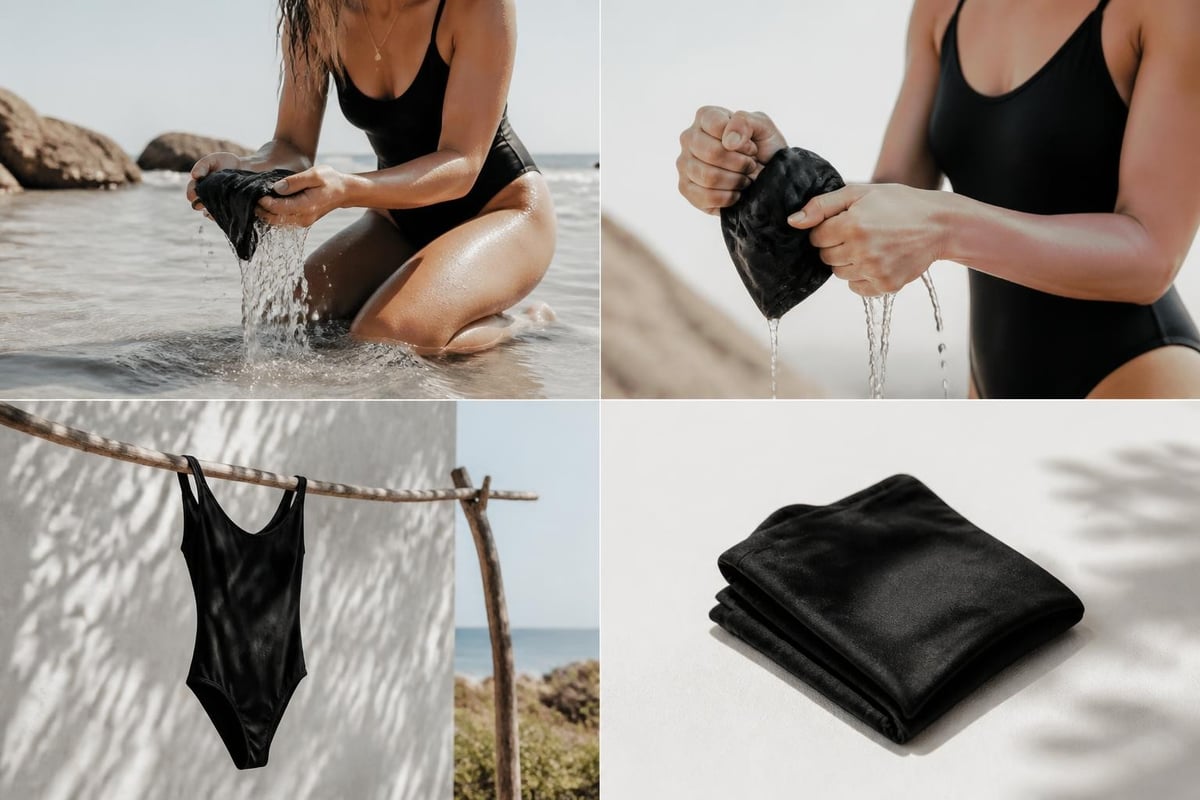
Salt water, chlorine, and sand attack the fibers. Rinse your swim suits for surfing with cold fresh water immediately after every surf. Do not wring them out; instead, gently press the water out.
Step-by-step care:
- Rinse with cold water immediately after surfing
- Do not wring out, just press gently
- Dry flat in the shade (never in the sun!)
- Hand wash from time to time with mild detergent
- Never put in the dryer
Storage between sessions
Store your swimwear dry, lying flat, and protected from direct sunlight. Avoid stuffing it into a bag while wet, as this promotes mold and unpleasant odors.
Sustainability and responsibility when buying
The surf community loves the ocean. That's why the choice of gear should also protect it. Swim suits for surfing made from recycled materials are an important step.
What does "sustainable" really mean?
Sustainability in the swimwear industry covers more than just recycled materials. It also includes fair working conditions, durable products, reduced packaging, and transparent supply chains.
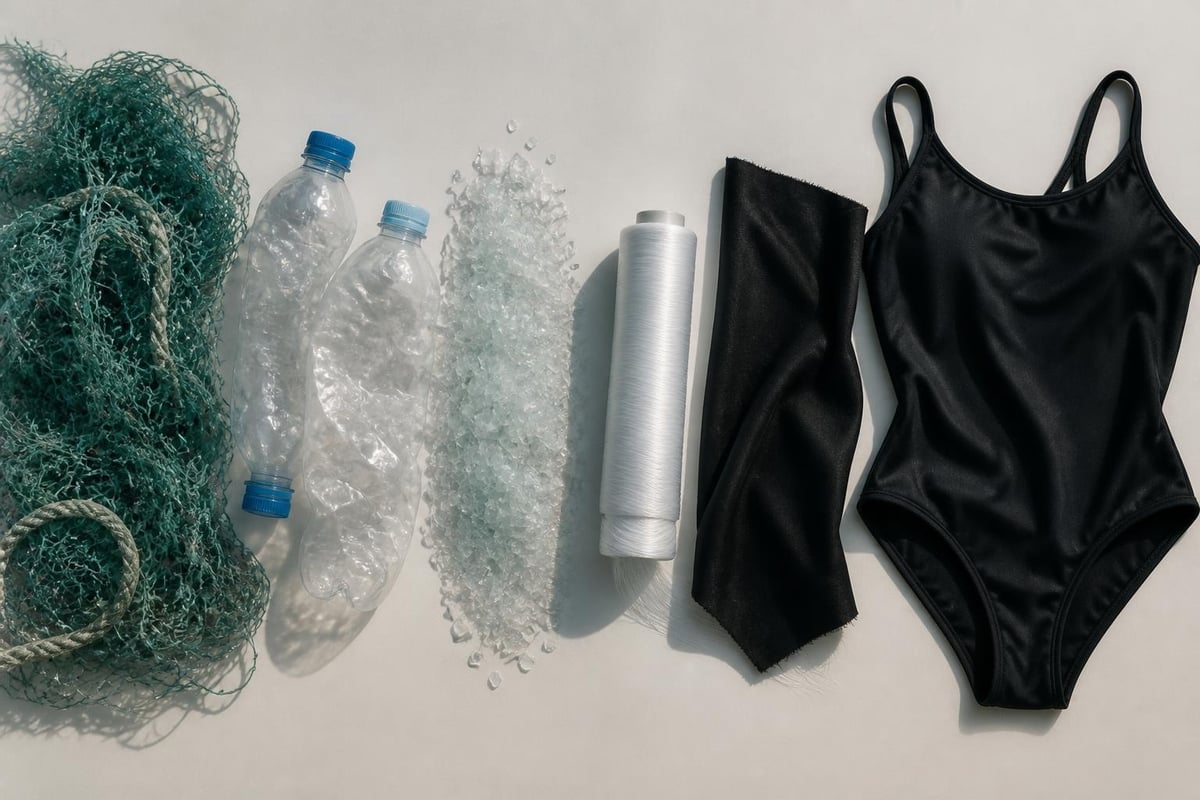
MAIN Design uses recycled fishing nets and PET bottles as raw materials and supports Healthy Seas in cleaning up the oceans. A portion of every sale goes directly toward the recovery of ghost nets.
Circular economy and end-of-life
A study on wetsuit sustainability shows that a circular economy is also possible for surf swimwear. Recycling programs, repair services, and upcycling old swimwear significantly reduce waste.
Buy less, but better. A high-quality, long-lasting bikini is more sustainable than three cheap ones that break after one season.
Comparing materials
The Springer analysis on textile sustainability compares different fibers and their environmental impacts. Recycled polyester and nylon perform significantly better than conventional virgin materials; organic cotton is less suitable for swimwear due to a lack of elasticity.
Styling tips: From the water to everyday life
Swim suits for surfing don't just have to be functional. With the right cuts and combinations, you can wear them outside the water as well.
Layering for the beach-to-street look
A sporty bikini top under an open linen shirt, paired with shorts and sandals. Your relaxed surf look is ready. Many surf tops also function as sports bras for yoga or light training.
Combination ideas:
- Surf bikini + kimono + shorts for the way to the pool
- Rashguard + jeans + sneakers for an urban look
- Swimsuit + loose trousers + sandals for beach bar evenings
Choosing colors and patterns consciously
Dark, rich colors offer better UV protection than light tones. At the same time, they often look more elegant and are more versatile to combine. Patterns can add variety, but timeless designs remain in the wardrobe longer.
Under best surf swimwear you will find inspiration on how to combine function and style.
Common mistakes when buying surf swimwear
Even experienced surfers sometimes make mistakes when buying. These pitfalls can be easily avoided.
Too much emphasis on looks, too little on function
A bikini may look stunning in a photo, but if it slips during the first duck dive, the purchase was in vain. Function always comes before appearance, especially with swim suits for surfing.
Choosing the wrong size
Swimwear should fit snugly, but not dig in. It stretches slightly in the water, so it's better to choose one size smaller than too big. Use the fit guide to find the right size.
Paying too little attention to material
"Polyester is polyester" is not true. The quality of the fibers, the density of the fabric, and the workmanship make a huge difference. Cheap swimwear made from low-quality polyester often lasts only one season.
Ignoring sustainability
If you love the ocean, you should protect it. When buying, look for recycled materials, certifications, and transparent brands. Those few extra francs pay off in the long run, for you and for the environment.
For children: Safety and comfort while surfing
Children need special attention when it comes to surf swimwear. Their skin is more sensitive, they move differently, and they grow quickly.
UV protection is mandatory
Children's skin is particularly susceptible to UV damage. Long-sleeved rashguards with UPF 50+ and swimsuits that cover shoulders and backs are essential. Combined with a sun hat and sunscreen, they offer optimal protection.
Freedom of movement and ease of putting on and taking off
Children want to move freely, climb, jump, and play in the sand. Swimwear must accommodate this without slipping or chafing. At the same time, it should be easy to put on and take off, especially after a surf when the little ones are tired.
| Criterion | Why it's important | What to look for |
|---|---|---|
| UV protection | Sensitive skin | At least UPF 50+ |
| Fit | Safety, comfort | Adjustable straps, elastic waistbands |
| Material | Skin tolerance | OEKO-TEX certified, soft |
| Fasteners | Independence | Simple zippers or ties |
Plan for growth
Children grow fast. Adjustable designs and cuts with a little room to grow extend the usage time. Nevertheless, swimwear should never be too big, as this endangers safety in the water.
Choosing the right swim suits for surfing makes the difference between frustrating sessions and a real flow in the water. Material, fit, UV protection, and sustainability are not extras; they are basics. If you value quality, function, and responsibility, you are in the right place at MAIN Design. Our collections combine thoughtful cuts, recycled materials, and timeless design. Every purchase supports Healthy Seas in protecting the oceans. Discover swimwear that delivers on its promises.