

The right kitesurf bikini bridges two worlds: the ease of summer and the power of the wind. Anyone who has ever stood on a board knows that ordinary swimwear quickly reaches its limits. Between jumps, falls, and glides, you need more than just a pretty bikini top. You need a piece that stays where it belongs, protects you, and still looks good. This guide shows you what really matters – from fit and material to sustainable alternatives that protect the ocean instead of burdening it.
What truly defines a good kitesurf bikini
When kitesurfing, forces act on your body that never occur while swimming casually. The wind pulls at the kite, the water strikes against you, and with every jump, you land with considerable force.
The three most important features:
- Secure hold: Adjustable straps, wide bands, and secure fasteners prevent your bikini from shifting or slipping.
- Freedom of movement: The cut must allow for arm movements, rotations, and quick changes in direction without digging in.
- Durability: Saltwater, UV radiation, and mechanical stress take a toll on the material – quality pays off.
A kitesurf-specific bikini design differs fundamentally from conventional swimwear. The seams are positioned strategically to avoid chafing. The fit is tighter, but not restrictive. And the material should retain its shape even after dozens of sessions.
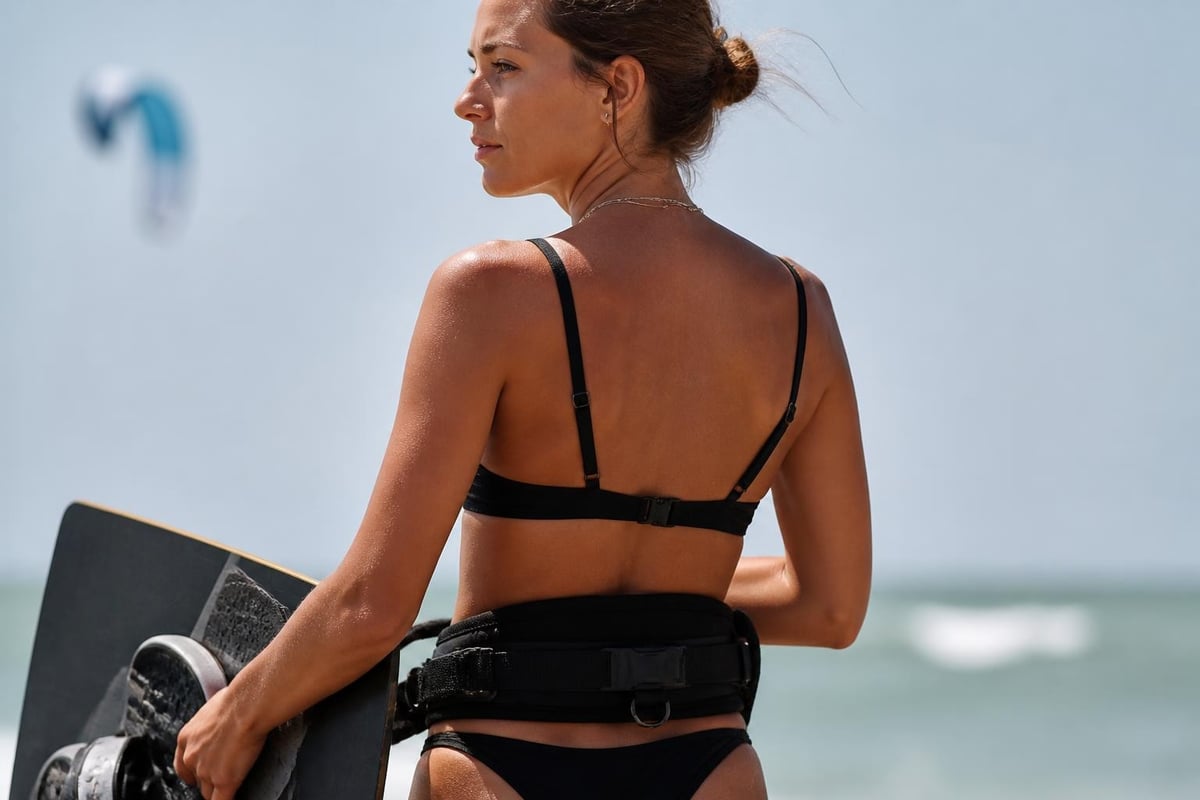
Fit: Why "staying put" is non-negotiable
During your first crash, you will understand why kitesurfers don't wear standard bikinis. The water hits you with force, and a loose top is shifted faster than you can say "wipeout."
Checklist for the perfect fit:
- Straps can be individually adjusted
- Under-bust band sits firmly without pinching
- No loose strings that could get caught in the kite
- Cups or pads stay in place even when wet
- Movement test before buying: reach arms over your head, bend forward, twist to the side
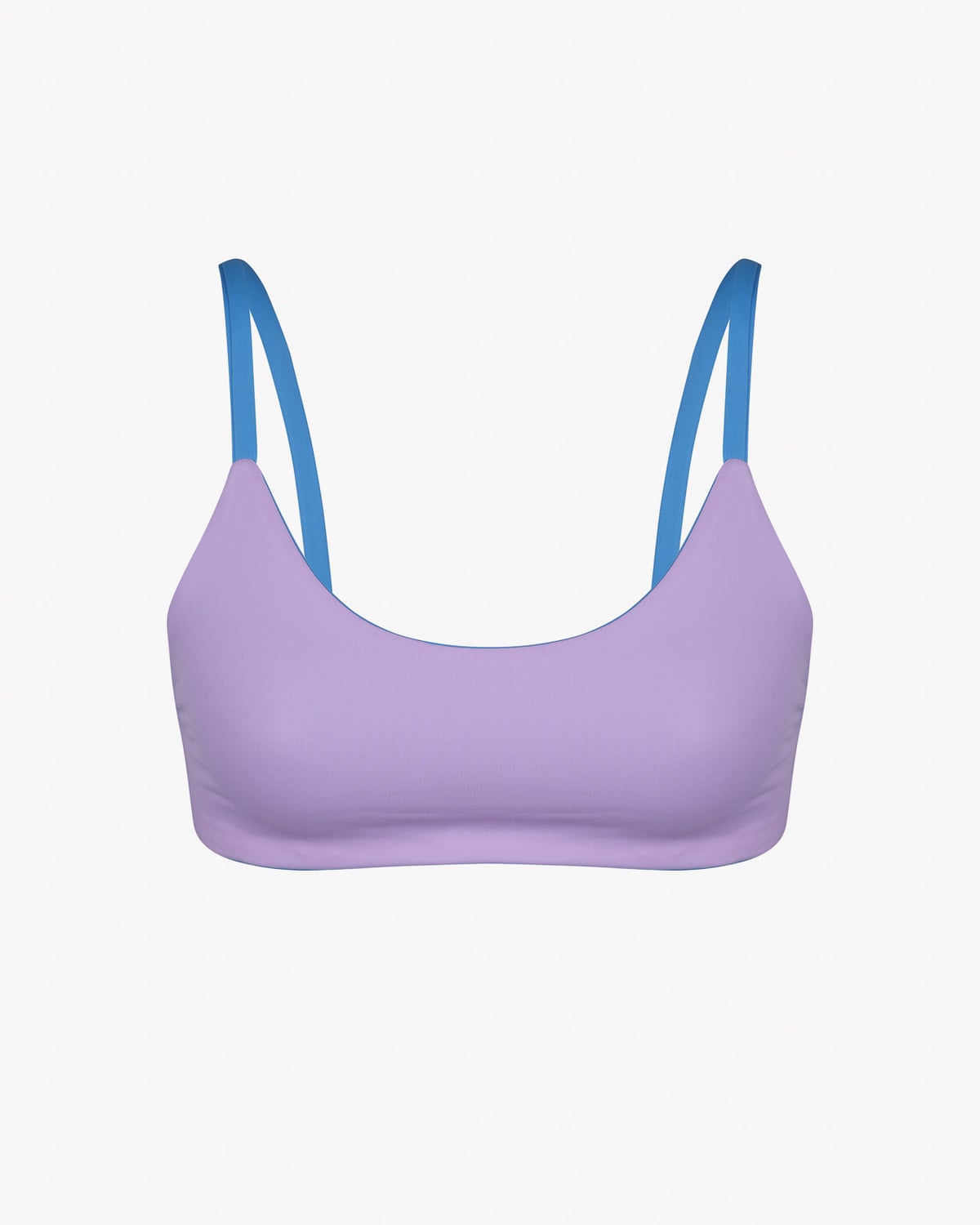
The Sassy Bikini Top, for example, was developed exactly for such requirements. With its sporty design and four refined back straps, it offers incredible comfort and feels like a second skin thanks to seamless construction and soft fabric – perfect for long sessions on the water.
| Closure Type | Hold | Comfort | Kite-Suitability |
|---|---|---|---|
| Tie-back straps | Medium | High | Low (can come undone) |
| Hook closure | High | Medium | Medium |
| Adjustable clips | Very high | High | High |
| Over-the-head design | High | Very high | Very high |
Material and durability: What survives the session
Not every fabric is made for hours of contact with saltwater, sand, and UV radiation. Studies show that seawater and sunlight significantly age knitted swimwear fabrics – mechanical strength and elasticity decrease.
Materials in comparison:
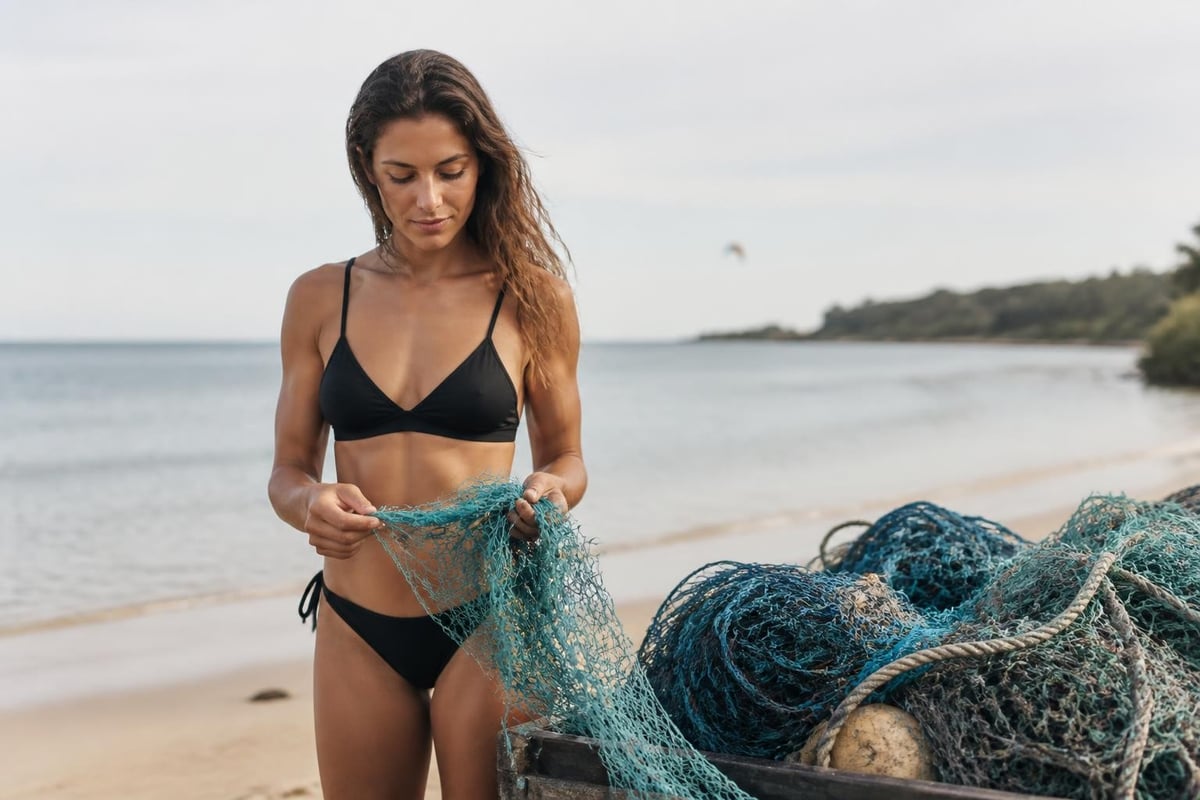
- Recycled Nylon (Econyl): Made from fishing nets and industrial waste, chlorine and saltwater resistant, very elastic
- Recycled Polyester: Quick-drying, retains shape, often treated with UV protection
- Elastane content: Provides stretch and recovery, should be between 15-20%
- Standard Polyamide: Cheap, but more prone to fading and wear
A good kitesurf bikini usually consists of a blend of recycled nylon and elastane. This combination offers the necessary elasticity for freedom of movement while remaining resistant to the elements.
Sustainability: The ocean deserves better material
This is where it gets interesting – and important. Most synthetic fabrics release microplastic fibers with every wash, which end up directly in the oceans. As a kitesurfer, you spend countless hours on the water. It makes sense to choose swimwear that does not harm this ecosystem any further.
Recycled materials are a step in the right direction. The Textile Exchange Materials Benchmark shows that recycled nylon causes up to 80% fewer CO₂ emissions compared to virgin materials and does not consume additional raw materials.
What you can concretely do:
- Wash your kitesurf bikini in a Guppyfriend bag to filter microplastics
- Rinse out saltwater with cold water only, don't wash after every session
- Choose brands that report transparently about their material sources
- Opt for quality over quantity – one durable bikini is more sustainable than three cheap ones
The surf-specific collections at sustainable labels often use certified recycled fibers and support ocean protection projects. This is more than marketing – it is lived responsibility.
UV protection: More than just sunscreen
Spending hours in the blazing sun on the water – your skin needs more than SPF 50. The reflective water surface significantly increases UV exposure.
A classic kitesurf bikini offers minimal body coverage. Therefore, most kitesurfers combine their bikini bottom with a rashguard or Lycra shirt with a UPF rating. Experts recommend clothing with UPF 50+ for intensive outdoor activities on the water.
The right combination for maximum protection
| Body Region | Recommended Protection | Product Type |
|---|---|---|
| Upper body | UPF 50+ long-sleeve rashguard | Lycra shirt |
| Back/shoulders | Additional sunscreen | Waterproof, SPF 50+ |
| Lower body | Kitesurf bikini + boardshorts | High leg cut |
| Face/neck | Sunscreen + cap | Surf cap with chin strap |
The Surf Swimwear category often offers options that cover more body area – long-sleeve bikini tops, high-waisted bottoms, or one-piece suits with a zipper. For particularly sun-intensive spots, these cuts are worth their weight in gold.
Don't forget: even waterproof sunscreen washes off after 60-80 minutes in the water. Reapplying is a must – or you rely on textile protection that stays.
Cuts: From triangle to high-neck
Not every bikini top is equally suitable for kitesurfing. The cut determines hold, comfort, and safety.
Triangle bikini: Classic, adjustable, but often insecure during hard landings. Only recommended with very firm straps and a good fit.
Bandeau with removable straps: Looks good on the beach, but doesn't belong on the water. Too little hold during dynamic movements.
Sport bikini with wide straps: The safest choice. Distributes tension evenly, barely slips, dries quickly.
High-neck or crop-top style: Maximum coverage, very secure hold, ideal for cooler days or intensive sessions. Feels almost like a rashguard.
Wrap design: Wrap-around look with fixation – stylish and functional if the fasteners are well-made.
For the bottom, the following applies: hipster cuts or medium leg cuts are more practical than string bikinis. You want to concentrate on the kite, not your bikini bottom.
Care and durability: How your kitesurf bikini survives hundreds of sessions
Even the best kitesurf bikini doesn't last forever – but with the right care, it lasts significantly longer than expected.
The golden rules of care:
- Directly after the session: Rinse saltwater thoroughly with cold fresh water
- Do not wring: Squeeze out gently, do not wring – this protects the fibers
- Dry in the shade: UV radiation bleaches colors and makes material brittle
- Prefer hand wash: If using a washing machine, use cold water and a laundry bag
- No fabric softeners: They attack elastane and reduce elasticity
- Store dry: Damp swimwear gets moldy – let it dry completely
A frequently overlooked danger: hot surfaces. Never lay your kitesurf bikini on hot stones, boat decks, or black bags in the sun. The heat can permanently damage fibers.
Research findings confirm that UV exposure and saltwater shorten the lifespan of swimwear materials. But those who follow these care routines extend the useful life by years.
Safety on the water: When the kitesurf bikini becomes a risk factor
Kitesurfing carries injury risks – that's no secret. Epidemiological studies show typical injury patterns and risk factors. Clothing also plays a role here.
Loose strings can get caught in the kite, lines, or the bar. A panic moment that can become dangerous. Therefore: All strings should be snug or knotted.
Lack of coverage can lead to abrasions during falls – especially on the back, stomach, and thighs. An additional rashguard or neoprene shorty protects not only from UV but also from grazes.
Reflective elements can increase visibility at dusk or near motorboats. Some brands integrate subtle reflectors into their sport bikinis.
When a wetsuit is the better choice
At water temperatures below 20°C or wind chill factor, a kitesurf bikini alone becomes impractical. Then a neoprene shorty, longjohn, or fullsuit make more sense. Many kitesurfers wear the bikini under the wetsuit – for quick breaks on the beach or when the sun comes out.
Style meets function: Colors, patterns, and personal expression
Just because your kitesurf bikini must be functional doesn't mean it has to look boring. On the contrary – the best designs combine both.
Light vs. dark colors: Light tones reflect sunlight and heat up less. Dark colors fade faster but hide sand and water stains better.
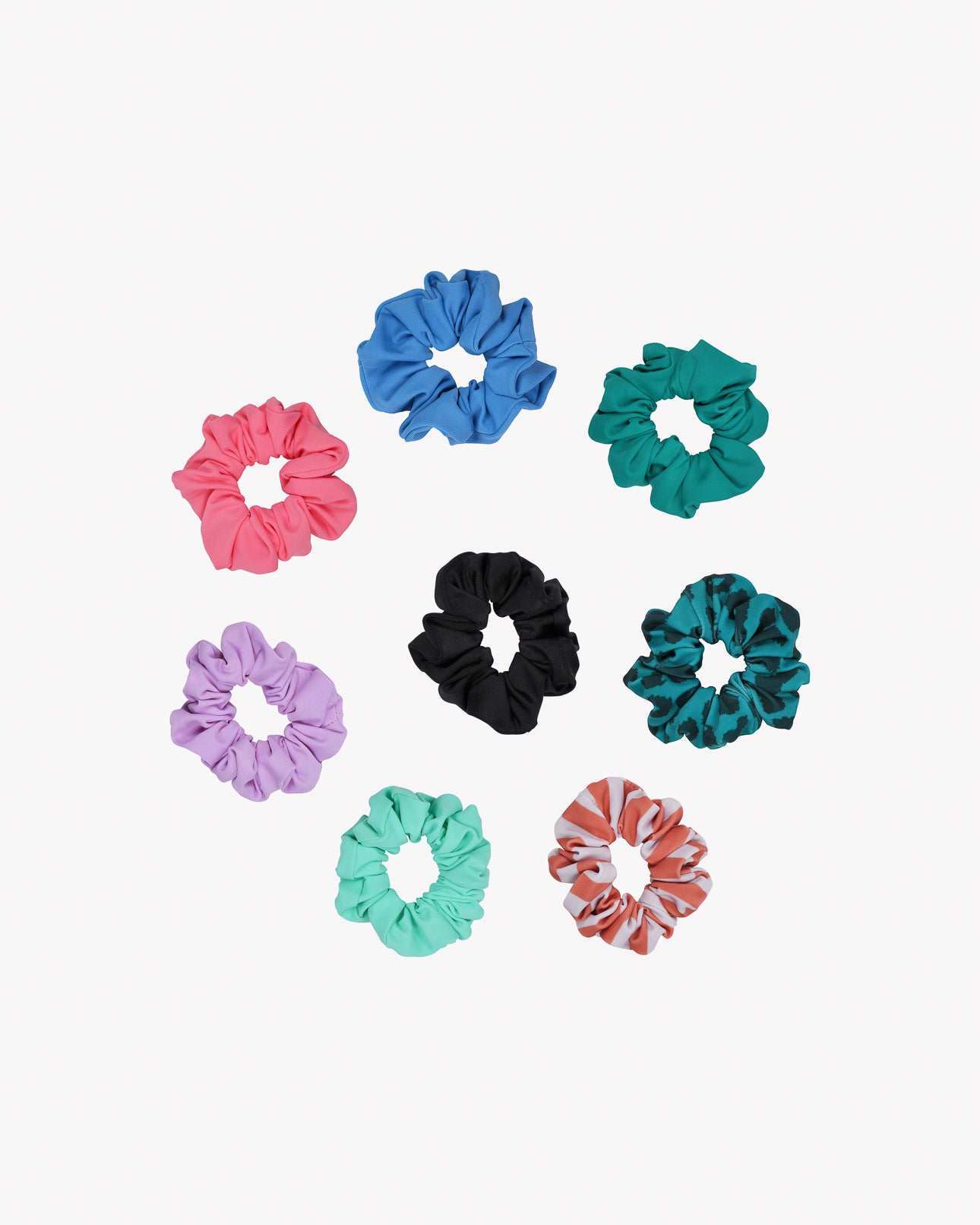
Patterns and prints: Digital printing on recycled material allows for vibrant designs without loss of quality. From minimalist solid tones to playful tropical prints – anything goes.
Reversible designs: Some kitesurf bikinis are reversible – two looks in one piece. Practical for longer trips or if you like variety.
Minimalism or statement: Timeless cuts in earth tones always fit. Bright neon colors or geometric patterns make a statement – and make you more visible on the water.
The bikini tops and bikini bottoms from sustainable labels show that environmental awareness and aesthetic demands do not contradict each other. Reduced design, high-quality materials, and thoughtful details result in timeless pieces that function season after season.
The kitesurf bikini packing list: What belongs in the bag
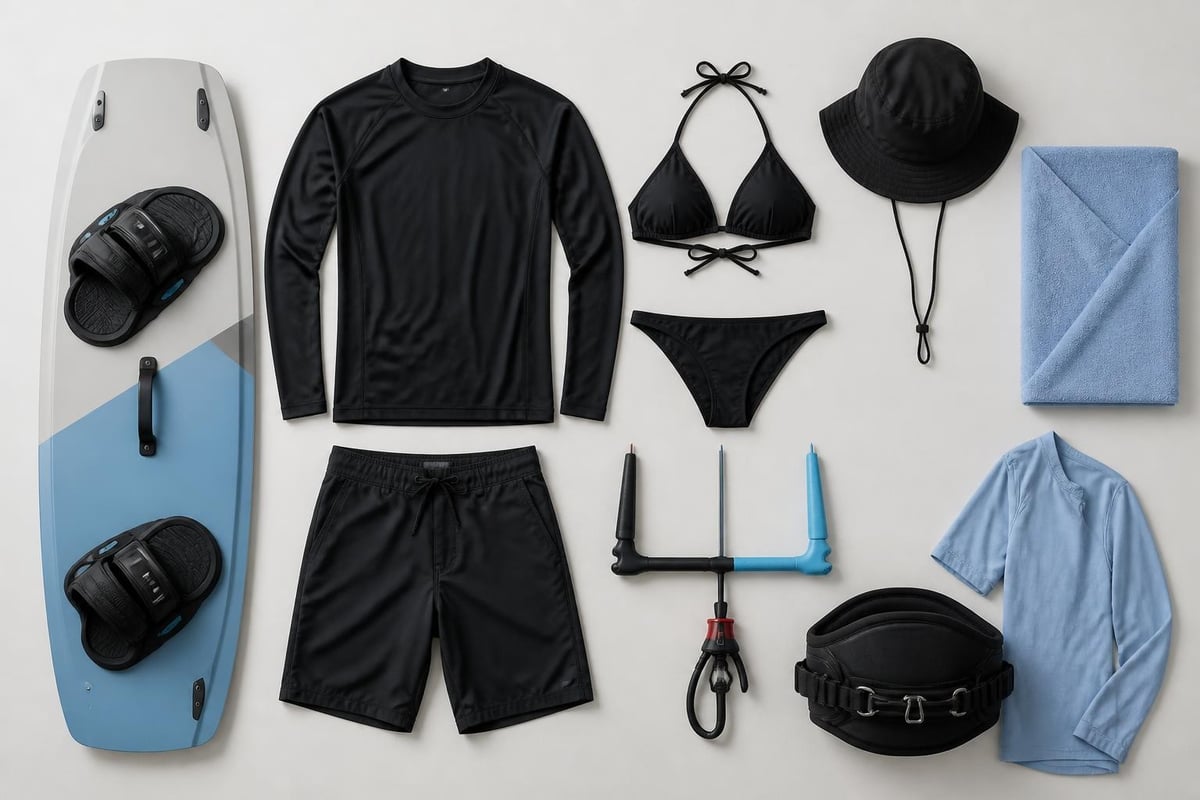
For a perfect kitesurf day, you need more than just your bikini. A thoughtful packing list makes the difference between flow and frustration.
Must-haves:
- Kitesurf bikini (ideally two sets to change)
- Long-sleeve rashguard with UPF 50+
- Boardshorts or bikini bottom with secure waistband
- Neoprene shorty (depending on water temperature)
- Waterproof sunscreen SPF 50+
- Change of bikini for after the session
- Large microfiber towel
- Surf poncho or kimono for changing
- Sun protection for head (cap with chin strap)
- Reef-safe sunscreen (protects coral reefs)
Nice-to-haves:
- Additional bikini bottom (in case one gets lost)
- Repair kit for small tears
- Guppyfriend laundry bag
- Waterproof bag for phone and keys
- After-sun lotion
The accessories collection often offers practical additions – from waterproof bags to stylish ponchos for changing at the beach.
When kids come along: Kitesurf bikini for young water sports enthusiasts
Small kitesurfers need special attention. Children's skin is more sensitive, and concentration fades faster – comfort is crucial.
What matters for kids' kitesurf bikinis:
- Even more secure hold: Kids move more impulsively, the bikini must fit perfectly
- Higher UV protection: Full coverage with UPF 50+ rashguards is recommended
- Bright colors: Kids are harder to see on the water – bright colors help
- Quick options to put on and take off: Zippers or snaps instead of complicated strings
- Skin-friendly materials: Certified fabrics without harmful substances
The children's swimwear collection shows that sustainable swimwear is also available for the little ones – with the same quality standards as for adults. And best of all: many designs match the adult collection in color, which perfectly implements the mini-me concept.
Buying advice: What you should really look out for
You are standing in front of the shelf (or scrolling through the shop) and wondering: which one is the right kitesurf bikini for me?
The most important questions before buying:
- How often will I use it? Frequent sessions justify a higher price for quality
- What conditions await me? Cold water, strong sun, rough spots?
- Do I need padding? Some prefer padded cups, others do not
- How important is sustainability to me? Recycled materials often cost more
- Do I combine it with a rashguard? Then minimal upper body coverage is sufficient
Evaluate price-performance ratio:
| Price segment | Typical characteristics | Suitable for whom |
|---|---|---|
| 20-40 € | Standard material, basic cut | Occasional users, beginners |
| €40-70 | Recycled fabrics, better workmanship | Regular sessions, conscious buyers |
| €70-120 | Premium material, thoughtful design | Intensive use, professionals, focus on sustainability |
With sustainable labels, you aren't just investing in a product, but in a philosophy. A portion of the proceeds often goes to ocean conservation projects, such as the recovery of ghost nets by Healthy Seas. That makes every euro more valuable.
Mix & Match: Putting together the perfect kitesurf look
A major advantage of separate bikini pieces: You can combine the top and bottom individually.
Combination options:
- Sports top + high-waist bottoms: Maximum coverage, retro vibe
- Triangle bikini + boardshorts: Casual, beachy, functional
- Crop top + classic bottoms: Modern, versatile
- One-piece under a rashguard: Alternative to a bikini, full protection
The bikini tops can often be combined with various bikini bottoms – creating a versatile kitesurfing wardrobe from just a few pieces.
Color combinations that work:
- Tone-on-tone for a clean look
- Contrasting colors for a statement
- Neutral bottom + patterned top (or vice versa)
- Completely solid in a bold color – timeless and eye-catching
Beyond the beach: From kitesurf bikini to lifestyle piece
The perfect kitesurf bikini is more than just sports equipment. It accompanies you from the water to the beach café, to your yoga session on the beach, to your van-life adventure.
Versatile use:
- As a sports bra for beach volleyball or jogging
- Under sheer kimonos or ponchos as a beach outfit
- For SUP, swimming, snorkeling
- As underwear at surf camp (quick-drying!)
The kimonos and cover-ups perfectly complement your kitesurf bikini – for the way from the spot to the café or for relaxing hours on the beach. Natural materials like cotton or linen feel comfortable on salty skin and dry quickly.
Investment piece instead of fast fashion:
A well-maintained, high-quality kitesurf bikini lasts for several seasons. This makes it more sustainable and ultimately cheaper than cheap alternatives that fade or lose their shape after just a few sessions.
Whether you are just starting out with kitesurfing or have been on the board for years – the right kitesurf bikini makes every day on the water better. Support, comfort, UV protection, and sustainable materials are not luxury features, but basic requirements. If you keep these criteria in mind, you will find a piece that not only functions well but also suits you. At MAIN Design, exactly these values are combined: stylish, durable swimwear made from recycled materials that protects the ocean instead of polluting it – so you can feel good while doing good.