

There are moments when simple is right. After swimming in the sea. After a shower. When you wrap yourself in something soft that feels good. Organic cotton towels bring exactly this quality to the bathroom – and beyond. They are more than just textiles. They represent a conscious choice that benefits your skin, people, and the earth.
Why organic cotton towels are different
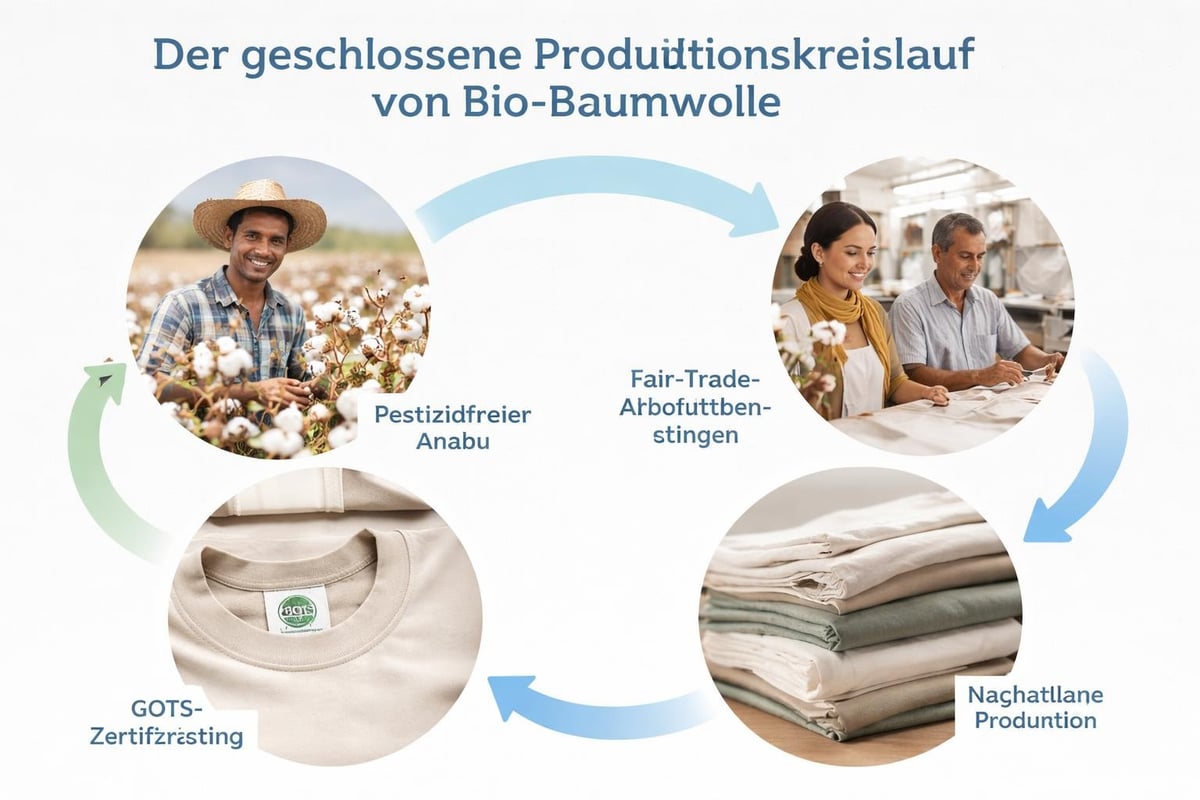
The difference begins in the field. Organic cotton grows without synthetic pesticides or genetic engineering. The water remains clean, the soil alive. Farmers work under fair conditions.
Conventional cotton is one of the most pesticide-intensive raw materials worldwide. This not only harms the environment but also the people who cultivate it. GOTS-certified towels made from 100% organic cotton guarantee that strict ecological and social standards are maintained from cultivation to processing.
The benefits at a glance
- Skin-friendly: No chemical residues, ideal for sensitive skin
- Breathable: Natural fibers regulate moisture better
- Durable: Quality that lasts – with proper care
- Environmentally friendly: Less water consumption, no pollutants in groundwater
- Fairly produced: Better working conditions throughout the supply chain
What makes a good organic towel
Not every towel with "organic" in its name is the same. Quality is reflected in the details. In the density of the fabric. In the feel. In the way it dries.
Material composition: Look for 100% organic cotton. Blended fabrics can be cheaper but often lose their natural properties. Terry towels made from organic cotton with linen stripes combine absorbency with durability.
Weight and density: A good towel weighs between 400 and 600 g/m². Too light means thin, too heavy dries slowly. Balance is key.
| Feature | Low Weight (300-400 g/m²) | Medium Weight (400-600 g/m²) | High Weight (600+ g/m²) |
|---|---|---|---|
| Absorbency | Good | Very Good | Excellent |
| Drying Time | Fast | Medium | Slow |
| Fluffiness | Low | Medium | High |
| Ideal for | Travel, Sports | Everyday, Beach | Luxury, Spa |
Certifications that matter
GOTS (Global Organic Textile Standard) is the gold standard. It covers the entire production chain. From harvest to the finished towel. Fairtrade labels complement the social commitment.
Other labels like OEKO-TEX Standard 100 check for harmful substances, but say nothing about organic farming. The difference is important. Organic cotton towels from various manufacturers show how diverse certified quality can be.
Organic cotton towels in everyday life
The best textiles prove themselves daily. When drying off after showering. When packing for a beach day. When children use them.
The absorbency of organic cotton is remarkable. The untreated fibers immediately absorb moisture. Synthetic fabrics or chemically treated towels cannot compete. You feel it instantly.
For families with children, sustainable textiles are particularly valuable. Children's skin is sensitive. At MAIN Design, we take this idea further – from swimwear to accessories that accompany a day by the water.
Care that pays off
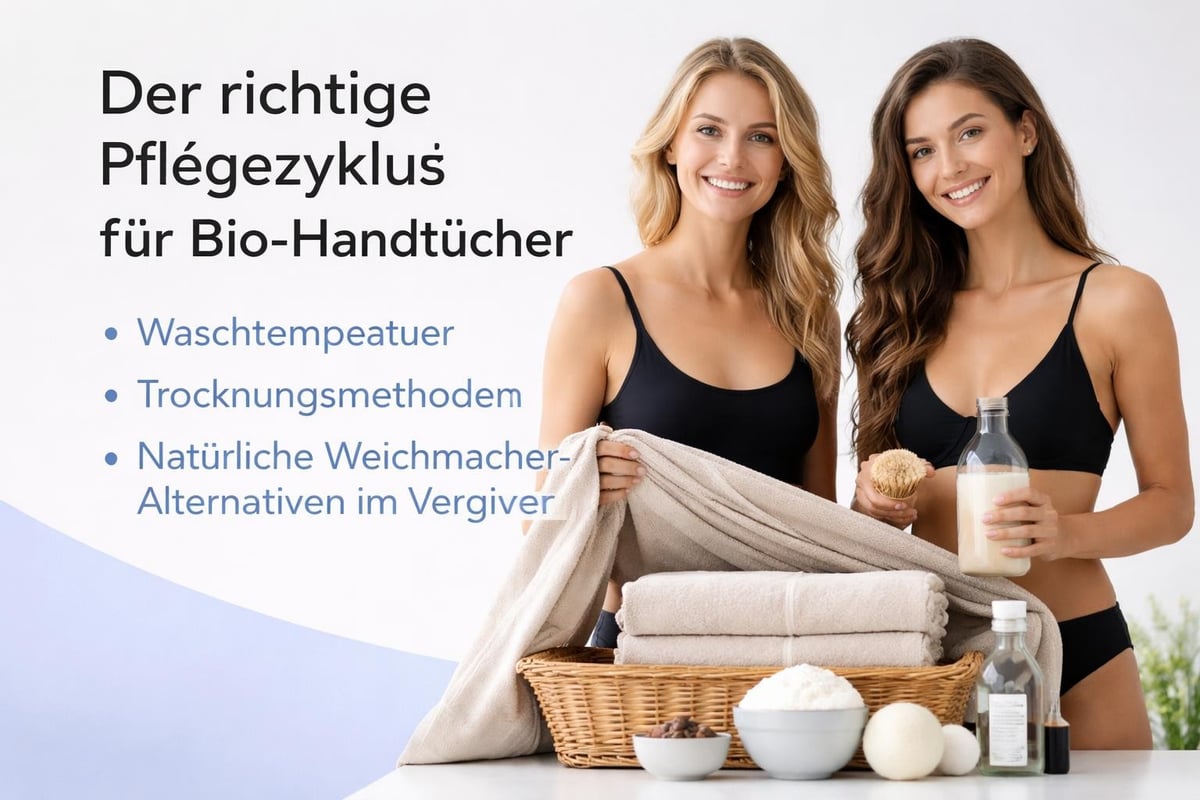
- Wash before first use: At 40-60°C without fabric softener
- Wash regularly: Every 3-5 uses, depending on usage
- Prefer air drying: Protects fibers and saves energy
- Avoid fabric softener: It clogs fibers, reduces absorbency
- Retreat if necessary: A splash of vinegar in the rinse cycle makes them soft again
Fabric softener is the biggest enemy of terry towels. It forms a film over the fibers. This feels good at first but makes the towel less and less absorbent.
The right size for every purpose
Towels come in all sizes. The choice depends on where and how you use them.
Guest towel (30x50 cm): Perfect for face and hands. Practical for on the go. Organic terry towels in this size fit in any bag.
Hand towel (50x100 cm): The classic for the bathroom. Versatile.
Shower towel (70x140 cm): Large enough to wrap yourself completely. Ideal after swimming.
Bath towel (100x150 cm or larger): For the beach or sauna. Plenty of space to stretch out.
At MAIN Design, we know how important the right companions are for a day by the water. Our sustainable accessories complement the experience – from recycled swimwear to thoughtful details that connect beach and everyday life.
Colors and Design: Naturally Beautiful
Organic towels don't have to be beige. The color palette has become diverse. From delicate pastels to vibrant natural colors.
The type of dyeing is important. GOTS-certified textiles use non-toxic dyes. No heavy metals, no harmful chemicals. The result is colors that last and don't wash out.
Popular styles for 2026
- Minimalist: Solid in natural white, sand, grey
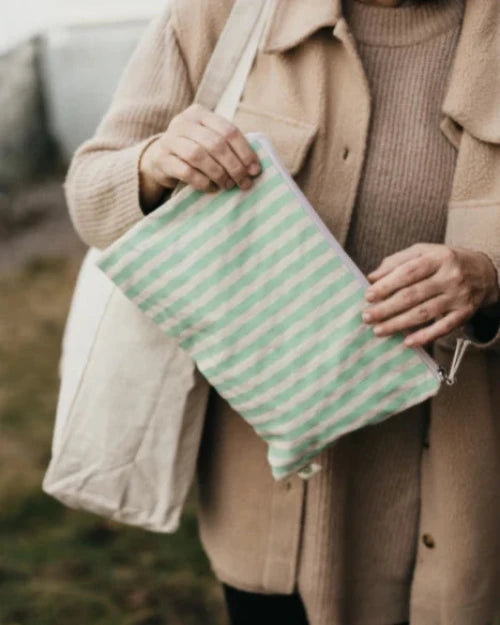
- Striped: Classic linen stripes or modern color blocks
- Earth tones: Terracotta, ochre, olive green
- Pastel colors: Delicate pink, light blue, mint
Aesthetics follow function. A good organic towel not only looks beautiful – it feels beautiful too.
Sustainability beyond the material
Organic cotton is the beginning, not the end. Real impact happens when the whole picture is right.
Transport routes: Where is it produced? Short distances reduce CO2. European production often has better standards than imports from overseas.
Packaging: Plastic-free packaged towels show that the manufacturer is serious. Paper, cardboard, or no packaging are better choices.
Longevity over trend: A towel that lasts five years is more sustainable than three cheap ones that need replacing after a year. High-quality organic towels are an investment that pays off.
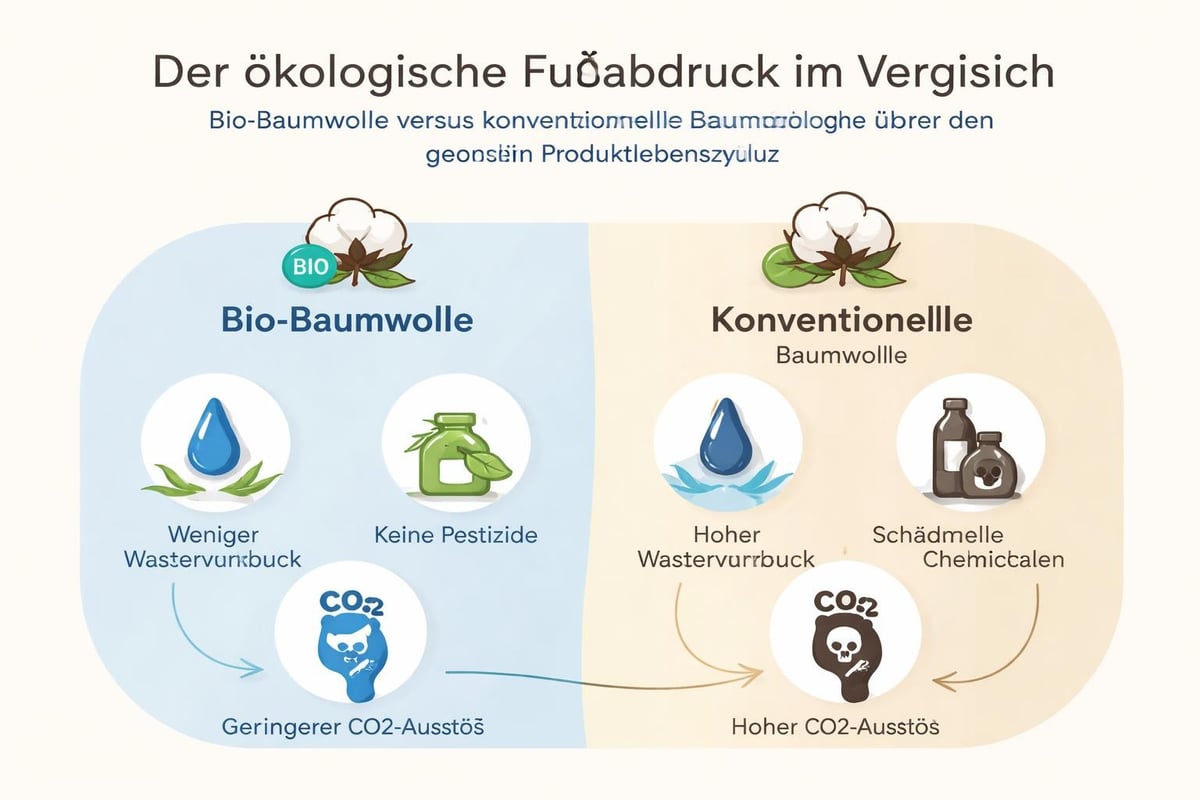
| Criterion | Conventional | Organic Cotton |
|---|---|---|
| Water consumption | High (up to 20,000 L/kg) | Medium (significantly reduced) |
| Pesticide use | Intensive | No synthetic pesticides |
| Soil health | Degraded | Improved |
| Working conditions | Often problematic | Fair Trade Standards |
| CO2 footprint | Higher | Lower due to natural processes |
Towels for the beach: Special requirements
Different rules apply at the beach. Sand, saltwater, sun. Your towel has to withstand more.
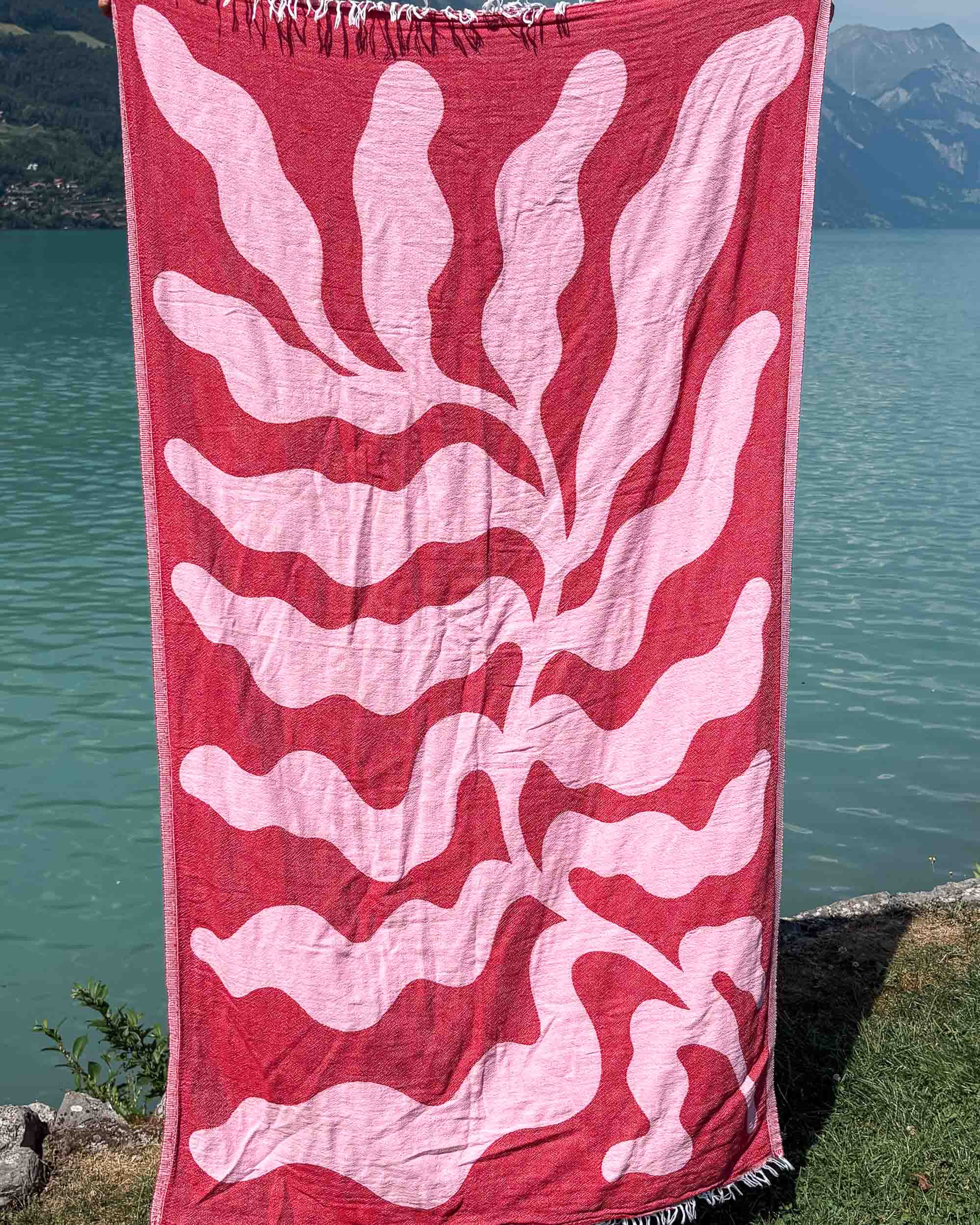
Nevertheless, you can rely on organic quality. Many manufacturers offer specially woven beach towels made from organic cotton. They are lighter than normal terry towels, dry faster, and pick up less sand.
Tip: Waffle-weave or Pestemal style are ideal for the beach. The loose structure easily shakes off sand, dries quickly, and looks stylish.
At MAIN Design, everything revolves around summer. About days by the water that stay in memory. Our swimwear made from recycled materials perfectly matches a conscious lifestyle that doesn't stop at towels.
Organic cotton towels for children
Children's skin is particularly sensitive. What adults tolerate can cause irritation in children.
Organic towels are the safe choice here. Harmful substance-free organic towels in various sizes offer exactly the softness young skin needs.
Children love to snuggle after bathing. A soft, fluffy towel makes this moment special. If it's also free of chemicals and fairly produced, it's perfect.
Special features of children's towels
- Softness: Extra gentle fibers for delicate skin
- Size: Not too large, so children can handle them themselves
- Colors: Cheerful, but with non-toxic dyes
- Durability: Withstands frequent washing
Where to find organic cotton towels
The market is growing. More and more manufacturers are focusing on genuine organic quality. This makes the selection easier – and sometimes more complicated.
Look for transparent information. Good retailers explain where the cotton comes from, where it is produced, and what certifications are available. Fairtrade organic cotton towels show that social responsibility is just as important as environmental protection.
Online shops often offer the largest selection. Local organic stores or sustainable concept stores offer towels to touch. Both have their value.
The price: An investment that pays off
Organic cotton towels cost more than conventional ones. That's no secret. The question is: Is it worth it?
A good organic towel costs between 15 and 40 Euros, depending on the size. That's two to three times as much as a cheap standard towel. But it also lasts twice as long. And it feels better. Every day.
Long-term comparison:
- 3 cheap towels at 10€ each = 30€ (Durability: 1-2 years each)
- 1 organic towel at 25€ = 25€ (Durability: 5+ years)
Plus: You invest in clean water, healthy soils, and fair wages. That has no price, but it has value.
The connection to a sustainable lifestyle
Towels don't stand alone. They are part of a larger picture. If you choose organic for textiles, this often extends further. To clothing. To swimwear. To everything that touches your skin.
At MAIN Design, we live exactly this philosophy. Every product is created from the desire to combine beauty with goodness. Our sustainable collection shows that style and responsibility belong together. From recycled swimwear to kimonos to the small details that make your day better.
A portion of our sales goes to Healthy Seas – for clean oceans, free waters, a future that works. Because every decision counts. Even the one for a towel.
Care hacks for maximum lifespan
You've invested in quality. Now it's about maintaining it.
Vinegar instead of fabric softener: 50-100 ml white vinegar in the fabric softener compartment. Softens fibers without clumping them. Neutralizes odors.
Don't overdry: In the dryer, only on low heat. Better: Air dry. Fibers remain more elastic.
Wash separately: Wash new towels separately for the first few times. They can bleed color.
Store properly: Dry and airy. Do not fold wet towels – risk of mold.
Freshen up: If towels become stiff after a while, a hot wash at 95°C can help. But only occasionally, as it stresses the fibers.
Why organic cotton protects the oceans
The connection is not immediately visible, but it is real. Conventional cotton farming uses pesticides and fertilizers. They enter the groundwater. From there into rivers. And finally into the sea.
Microplastics are a problem – but chemical pollution is too. The difference between organic towels and conventional ones begins long before the purchase. It begins in the field, which remains clean.
Every decision for organic reduces the burden on ecosystems. For corals suffering from chemicals. For fish swimming in polluted water. For beaches we love.
This is the cycle. From the cotton plant to the towel. From the towel to the lifestyle. From the lifestyle to the world we leave behind.
Gifting organic cotton towels
A towel as a gift? Absolutely. If it's the right one.
High-quality organic towels are a gift that lasts. For housewarmings, weddings, birthdays. For people who value quality.
Tip: Combine a set of guest towel, hand towel, and shower towel in coordinated colors. Presented in plastic-free packaging with a card that tells the story – where the cotton comes from, who processed it.
Organic cotton towels are more than a bathroom essential. They stand for an attitude: conscious, clear, connected to what truly matters. Quality that lasts. If you're looking for more ways to bring sustainability into your everyday life, discover the world of MAIN Design – where every piece is created with respect for people and the ocean, becoming part of your endless summer feeling.