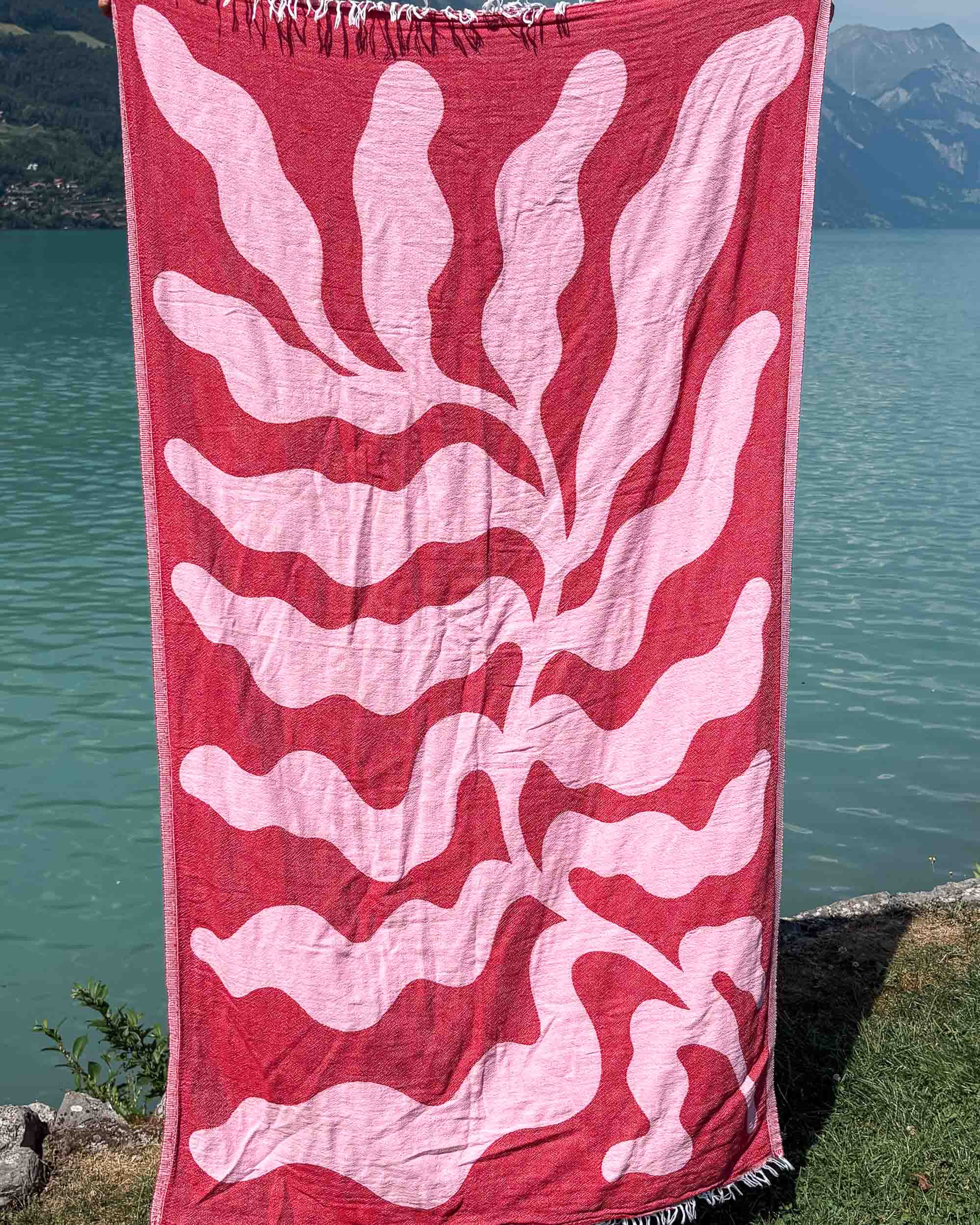


A quick-drying towel is now standard for anyone who travels a lot, plays sports, or simply wants less laundry at home. The days when heavy terrycloth towels hung damp on the line for days are over. Modern materials and thoughtful designs make it possible for towels to dry completely within a few hours – sometimes even faster. Whether at the beach, in the lido, during yoga, or when traveling: a quick-drying towel saves space, stays fresh, and is simply more practical.
Why a quick-drying towel makes sense
The decision for a quick-drying towel is not a matter of fashion, but a practical consideration. Traditional cotton towels store moisture in their thick fibers – which makes them soft and fluffy, but also heavy and slow to dry.
Quick-drying towels score with several advantages:
- Reduced weight when packing for the beach, lido, or travel
- Less odor formation due to shorter drying time
- Space-saving, as they can be stored compactly
- More hygienic, as bacteria have less time to multiply
- Lower energy consumption for washing and drying
Anyone who spends a lot of time outdoors knows the problem: the towel gets wet, goes into the bag, and stays there musty. With a quick-drying model, that's a thing of the past.
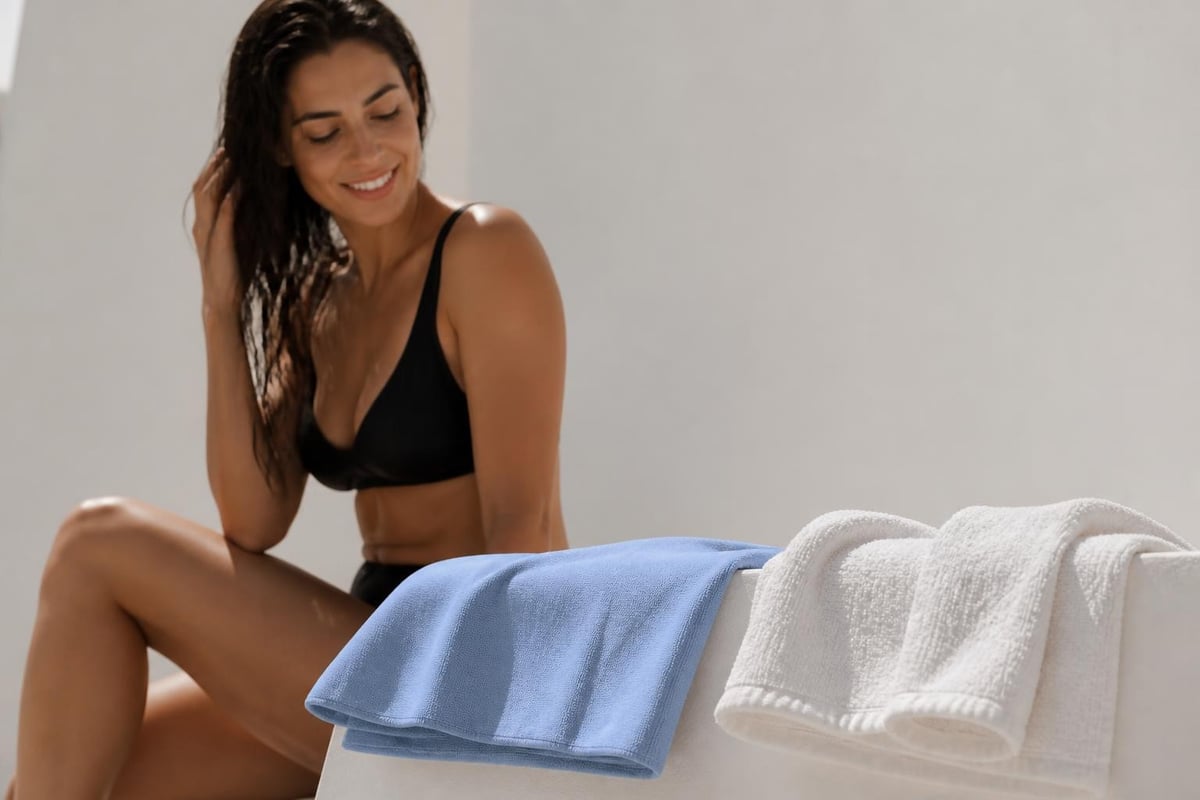
Materials that make the difference
Not every material is equally suitable for a quick-drying towel. The choice of fibers largely determines how quickly water is released and how the towel feels on the skin.
| Material | Drying time | Weight | Feel | Sustainability |
|---|---|---|---|---|
| Microfiber (polyester/polyamide) | Very fast (1-2h) | Very light | Smooth, cool | Medium (recyclable) |
| Cotton (thinly woven) | Medium (4-6h) | Medium | Soft, natural | High (biodegradable) |
| Bamboo fiber | Medium-fast (3-4h) | Light | Silky, soft | High (renewable) |
| Linen | Fast (2-3h) | Light-medium | Textured, cooling | Very high (durable) |
Microfiber is the classic among quick-drying towels. The synthetic fibers hardly absorb any water but distribute it in wafer-thin layers over a large surface. The result: extremely short drying times.
For those who prefer natural materials, thinly woven cotton or linen offer a sustainable alternative. These fabrics do not dry as quickly as microfiber but are significantly faster than classic terry cloth and feel more comfortable on the skin.
Areas of application for quick-drying towels
A quick-drying towel is versatile. It adapts to various life situations and makes sense wherever weight, space, or hygiene play a role.
At the beach and in the lido
Here the biggest advantage is shown: After swimming, the towel dries quickly enough to be reused for the next dip in the water. Sand particles adhere less to the smooth surface of microfiber, and the compact pack size leaves room for other beach essentials.
Especially for families with children, a quick-drying towel is worth its weight in gold. Children constantly jump between the water and the sunbathing area – with quick-drying towels, everything stays pleasantly dry. The children's swimwear should be as practical as the towel: high-quality, quick-drying, and durable.
For sports and yoga
Whether in the gym, jogging, or on the yoga mat: sweat needs to be absorbed quickly, and the towel should be ready for use just as quickly. Many athletes swear by microfiber towels because they dry quickly after training and take up little space in the sports bag.
When traveling and backpacking
Every gram counts when carrying a backpack for weeks. A quick-drying towel often weighs only a fraction of a normal towel and can be used again in the hostel, at the beach, or during wild camping within a very short time.
- Pack size comparable to a T-shirt
- Perfect for multi-day hikes without washing facilities
- Dries while traveling on the bus or train
- Can be used in many ways: as a picnic blanket, scarf, or headrest
Care and longevity
For a quick-drying towel to retain its properties, it needs proper care. Especially with microfiber, there are a few points to consider that significantly extend its lifespan.
Washing without fabric softener
Fabric softener is the biggest enemy of quick-drying towels. It forms a film over the fibers and dramatically reduces their absorbency. The drying properties also suffer.
Wash correctly – here's how:
- Wash towel at 30-40 degrees in the machine
- Use mild detergent, no additives
- Avoid high spin speed (max. 800 rpm)
- Prefer air drying, dryer only at low temperature
- Do not iron – heat damages synthetic fibers
Those who have chosen natural materials like linen or cotton can proceed a little more relaxed. These fibers can tolerate higher temperatures and occasional tumble drying.
Avoiding odors
Especially with synthetic fibers, an unpleasant odor can develop over time, even if the towel is clean. This is due to bacteria that settle in the fibers.
How to keep your quick-drying towel fresh:
- Let it dry completely after use, do not pack it wet
- Wash regularly at 60 degrees (if the material allows)
- Occasionally rinse with vinegar in the washing machine
- Dry in the fresh air, UV light has an antibacterial effect
- For persistent odors: soak in baking soda water
The accessories from MAIN Design follow the same principle: high-quality materials that, with proper care, last a long time and retain their function.
Sustainability in quick-drying towels
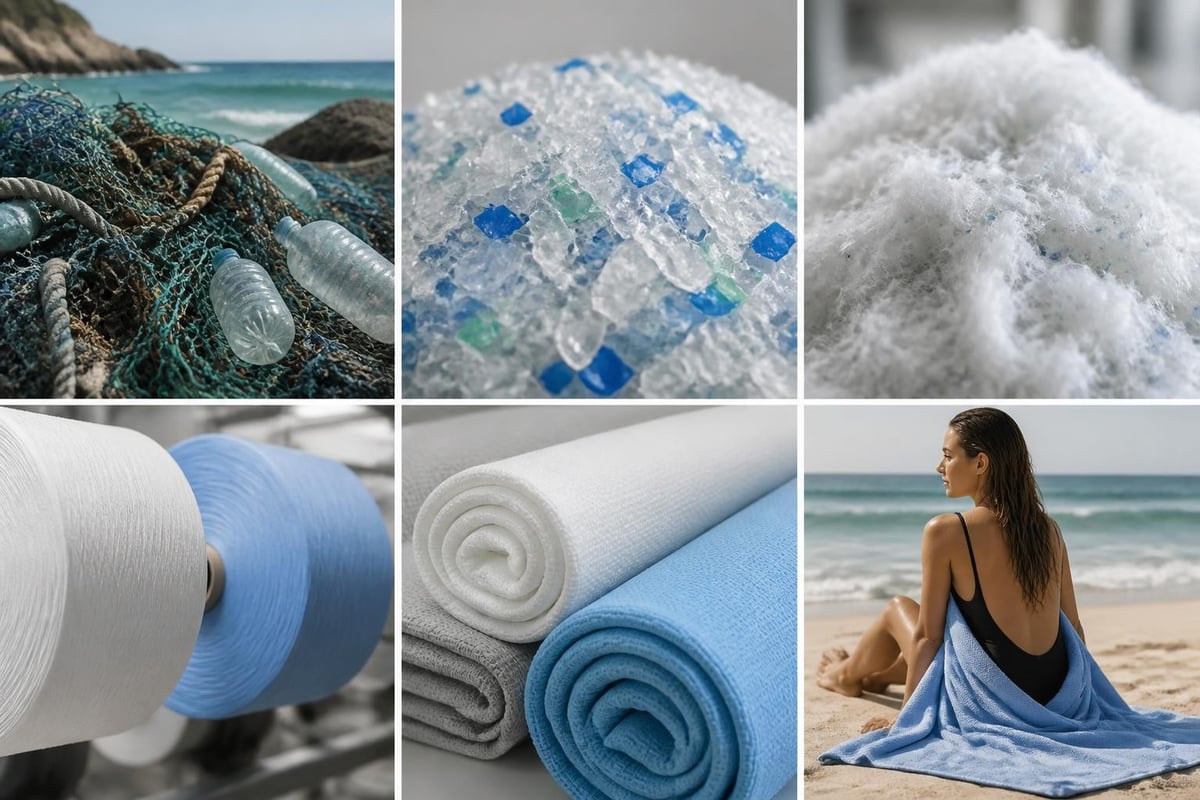
A quick-drying towel can definitely be sustainable – it depends on the choice of material and durability. Microfiber made from recycled polyester, for example, conserves resources and gives plastic bottles a second life.
Recycled materials as a solution
Many manufacturers now rely on recycled fibers. High-quality microfiber towels are made from PET bottles or old fishing nets, which function just as well as new goods – but without additional raw material consumption.
Advantages of recycled microfiber:
- Reduces plastic waste in oceans and landfills
- Same performance as conventional microfiber
- Lower CO₂ footprint in manufacturing
- Supports circular economy instead of throwaway culture
At MAIN Design, this approach is consistently pursued. All products – from surf swimwear to accessories – are made from recycled or responsibly produced materials. A portion of the proceeds also goes to Healthy Seas to free the oceans from ghost nets.
Longevity over quick replacement
The most sustainable towel is one that lasts a long time. A high-quality quick-drying towel can provide loyal service for years – provided it is properly cared for and not treated as a disposable product.
Cheap microfiber towels often lose their absorbency or start to fuzz after a few washes. Investments in quality pay off: better workmanship, stronger seams, and higher-quality fibers mean a longer service life.
Towel sizes for every purpose
Not every quick-drying towel has to be huge. A different size makes sense depending on the area of application.
| Size | Dimensions (approx.) | Ideal for | Weight |
|---|---|---|---|
| Hand towel | 30×50 cm | Face, hands, gym | 50-80 g |
| Small beach towel | 70×140 cm | Travel, backpacking | 150-250 g |
| Standard beach towel | 80×160 cm | Beach, lido, sunbathing | 250-400 g |
| XXL beach towel | 100×180 cm | Family outings, picnic | 400-600 g |
For a beach visit, the medium size is usually perfect. It offers enough space for lounging but can still be stowed compactly. Those traveling with light luggage opt for the smaller version and use it in many ways.
Finding the right quick-drying towel
The selection is huge – from inexpensive no-name products to premium brands. What should you look for to find the right towel?
Recognizing quality features
Clean workmanship is essential. Seams should be even and firm, edges cleanly enclosed. For microfiber towels, it's worth looking at the grammage: 200-300 g/m² is considered a good standard for beach towels.
Test absorbency: A good quick-drying towel absorbs water quickly without simply pushing it around. If you wipe your hand over the wet towel and still see water droplets, the absorbency is too low.
Check the feel: Some microfiber feels cool and smooth, others rather velvety. This is a matter of taste – it is important that the material feels pleasant and does not scratch.
Price-performance ratio
The mid-price segment for high-quality quick-drying towels ranges between 15 and 50 Swiss francs. Very inexpensive models (under 10 Swiss francs) often show weaknesses after a few washes, while premium brands do not necessarily offer better performance.
The Breeze Poncho made of 100% combed cotton shows how comfort and function can be combined. It dries quickly, feels wonderfully soft, and is versatile – from the beach to cozy hours at home. Shoreline Breeze Poncho stands for relaxed style and thoughtful design.
Towels for children – what to look for?
Special requirements apply to children. A quick-drying towel for little ones should not only be functional but also skin-friendly and robust.
Important criteria for children's towels:
- Soft materials that do not scratch or irritate
- Cheerful colors or patterns, so the towel is gladly used
- Compact size that small hands can easily grasp
- Durability for frequent washing and rough treatment
- Free from harmful substances, ideally OEKO-TEX certified
Especially for visits to the lido or beach days, a light, quick-drying towel is ideal. Children move a lot, go into the water several times – a towel that dries in between is simply more practical than heavy terry cloth.
Versatility in everyday life
A quick-drying towel is more than just a beach companion. Its properties make it an all-rounder for various situations.
At home
Even in the bathroom, a quick-drying towel can make sense – especially in households with little space or poor ventilation. It dries quickly on the hook and takes up less space in the laundry basket.
Outdoor activities
When camping, hiking, or climbing, every extra gram is noticeable. A compact quick-drying towel fits in any side pocket and is dry again by evening after washing in the stream in the morning.
Pets
Many dog owners swear by microfiber towels after walks in the rain. They absorb an astonishing amount of water and are ready for the next walk in just a few hours.
Colors and design
While functionality is paramount, aesthetics also play a role. A quick-drying towel doesn't have to look boring.
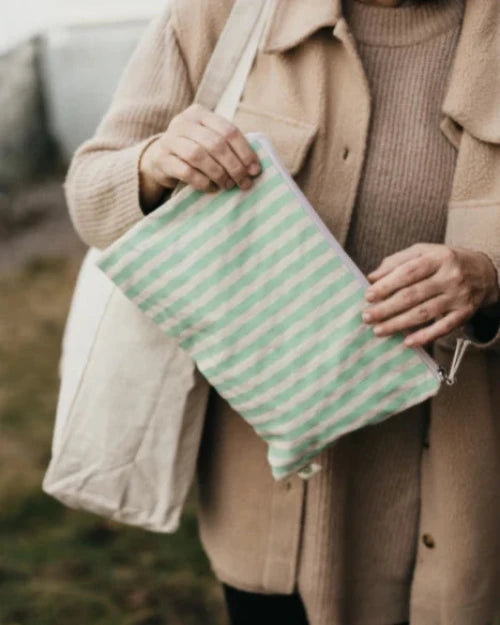
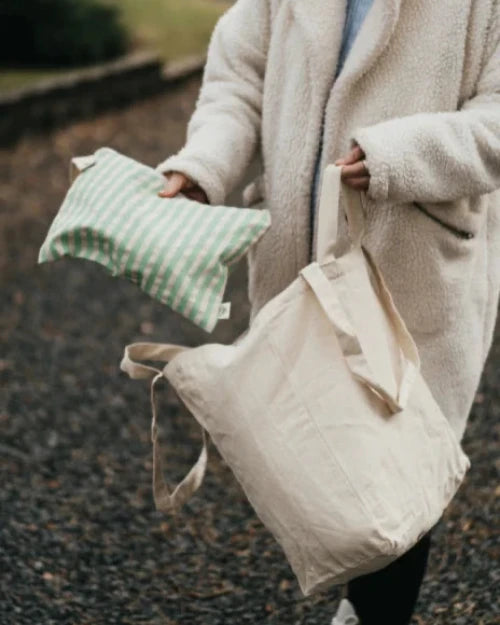
Modern designs range from simple solid colors to maritime stripes and vibrant patterns. Earthy tones such as sand, terracotta, or olive green perfectly match the natural, timeless style – they can be combined in many ways and never seem intrusive.
When choosing colors, it is worth paying attention to lightfastness. Especially towels that are often in the sun fade over time. High-quality dyes last longer and retain their intensity even after many summers.
The kimonos and ponchos from MAIN Design follow this philosophy: timeless, natural, and versatile – perfect for the beach, everyday life, and everything in between.
Environmental aspects of microfiber
As practical as microfiber is, there are also critical voices. Tiny plastic particles are released during each wash cycle, which end up in wastewater. These microplastic particles are difficult to filter and pollute waters.
Solutions for environmentally conscious users:
- Use special washing bags that catch microfibers
- Wash less often, only when truly necessary
- Prefer recycled microfiber – it at least reduces the use of new plastic
- Switch to natural alternatives if drying time is secondary
The discussion shows: Even with functional products, it is worth taking a close look and making conscious decisions. A quick-drying towel made from recycled materials is a compromise between functionality and responsibility.
Packing tips for on the go
How do you best pack a quick-drying towel so that it takes up little space and is still within reach?
Efficient packing methods:
- Roll instead of fold: Rolled towels take up less space and don't wrinkle
- Use compression straps: A rubber band or packing strap keeps everything compact
- Stuff into shoes: Perfect use of space in the suitcase
- Attach to the outside of the backpack: Allows the towel to dry during the hike
- In waterproof bags: Protects other items if the towel is still slightly damp
Especially on multi-day tours, it is practical to have two small towels: one for showering, one for sports or swimming. This way, a dry one is always available.
Alternative materials in comparison
Besides classic microfiber, there are exciting alternatives that also dry quickly and rely on natural fibers.
Linen, for example, is an underestimated material. It absorbs a lot of moisture but releases it quickly. Linen towels feel cool and smooth – perfect on hot summer days. They become softer with each wash and, with good care, last for decades.
Bamboo viscose combines softness with good drying properties. The fabric is silky, skin-friendly, and biodegradable. However, the processing of bamboo into viscose often requires chemical processes – here it is worth looking at certifications.
Thin cotton weaves like Turkish hammam towels are light, space-saving, and surprisingly absorbent. They dry faster than terry cloth but take longer than microfiber.
Quick-drying towel for different seasons
Even if we associate quick-drying towels primarily with summer and the beach: they are useful all year round.
In winter for indoor sports or in the sauna, they score with their compactness. In autumn with changeable weather, they are the ideal companion for spontaneous excursions. In spring, when the first swimming days beckon but temperatures are still cool, a quick-drying towel is particularly pleasant.
The versatility makes a quick-drying towel a worthwhile investment – not only for the summer months but as a year-round companion.
A quick-drying towel combines function, comfort, and sustainability – if you prioritize quality and conscious material choices. It accompanies you lightly and uncomplicatedly throughout the year, whether at the beach, while traveling, or at home. At MAIN Design, you'll find well-designed essentials for the beach and everyday life, made from recycled materials – so you can feel good and do good at the same time.