

Anyone who has ever been washed off their board knows: Not every bikini is made for the line-up. Good bikinis for surfing deliver on their promise – they stay where they belong, dry quickly, and feel like a second skin. Regardless of whether you are just starting to surf or have been in the water for years, choosing the right swimwear makes the difference between flow and frustration. In this guide, you will learn which cuts, materials, and details really count when it comes to bikinis that perform in the water – while looking good doing it.
What distinguishes good bikinis for surfing from regular swimwear
Regular bikinis are made for sunbathing, swimming, or relaxing hours by the pool. Surfing is a different world. Here, freedom of movement, support, and durability are what count.
Support without compromise
A bikini for surfing must be able to move without slipping. This means:
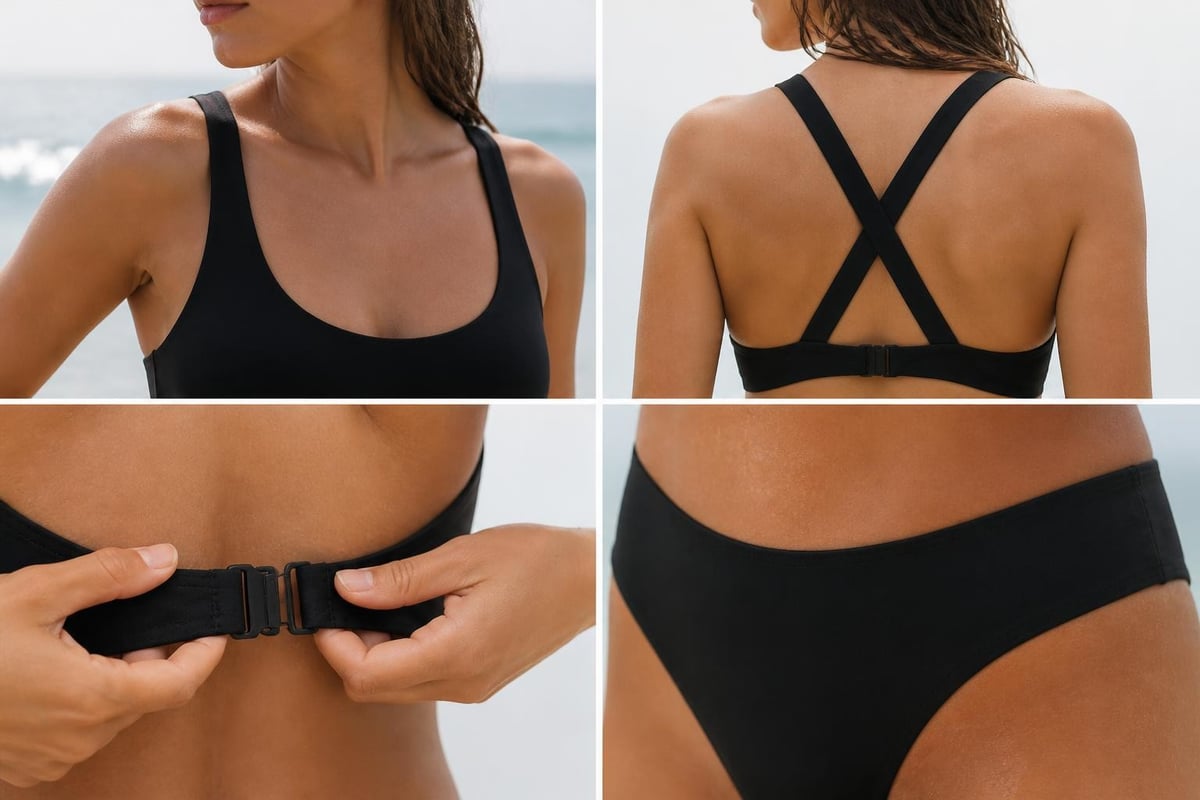
- Wider straps distribute weight more evenly and don't dig in, even when you've been paddling for hours.
- Double or crossed back designs keep the top in place, even during a duck dive.
- Elastic bands at the hips and legs ensure the bottoms don't ride up or twist.
- Adjustable closures or drawstrings allow you to customize the fit to your body.
The Inertia has shown in its surfsuit test that bikinis with a racerback design and secure closures perform best when it really matters.
Material and quick-dry properties
Synthetic fibers dominate the surf bikini world – and for good reason. Recycled nylon and polyester are not only durable but also quick-drying and resistant to saltwater, sun, and chlorine.
| Property | Recycled Nylon | Recycled Polyester | Natural Fibers |
|---|---|---|---|
| Quick-drying | Very fast | Very fast | Slow |
| UV resistance | High | Very high | Low |
| Saltwater resistance | High | Very high | Medium |
| Elasticity | Good with elastane | Good with elastane | Low |
A study on chlorinated water and sun exposure proves that polyester-based fabrics retain their strength and color significantly longer than natural materials. A crucial advantage for surfers who are regularly in saltwater.
The best cuts for different surf styles
Not every bikini cut works for every surf style. Your choice should depend on how you surf – and what you need in the water.
Sporty tops: For longboards and relaxed sessions
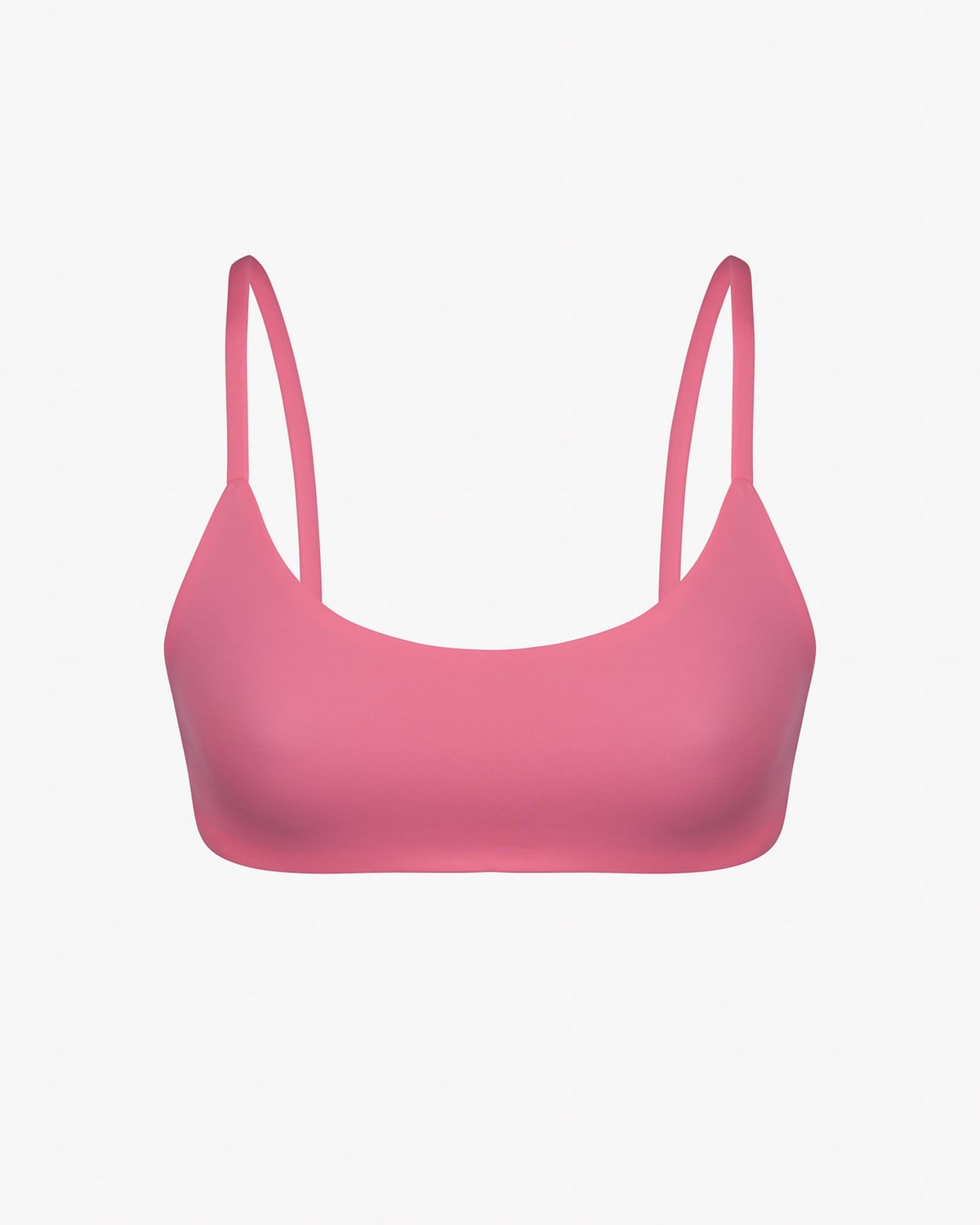
Racerback or sporty bikini tops like the Sassy Bikini Top offer maximum support due to their seamless construction and four back straps, without restricting freedom of movement. They feel like a sports bra and are ideal if you spend a lot of time on the board or stay active outside the water as well.
Sporty tops are perfect for:
- Beginners who still do a lot of paddling and are finding their balance
- Longboarders who prefer gentle, relaxed waves
- SUP surfers who value stability and comfort above all else
Triangle tops: Adjustable and versatile
Triangle bikinis have the advantage that you can adjust them individually. Make sure the strings are thick and stable – thin ribbons tear easily or loosen in the water.
Tip: Always tie your triangle tops twice – once at the back, once at the neck. This helps you avoid nasty surprises during a wipeout.
High-waist and banded bottoms: Security meets style
High-waist bikini bottoms are not just a visual statement, but also practical. They stay in place better and slip less than low-rise models. Banded bottoms with a wide waistband provide extra support – perfect for anyone tired of constantly tugging at their fabric.
Our surf bikini collection combines these cuts with sustainable materials so you feel safe and comfortable in the water.
Materials that last – and protect the environment
Good bikinis for surfing need to be robust, but that doesn't mean they have to come at the expense of the environment. Recycled materials have proven to be just as durable as conventional synthetics – often even better.
Why recycled nylon and polyester are the first choice
Recycled fibers from old fishing nets, PET bottles, or industrial waste conserve resources and reduce waste. They are:
- Chlorine and saltwater resistant: StretchHouse explains that polyester-based fabrics with chlorine-resistant elastane last significantly longer than normal Lycra blends.
- UV resistant: The colors do not fade as quickly, even in intense sunlight.
- Quick-drying: You can keep your bikini on after surfing without it staying wet for hours.
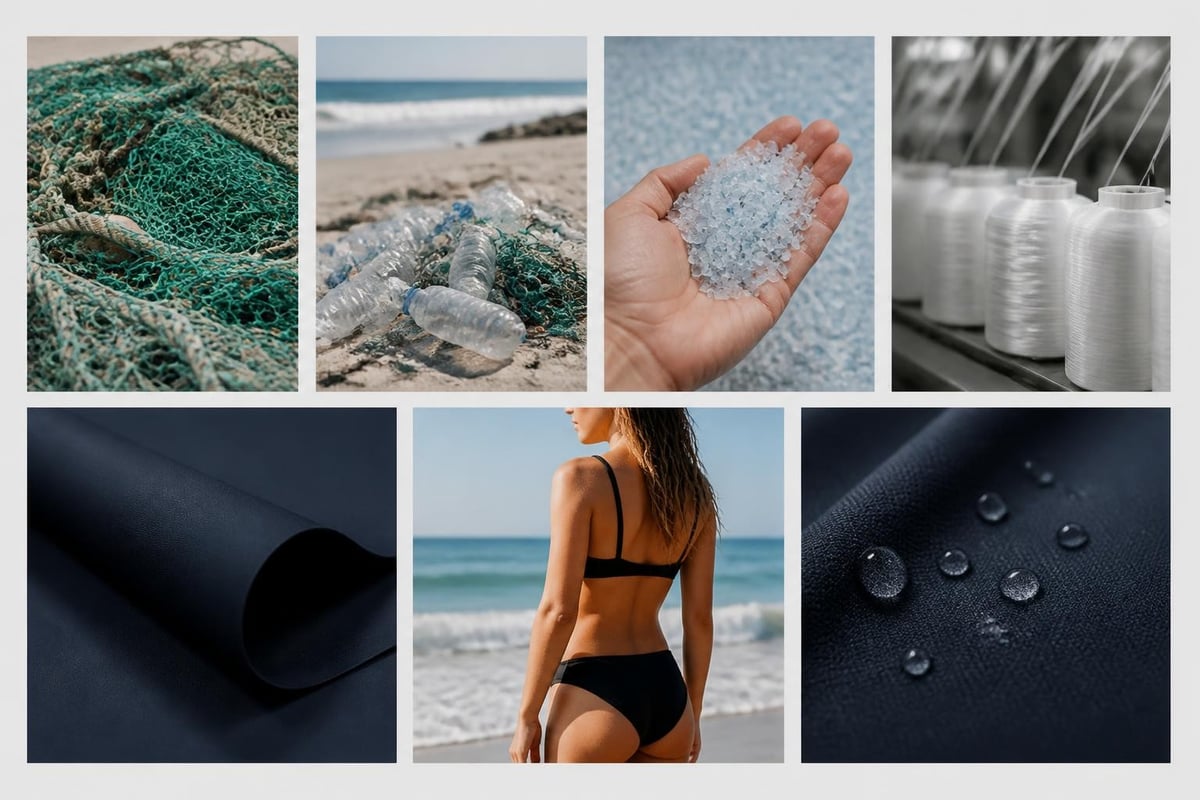
The Textile Exchange Report shows that recycled synthetics can reduce environmental impact by up to 75% – without compromising on performance.
The problem with microfibers – and what you can do
Synthetic fabrics release microfibers during washing, which end up in rivers and oceans. The Nature Conservancy has studied how we can minimize this effect:
- Wash bikinis less often – rinsing out saltwater is often enough.
- Use a Guppyfriend washing bag to catch fibers.
- Choose high-quality fabrics that shed less.
- Air dry instead of using a dryer to protect the material and the environment.
At MAIN Design, we focus on recycled materials that are durable and shed fewer fibers. Every purchase also supports Healthy Seas – the organization that retrieves ghost nets from the oceans before they can become even more microplastic.
Fit, size, and trying on: How to find your perfect fit
A bikini can be technically perfect – but if it doesn't fit, it's useless. Good bikinis for surfing must fit like a glove without constricting.
Reading size charts correctly
Most brands offer detailed size charts. Measure your bust, waist, and hips and compare the values. Pay special attention to:
- Underbust measurement: It determines how well the top stays in place.
- Cup size: Many surf tops are designed for B to C cups. For larger cups, you might need extra support.
- Hip circumference: Bottoms should fit firmly, but not dig in.
Rule of thumb: If you are between two sizes, take the smaller one for tops (better support) and the larger one for bottoms (more comfort).
Trying on: What you should test
Don't just check your new bikini in the mirror; test it in motion. Do a few squats, reach your arms up high, turn quickly – simulate the movements you make in the water.
Checklist for trying it on:
| Test | What to look for |
|---|---|
| Bending & Stretching | Does the top shift? Is it showing too much? |
| Squats | Do the bottoms stay in place? |
| Arm circles | Do the straps dig in? |
| Jumping | Does everything stay where it should? |
If everything fits – and really fits – you've found a bikini for life.
UV protection and additional clothing: When do you need more than just a bikini?
A bikini alone offers little sun protection. Most fabrics have a UPF (Ultraviolet Protection Factor) of 15 to 30 – better than bare skin, but not enough for sessions lasting hours.
Understanding UPF values
Hohenstein explains how UPF is measured: A UPF of 50+ blocks 98% of UV radiation. For comparison: Normal cotton is at UPF 5–10, thin bikini fabric at UPF 15–20.
When you need extra protection:
- When you are in the water for longer than an hour
- During intense midday sun (10 am – 4 pm)
- If you are prone to sunburn or have fair skin
The American Academy of Dermatology recommends combining swimwear with a UPF-certified rashguard – especially for the shoulders, back, and décolleté.
Rashguards and surfsuits as a complement
Long-sleeve rashguards offer continuous protection, are quick-drying, and also protect against chafing from the wax on the board. Our rashie collection combines UPF 50+ with recycled materials – so you can stay out longer without endangering your skin.
Surfsuits are the all-in-one solution: they combine a bikini and rashguard in one piece, fit tightly to the body, and offer maximum protection. Ideal for cold waters or long surf trips where you don't want to keep reapplying sunscreen.
Care and durability: How to keep your surf bikini looking great for a long time
A high-quality bikini can last for years – if you treat it correctly. Saltwater, sun, and sand take their toll on the material, but with a few simple tricks, you can significantly extend the lifespan of your favorite piece.
After surfing: Rinse immediately
Saltwater and chlorine attack the fibers. Rinse your bikini immediately after surfing with cold, clean water. It takes 30 seconds and works wonders.
Washing properly:
- Hand wash in cold water with a mild, pH-neutral detergent
- Do not wring out – squeeze carefully instead
- Air dry in the shade – direct sun bleaches the colors
- Never put in the dryer – heat destroys elastane
Don't wash your bikini after every wear. Often, rinsing it is enough. This protects the material and reduces microfiber shedding.
Storage between sessions
Store your bikinis flat or hanging – not crumpled in a bag where they get wrinkled or stay damp. Avoid direct sunlight in the closet and store them dry.
Tip: If you are on a surf trip, pack wet bikinis in a separate, breathable pouch until you can dry them properly.
Finding good bikinis for surfing: What to look for when buying
You now know what makes a good surf bikini. But how do you specifically find the right model for you?
The most important buying criteria at a glance
- Material: Recycled nylon or polyester with chlorine-resistant elastane
- Cut: Racerback, wide straps, secure closures, high-waist or banded bottom
- Fit: Tight, but not constricting – test while in motion
- Sustainability: Certified recycled materials, transparent supply chain
- UV protection: At least UPF 30, better 50+ (or combine with a rashguard)
- Care: Easy-care, robust, durable
How to recognize inferior bikinis
Not every bikini with a "surf" label delivers what it promises. Watch out for these warning signs:
- Thin, slippery fabrics that fall apart after a few washes
- Cheap closures that rust or break
- Too many strings and ribbons that tangle or come undone
- Missing information on material, origin, or care
- Unrealistically low prices – quality and sustainability cost money
At MAIN Design, we focus on transparency: Every piece is made from recycled materials, designed to be durable, and made with the ocean in mind. No greenwashing, just real commitment.
Different surf conditions, different bikinis
Depending on where and how you surf, you need different bikinis. Cold water, big waves, or tropical lagoons have different requirements.
Warm water surfing: Light and quick-drying
In warm waters (above 20 °C), a regular surf bikini is perfectly sufficient. Here, what counts most is:
- Breathability and quick drying, so you don't get chilled after surfing
- Light fabrics that don't soak up water
- Minimal coverage, because you don't need additional protection
Perfect for surf spots in Bali, Costa Rica, or Portugal in the summer.
Cold water surfing: Layering is everything
Below 18 °C you need more than just a bikini. This is where the layering principle comes into play:
- Surf bikini as a base – it keeps everything in place
- Rashguard or neoprene top over it for warmth and UV protection
- Possibly surf leggings or short wetsuit pants for the legs
Our surf swimwear collection shows how to cleverly combine bikinis and rashguards without sacrificing style.
Big waves and demanding conditions
When the waves get bigger or the conditions get rougher, you need maximum support. Here, one-piece surfsuits are often the better choice – but if you want to stick with your bikini, look for:
- Extra secure closures, preferably to tie or with clips
- Compression fit that sits tightly without constricting
- Thicker straps and bands that hold up even during hard wipeouts
Sustainability and ocean-friendly choices
Good bikinis for surfing also mean: Respect for the ocean that gives us the waves. Every purchasing decision has consequences – on materials, production conditions, and ultimately on the environment.
What "sustainable" really means
Sustainability is more than a recycled label. It is about:
- Transparent supply chains: Where do the materials come from? Who processed them?
- Durability: A bikini that lasts five years is more sustainable than three that break after one season
- Fair working conditions: People who sew our clothes earn fair wages and have safe conditions
- Active environmental projects: Companies that give back – for example, by supporting ocean cleanup initiatives
MAIN Design donates a portion of every sale to Healthy Seas to retrieve ghost nets from the oceans. This makes every bikini a small contribution to the protection of the ocean we love so much.
Circular economy: What happens after the bikini's life?
A truly sustainable bikini shouldn't become a burden even after it has served its purpose. Some brands offer recycling programs where you can send back old swimwear. The materials are then processed back into new products.
What you can do yourself:
- Repair instead of discarding: You can often mend small tears or loose seams yourself
- Pass it on: A bikini that no longer fits you might find a second life with a friend
- Upcycling: You can sew scrunchies, headbands, or patches from old bikinis
Good bikinis for surfing combine function, style, and responsibility – they stay in place in the water, protect the environment, and feel great. When you opt for recycled materials, thoughtful cuts, and genuine quality, you are investing in pieces that will accompany you for a long time. Discover sustainable surf bikinis that really last – and support the protection of our oceans with every purchase at MAIN Design - Your Daily Dose Of Summer.