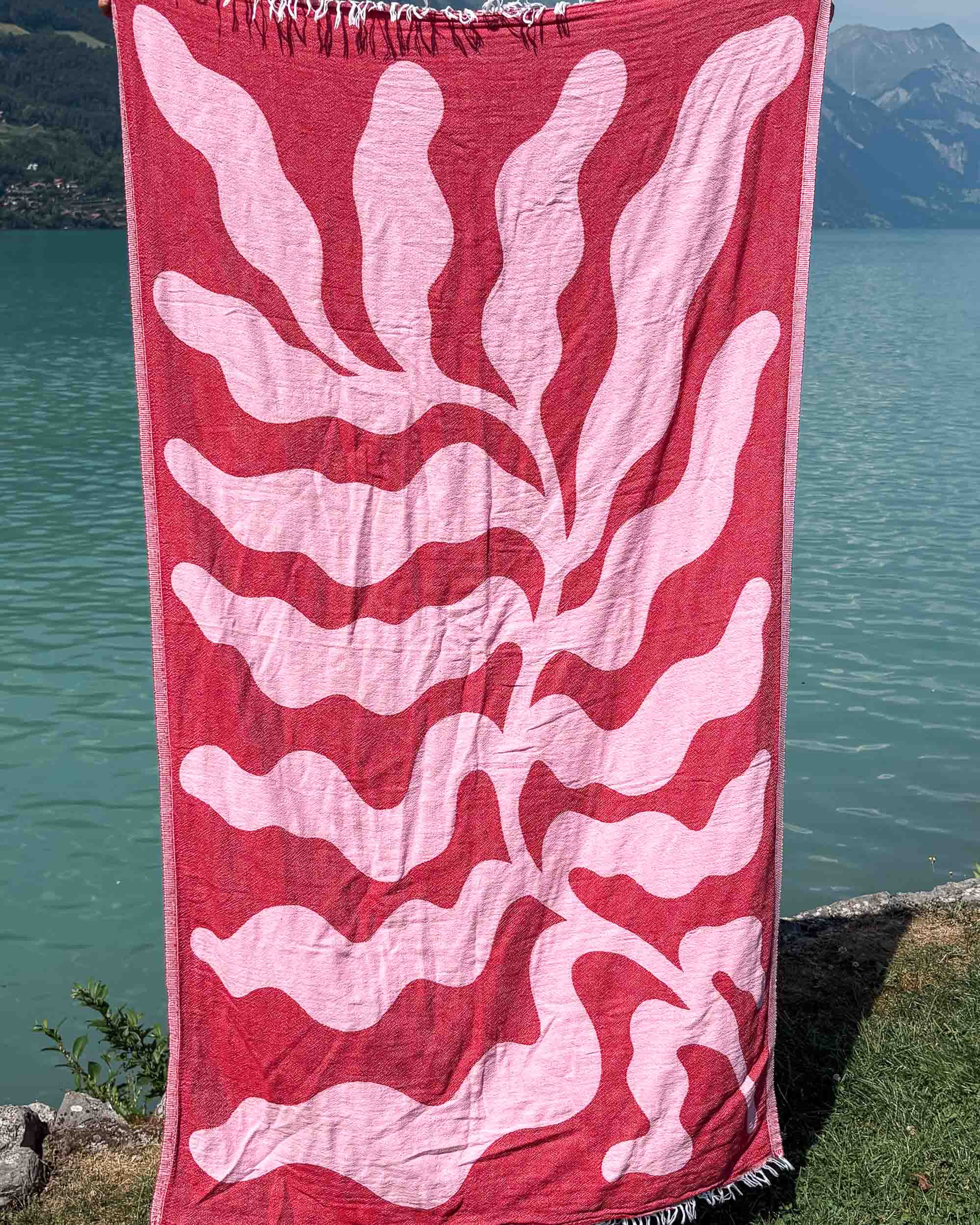


If you're out on the water, you need more than just a good look. Surfer swimwear womens combines performance with style, support with freedom of movement, and protection with lightness. Whether you're just stepping onto your board or have been riding waves for years – the right swimwear makes the difference between a great day in the water and one where you’re constantly adjusting. It’s about cuts that stay where they’re supposed to. About materials that give but still support. And about designs that take responsibility without being loud about it.
What defines surfer swimwear womens
Surfer swimwear womens is no ordinary swimwear. It delivers on its promises – even under conditions that would make other bikinis give up long ago.
Features that count
The most important features:
- Secure fit: Wide straps, adjustable closures, elastic cuffs – everything to ensure nothing slips when a wave shakes you up.
- Quick-drying materials: Recycled fabrics with technical properties that wick moisture away quickly and don't get heavy.
- UV protection: Many models offer built-in sun protection, especially with long-sleeve cuts and rash guards.
- Freedom of movement: Four-way stretch ensures you can paddle, stand up, and maneuver without feeling restricted.
The right sun-protective clothing is crucial, especially when surfing – you spend hours in direct sun, often without shade.
Difference from conventional swimwear:
| Feature | Standard swimwear | Surfer swimwear womens |
|---|---|---|
| Straps | Narrow, often adjustable | Wide, sporty, non-slip |
| Material | Standard Lycra | Recycled nylon/polyester with compression |
| Cut | Aesthetics-focused | Performance-oriented |
| Durability | Medium | High, saltwater and chlorine resistant |
| UV protection | Rarely integrated | Often UPF 50+ |

Cuts for different surf styles
Not every wave is the same, and neither is every body. Surfer swimwear womens comes in different cuts, depending on what you need.
Bikini tops:
- Crop tops and sports bras: High coverage, secure fit, perfect for active surfing and long sessions.
- Triangle with thick straps: Classic look with additional support from wider bands.
- Underwire bikinis: If you want more shaping, there are models with soft underwires that still remain flexible.
Bikini bottoms:
- High-waist: More coverage, stays in place, flatters many body types.
- Moderate coverage: Classic cut with wide side bands that don't dig into the skin.
- Surf shorts: Boyshort style for maximum coverage and freedom of movement.
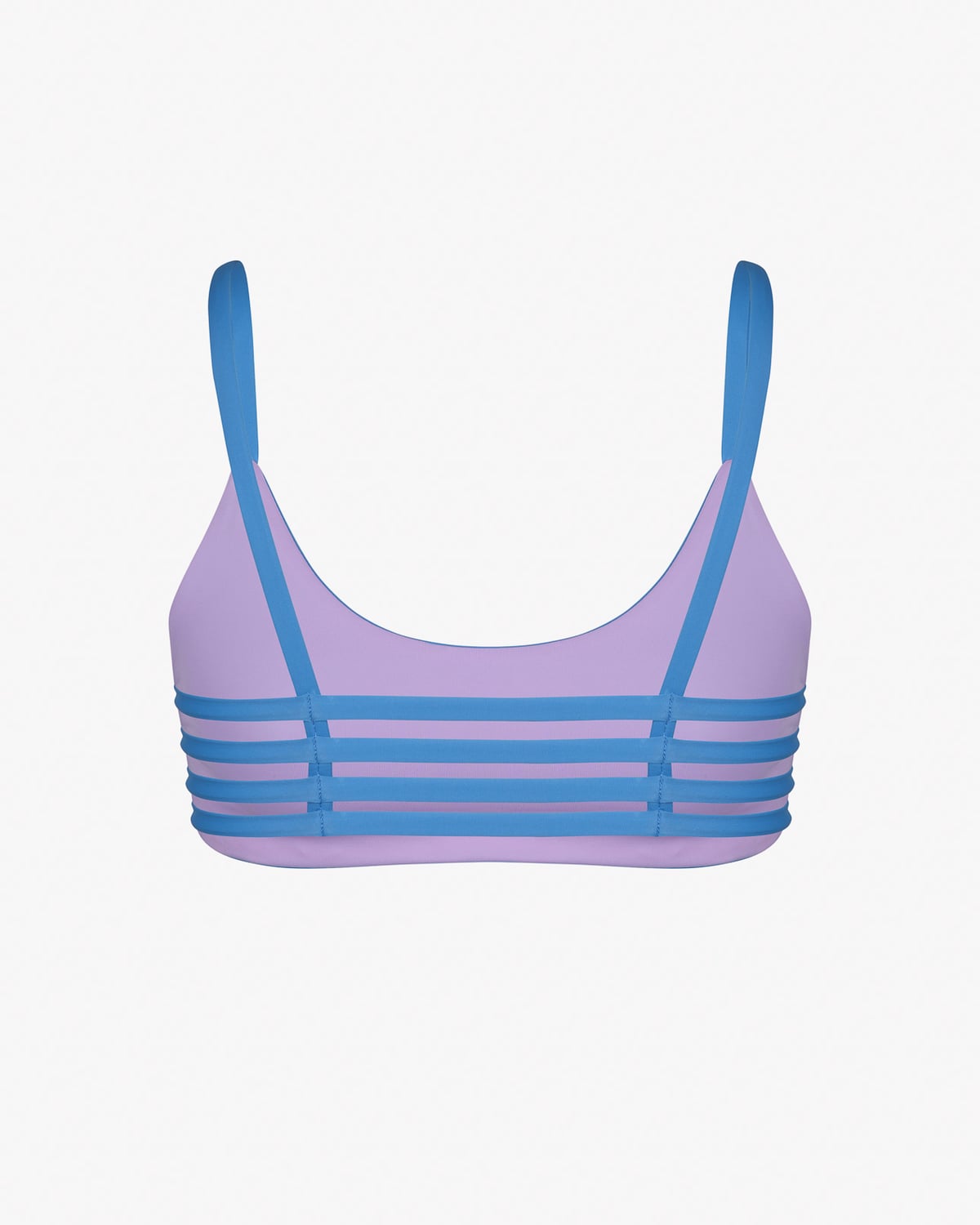
An example: The Sassy Bikini Top combines a sporty cut with four back straps and seamless construction – it feels like a second skin without getting in the way. Whether swimming, surfing, or as your favorite everyday bra.
Materials: Recycled, robust, responsible
Today, the majority of surfer swimwear womens is made from recycled fibers – usually regenerated nylon from fishing nets, old carpets, or industrial waste. This isn't just green marketing; it's a necessity.
Why recycled materials
The advantages:
- Conserving resources: Recycled nylon saves up to 80% energy compared to new production.
- Ocean cleanup: Programs like Healthy Seas recover ghost nets from the sea and process them into high-quality yarn.
- Same performance: Regenerated fibers are just as elastic and resistant to chlorine and saltwater as virgin materials.
- Circular thinking: Many manufacturers are working on circular textiles that can be recycled again at the end of their life.
Certifications to look for:
| Certificate | Meaning |
|---|---|
| OEKO-TEX Standard 100 | Tested for harmful substances, skin-friendly |
| Global Recycled Standard (GRS) | At least 50% recycled fibers, social and ecological criteria |
| bluesign® | Environmentally friendly and safe production |
| GOTS (for cotton) | Organic cotton from controlled cultivation |
The Ellen MacArthur Foundation shows what a new textile industry can look like – circular, regenerative, and waste-free.
Comparing materials
- Recycled polyamide (nylon): Very elastic, quick-drying, saltwater resistant. Ideal for bikinis and rash guards.
- Recycled polyester: Robust, retains shape, often used in surf shorts.
- ECONYL®: Regenerated nylon from fishing nets, particularly high quality.
- Organic cotton: For cover-ups, ponchos, and beachwear – soft, breathable, but slower to dry.
At MAIN Design, you can find out more about the materials and certifications used.
Fit and sizing: Bodies are different
One of the biggest mistakes when buying surfer swimwear womens? The wrong size. Too loose, and the bikini shifts. Too tight, and you can't breathe or move.
How to find the right size
Measure yourself correctly:
- Bust: Circumference at the widest point, parallel to the ground.
- Underbust: Directly under the bust, firm but not constricting.
- Waist: At the narrowest point.
- Hips: At the widest point over the buttocks.
Always use the brand's specific size charts. A European M may fit differently from one brand to another. The Fit Guide from MAIN Design helps you find the perfect size.
Tips for different body types:
- Small bust: Triangle bikinis with pads or push-up effects add shape, while wide straps offer support.
- Large bust: Crop tops or sports bra cuts with reinforced straps and an underbust band provide better support.
- Curvy hips: High-waist bottoms fit securely and flatter the figure.
- Athletic build: Moderate coverage with side bands or surf shorts provide support without adding bulk.
Try-on checklist
Before you get in the water, test:
- Raise your arms: Does the top ride up?
- Bend forward: Does everything stay in place?
- Squat down: Do the bottoms cut in or roll?
- Stretch and twist: Do you have full freedom of movement?
If even one point isn't right, try a different size or cut.
Protection and safety in the water
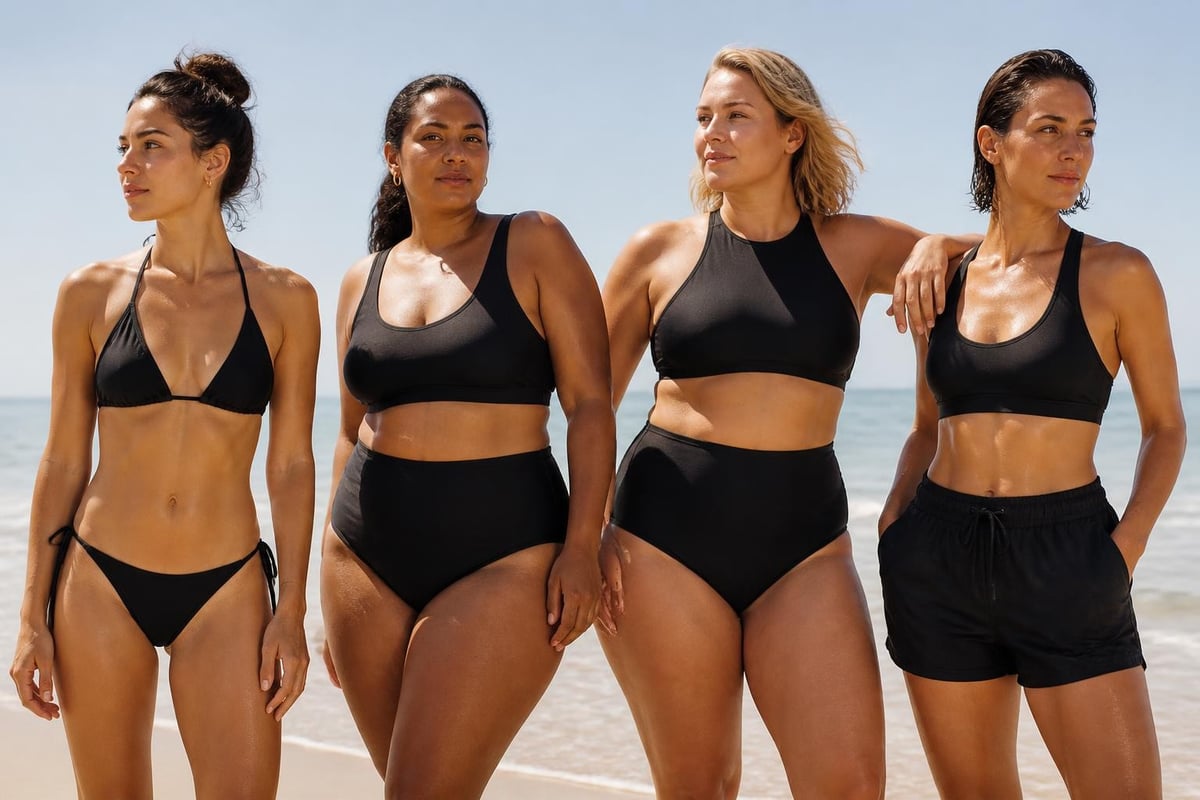
Surfer swimwear womens is not just swimwear – it protects you. From sun, from cold, from injury.
UV protection: More than sunscreen
Surfers often spend several hours in the water, and sunscreen alone isn't always enough. Sun-protective clothing with a UPF rating offers constant protection that doesn't wash off.
UPF (Ultraviolet Protection Factor):
- UPF 15-24: Good protection
- UPF 25-39: Very good protection
- UPF 50+: Excellent protection (blocks 98% of UV rays)
Long-sleeve rash guards with UPF 50+ are standard among surfers. Leggings and one-piece suits also offer protection for legs and torso.
Preventing injuries
Research into surfing injuries shows that proper clothing reduces abrasions, sunburn, and hypothermia. Rash guards protect against wax rash and board contact. Well-fitting bottoms prevent chafing.
The Surfers' Medical Association emphasizes how important a correct fit is for safety and performance – especially for women, whose body proportions are often different from men's.
Protection from the cold
In cooler waters, a bikini isn't enough. That's when these come into play:
- Neoprene shorties: Short-sleeve suits for mild temperatures.
- Spring suits: Long sleeves, short legs – ideal for transitional seasons.
- Fullsuits: 3/2 mm or thicker for cold water.
Good surfer swimwear womens is also useful under a wetsuit – it prevents chafing and provides an extra layer.
Care: How to make your swimwear last longer
Sustainability doesn't start with the purchase, but with how you treat what you own. The Guardian clearly shows how to make swimwear sustainable.
Correct washing
- Immediately after wearing: Rinse your surfer swimwear womens with cold, clear water – salt, chlorine, and sand attack the fibers.
- Hand wash preferred: Use a mild detergent, no fabric softeners.
- If machine washing: Use a laundry bag, cold water, and a delicate cycle.
- Never: Put it in the dryer, on a heater, or hang it in direct, intense sunlight. UV light and heat destroy elastane.
Drying rules:
- Gently squeeze out excess water (do not wring).
- Lay the piece flat on a towel and roll it up.
- Lay flat to dry or hang in the shade.
Storage
- Dry and dark: Avoid direct sunlight and humidity.
- Do not crumple: Fold your bikinis neatly or lay them flat.
- Rotation: If you own several sets, alternate them – this allows the elastane to recover.
Repair instead of discard
Small holes, loose seams, worn-out bands – much can be repaired. Some brands offer repair services. Or you can sew it yourself: a simple stitch can extend the lifespan by months.
Style meets sustainability
Surfer swimwear womens doesn't have to choose between function and looks. The best pieces combine both – and do good at the same time.
Minimalism that works
Timeless designs outlast trends. Classic cuts in neutral colors can be combined, worn for years, and refreshed with colorful accents if needed.
Advantages of minimalist swimwear:
- Versatile
- Doesn't go "out of style" as quickly
- Fits many outfits and occasions
- Reduces consumption
Responsible manufacturing
Transparency is important. Where do the materials come from? Who sews the pieces? Are fair wages paid? Brands that provide answers to these questions deserve trust.
At MAIN Design, you can learn exactly how and where the products are made – and what impact every purchase has.
Giving back with every purchase
Programs like Healthy Seas recover ghost nets from the sea and recycle them into new materials. If part of your purchase price flows directly into ocean cleanup, you are actively contributing to the solution – not just the problem.
Trends 2026: What's moving
The world of surfer swimwear womens continues to evolve. What's new, what stays?
Colors and patterns
Current trends:
- Earth tones: Sand, terracotta, olive green – colors that match nature.
- Bold prints: Graphic patterns inspired by ocean waves, coral, algae.
- Tone-on-tone: Monochrome sets in beige, black, rust red.
Cuts and silhouettes
- Asymmetric straps: Single shoulder strap, one-shoulder designs.
- Cut-outs: Strategically placed openings that allow movement.
- Reversible models: Two looks in one piece – sustainable and practical.
Technology in material
- Bio-based fibers: Initial experiments with algae-based textiles.
- Intelligent fabrics: Materials that adapt to body temperature or have antibacterial properties.
- Even better recycling processes: Vogue reports on new approaches for turning old swimwear into new fibers.
Combining: From the water to everyday life
Surfer swimwear womens is versatile. With the right layering pieces, a surf look becomes an everyday outfit.
Cover-ups and wraps
- Kimonos: Light, airy, casual over a bikini or with shorts.
- Ponchos: Cozy and soft after surfing, practical for the way home.
- Linen shirts: Classic, timeless, protect against wind and sun.
You can find more inspiration in the MAIN Design Journal on Beach Resort Holidays.
Accessories
- Straw hats: Sun protection and style.
- Sunglasses: Polarized lenses reduce reflections on the water.
- Waterproof bags: For keys, phone, and sunscreen.
From the beach to the city
A sporty bikini top can become an everyday look under a loose linen jacket. Surf shorts go well with a white T-shirt and sneakers. The boundaries between sportswear and streetwear are blurring – and that's a good thing.
Buying tips: What to watch out for
When buying surfer swimwear womens, there is more that counts than just the first impression.
Checklist before buying
- Material: Is it recycled? Certified?
- Fit: Are there detailed size charts and fitting instructions?
- Features: UV protection, quick-drying, chlorine resistant?
- Sustainability: Transparency about origin and production?
- Brand: What values does it represent? Does it support specific projects?
- Value for money: Better to pay more once and wear for years than to buy cheap and replace often.
Questions you should ask
- Where and how is it produced?
- What materials are used?
- Is there a take-back or recycling program?
- How long does the product last with proper care?
- Can I have it repaired?
Where to buy?
- Directly from sustainable brands: Often better transparency and direct contact.
- Specialized surf shops: Expert advice.
- Online with return policy: This allows you to try things on at home in peace.
Look for brands that not only sell products but also represent an attitude – like MAIN Design, where every purchase supports Healthy Seas.
Community and inspiration
Women's surfer swimwear is more than just clothing – it connects.
Role models and surf culture
Women in surfing are shaping the scene today more than ever. Whether professional surfers or local wave riders – they show that performance and style are not a contradiction.
Online communities
- Surf forums and social media: Exchange about spots, equipment, experiences.
- Blogs and vlogs: Inspiration for travel, techniques, sustainable choices.
- Local surf groups: Shared sessions, tips, friendships.
Sharing responsibility
Sustainability works better together. Organize beach clean-ups, share knowledge about recycling, support initiatives like Healthy Seas.
Women's surfer swimwear is an expression of freedom, respect, and clarity – for yourself, for the ocean, for the future. The right swimwear guides you safely through every wave, protects your skin, and takes responsibility without making a fuss. MAIN Design combines exactly that: stylish, long-lasting swimwear made from recycled materials that supports Healthy Seas with every purchase and clears the oceans of ghost nets. Feel good. Do good.