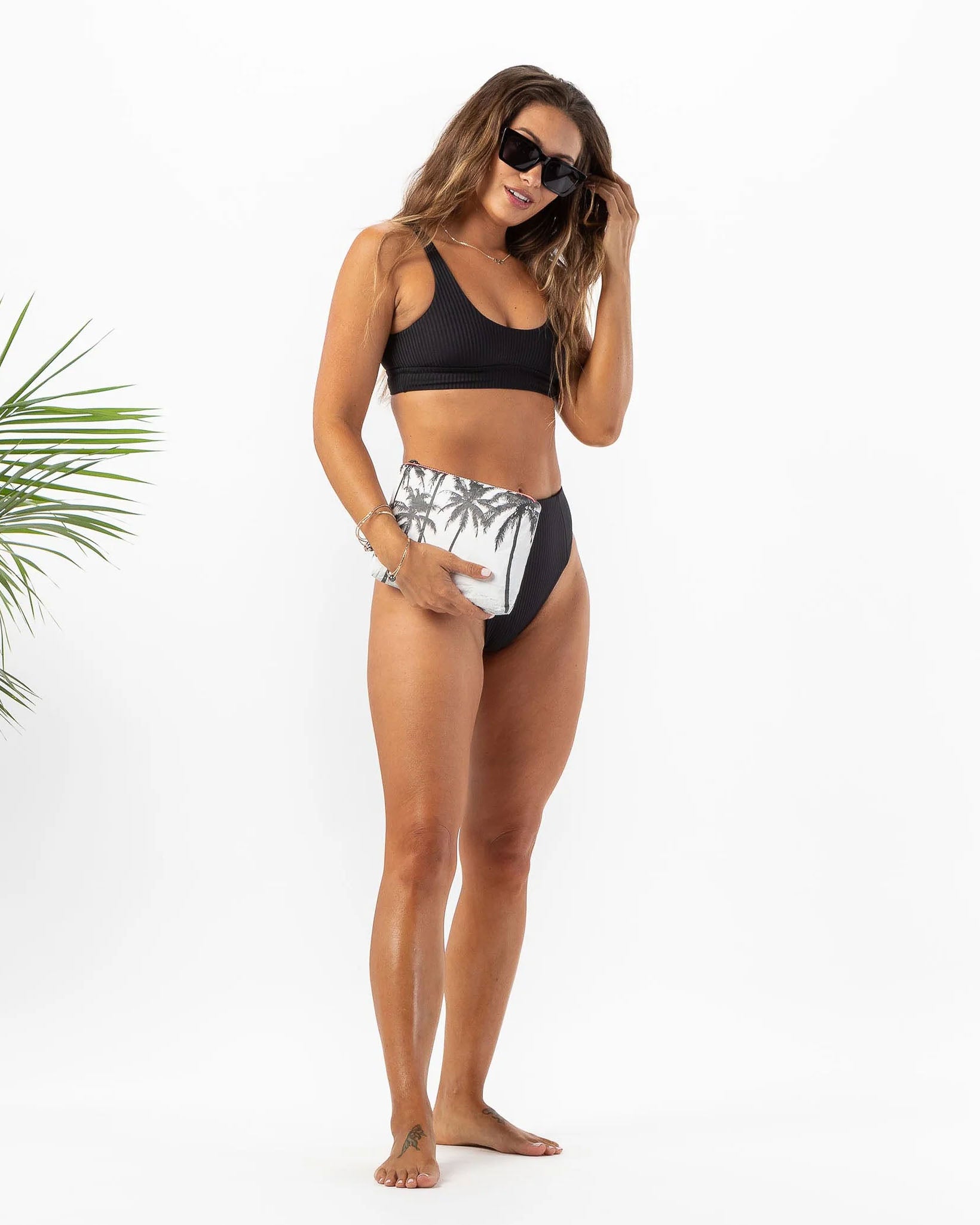
A women's surf bikini fits snugly without digging in, offers secure support, and stays in place while paddling, duck diving, and riding waves. Crossed or wide straps, a secure leg cut, flat seams, and a smooth back ensure stability and comfort. When trying it on, raise your arms, lean forward, and squat: if nothing slips, the cut is right.
- How can you tell if a women's surf bikini stays securely in place with every movement?
- Support, coverage, and slipping: the most important differences from regular swimwear
- Which details really matter for paddling, duck diving, and riding waves
- How should a surf bikini fit – and which cut is right for your use?
- Surf bikini tops compared: bustier, crop top, and crossed straps
- Bottoms compared: classic pants, high-waist, and biker cut
- Which materials and construction features make a surf bikini durable?
- Fabrics, stretch, and lining: what matters with salt, sun, and frequent wear
- Seams, fasteners, and straps: how to check comfort and durability
- How do you find the right surf bikini for your body, conditions, and budget?
- Choosing the right fit for your surf level and use: from occasional wave riding to long sessions
- Practical try-on checklist for support, freedom of movement, and the right size
- Frequently asked questions about women's surf bikinis
- Which fit holds up best while surfing?
- Should a surf bikini fit tighter than a regular bikini?
- How do I prevent the bikini from slipping while riding waves?
- How do I care for my surf bikini so the fabric and elasticity last a long time?
How can you tell if a women's surf bikini stays securely in place with every movement?
A good surf bikini fits snugly enough not to shift, while still leaving your shoulders, hips, and breathing free. You can recognize it by its firm fabric, secure coverage, and straps or bands that stay in place even in the water.
Support, coverage, and slipping: the most important differences from regular swimwear
Regular swimwear is made for sunbathing and beach walks. A surf bikini, on the other hand, must withstand waves, currents, and movement. This is especially evident in three areas:
- The top has a firm underband or wide straps so that nothing rides up.
- The bottoms provide sufficient coverage and have a waistband that does not roll.
- The fabric is dense and stretchy and does not become see-through when wet.
Perform a simple test before buying: raise your arms, lean forward, and squat deeply. If everything stays in place, that's a good sign.
Which details really matter for paddling, duck diving, and riding waves
When paddling, you lie on your stomach, your shoulders rotate, and your chest expands. Here, bulky fasteners, hard seams, or buckles on the back that press against the board are a nuisance. Flat seams and a smooth back make long sessions significantly more comfortable.
When duck diving, water hits you with pressure from the front. Crossed or wider straps and a secure leg cut prevent anything from shifting. When standing up and riding waves, freedom of movement in the hips is also important.
Tip: If you have to keep adjusting yourself while trying it on, it will only get worse in the water.
How should a surf bikini fit – and which cut is right for your use?
A surf bikini fits correctly when it is snug without digging in, and barely moves even when rotating your arms, paddling, and duck diving. Which cut is right for you depends on your bust shape, wave conditions, and session length.
Surf bikini tops compared: bustier, crop top, and crossed straps
Crossed straps distribute the tension across both shoulders and provide the most secure support while paddling. The bustier offers plenty of coverage and stability when surfing larger waves. A crop top with a wide underbust band is ideal for longer sessions because it barely chafes and is comfortable to wear.
Always try out a few movements when trying it on: stretch your arms forward, go into a push-up position, and turn your head. The top should stay in place. The Charm Surf Bikini Top is well suited for this because it is designed for freedom of movement and secure support in the water.
Bottoms compared: classic pants, high-waist, and biker cut
Classic pants with a side band are lightweight and can be adjusted for width. For beginners and warm days, they are an uncomplicated choice. However, they can slip when the waves are high if the fabric is thin.
- High-waist: covers more, usually stays in place when duck diving, and gives many a secure feeling around the stomach.
- Biker cut: has longer leg hems that do not ride up and protect the thighs from rubbing against the board.
- Classic pants: offer the most freedom at the hips and dry quickly.
Make sure the waistband lies flat and the leg cut doesn't pinch. Then everything stays comfortable even during long sessions.
What materials and construction features make a surf bikini durable?
A durable surf bikini is made of a dense, elastic fabric with good shape retention and is neatly finished. If the cut suits you, the material determines how long it retains this hold.
Fabrics, stretch and lining: what matters with salt, sun and frequent wear
Look for blends of polyamide or recycled polyester with elastane. The elastane content ensures that the fabric snaps back into shape after stretching. A dense fabric remains opaque even when wet and offers better protection against sand and chafing. Recycled materials, like those we use in many MAIN Design models, are not a compromise, but a way to make the most of existing resources.
A full lining, especially in the cups and bottoms, prevents transparency and provides additional support. That's why you should always choose light colors with a lining. Salt, chlorine and sunscreen damage fibers, so UV-resistant fabric that doesn't fade quickly is worth it.
Seams, fasteners and straps: how to check comfort and durability
Gently stretch the fabric at the seams. Good seams give a little without exposing threads. Flat overlock or zigzag seams chafe less than thick ridges, which is important during long sessions on the board.
- Fasteners: Tie or pull-on styles eliminate metal parts that can rust. For clips, the fastener should lie flat.
- Straps: They should be wide enough not to dig in and not twist.
- Edges: Piped or double-hemmed edges fray less.
If you want to see how these details work in practice, you'll find suitable models in our selection.
There you can directly compare cuts, fabrics and straps and choose the model that suits your everyday surfing.
How do you find the right surf bikini for your body, conditions and budget?
Choose the right fit for your surf level and activity: from occasional wave riding to long sessions
The more often and longer you are in the water, the more important support and construction become. For occasional sessions on holiday, a model with a bustier or crop cut and adjustable straps is often enough. If you practice regularly, duck dive, or surf in cold, powerful water, crossed straps and higher-cut bottoms will suit you better.
- Occasional, calm waves: a comfortable cut with good support that you can also wear on the beach.
- Regular, medium waves: crossed straps, firm fabric, bottoms with slightly more leg coverage.
- Long sessions: durable material, flat seams, few decorative elements that can chafe.
When it comes to budget, it's worth looking at the cost per use. A robust model that lasts an entire season is often cheaper than two flimsy bikinis. At MAIN Design, you'll find surf and swimwear made in Bali, some of which is made from recycled materials.
Practical fitting checklist for support, freedom of movement and the right size
Don't just try on the bikini while standing; move around in it. This will quickly show you if it can keep up in the water. Every body shape is different, so your own feeling counts more than the size on the label.
- Bend forward and do a few push-ups or a paddling motion: The top should stay in place.
- Raise your arms above your head and circle your shoulders: Nothing should dig in or pull.
- Squat deep and jump briefly: The bottoms should not slip or pinch.
- Run a finger under the straps and waistband: They should fit snugly but leave no deep marks.
- If in doubt, it's better to choose a size that's slightly smaller than too large, because wet fabric stretches easily. Between two sizes, choose the one in which you can move freely.
Frequently asked questions about surf bikinis for women
Which fit holds up best while surfing?
The best fit is one that fits like a second skin without digging in. For tops, this is usually a bustier, crop top, or model with crossed straps. For bottoms, a higher leg cut and slightly more coverage provide security while paddling and duck diving.
Should a surf bikini fit tighter than a normal bikini?
Yes, it can fit a little tighter, but never so tight that it pinches or restricts your breathing. Wet fabric stretches easily. A bikini that fits perfectly loose on land often becomes too loose in the water. The straps should not dig in, and you should be able to take a deep breath effortlessly.
How do I prevent my bikini from slipping while surfing?
Do a quick movement test before getting in the water. This will help you:
- Jump up and down several times and bend deep forward.
- Simulate the paddling motion with circular arm movements.
- Double-knot the ties or choose styles with a back closure that does not press against the board.
- Choose a size that prevents anything from slipping when the fabric is wet.
How do I care for my surf bikini so that the fabric and elasticity last a long time?
Rinse it with cold fresh water after every session so that salt, sand, and sunscreen do not remain in the fabric. Wash it by hand with mild detergent without wringing it. Dry it flat in the shade, as direct sun and heat damage the elasticity. Avoid fabric softener and dryers, as they cause the fibers to stick together and stretch out.
It should fit snugly without digging in and move very little when you circle your arms, bend forward, and do deep squats. This helps keep it in place better while paddling and diving.
Crossed or wider straps provide particularly secure support while paddling and duck diving. They help distribute the pull more evenly across your shoulders.
A smooth back without bulky closures, hard seams, or buckles is more comfortable while paddling because nothing presses against the surfboard. Flat seams increase comfort during longer sessions.