

A beach kimono is more than just a cover-up. It's the piece that gives you freedom – between sea and city, between movement and calm. Lightweight, flowing, uncomplicated. It protects your skin from the sun without making you feel restricted. And it transforms your beach outfit into something street-ready in seconds. No changing, no overthinking. Just throw it on and go.
What Makes a Beach Kimono Special
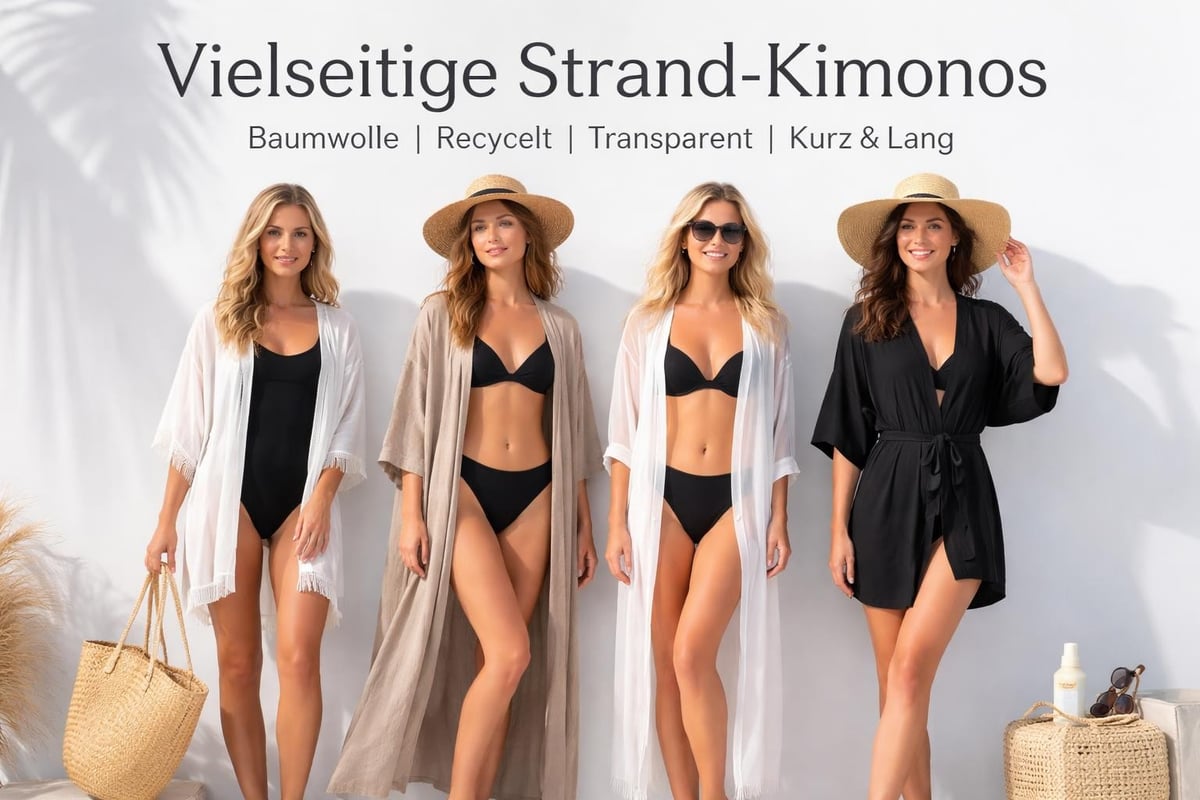
The cut is the secret. A true beach kimono has wide sleeves that gently sway when you walk. It drapes loosely over the shoulders and hips, without clinging or flapping. The length varies – some end at the thigh, others reach down to the calves. But they all share one characteristic: they give you space.
Typical Features of a Beach Kimono:
- Open cut without buttons or fasteners
- Wide, airy sleeves for maximum freedom of movement
- Light, breathable fabrics like cotton, viscose, or recycled material
- Versatile to combine over a bikini, swimsuit, or everyday clothes
The choice of material determines the wearing comfort. Natural fibers like organic cotton or linen feel cool on the skin and dry surprisingly fast. Recycled fabrics combine sustainability with functionality – an important point, especially for sustainable swimwear. Transparent versions, like this transparent beach kimono with lace, are perfect for hot days when you need shade without sacrificing air circulation.
The Right Fabric for Every Situation
| Fabric Type | Properties | Ideal for |
|---|---|---|
| Organic Cotton | Soft, breathable, absorbent | Everyday wear, sensitive skin |
| Recycled Polyester | Quick-drying, lightweight, easy care | Active beach days, water sports |
| Viscose | Flowing, cooling, elegant | Evening beach visits, restaurants |
| Linen | Durable, cooling, natural | Long days in the sun, travel |
The choice of material affects not only comfort but also durability. Recycled materials combine the best of both worlds: they conserve resources and last for years.
How to Wear a Beach Kimono
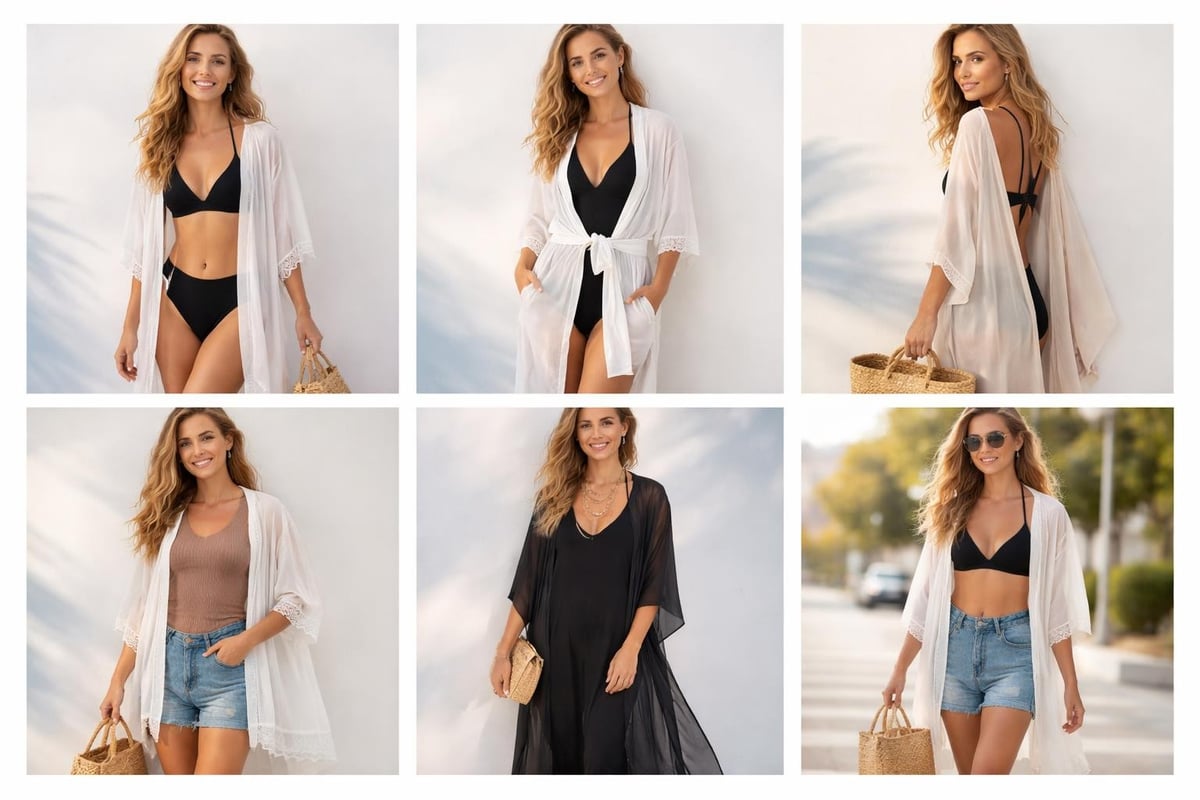
There are no rules. That's the point. You throw it over your bikini when you stroll from the water to the cafe. You tie it loosely at the waist if you want more structure. Or you let it fall open, draped asymmetrically over one shoulder.
Styling Options for Every Occasion:
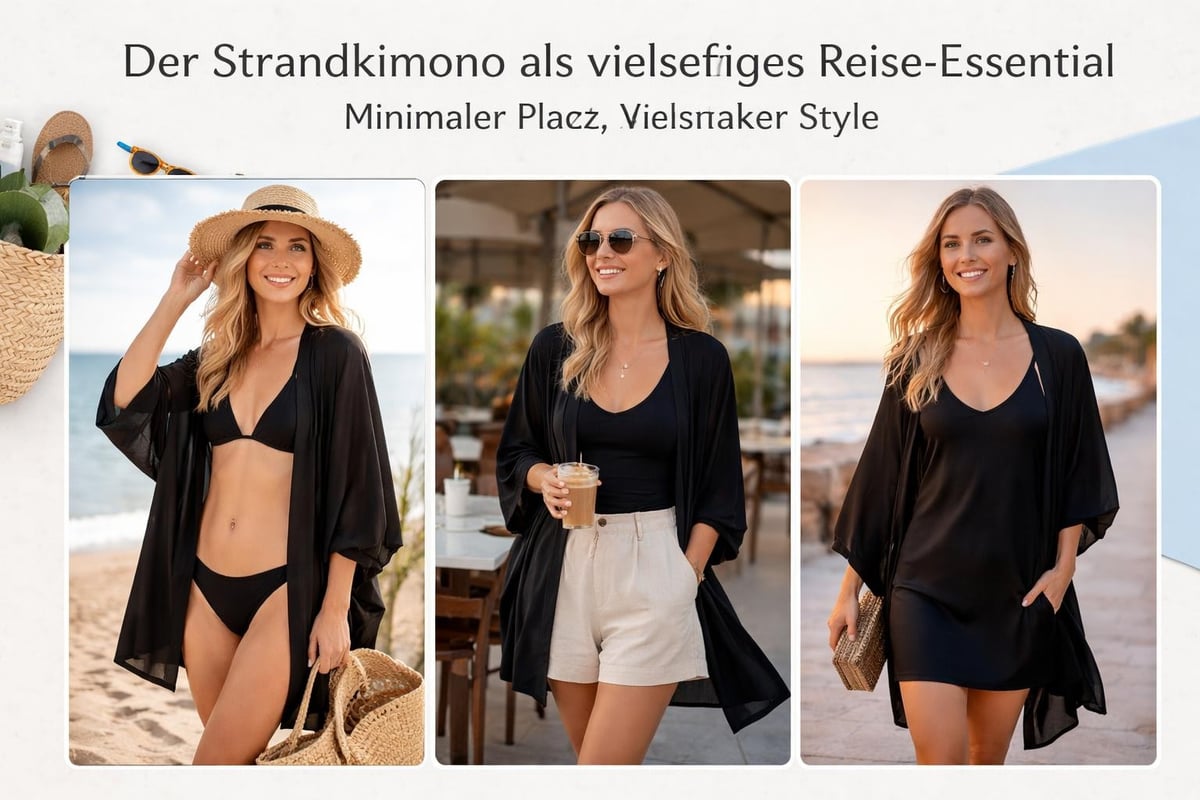
- At the Beach: Open over a bikini or swimsuit, with a wide straw hat and sandals
- For Brunch: Over a solid-colored tank top and shorts, with leather sandals
- In the Evening: Over a simple dress, with statement jewelry and flat shoes
- Everyday: As a light jacket over a T-shirt and jeans, with sneakers
The beach kimono adapts to your life, not the other way around. It's the piece that lies on the chair in the morning and still looks just as fresh in the evening. No wrinkles, no complicated care instructions.
Consciously Choose Colors and Patterns
Solid-colored kimonos are timeless. Black, white, sand – they go with everything and don't distract. A black beach kimono, for example, works just as well with colorful bikinis as with minimalist swimsuits. It's your haven of peace in the visual chaos of a crowded beach.
Patterns, on the other hand, add accents. Floral prints for a boho look. Stripes for maritime vibes. Zebra patterns, like in this transparent beach kimono in black-beige, bring movement to the outfit. The question is: What do you feel like today? Quiet elegance or bold presence?
Sustainability Starts with the Choice
A beach kimono made from recycled materials is not a compromise. It's a decision. For less waste in the oceans. For fair production conditions. For quality that lasts longer than one season.
At MAIN Design, sustainability means more than just the material. It's about the entire supply chain. From the extraction of fibers to packaging. Every detail counts. And with every purchase, you support Healthy Seas – an organization that removes ghost nets from the seas and transforms them into new fabrics.
Sustainable Alternatives at a Glance:
- Recycled polyester from PET bottles
- Regenerated nylon fibers from fishing nets
- Organic cotton without pesticides
- Natural dyeing methods without toxic chemicals
The difference is palpable. The fabric feels different on the skin. It smells of nothing but itself. No chemical residues, no synthetic odors. Just purity and quality.
Durability Instead of Fast Fashion
A well-made beach kimono lasts for years. The seams hold. The colors stay true. The fabric retains its shape, even after countless washes. This is the opposite of fast fashion, where you see pilling and faded colors after just a few weeks.
You recognize quality by the details. Double-stitched hems. Reinforced seams at the shoulders. Colorfast fabrics that retain their intensity. When you invest in a sustainable piece, you invest in years of wearing pleasure – not just one summer.
Versatility for All Walks of Life
The beach kimono is not a seasonal item. It accompanies you throughout the year. In summer as sun protection, in spring as a light jacket over a sweater, in autumn as an extra layer during a walk by the lake.
This versatility makes it the perfect travel companion. It takes up hardly any space in your suitcase, doesn't wrinkle, and can be combined with almost anything. One piece, five outfits. That's the kind of minimalism that makes sense.
| Situation | Styling Tip | Combination Partner |
|---|---|---|
| Beach Day | Loosely open | Bikini, straw bag, sunglasses |
| City Stroll | Tied at the waist | Tank top, jeans, sandals |
| Beach Yoga | Over the shoulders | Sports bra, leggings, barefoot |
| Dinner | Draped asymmetrically | Simple dress, jewelry, flat shoes |
The beach kimono seamlessly integrates into your daily life. It's there when you need it – without having to think too much.
Practical for Families
If you have children, you know: practicality is everything. A beach kimono can be put on and taken off in seconds. Perfect when the little ones are impatient and want to get into the water. And when you need to quickly throw on your swimwear because someone is hungry or the sun is too strong.
For mothers, the beach kimono is also a discreet way to dry off after swimming or to have a little more privacy while breastfeeding. It's functional without being cumbersome. Light enough to always have it with you – in your beach bag, in the car, in the stroller.
Speaking of family: children's swimwear should also be sustainable. If you're already buying consciously for yourself, why not for the little ones too?
Care That Pays Off
A beach kimono needs little attention, but the right kind. After a visit to the beach, rinse with clear water to remove salt and sand. Air dry, preferably in the shade, so the colors don't fade. No aggressive machine washing necessary – hand wash or a delicate cycle is completely sufficient.
Care Tips for Long Lifespan:
- Use cold or lukewarm water
- Choose mild, environmentally friendly detergent
- Do not wring, but gently squeeze out
- Dry flat or hanging
- Ironing usually unnecessary – the fabric smooths itself out
If you treat your beach kimono well, it will treat you well. It stays soft, the colors remain vibrant, and the shape is maintained.
Storage Between Seasons
When summer is over, loosely fold your beach kimono and store it in a dry, dark place. No plastic bags – the fabric needs air. A cotton bag or simply a shelf space will suffice.
This way, it stays ready for the next vacation, the next warm week, the next spontaneous day at the lake. No nasty surprises, no mildew, no yellowed spots.
The Beach Kimono as a Statement
A beach kimono says something about you. It shows that you value quality. That you don't follow every trend. That you don't see functionality and aesthetics as opposites.
It's a quiet form of self-confidence. You don't need flashy logos or exaggerated cuts. You wear what feels good. What suits you. What lasts.
In a world full of loud fashion, the beach kimono is a whisper. But it is heard. By people who understand that less is often more. Who prioritize quality over quantity. Who see fashion as an expression of values, not just decoration.
Suitable for All Body Shapes
The beach kimono flatters every body because it doesn't pretend anything. It drapes loosely, without concealing or emphasizing. It gives you space without hiding you. This is true inclusivity – not as a marketing slogan, but as a design principle.
Whether you are small or tall, curvy or slender – a well-cut beach kimono works. It adapts without you having to adapt. That is freedom in fabric form.
Beach Kimonos in Different Lengths
The length of your kimono influences how you wear it. Short models that end at the thigh are sporty and uncomplicated. They are ideal for active days when you walk, swim, or play a lot. You can move freely without fabric getting in the way.
Mid-length kimonos reach to the knee or just below. They are the golden mean – versatile enough for beach and city, elegant enough for dinner by the water. They provide more sun protection than short versions without becoming heavy or warm.
Long kimonos, reaching to the calves or ankles, have something majestic about them. They move like water when you walk, create dramatic silhouettes, and offer maximum sun protection. Perfect for long kimonos in summer style that look both casual and elegant.
Length Variations Compared:
| Length | Advantages | Best Occasions |
|---|---|---|
| Short (Thigh) | Freedom of movement, sporty, quick-drying | Surfing, beach volleyball, active beach days |
| Medium (Knee) | Versatile, balanced, suitable for everyday and beach | Cafe visits, strolls, shopping |
| Long (Calf/Ankle) | Maximum sun protection, elegant, dramatic | Dinners, beach parties, relaxed days |
The right length depends on your lifestyle. If you're on the go a lot, a mid-length kimono is usually the most practical choice. For special occasions or if you simply love the feel of flowing fabric, opt for the long version.
Color Psychology and Personal Style
Colors influence how you feel. A green kimono, for example, has a calming effect and connects you with nature. Green is the color of forests and meadows, of tranquility and growth. Perfect if you want to escape everyday life and ground yourself.
White and light tones reflect sunlight and keep you cooler. They exude freshness and lightness. Dark colors like black or navy blue are timelessly elegant and hide stains better – practical if you're out with children or eating and drinking a lot at the beach.
Warm tones like terracotta, mustard, or rust red bring earthiness and warmth. They go well with tanned skin and create a natural, down-to-earth look. Cool tones like blue, turquoise, or lavender are refreshing and perfectly match the sea.
Patterns with Meaning
Some prefer clean, graphic patterns – stripes, dots, geometric shapes. They are modern and structured. Others love floral prints that express romance and femininity. Still others choose abstract designs that allow for interpretation.
Your beach kimono can be a reflection of your personality. Or it can be the opposite of what you usually wear – a break from routine, an invitation to show a different side of yourself.
The Kimono as Cultural Heritage
The kimono has roots in Japanese culture, where it served as everyday clothing for centuries. Its form – straight seams, wide sleeves, open cut – is a masterpiece of functional simplicity. No unnecessary details, just the essentials.
The beach kimono adopts these principles and adapts them to modern needs. It preserves the elegance of the original, but makes it suitable for everyday wear and beach-friendly. This is cultural appreciation at its best – not as a copy, but as an evolution.
Inspiration from Around the World
Various cultures have developed similar garments. The Moroccan caftan, the Indonesian sarong, the Greek chiton – all share the idea of loosely flowing, airy fabrics that give the body space. They are answers to the same need: protection from sun and wind without heaviness or constriction.
The modern beach kimono is a global garment. It takes the best from different traditions and combines them into something new. Something that works everywhere – on the Mediterranean as well as on the Pacific, on a Swiss lake as well as on the Atlantic.
Finding the Right Beach Kimono
When buying, the feeling is what matters most. How does the fabric feel? Is it scratchy? Is it too heavy or too thin? Does it drape loosely enough or too wide? Try different cuts and lengths until you find the one that feels right.
Pay attention to details. Are the seams neatly finished? Are there loose threads? How does the hem look? Quality is evident in the workmanship, not just the price.
Consider how you will wear the kimono. Do you need something for daily beach visits or for special occasions? Should it fit in your handbag or can it be more voluminous? Your answers will determine which model suits you.
The beach kimono is not just a piece of clothing. It is a companion for days in the sun, for moments of freedom, for the feeling of summer on your skin. At MAIN Design, you'll find kimonos that embody this philosophy – made from recycled materials, with attention to detail and the promise that fashion can do good. For you and for the world.
A beach kimono gives you freedom of movement and style without compromise. It adapts to your life, protects your skin, and remains feather-light. If you value sustainable quality that lasts for years, discover the collections at MAIN Design – there you'll find essentials that complete your summer while protecting the oceans.