

Imagine lying relaxed by the sea, soaking up the sun, but your towel remains free of sand and dirt. That's exactly what a sand-free beach towel makes possible. Many beachgoers know the problem: after every sunbathing session, sand sticks to everything, and comfort suffers.
This guide will show you how a sand-free beach towel can completely transform your day at the beach. We'll explain how these innovative towels work, what to look for when buying one, and which models are particularly impressive in 2026.
Look forward to practical tips, clever care tricks, and answers to all your important questions. Read on and make your next beach day a real highlight!
What is a sand-free beach towel?
Imagine lying down on your towel at the beach, relaxing, and then getting up again without a trace of sand. That's exactly what a sand-free beach towel promises. But what exactly is behind it, and how does it differ from a traditional beach towel? This section provides a clear overview of the technology, advantages, and target groups of these innovative towels.
Definition & Functionality
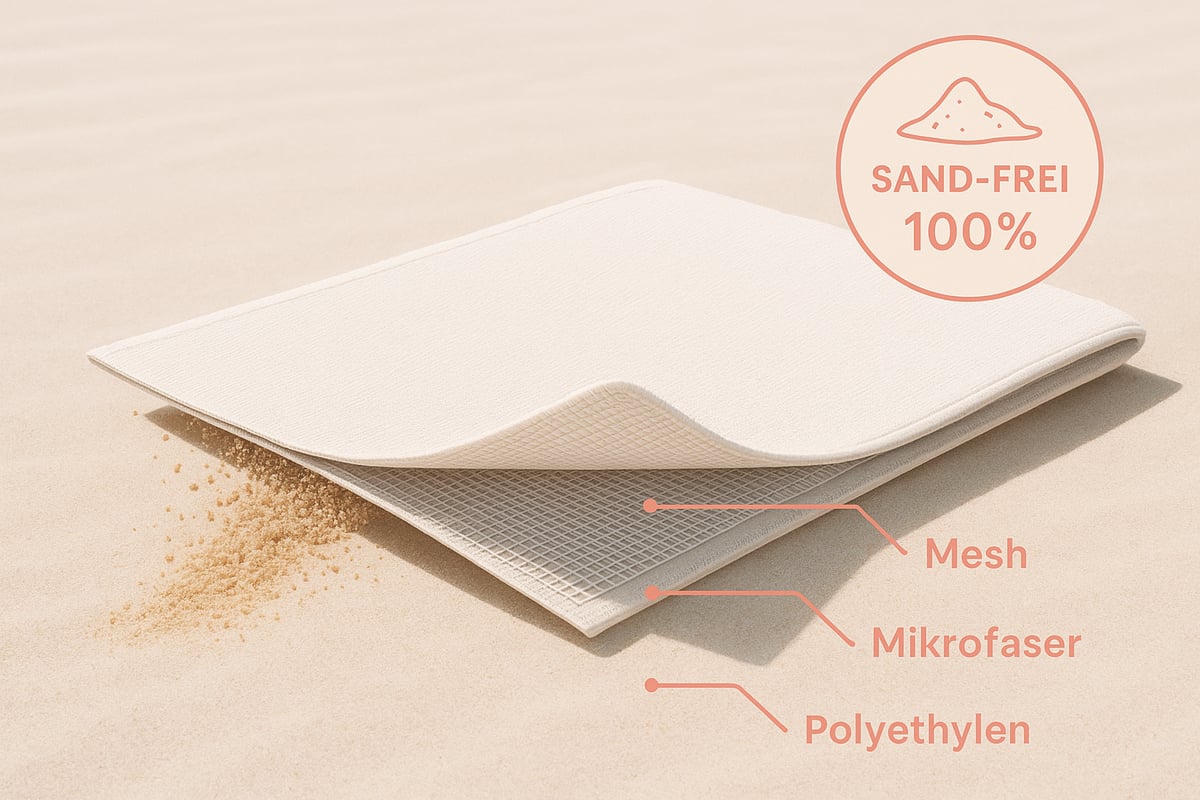
A sand-free beach towel is specially designed to allow sand to pass through easily and not stick to the fabric. This fundamentally distinguishes it from conventional cotton towels, where sand often becomes trapped and is difficult to remove.
The secret usually lies in a double-layered construction or special weaving technologies. Modern models are often made of microfiber, mesh, or polyethylene. These materials are processed in such a way that sand particles sift through the underside while the surface remains clean. Two-layer systems are particularly popular, where the top layer is soft and the bottom layer carries away the sand. Some models also feature non-stick coatings.
According to the manufacturer, a sand-free beach towel reduces sand adhesion by up to 90 percent. User reviews from 2025 and 2026 confirm that hardly any sand remains on the towel, even with fine beach sand or after stormy weather. Cleaning is also simple: a quick shake is all it takes, and the towel is ready to use again.
Compared to traditional beach towels, these products offer not only greater comfort but also advantages in terms of hygiene and drying time. They absorb very little moisture and therefore dry exceptionally quickly. For those who would like to study further comparisons and features in detail, this overview of the best beach towels of 2021—sand-free, XXL, organic— provides illustrative examples and reviews.
Advantages at a glance:
| Characteristic | sand-free beach towel | Classic beach towel |
|---|---|---|
| Sand permeability | Very high | Low |
| Drying time | Short | Long |
| Weight | Light | Often more difficult |
| hygiene | High | Medium |
Who are sand-free beach towels suitable for?
A sand-free beach towel is ideal for anyone who values comfort and cleanliness when visiting the beach. Families with children especially benefit, as there's no need to constantly shake out the towel. Surfers and campers also appreciate the quick drying time and light weight for easy transport.
People with allergies or sensitive skin benefit from the hygienic surface, as less sand and dirt particles adhere to the fabric. Frequent beachgoers and travelers especially appreciate its compact size and easy care. A sand-free beach towel is also the perfect choice for sunbathers who enjoy yoga or picnics on the beach.
Whether for a spontaneous weekend trip to the beach or a long-distance vacation, a sand-free beach towel ensures a clean and pleasant experience. The combination of innovative technology and practical use makes these towels a must-have for every beach lover.
Advantages of a sand-free beach towel
A sand-free beach towel offers a crucial advantage at the beach: you can relax without constantly having to deal with sand. Whether sunbathing, picnicking, or playing sports – the comfort is immediately noticeable. Who isn't familiar with the endless shaking and fluffing of traditional towels? With a sand-free beach towel, this problem is a thing of the past. The innovative technology ensures that sand simply falls through the fabric and doesn't stick. This allows you to enjoy your day at the sea or lake much more carefree and hygienic.
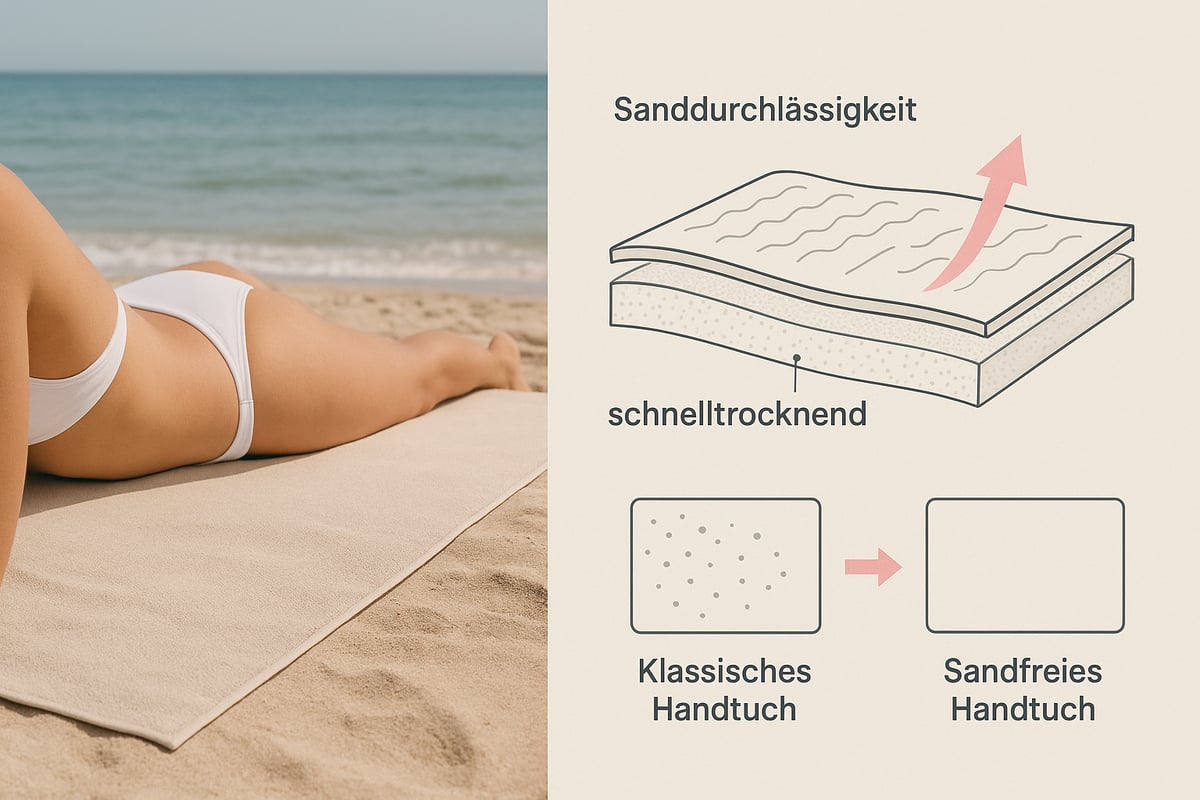
Comfort and cleanliness on the beach
With a sand-free beach towel, you not only save yourself the constant shaking and beating out. The towel remains pleasantly sand-free even in wind and humidity. Thanks to its quick-drying properties, you can use it several times a day without feeling damp.
Hygiene also benefits: Less sand means less dirt and bacteria that could become trapped in the fabric. This is a real plus, especially for allergy sufferers or families with small children. Furthermore, the sand-free beach towel is perfect for picnics, yoga on the beach, or other outdoor activities.
The special material structure ensures that even after a long day at the beach, hardly any sand residue remains on the towel. The result is a relaxing and clean day by the water.
- No need to shake it out
- Remains sand-free even in windy conditions
- Quick-drying and hygienic
Sustainability & Longevity
Many modern sand-free beach towel models rely on sustainable materials such as recycled plastics or certified fibers. This means you actively support environmental protection and benefit from a longer lifespan. Compared to conventional cotton towels, sand-free versions often retain their function and appearance for many years.
Another advantage is the reduced water and detergent consumption, as a sand-free beach towel needs to be washed less often. Sustainability is playing an increasingly important role in purchasing decisions. If you'd like to delve deeper into the topic, you'll find interesting comparisons and further information in the article "Discovering Sustainable Beach Towels" .
Thanks to its durability and high-quality materials, you conserve resources and do something good for yourself and the environment at the same time.
Space and weight advantages
A sand-free beach towel is usually significantly lighter and more compact than traditional towels. This makes it the ideal companion for travel, day trips, or a spontaneous day at the lake. Many models can be rolled up to a small size and fit easily into any backpack or suitcase.
Especially when traveling by plane or on long hikes, every gram counts. A sand-free beach towel is a practical, space-saving accessory that offers you plenty of comfort on the beach without adding extra weight.
Whether it's a family holiday, camping trip or backpacking adventure – the sand-free beach towel impresses with its versatility and ease of use.
Materials and Technologies 2026
Choosing the right material is crucial if you're looking for a sand-free beach towel. Modern technologies ensure that sand simply passes through the fabric, while the towel remains soft and comfortable. Innovation, functionality, and sustainability will be the focus in 2026.
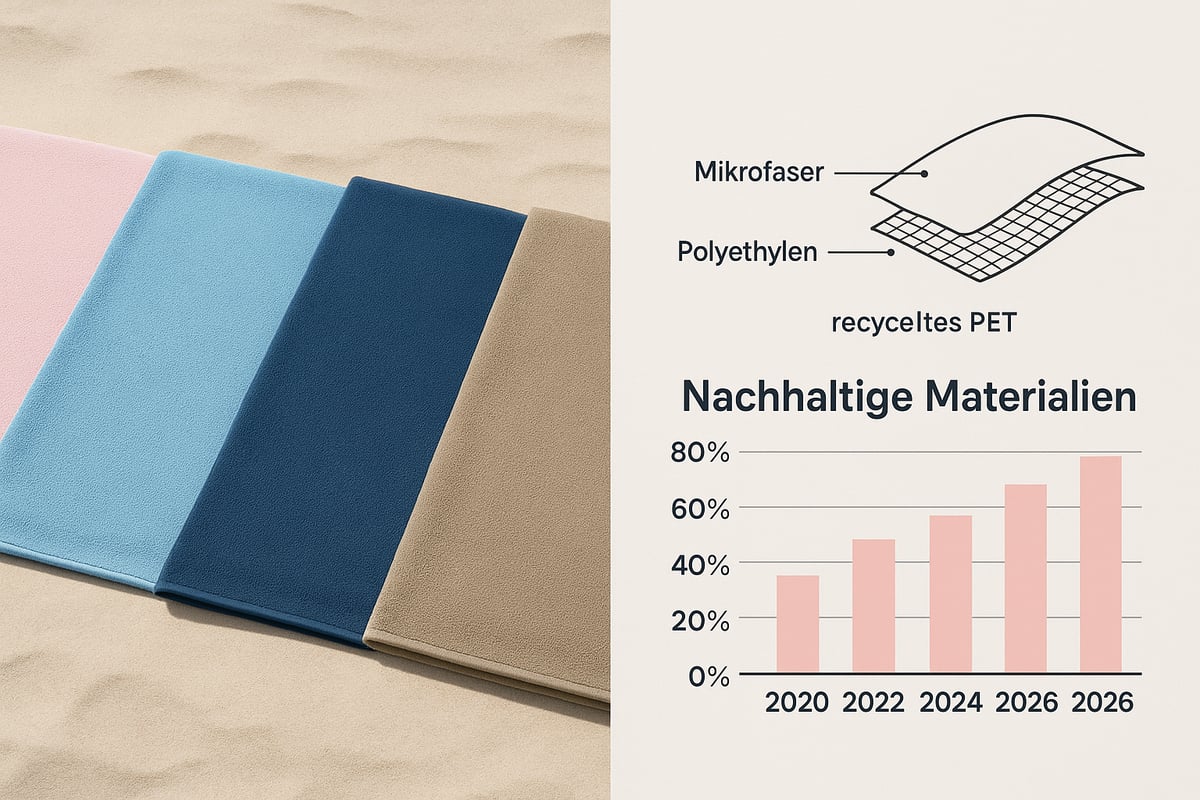
High-tech materials & innovations
A sand-free beach towel differs from classic cotton towels primarily due to its innovative materials. Microfiber, mesh, and polyethylene are particularly popular. These fabrics allow sand to simply pass through without sticking to the towel.
By 2026, the industry will be focusing on even finer weaves and advanced two-layer systems. These ensure improved sand permeability and faster drying times. Many sand-free beach towels are equipped with UV protection and antibacterial coatings. This not only increases comfort but also protects the skin.
Material comparison overview:
| material | Advantages | Disadvantages |
|---|---|---|
| microfiber | Very light, quick-drying, compact | May fade with frequent washing |
| Mesh (Polyester) | Extreme sand permeability, robust | Less soft than cotton |
| Polyethylen | Durable, water-repellent | In some cases, it is less breathable. |
| Recycled plastics | Sustainable, often also quick-drying | Production is partly energy-intensive |
| organic cotton | Environmentally friendly, pleasant on the skin | Less sand-resistant, heavier |
Sustainability is playing an increasingly important role. More and more manufacturers are using recycled PET bottles or organic cotton. According to industry reports, the proportion of recycled materials in sand-free beach towels is increasing by around 15 percent annually. Brands such as VOITED, Tesalate, and Dock & Bay already offer models made from sustainable alternatives. Those who want to delve deeper into the topic of sustainable materials and environmentally friendly alternatives can find valuable information under Eco-friendly Swimwear and Accessories .
Another trend is multifunctional features: integrated pockets, loops for attaching and even customizable designs make the sand-free beach towel a true all-rounder.
Care and durability
Proper care is crucial to ensure your sand-free beach towel lasts a long time. Most models can be machine washed on a gentle cycle at 30 to 40 degrees Celsius. Avoid using fabric softener to maintain the material's functionality.
The best way to dry your sand-free beach towel is to air dry it. Many high-tech materials are quick-drying, which further improves hygiene. Regularly shaking it out after visiting the beach helps to keep it sand-free for longer.
Another advantage: Sand-free beach towels require less water and detergent than traditional cotton towels. This saves resources and protects the environment. The durability of these towels is impressive, as they show hardly any wear even after many washes.
Compared to traditional beach towels, modern materials stand out due to their durability. Minor damage can often be repaired with patch kits, allowing the sand-free beach towel to be used even longer. This way, you actively contribute to reducing waste and protecting the environment.
How to find the perfect sand-free beach towel
Tired of sitting on the beach and getting annoyed by sand on your towel? Then a sand-free beach towel is just what you need. But how do you find the perfect model to suit your needs? This guide will help you choose step by step, guaranteeing you'll find the ideal sand-free beach towel for your adventures.
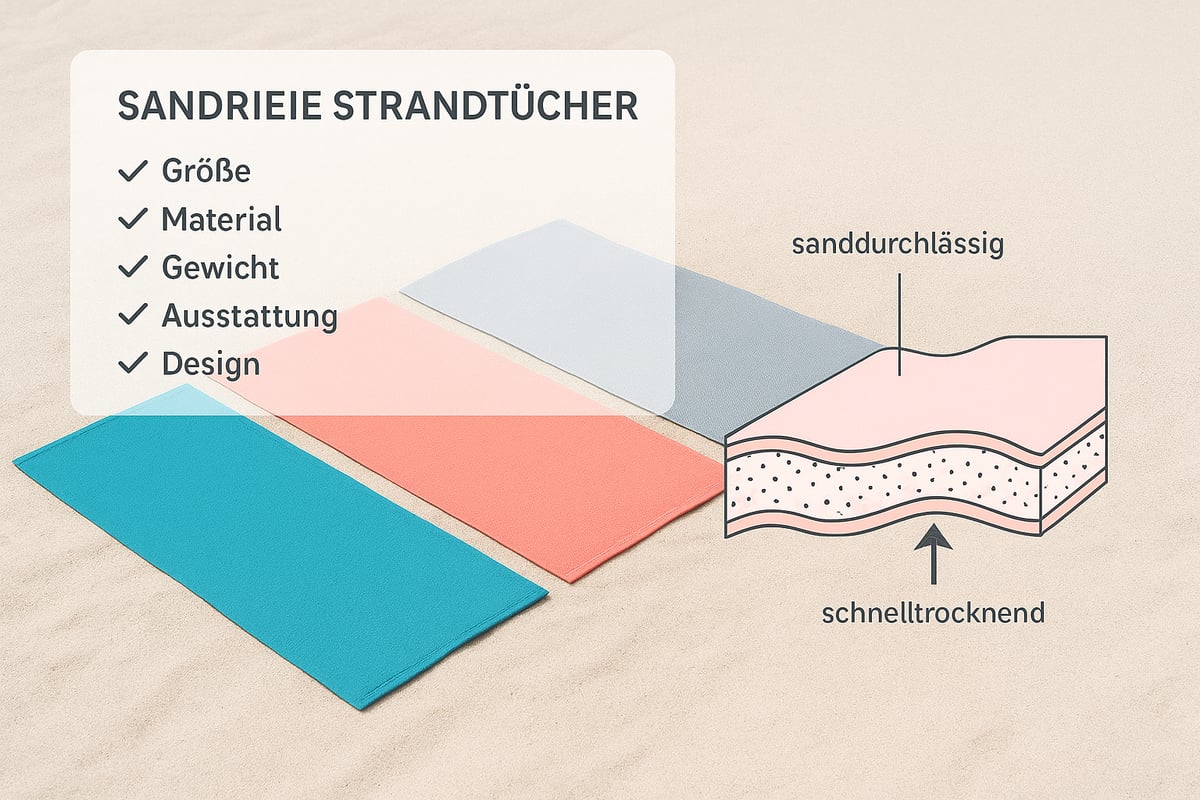
Step-by-step instructions for selection
Before buying a sand-free beach towel, you should define your exact intended use. Are you more of a classic beachgoer, do you go camping, or do you need a versatile towel for sports and travel? This will influence the size, weight, and features.
Consider which size suits you best: A standard size is usually sufficient for individuals, while families benefit from XXL versions. Also check the packed size, especially if you plan to take the sand-free beach towel with you when traveling.
Choose a material that meets your needs. Microfiber offers high comfort and dries quickly, while mesh or recycled plastics are particularly lightweight and allow sand to pass through. Look for special features like UV protection, sewn-in pockets, or attachment loops if you value extra functionality.
The design is also not to be underestimated: From minimalist colors to eye-catching patterns, everything is possible; in some cases, you can even have your sand-free beach towel personalized.
It's worth comparing prices: Budget models start at around €30, while premium products cost around €90. Check for deals and discounts, especially on sets or family bundles.
What you should pay attention to when buying
When buying a sand-free beach towel, you should look for sustainability certifications such as OEKO-TEX or GRS to ensure you get an environmentally friendly product. Customer reviews and current testimonials from 2025 or 2026 provide information about the durability and actual sand resistance of the models.
Manufacturers like VOITED, Tesalate, Dock & Bay, or SandfreeCo offer a wide selection, often with warranty and return policies. Check whether a replacement or repair is offered in case of a warranty claim.
Pay attention to the price-performance ratio. The most expensive sand-free beach towel isn't always the best one for you. Different models offer various advantages depending on their features and materials. Looking at market trends for XXL beach towels will help you identify current innovations and popular features.
Compare the most important criteria clearly:
| criterion | Recommendation | Notes |
|---|---|---|
| material | Microfiber, mesh, recycled | Depending on comfort and purpose |
| Size | Single, Family, XXL | Consider the area of application |
| equipment | UV protection, pockets, loops | Practical extras |
| sustainability | Check certificates | OEKO-TEX, GRS, recycled |
| Price | €30–90 | Weigh up the price-performance ratio |
Tips for online and offline shopping
You can purchase your sand-free beach towel both online and in brick-and-mortar stores. Popular places to look include sporting goods stores, outdoor shops, or specialized online retailers. When buying online, pay attention to transparent shipping terms, delivery times, and a fair return policy.
Seasonal offers are especially common in spring and summer, often including family bundles or discounts. Buying in-store allows you to directly touch the sand-free beach towel and test its texture, which is particularly helpful for those with sensitive skin.
Before buying, read recent customer reviews and find out about the retailer's services. Good support and a hassle-free return policy offer added peace of mind. Note down the dimensions, weight, and care instructions to ensure the sand-free beach towel integrates seamlessly into your daily routine.
With these tips, you're guaranteed to find a sand-free beach towel that suits your lifestyle, budget, and quality requirements.
The best sand-free beach towels of 2026 compared
The market for sand-free beach towels is booming in 2026, as more and more beach lovers are opting for innovative solutions for a clean and comfortable day at the seaside. But which sand-free beach towel is right for you? In this comparison, we take a close look at the top models, user reviews, and give you specific recommendations for different needs.
Market overview & test criteria
By 2026, numerous models will be available, differing in material, function, and design. A sand-free beach towel is particularly appealing due to its ability to allow sand to simply pass through and not adhere to the fabric. The most important test criteria are sand resistance, comfort, drying time, weight, and sustainability.
The following table gives you a quick overview of the top 5 products for 2026:
| Model | material | Size (cm) | Weight | Special features | User rating |
|---|---|---|---|---|---|
| VOITED Beach Sheet | Polyester mesh | 160x200 | 900g | UV protection, recycled | 4.8/5 |
| Tesalate Towel | microfiber | 160x80 | 400g | quick-drying | 4.7/5 |
| Dock & Bay | recycled PET | 200x90 | 450g | Compact, many colors | 4.6/5 |
| Decathlon Sandfree | Polyethylen | 170x130 | 600g | Budget-friendly | 4.5/5 |
| Local Eco-Brand | organic cotton | 180x100 | 500g | Sustainable, allergy-friendly | 4.7/5 |
A sand-free beach towel like the VOITED Beach Sheet scores points with its high sand permeability and robust material. Users praise its easy cleaning and pleasant feel against the skin. Families especially appreciate XXL models with fastenings, while frequent travelers prefer ultra-lightweight versions.
Innovations in 2026 include improved non-stick coatings, UV protection, and antibacterial finishes. The wholesale market is also expanding, as demonstrated by the 10-piece beach towel set featuring various sand-free, diamond-woven towels , which is particularly attractive for groups or holiday homes.
The demand for high-quality, sand-free beach towels is steadily increasing, which is also reflected in the consistently positive user reviews. Many models offer multifunctional uses, from picnics to yoga, and are available in various colors and designs.
Recommendations for different needs
Not every sand-free beach towel is equally suitable for every purpose. We'll show you which model suits your needs:
- For families: XXL versions like the VOITED Beach Sheet offer ample space and can be secured with pegs to ensure the sand-free beach towel remains stable even in windy conditions.
- For travelers: Ultralight and compact models like the Dock & Bay are ideal for backpacks, as they take up very little space and dry quickly.
- For children: Colorful, hypoallergenic designs made from organic cotton protect sensitive skin and ensure fun at the beach.
- For the environmentally conscious: Brands like Local Eco-Brand rely on recycled materials or organic cotton and guarantee you a sustainable, sand-free beach towel.
When choosing a beach towel, always pay attention to the test criteria and read current user reviews. A sand-free beach towel should not only be practical but also durable and easy to care for. Most models can be easily machine-washed and retain their sand-repellent properties for many seasons.
With a suitable sand-free beach towel, your next beach day is guaranteed to be more relaxing, hygienic, and sustainable. Experience the comfort and versatility for yourself and find your personal favorite for 2026.
Care, cleaning & longevity
A sand-free beach towel is a real asset for any trip to the beach, but to ensure you can enjoy it for as long as possible, proper care and thoughtful cleaning are crucial. With targeted measures, your sand-free beach towel will remain hygienic, functional, and durable.
Proper cleaning and care
To ensure your sand-free beach towel retains its functionality, you should follow a few important care tips. Ideally, wash the towel on a gentle cycle at a maximum of 30 degrees Celsius. Avoid fabric softener, as it can cause the special fibers to clump together. A mild, eco-friendly detergent maintains the sand-permeability and protects the material.
Ideally, dry your sand-free beach towel in the air. This protects the fabric and extends its lifespan. For stubborn stains, pretreat them directly with a little bile soap or a gentle stain remover. Odors usually disappear after just one wash in the fresh air.
For even more practical care tips, take a look at this detailed guide to the care of hammam and beach towels , which also offers valuable advice for your sand-free beach towel.
Regular and gentle cleaning ensures that your towel looks like new even after many days at the beach.
Repair and upcycling
Minor damage to a sand-free beach towel can often be easily repaired yourself. A small tear can be quickly mended with a sewing kit or special repair tape. Many manufacturers even offer repair services or replacements under warranty. Check the terms and conditions with your manufacturer for details.
If your sand-free beach towel has worn out after a few years, you don't have to throw it away. Upcycling ideas like transforming it into a lightweight picnic blanket, a pillowcase, or even a shopping bag give the material a second life. This way, you make the most of its durability and actively contribute to conserving resources.
With a little creativity, an old sand-free beach towel can be transformed into a sustainable everyday companion.
Sustainability in everyday life
A sand-free beach towel is not only practical, but also beneficial for the environment. Because it absorbs less sand and dirt, it needs to be washed less often. This saves water, energy, and detergent. The robust materials ensure a significantly longer lifespan compared to traditional cotton towels.
When your sand-free beach towel finally reaches the end of its lifespan, dispose of it in the most environmentally friendly way possible. Many models can be recycled or taken to special collection points. It's best to check with the manufacturer for more information.
By using a sand-free beach towel, you support a sustainable lifestyle and actively reduce your ecological footprint.
FAQ: Frequently asked questions about sand-free beach towels
Do you have questions about sand-free beach towels? Here you'll find the most important answers regarding function, comfort, suitability, and care, so that your next beach day is guaranteed to be sand-free.
Do sand-free beach towels really work with every type of sand?
A sand-free beach towel works on almost all common types of sand, whether fine white or coarser. The special weave allows sand to trickle through instead of holding onto it. However, with extremely fine dust or wet sand, a minimal amount may remain. Compared to traditional towels, though, the effect is significantly noticeable.
How does the material feel on the skin?
Modern sand-free beach towels are usually made of microfiber, mesh, or polyethylene. They are pleasantly soft, skin-friendly, and often even hypoallergenic. Many users report that a sand-free beach towel is very comfortable even for sensitive skin. Some models also offer antibacterial properties, which is particularly beneficial for allergy sufferers.
Are they suitable for allergy sufferers?
Yes, a sand-free beach towel is generally suitable for allergy sufferers, as it retains less dust and sand particles. Many manufacturers use skin-friendly materials. Furthermore, the towels are easy to clean, which further reduces the risk of allergens.
How do budget models differ from premium models?
The differences lie primarily in material quality, durability, and additional features. Premium models often offer a denser fabric, better sand permeability, and extras such as UV protection or pockets. Budget-friendly options usually fulfill their basic purpose but often have a shorter lifespan. An overview:
| feature | Cheap | Premium |
|---|---|---|
| material | Simple, thin | High-quality, robust |
| Sand-permeable | Good | Very good |
| Extras | Rarely | Yes (e.g. UV) |
| durability | 1-2 seasons | 3-5 seasons |
Can I use a sand-free beach towel as a picnic blanket?
Yes, a sand-free beach towel is also excellent as a picnic blanket, yoga mat, or camping groundsheet. Its sand-repellent properties ensure that your food and belongings stay clean.
How long does a sand-free beach towel typically last?
The lifespan depends on the material and care. High-quality models often last for several years and are more resistant to UV radiation and saltwater. With proper washing and storage, you can use your sand-free beach towel for many seasons.
Are there alternatives to sand-free beach towels?
As alternatives, classic cotton towels, bamboo beach mats, or water-repellent blankets are suitable. However, they don't offer the same sand-free comfort. The importance of this issue is growing, not least because of the global sand shortage , which also affects the protection of our beaches.
What to do if sand still sticks?
If sand does stick to the cloth despite all efforts, a quick shake or tap usually helps. For wet sand, it's best to let the cloth dry and then shake it again. Stubborn residue can usually be removed with a gentle wash.
Trends & Outlook: The Future of Sand-Free Beach Towels
The world of sand-free beach towels is evolving rapidly. By 2026, innovations and new technologies will take center stage, making your beach day even more comfortable. Manufacturers are constantly investing in research to create materials that are not only sand-free but also exceptionally durable, sustainable, and pleasant against the skin.
Innovations in materials and technologies
The focus for the coming years will be on sand-free beach towels made from innovative fabrics. New fibers, such as advanced microfiber and mesh fabrics, will ensure even better sand permeability and faster drying times by 2026. Some models will offer additional features like integrated UV protection or antibacterial coatings, which is particularly attractive for allergy sufferers and families with children.
The proportion of recycled materials is also increasing: according to industry reports, the use of recycled plastic is growing by 15 percent annually. Environmentally friendly alternatives such as organic cotton and recycled PET bottles are becoming increasingly popular and offer a sustainable option for sand-free beach towels.
Smart features and personalization
The future brings smart features. More and more sand-free beach towel models come with clever extras: hidden pockets for valuables, integrated cooling zones for hot days, or even small trackers to prevent your towel from getting lost. Personalization is trending – you can often customize your sand-free beach towel with your own designs, names, or color combinations.
Those who value clever travel equipment should take a look at travel essentials for the beach , where practical tips and accessories for a relaxing day at the seaside are presented.
Sustainability and social change
Sustainability will be a key theme in 2026. Many manufacturers are collaborating with environmental organizations and designers to make sand-free beach towels even more resource-efficient and appealing. Production is increasingly localized, and short supply chains reduce the ecological footprint. Packaging is also being designed to be more environmentally friendly.
Outdoor enthusiasts are increasingly focusing on durable products. The sand-free beach towel scores points here due to its robustness and the reduction in washing cycles, which saves water and energy.
Forecast and market development
According to the outdoor industry association, the market for sand-free beach towels is growing by 12 percent annually. Families and frequent travelers are particularly fond of these innovative towels. XXL sizes, multifunctional designs, and lightweight travel versions are in higher demand than ever.
The following table shows which features will be in high demand in 2026 and how demand is developing:
| feature | Popularity 2026 | Forecast 2027+ |
|---|---|---|
| Recycled materials | High | Further rising |
| Smart bags | Medium | Sharply rising |
| UV protection | Very high | Remains stable |
| personalization | High | Increasingly |
| Cooling zones | Medium | On the rise |
Outlook: What awaits us in the future?
The sand-free beach towel is poised for exciting developments by 2027 and beyond. Even lighter fabrics, smart app connectivity, and further collaborations with designers are expected. Customization options will expand, as will the focus on circular economy practices in production.
The sand-free beach towel remains a must-have for anyone who values cleanliness, comfort, and sustainability at the beach. Those who pay attention to the trends now will be perfectly prepared for next summer.
Looking for a clean, relaxing day at the beach while also being mindful of sustainability? Modern sand-free beach towels offer just that – combined with smart materials, minimalist design, and practical benefits. Discover how the right essentials can not only enhance your comfort on the beach but also contribute to protecting our oceans. MAIN Design combines sustainable swimwear and accessories that will add a special touch to your summer. If you'd like to learn more about stylish, eco-friendly products for the beach and everyday life, you can explore further here.