

The first few months with a baby are full of discoveries – a baby playmat offers your child exactly the safe space they need to play and grow. Wondering what to look for when buying one? This guide provides expert advice on features, materials, sizes, designs, safety, care, and current trends.
Discover how a suitable playmat not only promotes your baby's development but also provides safety and comfort in everyday life. Get inspired and make an informed decision for 2026.
What is a playmat and why is it important?
A baby playmat is much more than just a pretty accessory in the nursery. It provides a safe base for your baby's first explorations. From the very beginning, it ensures your child is softly cradled and can move freely. Especially in the first year of life, when babies are curiously exploring their environment, a high-quality baby playmat creates a protected space that invites grasping, rolling, and crawling.
What actually distinguishes a baby playmat from a regular baby blanket or a classic play mat? The following table shows the most important differences at a glance:
| feature | Baby playmat | baby blanket | Playmat |
|---|---|---|---|
| upholstery | thick, soft | thin | usually thin, sometimes harder |
| Slip resistance | often present | rarely | occasionally |
| Protective function | high | small amount | medium |
| Design focus | child-friendly, robust | decorative | playful, colorful |
| Area of application | versatile | in bed/stroller | Play area |
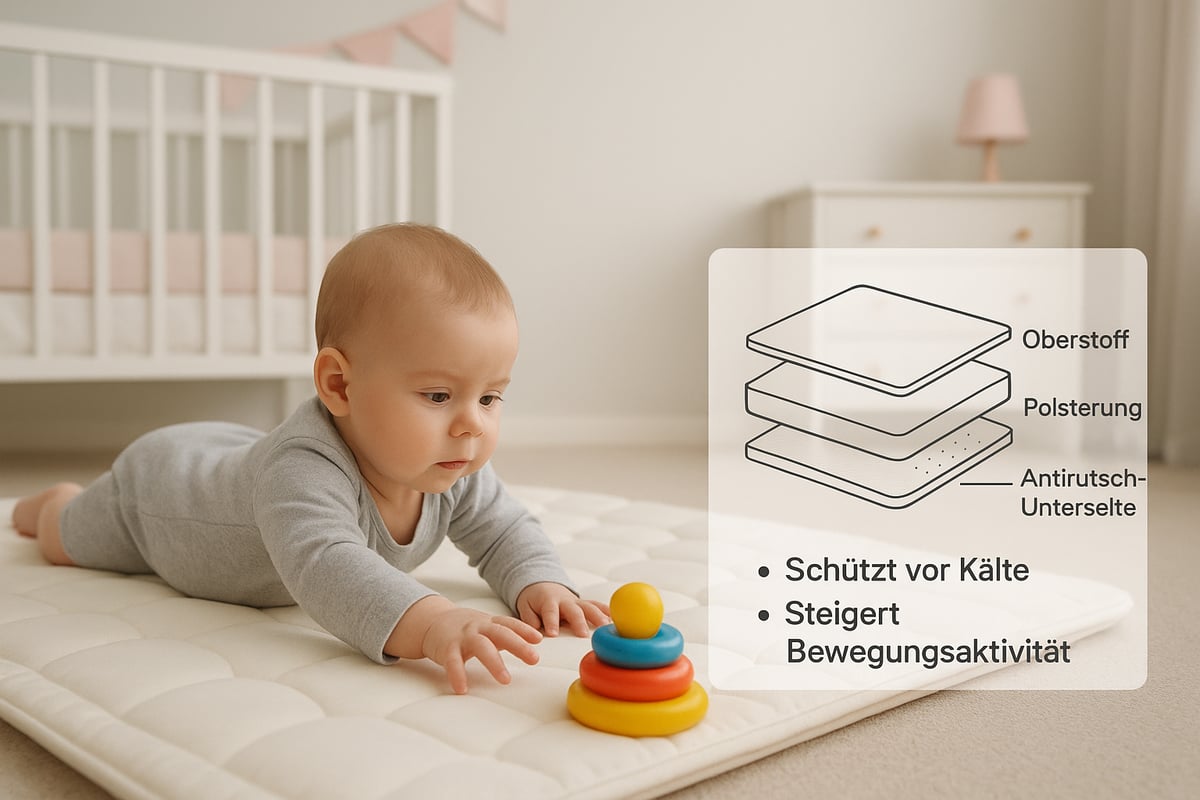
A baby playmat is specifically designed to promote motor development. It offers a soft, padded surface on which babies can safely make their first attempts at rolling over and crawling. The various fabrics, colors, and patterns also stimulate sensory development. Studies show that babies who regularly play on a baby playmat develop independent motor skills earlier.
Besides promoting development, safety is paramount. The padding reliably protects against cold floors and impacts. This is a huge advantage, especially on tile or laminate flooring. A non-slip underside ensures that the baby playmat stays in place, even with active babies. At the same time, it provides a clearly defined play area, which makes everyday life easier for parents.
The possible uses are diverse:
- In the living room as a play island
- In the garden for the first picnic
- Visiting relatives or friends
- In the baby's room as the centerpiece of the play area
Many parents report that a baby playmat quickly becomes the heart of everyday life because it combines play, protection, and security. If you're looking for guidance when buying a playmat, this guide offers helpful information on size, material, and care. This will make the choice easier and more confident for you and your baby.
The most important buying criteria for playmats in 2026
When buying a baby playmat, you should pay attention to several aspects to ensure your child can play safely, comfortably, and healthily. In 2026, parents will have numerous options available, differing in size, material, safety, and design.
Size and shape: Flexibility for every situation
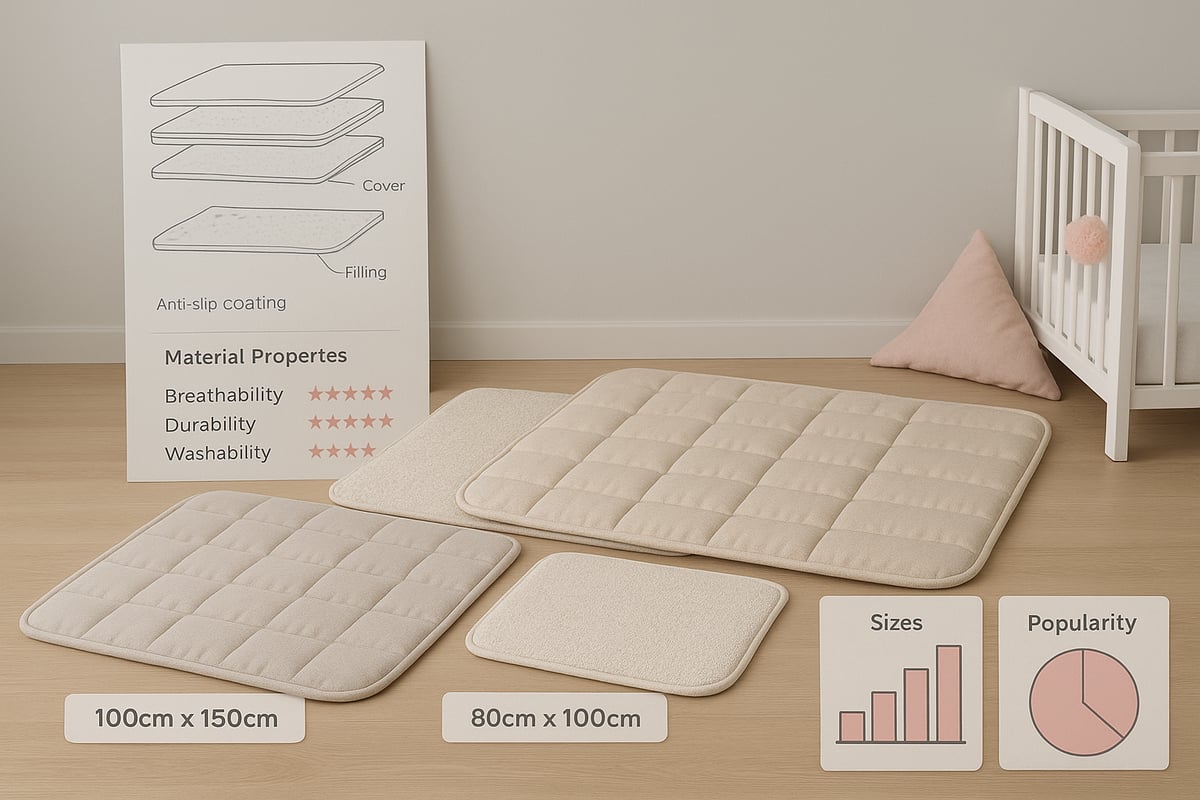
The size of a baby playmat depends on the available space and your child's needs. Standard sizes are 80x80, 100x100, 120x120, and 140x140 cm. Larger models offer more freedom of movement, while smaller ones fit well in playpens or are convenient for travel.
| Size | Suitable for | Advantages |
|---|---|---|
| 80x80 cm | Newborns, on the way | Compact, easy to transport |
| 100x100 cm | Baby room, playpen | Versatile, flexible |
| 120x120 cm | Living room, play area | More space to crawl |
| 140x140 cm | Garden, larger areas | Maximum freedom of movement |
Make sure the shape is suitable for its intended use. Round and rectangular models are particularly popular for baby playmats.
Material selection: focus on comfort and safety
The material affects skin compatibility and care requirements. Cotton, organic cotton, and OEKO-TEX® certified fabrics are popular. The filling can consist of polyester or natural fibers. Organic materials are particularly gentle on baby's skin and are environmentally friendly.
A high-quality baby playmat should be breathable, soft, and free of harmful substances. Certifications such as OEKO-TEX® and GOTS provide additional assurance.
Tip: Choose materials that you can wash at at least 40°C. This makes everyday hygiene easier.
Thickness, padding and slip resistance
For optimal protection on hard or cold floors, a well-padded baby playmat is essential. The thickness should be between 2 and 4 cm to absorb impacts and provide comfort.
A non-slip backing ensures the blanket stays in place, even when your baby is active. Look for sturdy construction and no loose parts.
Design, colors and personalization
In 2026, both minimalist and playful designs will be in demand. Natural tones, rainbow patterns, and animal motifs are trending. Many manufacturers offer the option of personalizing a baby playmat with a name or initials.
The design should not only be appealing but also complement the decor. Timeless patterns can be easily combined with other accessories.
Price-performance ratio and manufacturer
Prices for baby playmats vary depending on quality and brand. High-quality models cost between €40 and €120. Look for good workmanship, tested materials, and useful extras such as removable covers.
As a guide for purchasing and for an independent overview of current models and test results, a look at playmat comparisons is recommended.
Statistics and Trends
According to recent surveys, organic cotton and OEKO-TEX® certified fabrics are the most popular materials for baby playmats. The standard size of 100x100 cm remains the most popular, closely followed by 120x120 cm. Parents particularly appreciate easy-care, durable, and versatile models.
By combining all these criteria, you are guaranteed to find the perfect baby playmat for your family's needs.
Safety and health: What should you pay attention to?
Your baby's safety and health are paramount when choosing a baby playmat. Especially during the first year, a baby's skin is particularly sensitive and their immune system is not yet fully developed. Therefore, it's important to ensure the highest standards are met when selecting a baby playmat to avoid risks and provide your child with a safe and secure environment.
Freedom from harmful substances and choice of materials
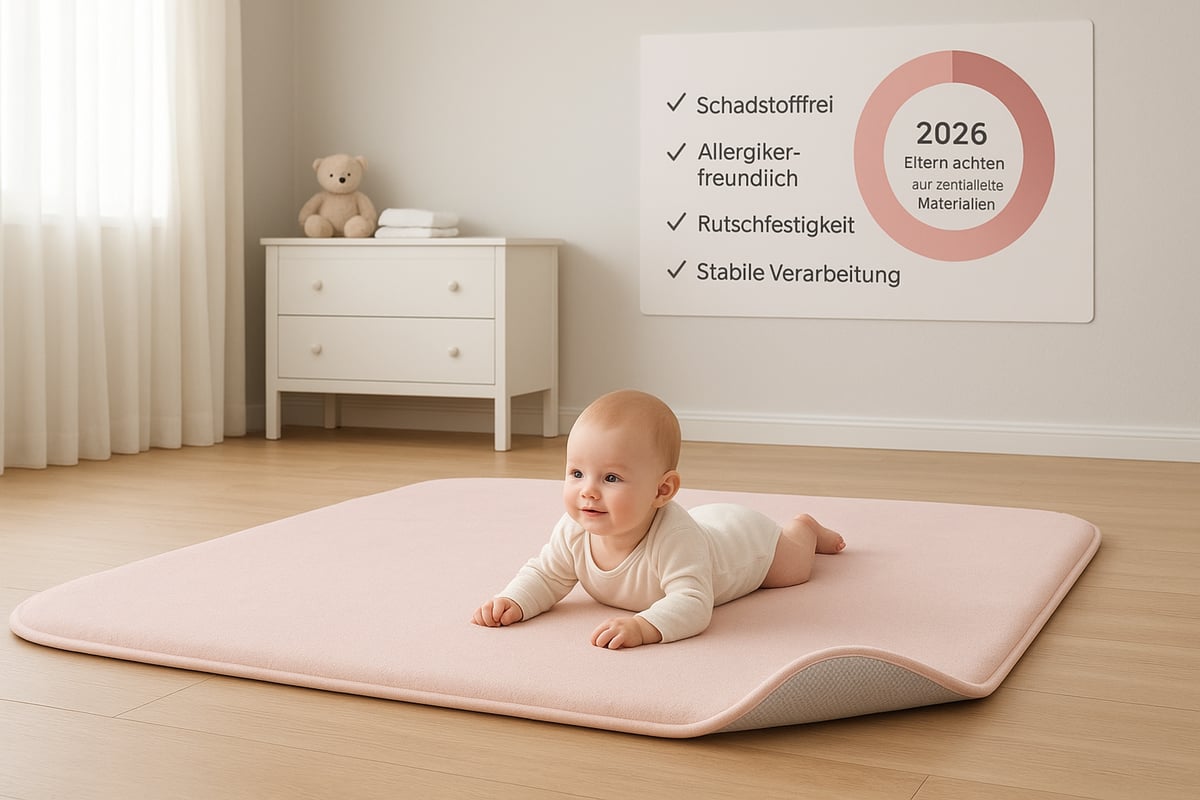
Make sure the baby playmat is made of certified, non-toxic materials. Independent labels such as OEKO-TEX®, GOTS, or TÜV confirm that it contains no harmful chemicals. Babies often explore their surroundings with their mouths and hands, so a non-toxic playmat is essential for their safety.
A comparison of important certificates:
| certificate | Meaning | Advantage for babies |
|---|---|---|
| OEKO-TEX® | pollutant test | Protection against allergies |
| GOTS | Organic cotton, sustainable | Gentle on baby skin |
| TÜV | Safety & Processing | Durability and reliability |
Allergy-friendly and hypoallergenic options
If your child is prone to allergies, you should specifically look for a baby playmat with hypoallergenic filling. Natural fibers such as organic cotton or bamboo are particularly gentle on the skin and reduce the risk of skin irritation. Polyester fillings should be specially labeled and tested for harmful substances.
Processing and safe construction
A good baby playmat is characterized by sturdy, double-stitched seams. It should not contain any small parts that could be swallowed, buttons, or loose appliqués. Strong seams prevent filling from escaping. Regularly check the playmat for damage to ensure it is safe for babies.
Slip resistance and fire protection
A non-slip backing is essential, especially on smooth floors. It ensures that the baby playmat stays in place even during active movements. Additionally, look for flame-retardant materials and manufacturing that complies with current fire safety regulations (2026). Studies show that unsafe surfaces can lead to preventable accidents. For an overview of safety standards, see the article "Safe Baby Sleep in Advertising" .
Hygiene and cleaning
Regular washing of your baby's playmat is important to remove germs, mites, and allergens. Most playmats are machine washable at 40 degrees Celsius. Stains should be treated immediately to prevent bacterial growth. For allergy sufferers, a weekly change is recommended.
Practical examples and statistics
Many parents report how a safe and well-maintained playmat has prevented everyday accidents for their baby. According to current statistics, most incidents are due to unsafe materials or insufficient slip resistance. With the right choice, you protect your child and create a healthy environment for exploration.
Designs, colors and trends 2026
The design of a baby playmat in 2026 is more than just a visual statement – it reflects current trends, the needs of parents, and the world of the child. Colors, patterns, and materials are carefully selected to promote both the baby's well-being and development.
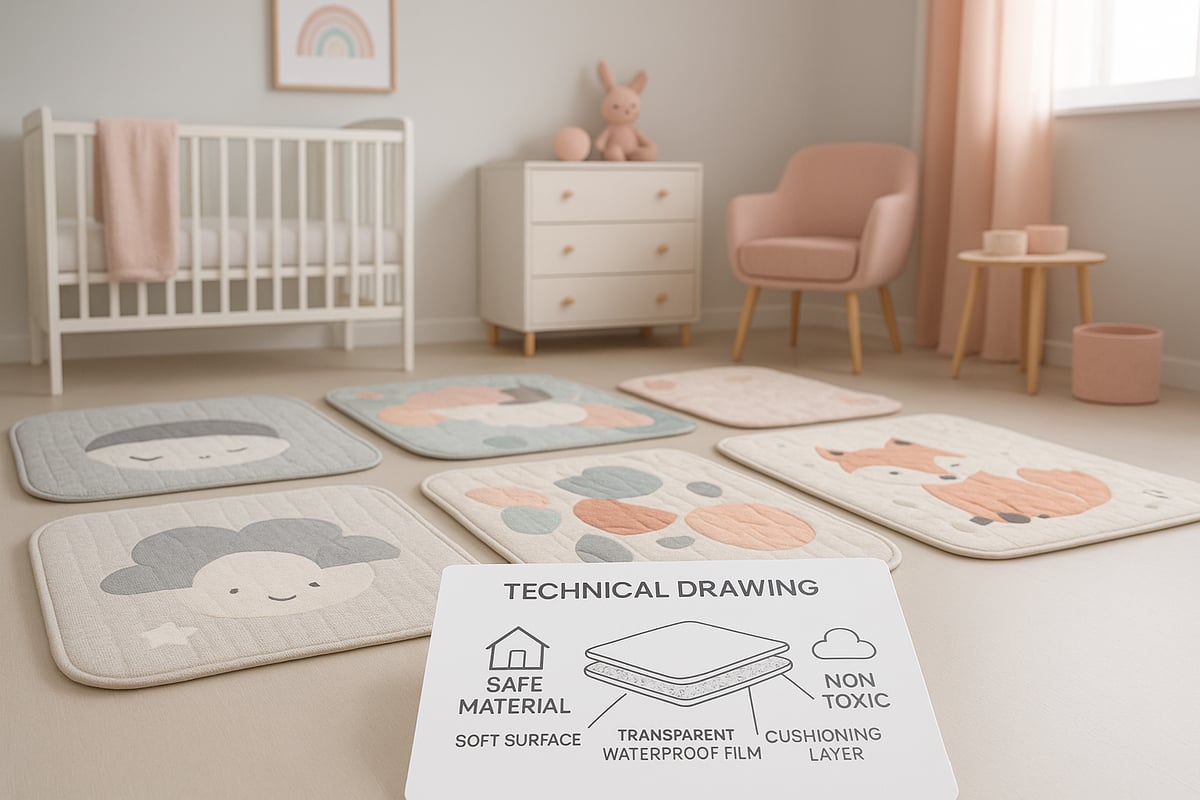
Trend colors and patterns: Naturalness & diversity
In 2026, soft natural tones like beige, olive green, and terracotta will dominate the world of baby playmats. These colors have a calming effect and are easy to combine with modern decor. Patterns featuring animals, rainbows, leaves, or geometric shapes are especially popular.
A look at current bestsellers shows that rainbow designs are among the absolute favorites. Anyone looking for inspiration should check out the Rainbow Playmat . This model combines soft colors, high-quality materials, and a playful motif that encourages babies to grasp and explore.
Minimalist or playful: What suits you?
When choosing a baby playmat, you can select between minimalist looks and elaborate, child-friendly designs. Minimalist mats feature clean lines and subtle colors that blend seamlessly into the nursery. Playful versions incorporate colorful patterns, friendly animal faces, or creative shapes, making the mat a real eye-catcher.
Influencers and social media significantly shape these trends. Parents share their favorite designs and inspire others with creative combinations of blankets, pillows, and decorative items. Limited editions and collaborations with well-known brands provide additional exclusive highlights.
Personalization: Unique gifts and keepsakes
Personalized design is a strong trend for baby playmats. Many manufacturers offer name embroidery, birth details, or custom designs. This makes the playmat a truly personal gift for a birth, christening, or first birthday.
Personalized baby playmat designs are especially popular when it comes to creating lasting memories. They can also be wonderfully combined with other accessories such as baby nests, bed bumpers, or play gyms.
Statistics & Examples: What parents will prefer in 2026
According to current market analyses, nature motifs, rainbows, and soft pastel shades are particularly popular for baby playmats. Geometric patterns and animal illustrations top the bestseller lists at retailers such as Ullenboom and Baby-Walz.
Many parents appreciate it when a baby playmat is not only functional but also visually versatile. Combining it with other nursery accessories creates a harmonious overall look and reflects the family's individual style.
Care and cleaning: How to keep your playmat looking good for a long time
A clean and well-maintained baby playmat is not only hygienic, but also ensures durability and comfort. Especially in the daily life of a baby, stains, crumbs, and little accidents can happen quickly. With proper care, your child's favorite playmat will stay fresh and safe for longer.
Care tips for different materials
Not all baby playmats are the same: materials like cotton, organic cotton, or blends have different requirements. Cotton is particularly robust, breathable, and usually washable at 40 degrees. Organic cotton is recommended for sensitive baby skin, while polyester fillings provide extra padding.
| material | Washing temperature | Suitable for tumble drying | Special features |
|---|---|---|---|
| Cotton | 40°C | Yes (gently) | Very easy to care for |
| organic cotton | 30–40°C | Partially | Suitable for allergy sufferers |
| polyester | 30°C | Yes | Quick-drying |
| Mixed fabric | 30–40°C | Partially | Check the care label |
Always check the care label when washing your baby's playmat. This will prevent deformation or color loss.
Washing and drying routine
For your baby's playmat, we recommend a gentle wash cycle with mild, fragrance-free detergent. Avoid fabric softener, as residue can irritate sensitive baby skin. Most models can be tumble dried on a low setting, but air drying will extend their lifespan.
Many parents wash their baby's playmat weekly; more frequent washing is recommended for children with allergies or pets. A stain protector helps to remove small accidents immediately.
Stain removal and everyday care
Babies often spit up, drool, or spill. Immediately dab fresh stains on the baby's playmat with a damp cloth. For stubborn stains, a gentle, natural stain remover will help. For food or milk stains, soaking before washing is recommended.
It's practical to have a second baby playmat on hand as a spare in case one is in the wash. For example, the "Sun" baby playmat offers an easy-care surface and modern materials that can easily withstand frequent washing.
Storage, repair and hygiene
When not in use, fold the baby playmat loosely and store it in a dry place to prevent mold. Small tears can be repaired with a needle and thread or special fabric glue. For allergy sufferers, regular washing at 60 degrees is recommended, provided the material allows it.
Statistically, parents wash their baby's playmat an average of 1-2 times per week, as surveys show. Experience shows that investing in high-quality, easy-care models is worthwhile to ensure the mat remains beautiful, hygienic, and safe for a long time.
Playmats in everyday life: Practical tips & creative uses
A baby playmat is much more than just a soft surface. It quickly becomes a central part of family life, providing babies with a safe space to play, explore, and rest. Whether in the living room in the morning, during story time, or as a relaxing retreat – the baby playmat adapts flexibly to every situation.
Thanks to its versatile uses, the baby playmat becomes an indispensable companion. It protects against cold floors, cushions impacts, and creates a safe environment for first attempts at movement. Especially in the first few months of life, it promotes the development of motor skills and perception. Many parents report that the baby playmat quickly becomes their child's favorite spot.
A playmat as a playground, cuddle spot and retreat
A baby playmat is ideal as a play area. Babies can roll, crawl, and practice their first grasping skills on it. At the same time, it invites cuddling – whether with mom, dad, or siblings. Many families also use the baby playmat as a cozy retreat when the baby needs some peace and quiet.
Another advantage: The baby playmat is easy to move. In the garden, it becomes a picnic blanket; when traveling, it provides a familiar place; and even on vacation, it brings a touch of home. For special occasions, the baby playmat is ideal as a photo backdrop, for example, for month photos or milestone pictures.
Those looking for alternatives will find exciting options such as the Boat playmat , which can provide additional play impulses through its shape and choice of material.
Integration into rituals and creative usage ideas
A baby playmat makes it easier to establish regular daily routines. Whether it's morning circle, story time, or baby yoga – the mat provides a clear framework. It can also serve as a base for motor skills toys, rattles, or activity mats to specifically promote development.
Here are some creative ways to use it:
- Playmat as a stage for mini-theatre or puppet shows
- Singing and making music together
- A place to retreat during family visits or in a café
- Basis for first role-playing games with older siblings
The versatility of the baby playmat makes it an all-rounder – and a daily companion in every family.
Checklist & tips for everyday life
To help you get the most out of your baby playmat, a small checklist will be helpful:
| Tip | Advantage |
|---|---|
| Washable & durable | Fast cleaning, long service life |
| Slip-resistant | Increased safety on smooth floors |
| Choose the right size | Plenty of room to move around for the baby |
| Combinable | With playpen, bed bumper, baby nest |
| Easy-care fabrics | Less effort in everyday life |
For parents looking for a special gift, a gift voucher for the birth is a great option – it can be redeemed flexibly for the desired blanket or suitable accessories.
User reviews show that the average lifespan of a high-quality baby playmat is around 18 months. Surveys indicate that over 90 percent of parents are satisfied with its versatility and practicality. If desired, the playmat can later be kept as a keepsake or passed on to friends.
FAQ: Frequently asked questions about the playmat
Choosing the right baby playmat raises many questions for parents. Here you'll find the most important answers about use, care, and selection, so you can make a confident and informed decision.
From what age and for how long should a baby use a playmat?
A baby playmat is useful from the first few weeks, as soon as your baby starts moving around and exploring their surroundings. It supports their development from lying down to rolling over, crawling, and sitting. Many families use the mat well into toddlerhood, precisely because it is flexible and safe.
What size is ideal for my baby?
The size of a baby playmat depends on the available space and your child's activity level. For newborns, 80x80 cm is often sufficient, while 100x100 cm or 120x120 cm are popular for active babies. Larger models offer more room, especially when toys or siblings join in on the mat.
| Baby's age | Recommended size |
|---|---|
| 0-6 months | 80x80 cm |
| 6-12 months | 100x100 cm |
| From 1 year old | 120x120 cm+ |
Are baby playmats suitable for allergy sufferers?
Many manufacturers use hypoallergenic materials and avoid harmful substances. Look for certifications like OEKO-TEX or GOTS if your child is particularly sensitive. This ensures that the baby playmat remains a safe choice even for allergy sufferers.
How often should a baby's playmat be washed?
Regular cleaning is important, especially for allergy sufferers. In everyday life, one wash per week is usually sufficient; more frequent washing is needed for stains or after illness. Many models are machine washable and dryer safe, but always check the care label of the baby playmat.
Which baby playmat is suitable for travel?
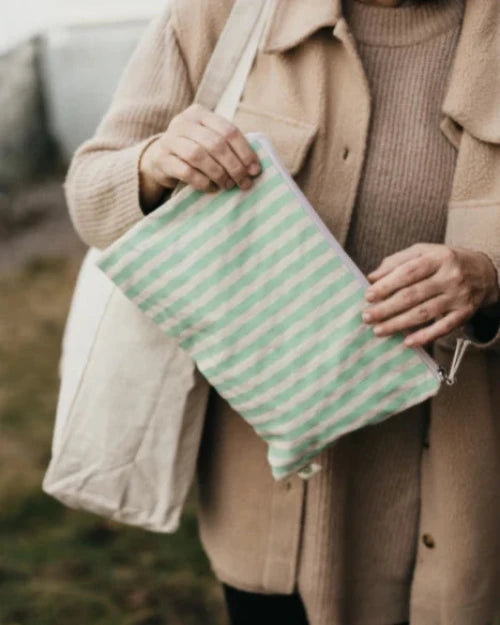
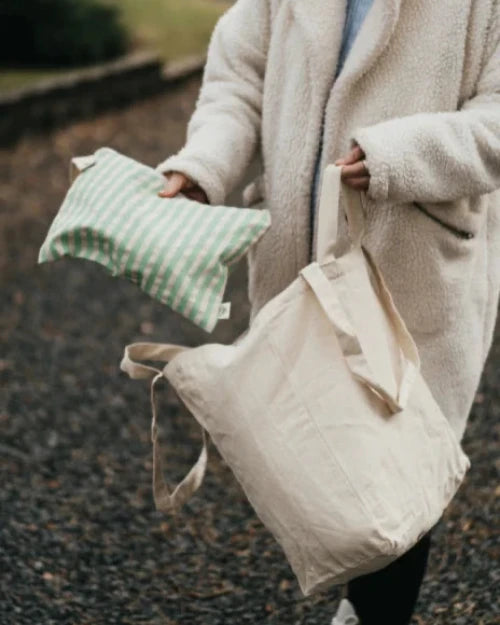
For on-the-go use, a lightweight, foldable baby playmat that can be quickly rolled up is recommended. Models with a water-repellent underside are practical for the garden or picnics. Compact versions fit easily into a stroller or diaper bag.
What to do in case of stains or damage?
For stubborn stains on your baby's playmat, it's best to use stain remover spray or bile soap. Small tears can often be repaired with a few stitches. If the playmat is badly damaged, it should be replaced to ensure safety.
Can the baby playmat also be used in a playpen?
Many baby playmats fit perfectly in playpens and offer extra comfort. Pay attention to the dimensions and make sure that no edges stick up. The padded surface protects against bumps and makes the playpen even cozier.
Tips for storage and care
When the baby playmat is not in use, loosely roll it up or store it in a fabric bag. This will keep it dust-free and help it retain its shape. For longer-term storage, a dry, clean place is recommended.
What should you pay attention to when buying from an online shop?
Compare product descriptions, customer reviews, and check the return policy. Important: When choosing a baby playmat, pay attention to tested materials, safe workmanship, and the correct size. Certificates provide additional assurance.
Recommendations for sustainable and safe baby playmats
More and more parents are placing importance on sustainable production and certified quality. Labels such as GOTS, OEKO-TEX, and Fairtrade guarantee textiles free of harmful substances. According to the 2015 report on indoor baby products in Germany , most households regularly use playmats, with natural materials and certified safety being particularly popular. User reviews from parenting forums confirm that a well-designed playmat remains a staple in family life for a long time.
Whether you're looking for the perfect playmat for your baby or want to learn about safe, sustainable materials and current trends – it's wonderful that you're taking the time to make conscious choices. After all, it's about comfort, security, and a safe environment for your child – values that are also central to MAIN Design. Want to discover more about stylish and responsibly produced essentials for family and everyday life? Then feel free to stop by and explore further .