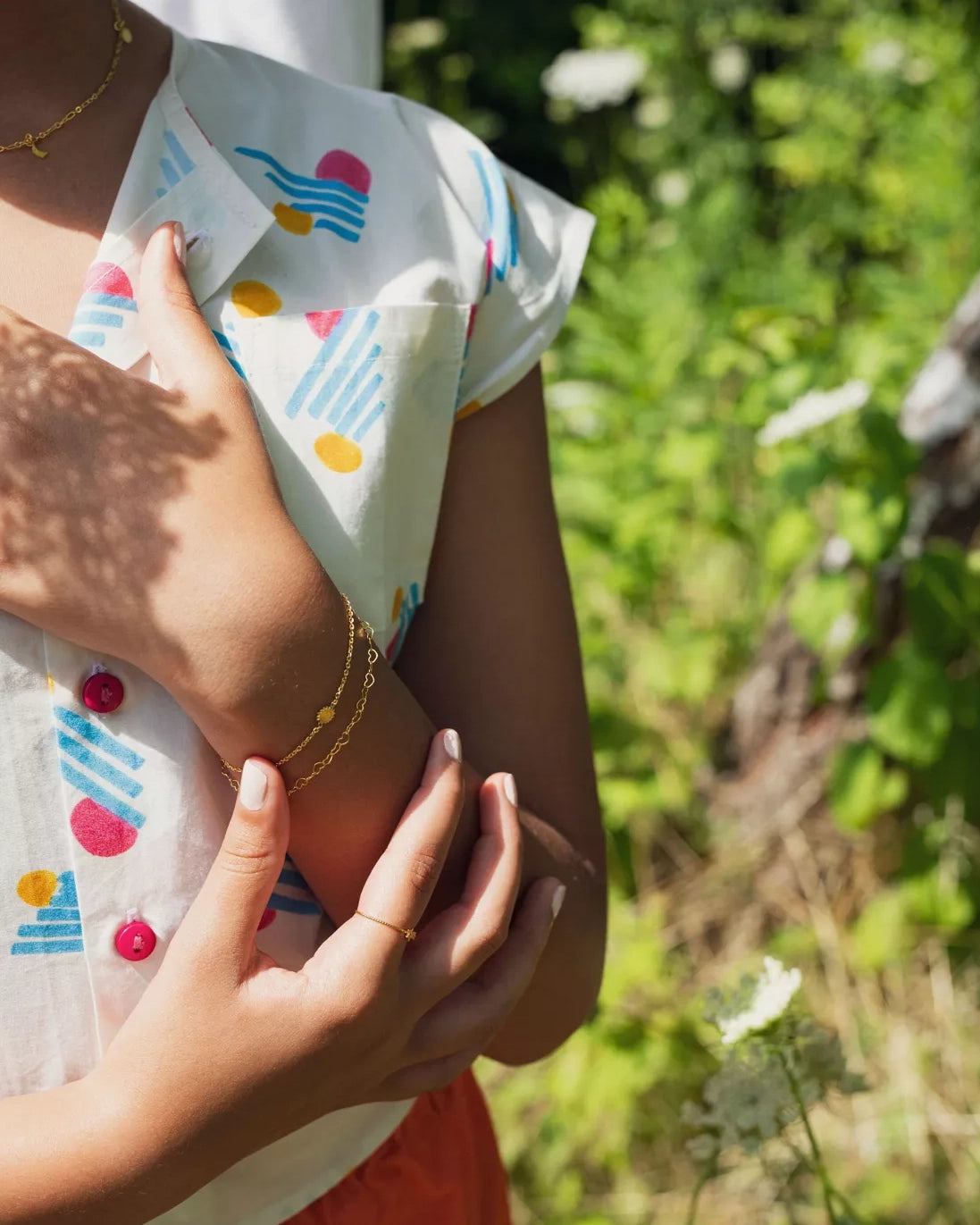
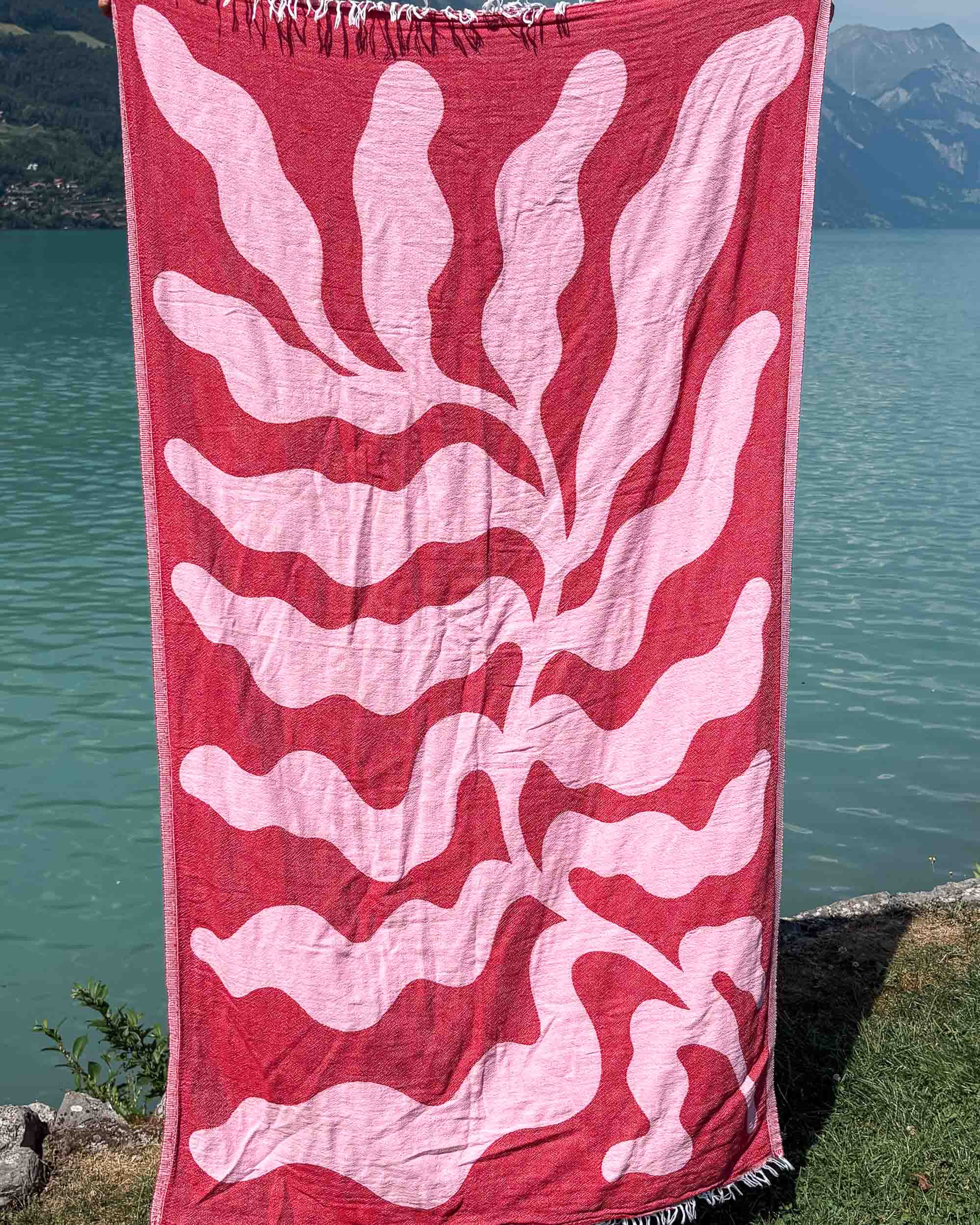


A kimono robe is more than just a piece of clothing. It's the feeling you get when you walk barefoot across cool wooden floors in the morning, open the garden door, and the fabric gently drapes around your shoulders. Light enough not to weigh you down. Present enough to envelop you. This simple companion combines centuries-old Japanese craftsmanship with the need for freedom and naturalness in our everyday lives. Whether it's for your first coffee by the window, after a shower, or as a casual cover-up on the beach – the kimono robe adapts without being intrusive.
From Traditional Garment to Modern Essential
The roots of the kimono style run deep in Japanese cultural history. Originally, the kimono was an artfully crafted garment with symbolic meaning, its cut, color, and pattern reflecting social status and occasion. Over the decades, this silhouette traveled across continents and found its way into Western bedrooms and bathrooms.
The kimono robe retains its characteristic shape: an open cut, wide sleeves, and a tie belt. However, it foregoes heavy brocade fabrics and complex patterns. Instead, it focuses on lightness.
Why the Open Cut is So Liberating
- No buttons, no zipper – just throw it on and tie it
- Air circulation is maintained, nothing sticks to the skin
- Freedom of movement in all directions, ideal for relaxed mornings
- Quick to put on and take off, perfect for spontaneous moments
The absence of rigid fasteners makes the kimono robe a garment that adapts to the body, not the other way around. This philosophy reflects what many people are looking for in 2026: less constraint, more flow.
Material and Feel – What Makes the Difference
A kimono robe thrives on its material. The choice of fabric determines whether you wear it in high summer or on cool autumn evenings, whether it dries you after bathing or warms you in the morning.
| Material | Properties | Best Season | Feel |
|---|---|---|---|
| Cotton | Breathable, absorbent, easy-care | Year-round | Soft, natural |
| Linen | Cooling, textured, durable | Spring/Summer | Light, airy |
| Cotton-Linen Blend | Combines softness with breathability | Spring to Autumn | Pleasantly flowing |
| Muslin | Ultra-light, multi-layered, delicate | Summer | Gossamer, floating |
Natural fibers are at the heart of it. They absorb moisture, allow air to pass through, and feel authentic. OEKO-TEX® certified cotton also guarantees that no harmful substances touch the skin – especially important for clothing worn directly after showering.
Recycled materials are also gaining importance in loungewear. Those who live sustainable values consciously choose pieces that have been produced in a resource-efficient manner.
Texture and Wearing Comfort in Everyday Life
A linen kimono robe feels different from one made of combed cotton. Linen has structure, a certain roughness that softens over time. Cotton immediately nestles, yields, envelops. Both have their justification.
If you get cold quickly in the morning, opt for densely woven cotton. If you don't like heat, choose linen or muslin. The right kimono robe adapts to your rhythm – not to the expectations of others.
Styling Options – From Bedroom to Beach
For a long time, the kimono robe was understood as pure loungewear. But this boundary is blurring. In 2026, people wear what feels good – regardless of context.
At home:
- Over pajamas as a warming layer
- After showering, directly on the skin
- When working on the laptop, if comfort is desired
- In the evening on the terrace with a cup of tea
On the go:
- As a cover-up over swimwear at the beach or in the lido
- Over a tank top and shorts for a walk
- As a light jacket on warm summer evenings
- In the yoga studio before and after class
The open form can be combined as desired. A narrow belt emphasizes the waist. Loosely tied, the kimono robe looks casual and relaxed. Some wear it completely open over a basic outfit – one more layer, without being over-laden.
Color Choice and Personal Expression
Earth tones dominate in 2026. Sand, terracotta, olive green, warm grey. These colors suit nature, the longing for reduction and authenticity. A kimono robe in natural tones can be effortlessly combined with everything that is already in the wardrobe.
Those who like contrasts choose models with contrasting accents – for example, fringes in a different shade or a band that stands out in color. These small details give the simple cut personality without making it loud.
Care and Longevity – Less is More
A well-made kimono robe lasts for years. Prerequisite: You treat it correctly. Natural fibers are robust, but they need attention.
Washing:
- Cotton at 30-40°C, linen at 40°C
- Mild detergent without bleach
- Wash inside out to protect colors
- No fabric softener – it clogs the fibers and reduces absorbency
Drying:
- Air dry, ideally lying flat or hanging
- Avoid direct sunlight – colors bleach out
- Linen can be ironed slightly damp, which makes smoothing easier
- Cotton usually doesn't need ironing if hung smoothly
Storage:
- Loosely on a hanger or folded in the closet
- Do not squeeze – the loose silhouette should be maintained
- For longer periods of non-use, store in a fabric bag, not plastic
If you follow these simple steps, you will enjoy your kimono robe for a long time. Natural fibers even become more beautiful over time – softer, smoother, more familiar.
Sustainability and Conscious Consumption
A kimono robe is not a disposable product. It belongs to those pieces that you buy because you really need them and that then stay for years. This attitude fits the growing movement that prioritizes quality over quantity.
Those who pay attention to sustainable materials make a decision that goes beyond their own wardrobe. Recycled fibers, OEKO-TEX® certified cotton, linen from European cultivation – all of this reduces the ecological footprint.
Brands like MAIN Design show that sustainability and style are not a contradiction. From sustainable swimwear to kimonos and ponchos – each piece is made from responsibly sourced materials. A portion of the proceeds also goes to projects like Healthy Seas, which free oceans from ghost nets.
Why a High-Quality Kimono is an Investment
- Durability instead of quick wear and tear
- Timeless design that outlasts trends
- Versatile in various areas of life
- Natural materials protect skin and environment
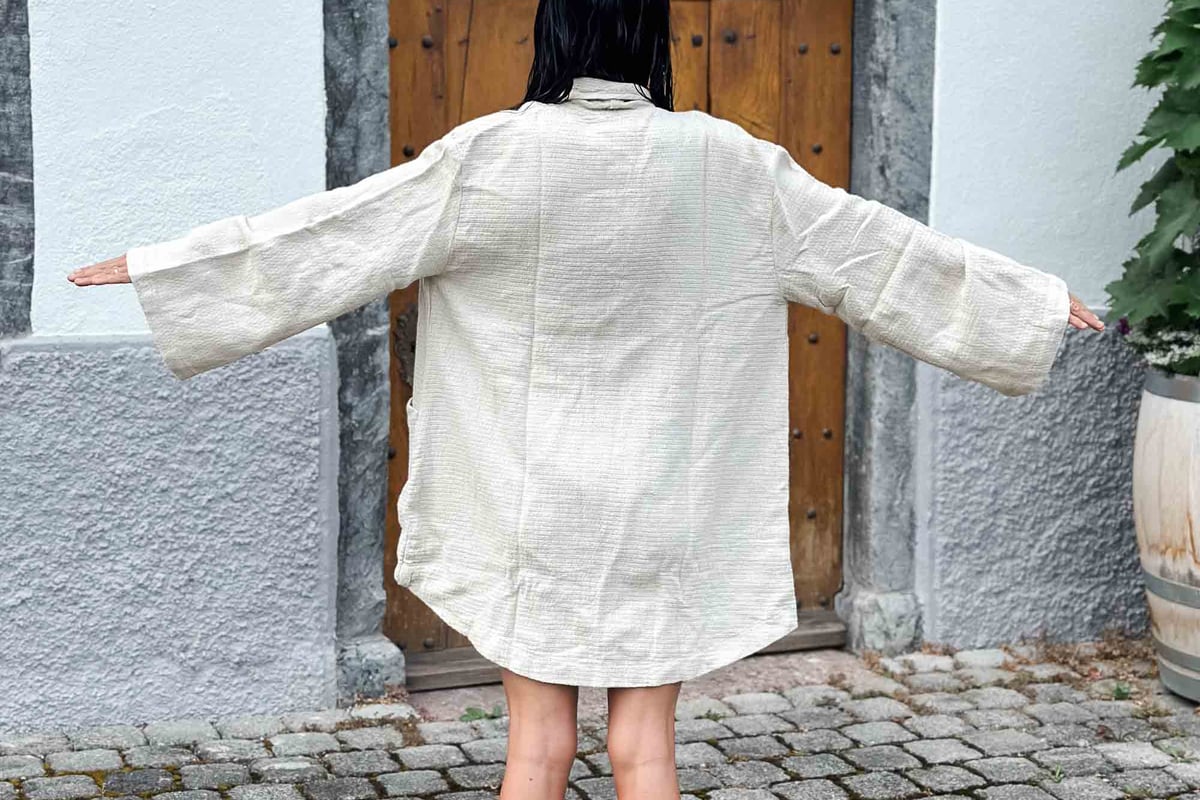
The Kimono Solana embodies precisely these values. With its blend of cotton and linen, it offers an airy feel and a natural, elegant drape. The oversized fit, wide sleeves, and practical pockets make it an ideal companion – from morning coffee to sunset by the water.
Kimono Robe in Modern Culture
What was once considered an exotic import is now an integral part of contemporary loungewear. Fashion has appropriated the kimono style and reinterpreted it. Designers worldwide pick up on the wide silhouette, combine it with Western cuts, and thus create hybrids that unite both worlds.
Even in the wellness scene, the kimono robe is indispensable. Spas, retreats, and yoga studios rely on the simple elegance of the cut. It stands for deceleration, for conscious pausing – values that are more important than ever in 2026.
The Kimono as a Symbol of Mindfulness
Putting on a kimono robe is a small gesture of self-care. You take time to feel the fabric, to tie the belt, to wrap yourself. It's a moment that says: I am worth it.
This mindfulness runs through many areas of life. People choose more consciously what they wear, eat, how they live. The kimono robe fits seamlessly into this attitude. It is minimalist without being stark. It is beautiful without being loud.
Practical Tips for Buying
If you want to buy a kimono robe, you should consider a few points to find the right model.
Length:
- Short versions (thigh-length): airy, youthful, ideal for warm days
- Mid-length (knee-length): versatile, classic, the most common choice
- Long models (ankle-length): elegant, warming, perfect for cooler evenings
Fit:
- One Size: usually fits sizes S to L, loose and free
- Graduated sizes: tighter fit, more defined look
- Pay attention to sleeve length – too short looks disproportionate
Details:
- Pockets are practical, but not strictly necessary
- Fringes or contrasting hems add accents
- The width of the tie belt influences the look – wide looks structured, narrow looks subtle
Try on different models or measure carefully if you order online. A kimono robe should sit comfortably on the shoulders without pulling, and have enough length so that it doesn't slip when tied.
Differences from Other Robes
A kimono robe clearly distinguishes itself from classic bathrobes or dressing gowns. The differences lie in the cut, material, and overall philosophy.
| Type | Cut | Material | Weight | Use |
|---|---|---|---|---|
| Kimono Robe | Open, wide sleeves, tie belt | Light cotton, linen | Light | Loungewear, cover-up, everyday |
| Classic Bathrobe | Gathered, narrow sleeves, belt loops | Terry cloth | Heavy | After bathing, for drying |
| Dressing Gown | Closed, button placket or zipper | Fleece, flannel | Medium to heavy | Warmth, cozy evenings |
The kimono robe is the lightest, airiest option. It doesn't dry as thoroughly as a terry bathrobe, but that's not its purpose. It's a layer, a cover, a feeling – not a functional drying tool.
When Each Robe Makes Sense
If you want to dry off quickly after swimming in the sea or pool, reach for a classic bathrobe. If you want to comfortably wrap yourself in the morning without sweating, choose a kimono robe. If you get cold in the evening, take a dressing gown.
It's not about right or wrong, but about the moment you're in. The kimono robe is for those who seek lightness.
The Right Season for Every Fabric
Not every kimono robe suits every season. The choice of material determines whether you wear it in high summer or on cool spring evenings.
Summer: Linen and muslin are top choices. They cool, absorb moisture, and dry quickly. Perfect for days by the water or warm nights on the terrace.
Spring/Autumn: Cotton-linen blends or medium-weight cotton offer enough warmth without being too bulky. They adapt to changing temperatures.
Winter: Even in winter, a kimono robe has its place – as a layer over pajamas before the thick dressing gown, or after a hot shower when the heating is on.
Many people own several models and switch them as needed. A light linen kimono for July, a soft cotton kimono for October – so you are well equipped all year round.
From Tradition to Personal Routine
The history of the kimono robe shows how a traditional garment can transform without losing its soul. The wide silhouette, the open cut, the reduction to the essential – all that remains. But the interpretation is new.
Today, a kimono robe is not a symbol of exoticism, but of conscious everyday life. It suits people who walk barefoot on wooden floors, who throw open the window in the morning and need fresh air, who want to feel breathable fabric.
It's for those who want to own less, but love what they have. Who don't throw away a garment after one season, but care for it, wear it, pass it on.
Creating Rituals with a Kimono
Some people have fixed routines: Get up, shower, put on a kimono robe, make coffee. This rhythm provides stability. The kimono becomes part of a morning routine that brings calm to hectic days.
Others use it as a transition – between work and leisure, between outside and inside, between tension and relaxation. A simple fabric that can do much more than just warm.
Integration into a Sustainable Lifestyle
Those who want to live sustainably question purchasing decisions. Do I really need this? How long will it last? Where does it come from? A kimono robe made from natural, certified materials answers these questions positively.
It's not an impulse purchase, but an investment in daily comfort. It doesn't require dry cleaning, special care, or effort. It's uncomplicated – like the people who wear it.
Brands that are transparent about origin and production gain trust. When a kimono is made in Europe or under fair conditions, you wear it differently. With more awareness, with more joy.
Circular Economy and Longevity
A high-quality kimono robe can be passed on. To friends, siblings, the next generation. Natural fibers age gracefully. They become softer, more familiar, better.
Those who can repair, mend small tears. Those who can sew, shorten the length or sew on new pockets. The kimono becomes a unique piece that tells a story.
This attitude stands in contrast to the throwaway culture. It says: I respect what I have. I care for it, I preserve it, I appreciate it.
A kimono robe is a piece of lived lightness – minimalist, natural, free. It suits people who make conscious choices and value quality. At MAIN Design you will find kimonos and other essentials that are sustainably produced and feel good. With every purchase, you support Healthy Seas and contribute to protecting the oceans. Discover what suits you.