The kimono has captivated people around the world for centuries and has evolved from a traditional Japanese garment into a modern lifestyle statement. In 2025, sustainable materials such as linen and organic cotton are taking center stage, particularly valued as lightweight beach and pool cover-ups.
This guide explores the history, current styles, and trends surrounding the kimono. Discover how to style kimonos in versatile ways, what to look for in materials, and how sustainable options can enrich your summer look.
The History and Significance of the Kimono
The kimono has an impressive history and is far more than just a symbol of Japanese tradition today. Thanks to its adaptable form and variety of materials, the kimono has also gained importance worldwide as a modern lifestyle and beachwear piece. Its evolution from court attire to a sustainable beach cover-up reflects the spirit of the times and cultural diversity.
Origins and Development
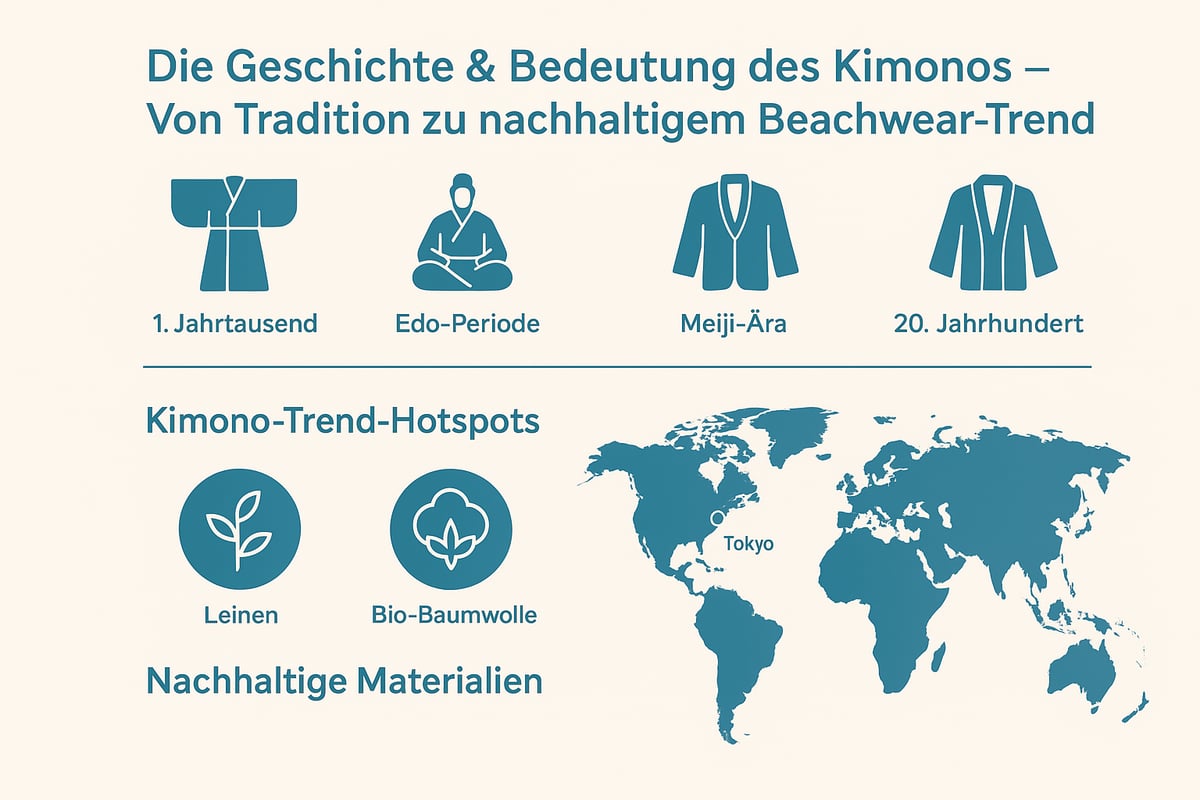
The kimono dates back to the 8th century, when its characteristic T-shape developed. During the Heian and Edo periods, the kimono reflected social status and the occasion, serving as either magnificent court attire or a simple samurai kimono. Fabrics and cuts evolved over the centuries: silk was dominant for a long time, but today natural materials such as linen and organic cotton are experiencing a renaissance, particularly in beach and lifestyle kimonos.
In the 20th century, the number of kimono wearers dropped drastically, but global interest has been rising again since the 2000s. An in-depth overview of its development can be found in Kimono: A Garment Changing Through Time. Today, the kimono is also making a comeback as a breezy cover-up at the pool or beach.
Cultural Significance and Ceremonies
In Japan, the kimono represents respect, tradition, and appreciation for special moments. At weddings, tea ceremonies, or the Hanami festival, the kimono is a central garment. Colors and patterns carry symbolic meanings: a crane represents good luck, while blossoms symbolize new beginnings.
Women wear different types of kimonos depending on their stage of life, such as the colorful furisode for coming-of-age ceremonies or the simple tomesode as a married woman. Special versions also exist for men and children. In this way, the kimono connects generations and remains part of everyday culture, especially during important rituals.
Modern Relevance Worldwide
Today, the kimono has conquered the world's runways and beaches. International designers use traditional elements and combine them with modern cuts. Lifestyle and beachwear kimonos made of linen and sustainable cotton are particularly popular, worn as lightweight wraps over bikinis or swimsuits.
Social media and street style are fueling the trend: more and more people are choosing the kimono as a statement piece that combines comfort and style. Exports of modern kimonos are steadily growing, and celebrities regularly appear in kimono looks at fashion weeks.
Sustainability and Cultural Responsibility
With the worldwide popularity of the kimono, awareness of sustainable materials and fair production is also growing. Discussions about cultural appropriation are leading to greater appreciation for the craftsmanship and origins of the garment. Many manufacturers now use linen, organic cotton, and recycled fabrics to create durable, environmentally friendly kimonos.
Collaborations with traditional workshops promote knowledge transfer and secure the kimono's future as a symbol of a sustainable lifestyle. In this way, the kimono remains not only a piece of history but also an inspiration for responsible fashion at the beach and beyond.
Types of Kimonos: From Classic to Modern
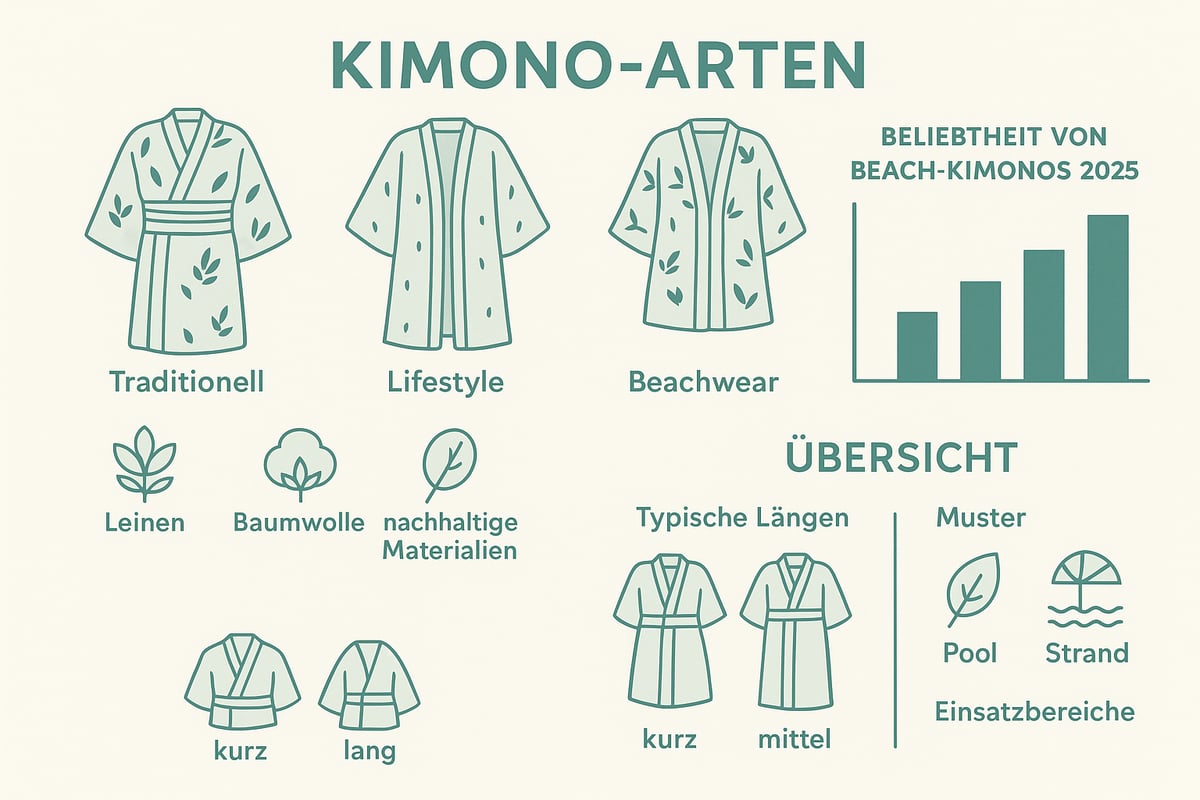
The variety of kimono types reflects a fascinating evolution. From traditional cuts to modern lifestyle and beachwear versions, the kimono now offers the right style for every occasion. Sustainable fabrics such as linen and organic cotton are particularly popular, establishing the kimono as a versatile summer and beach piece.
Traditional Kimono Types
The classic kimono is deeply rooted in Japanese culture. Typical versions include the furisode with long sleeves for young women, the formal tomesode for married women, and the komon with a fine all-over pattern. The yukata, a lightweight summer kimono made of cotton, is traditionally worn at festivals and on hot days.
The differences lie mainly in the cut, length, and patterns. While the houmongi is used for festive occasions, the unpatterned iromuji is suitable for tea ceremonies. Each kimono variant is associated with specific occasions and social roles.
Modern Interpretations & Lifestyle Kimonos
In modern everyday life, the kimono has long been established as a versatile fashion piece. New interpretations feature loose cuts, minimalist patterns, and unisex designs. The kimono is particularly popular as a cardigan alternative, loungewear, or a statement piece at festivals.
Lifestyle kimonos made from natural materials offer comfort and style. They can be easily worn over T-shirts or summer dresses and create a relaxed, fashionable look in urban environments.
Beach and Pool Kimonos: Function and Style
Today, the kimono is a must-have for the beach and pool. As a lightweight wrap, it provides comfortable sun protection and freedom of movement. Typical beachwear kimonos are made of linen or sustainable cotton, are quick-drying, and are particularly breathable.
They usually reach the knee or calf to ensure flexibility. Particularly practical: a kimono can be worn both at the pool and on a promenade stroll. Those who want to discover different styles can find inspiration in Discover Kimono Ponchos & Cover-Ups.
Materials: Linen, Cotton & Sustainable Fabrics
In summer, breathable and sustainable materials are essential. Linen is highly sought after for kimonos because of its cooling, quick-drying properties. The material is environmentally friendly and ensures a comfortable feel, even at high temperatures.
Organic cotton scores points for its softness and skin-friendliness. Many kimono designs now use GOTS-certified or recycled fabrics. In this way, the kimono combines comfort, sustainability, and modern style into a true summer highlight.
Differences Between Women's, Men's, and Children's Kimonos
The cut and design of the kimono differ depending on the target audience. Women's models often feature feminine patterns and pastel tones, while men's kimonos are designed in muted colors and clean lines. For children, comfort, freedom of movement, and UV protection are the priorities.
Size charts help you find the right kimono variant. Family looks are particularly popular at the beach, where mother and child coordinate in matching kimonos.
Kimono Styling 2025: Tips for the Beach, Everyday Life & Events
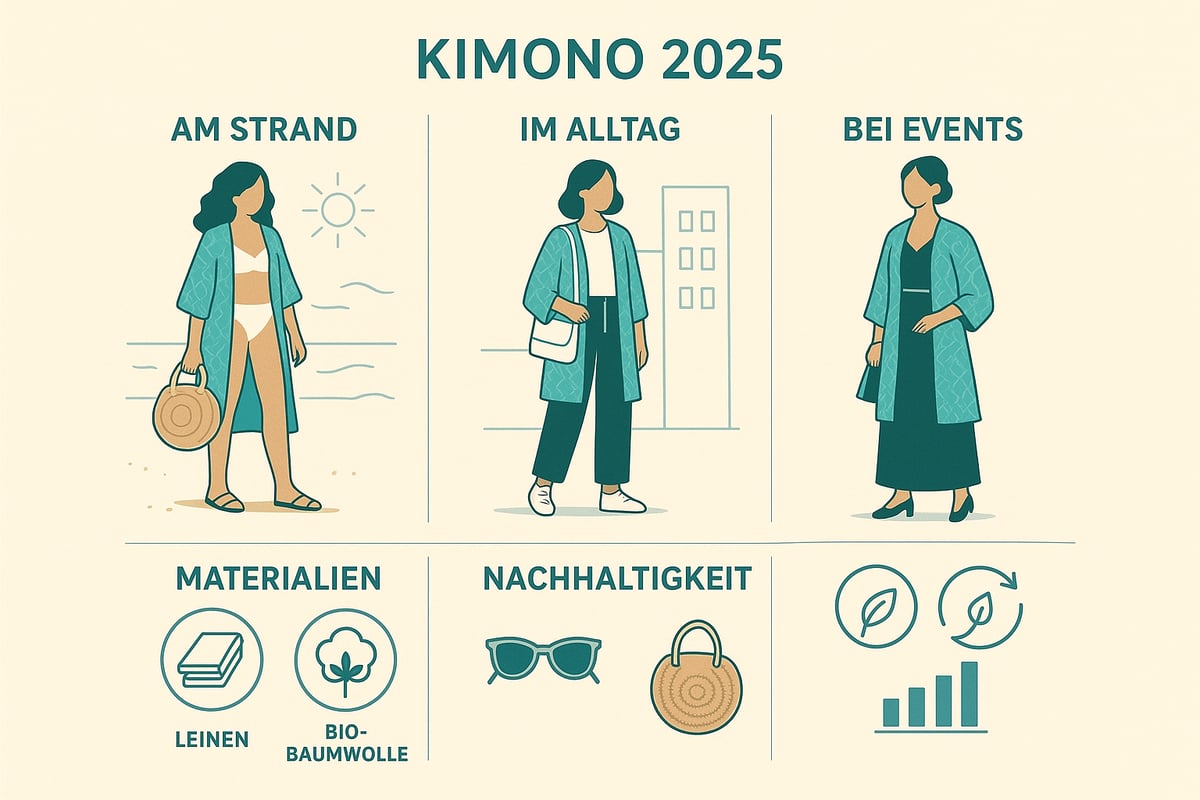
The kimono has long been more than just a traditional garment. In 2025, it presents itself as a versatile and sustainable must-have for the beach, everyday life, and special occasions. Lifestyle and beachwear kimonos made of linen or organic cotton impress with their comfort, style, and environmental awareness.
Beach Look: Kimono as a Cover-Up
A kimono made of linen or sustainable cotton is the ideal companion at the beach. It serves as a breezy cover-up over a bikini, swimsuit, or shorts and protects the skin from the sun. Linen kimonos dry quickly, are pleasantly cooling, and offer natural UV protection. Combine your kimono with a straw hat, woven bag, and sandals for a relaxed summer look.
Popular patterns such as palm prints or soft pastel tones enhance the vacation feeling. You can find more inspiration and current summer trends for the kimono on Kimonos in Summer Style.
Urban Style: Kimono in Everyday Life
In everyday life, the kimono can be combined in versatile ways as a lightweight jacket alternative. Worn over jeans, a simple dress, or leggings, it creates a modern, urban look. Kimonos made of sustainable cotton with minimalist prints are particularly perfect for the city.
Layering is also a trend in 2025: wear the kimono open or with a belt, along with sneakers and statement jewelry. Street style and social media inspiration show how versatile the kimono is.
Elegant Occasions: Kimono for Events
For summer parties, weddings, or dinners, the kimono becomes a statement piece. Choose models made of high-quality linen or organic cotton with elegant prints or embroidery. Combine the kimono with high heels, a clutch, and delicate jewelry.
Floral patterns and refined details add accents. Especially silk kimonos with floral designs are in demand in 2025. The kimono gives every event outfit a special touch.
Unisex & Family Looks
The kimono is suitable for women, men, and children alike. Minimalist cuts and muted colors make unisex kimonos a trend. At the beach, stylish partner or family looks can be created with matching kimonos made from sustainable materials.
Children's kimonos offer comfort, freedom of movement, and UV protection. Matching outfits for mother and child are particularly popular, making the kimono the highlight of the beach day.
Sustainable Fashion & Conscious Consumption
Sustainability is the focus for the kimono in 2025. Kimonos made of durable linen or organic cotton are environmentally friendly and offer high wearing comfort. A capsule wardrobe with a few high-quality kimonos saves resources and focuses on quality instead of quantity.
Secondhand and vintage kimonos are a stylish alternative to fast fashion. When buying a kimono, look for well-maintained pieces and favor providers who value quality.
Trend Colors, Patterns & Details 2025
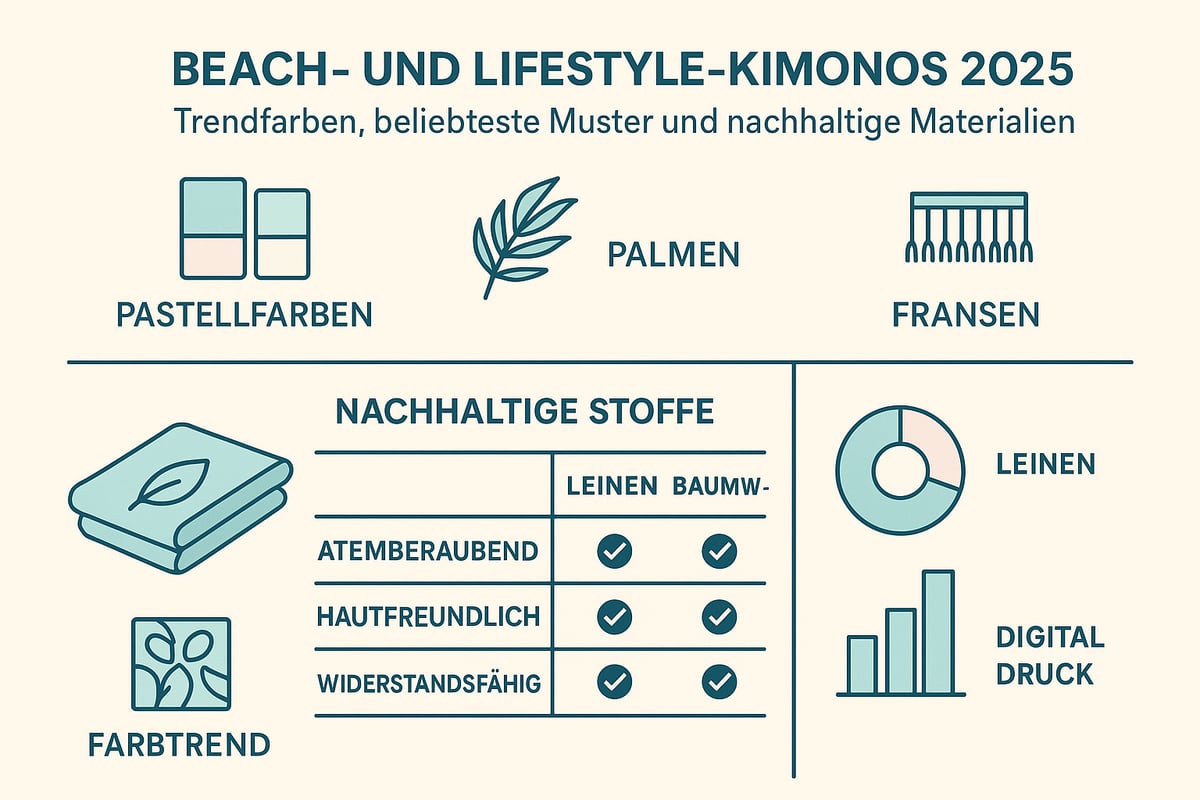
Colors, patterns, and special details shape the appearance of modern kimono models, especially in the lifestyle and beachwear sector. In 2025, sustainable materials such as linen and organic cotton are taking center stage. These fabrics not only ensure comfort at the beach but also set fashionable accents through innovative designs and environmentally friendly trends.
Color Trends for Kimonos
In 2025, natural, sea-inspired tones dominate kimono fashion. Pastel tones such as sky blue and sand beige convey lightness, while bold colors such as coral and sea green radiate freshness. Earth tones are particularly popular, as they pair perfectly with linen and cotton fabrics and are ideal for beachwear.
This color palette has a calming effect and underscores the relaxed lifestyle at the beach. Kimono cover-ups in these colors can be combined in versatile ways and ensure a harmonious summer look.
Patterns & Prints: From Classic to Modern
Timeless motifs such as cranes, waves, and cherry blossoms continue to be found on kimonos. For the beach and pool, floral patterns, palm prints, and modern geometric designs are particularly popular. They give the kimono as a cover-up a fresh, individual touch.
Many designers are focusing on a creative mix of traditional and current elements in 2025. This creates prints that reflect both Japanese culture and a modern beach lifestyle. As beachwear, the kimono impresses with striking patterns that instantly spread a vacation mood.
Special Details & Finishes
Details make the difference: fringes, open hems, and wide belts give the kimono a relaxed, modern character. Transparent inserts or light embroidery provide elegant accents without sacrificing comfort. Structured fabrics are particularly popular in linen and cotton kimonos.
For festivals and everyday life by the sea, kimonos with tassels, patchwork, or upcycling elements are in vogue. These details emphasize the individuality of each kimono and make it a true statement piece of the season.
Sustainable Innovations in Colors & Patterns
Sustainability is at the heart of kimono trends in 2025. More and more manufacturers are using plant-based dyes and resource-saving digital printing to create bright and durable patterns. Collaborations with artists produce limited editions with hand-painted prints.
Those interested in an environmentally conscious kimono will find numerous options made from certified organic cotton or recycled materials. Further information on sustainable materials and production can be found on Sustainability in Fashion & Kimonos. In this way, the kimono becomes not only a fashionable but also a responsible companion at the beach.
Care, Storage & Longevity of Kimonos
The proper care of a kimono made of linen or sustainable cotton largely determines its longevity—especially when it serves as a stylish companion at the beach or pool. Those who value a well-maintained look should follow a few basic rules. In this way, the kimono not only remains visually attractive but also functional and comfortable to wear.
Proper Care for Different Materials
A kimono made of linen or organic cotton is ideal for hot days by the sea but requires special care. It is best to wash the kimono at low temperatures on a delicate cycle to protect the fibers. Avoid bleach and choose a mild detergent to preserve colors and patterns.
Linen dries particularly quickly, which is practical for spontaneous beach visits. After washing, gently reshape the kimono and let it air dry. Embroidery and appliqués should be cleaned by hand as much as possible so that the kimono stays beautiful for a long time.
Table: Care Properties
| Material | Wash Temperature | Drying | Special Feature |
|---|---|---|---|
| Linen | max. 30°C | Air dry | Quick-drying |
| Cotton | max. 40°C | Air dry | Skin-friendly |
Storage at Home & While Traveling
To ensure that your kimono retains its shape even after several days at the beach, proper storage is crucial. At home, it is recommended to hang the kimono loosely on a wide hanger or fold it carefully. For longer storage, breathable cotton bags are ideal to protect it from dust and moisture.
While traveling, a kimono can be stored space-efficiently in a suitcase. Roll the garment gently to avoid creases. A small lavender sachet additionally protects against moths and keeps the kimono fresh.
Longevity & Repair
A high-quality kimono made from ecological materials can accompany you for many summers. Small damages such as loose seams or loose fringes can easily be repaired yourself with a needle and thread. Especially with beachwear kimonos, it is recommended to regularly check for wear on the hem and belt.
To extend its lifespan, use sustainable care products without harsh chemicals. In this way, the kimono remains comfortable to wear and looks like new even after many days at the beach.
Sustainability and Secondhand
Those who want to do their part for the environment should choose sustainable options for kimonos. Secondhand and vintage kimonos are not only unique but also resource-saving. When buying, look for well-maintained pieces and favor providers who value quality.
Upcycling and the circular economy are also gaining importance in the kimono sector. In this way, every piece becomes a sustainable statement at the beach and beyond.
Buying Guide: Finding the Perfect Kimono
The perfect kimono for the beach and everyday life combines style, comfort, and sustainability. Whether for a vacation by the sea or as a versatile fashion statement in everyday life, the selection should be carefully considered. Especially with beachwear and lifestyle kimonos made of linen or organic cotton, fit, quality, and material play a crucial role.
Fit, Size & Cut
The right fit is essential for a kimono, so that it excels both as a beach cover-up and as a relaxed lifestyle piece. Most kimonos are designed as one-size models, but it pays to pay attention to size charts and cut styles. Especially for tall women, a longer kimono is recommended, while petite sizes are better suited to shorter models.
For optimal orientation, the fit and size guide for kimonos offers helpful tips on dimensions, sleeve lengths, and waist widths. This allows the kimono to be individually tailored to your own silhouette, whether worn loosely open or tied with a belt.
Quality Features & Material Choice
A high-quality kimono made of linen or organic cotton is characterized by clean seams, an even fabric density, and sustainable certifications such as GOTS or OEKO-TEX. Especially at the beach, breathable, quick-drying materials are in demand that are also environmentally friendly.
| Material | Benefits | Sustainability |
|---|---|---|
| Linen | Cooling, easy-care | Resource-efficient |
| Organic cotton | Soft, skin-friendly | GOTS-certified |
When choosing, pay attention to handmade kimono models that guarantee durability and wearing comfort. Sustainable fabrics not only ensure a good feeling on the skin but also an environmentally conscious fashion experience.
Value for Money & Budget Tips
The price ranges for a kimono vary depending on material, workmanship, and brand. While simple beach kimonos made of organic cotton are available from 40 euros, high-quality, handmade unique pieces made of linen often cost 100 euros or more. It is better to invest in a durable piece that is versatile and lasts for many seasons.
You can find bargains at sale events, on second-hand platforms, or during seasonal offers. Always pay attention to transparent material information and quality features when purchasing to choose a kimono that will meet your demands in the long term.
Shopping Sources: Online, Boutiques & Markets
Kimonos are now available both online and in selected boutiques or at markets. When buying online, it is recommended to pay attention to detailed product descriptions, return policies, and customer reviews. Local pop-up stores or markets often offer individual advice and the opportunity to try on the kimono directly.
Popular places to start are specialized kimono shops in Europe or import boutiques with a focus on sustainable beachwear. Those looking for exclusive designs and personal service will find success especially in small concept stores or at seasonal markets.
Future Outlook: Kimono Trends & Innovations
A look into the future shows that the kimono is continuing to gain importance as a versatile lifestyle piece. Especially in the area of beachwear and pool cover-ups, innovations and sustainable materials are in focus. In 2025, kimonos made of linen, organic cotton, and recycled fabrics will not only be a fashionable statement but also a symbol of environmental awareness.
Technological Innovations & New Materials
In 2025, technological innovations in kimonos are particularly gaining ground in beach and poolwear. Natural materials such as linen and organic cotton are being complemented by smart textiles that are quick-drying, UV-protective, and antibacterial. Kimonos made from recycled ocean plastic or certified organic fibers are especially in demand, serving as ideal lightweight cover-ups at the beach.
Many labels are cooperating with innovative workshops to combine sustainable fabrics and modern designs. This development is also reflected in global forecasts, as highlighted in the article Predictions 2025: Watch for Kimono's Global Momentum and Local Revival.
Kimono in Pop Culture & Social Media
Pop culture and social media are driving the popularity of kimonos as beach and lifestyle clothing. Influencers and celebrities regularly present new styling ideas for kimonos made of linen or cotton, often as airy wraps at the pool or sea. Instagram and TikTok inspire with hashtags, challenges, and viral looks that showcase the kimono in everyday life and at the beach.
Modern interpretations combine Japanese tradition with Western lifestyle. Those interested in current trends will find exciting insights into the development of the kimono in the article Contemporary Japanese Fashion: How to Dress in 2025?.
Sustainability as the Guiding Principle of the Future
Sustainability is the guiding principle for the future of the kimono. More and more consumers are opting for slow fashion and fair production conditions. Transparency in the supply chain and certifications such as GOTS are gaining importance. A kimono made of linen or organic cotton meets not only fashion demands but also ecological ones.
The kimono is becoming a symbol of a conscious lifestyle. Those who value quality and durability are investing in sustainable beachwear that respects both trends and the environment.
You have just learned how versatile and timeless the kimono is – from its historical origins to modern styling tips and sustainable materials. If you have been inspired to bring a piece of tradition and style into your everyday life or to the beach yourself, then visit MAIN Design. There you will find sustainable kimonos and beachwear that not only look stylish but can also be worn with a clear conscience. Discover high-quality designs inspired by Japanese aesthetics and made from responsible materials.
discover more