

The first water moments with a baby are magical. Warm water, tiny feet gently dipping in, laughter echoing in the air. But before it all begins, one question lingers: What should we wear? Infant swimsuits are more than just clothing. They protect delicate skin, allow freedom of movement, and accompany the first discoveries in and around the water. At the same time, they carry responsibility – for the health of the little ones and for the environment in which they grow up.
Why infant swimsuits are more than just cute
Babies need protection. Their skin is thinner, more sensitive, and reacts more quickly to UV radiation than adults'. A good baby swimsuit takes on this task without parents constantly having to reapply sunscreen. UPF50+ protection is standard here – a value that blocks over 98% of harmful rays.
But it's not just about sun protection. Infant swimsuits need to be soft, breathable, and quick-drying. Babies move a lot, splash, crawl, grab. The fabric must not chafe, restrict, or become heavy when wet.
What really matters when choosing
The right size is the first step. Too tight means discomfort, too loose means a safety risk. Many manufacturers use age guidelines – useful, but not always suitable. A look at the size chart helps. At MAIN Mini Children's Swimwear, sizes are given in years, making it easier for parents to navigate.
Material is the second big topic. Recycled polyamide or polyester from ocean plastic are not only sustainable but also functional. They dry quickly, retain their shape, and feel comfortable on the skin. You can learn more about the importance of sustainable materials in our article on eco-friendly swimsuits.
- Quick drying process: Prevents cooling down after splashing
- Soft surface: No friction, no irritation
- Chlorine and saltwater resistance: More durable, even with regular use
- Colorfastness: Vibrant designs that don't fade
Another point: freedom of movement. Infant swimsuits must not restrict. Arms and legs need space to kick, grab, and discover. Elastic but not too tight cuts are ideal.
Different styles for different needs
Not every swimsuit suits every occasion. Some families spend hours at the beach, others go swimming with their babies, while others plan a seaside vacation. The requirements differ.
Long-sleeved swimsuits for maximum protection
Long-sleeved infant swimsuits offer the most comprehensive protection. They cover arms, torso, and often legs – perfect for longer stays in the sun. Especially for babies who cannot yet spend much time in the shade, this is a real relief.
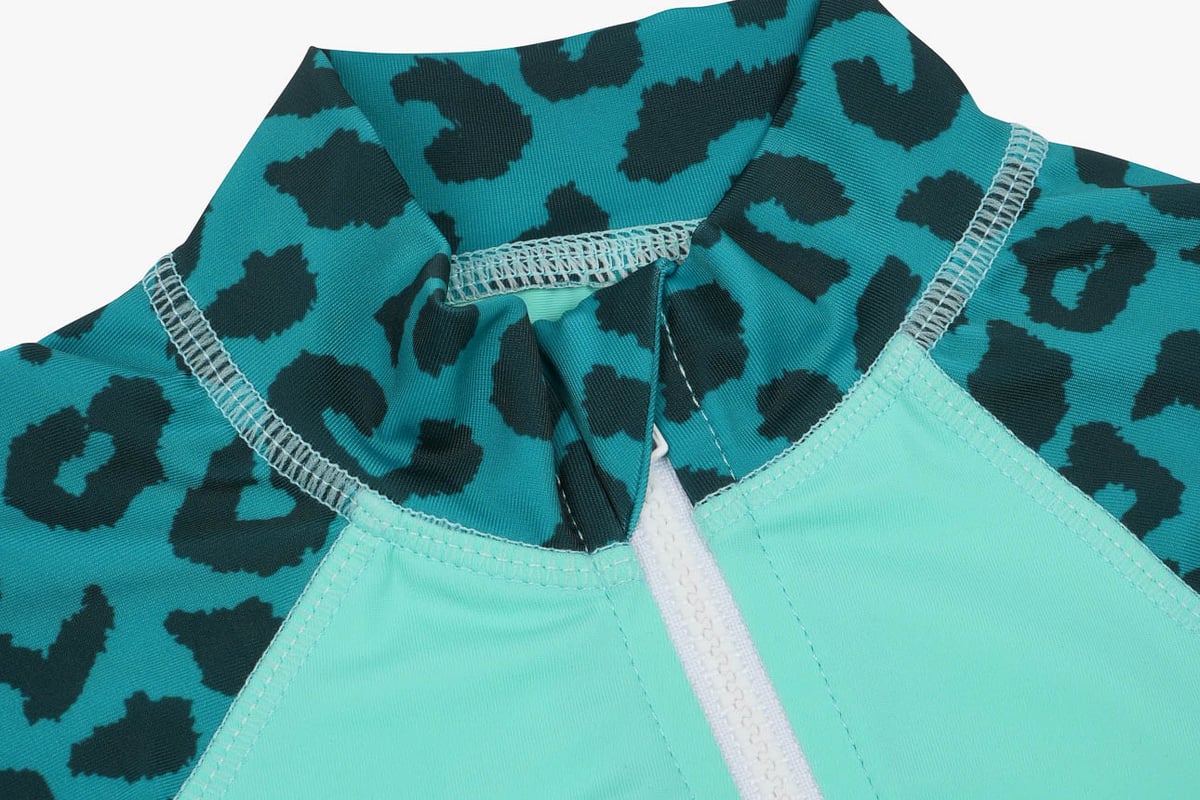
A full-length zipper makes dressing and undressing easier. Anyone who has ever tried to pull a wet swimsuit over a wiggling baby knows what we're talking about. With our Kai Baby Swimsuit, this very zipper ensures that even diaper changes in between are not a drama.
| Style | Advantages | Ideal for |
|---|---|---|
| Long-sleeved suit | Maximum UV protection, warms in the water | Beach, sea, long days outdoors |
| Short-sleeved suit | Freedom of movement, less material | Pool, warm days, short stays |
| Two-piece | Easy diaper changes, flexible combinations | Playing by the water, garden, paddling pool |
Two-piece and swim dresses
Two-piece infant swimsuits combine functionality with style. Top and bottom can be washed, changed, and adjusted separately. Practical if only the bottom needs changing.
Swim dresses for girls combine cuteness with protection. They cover the torso but leave the legs free – good for hot days. Important: The straps should be adjustable or tied so the suit can grow with the child. More details on the correct fit can be found in our Size Chart Kids.
Sustainability starts in infancy
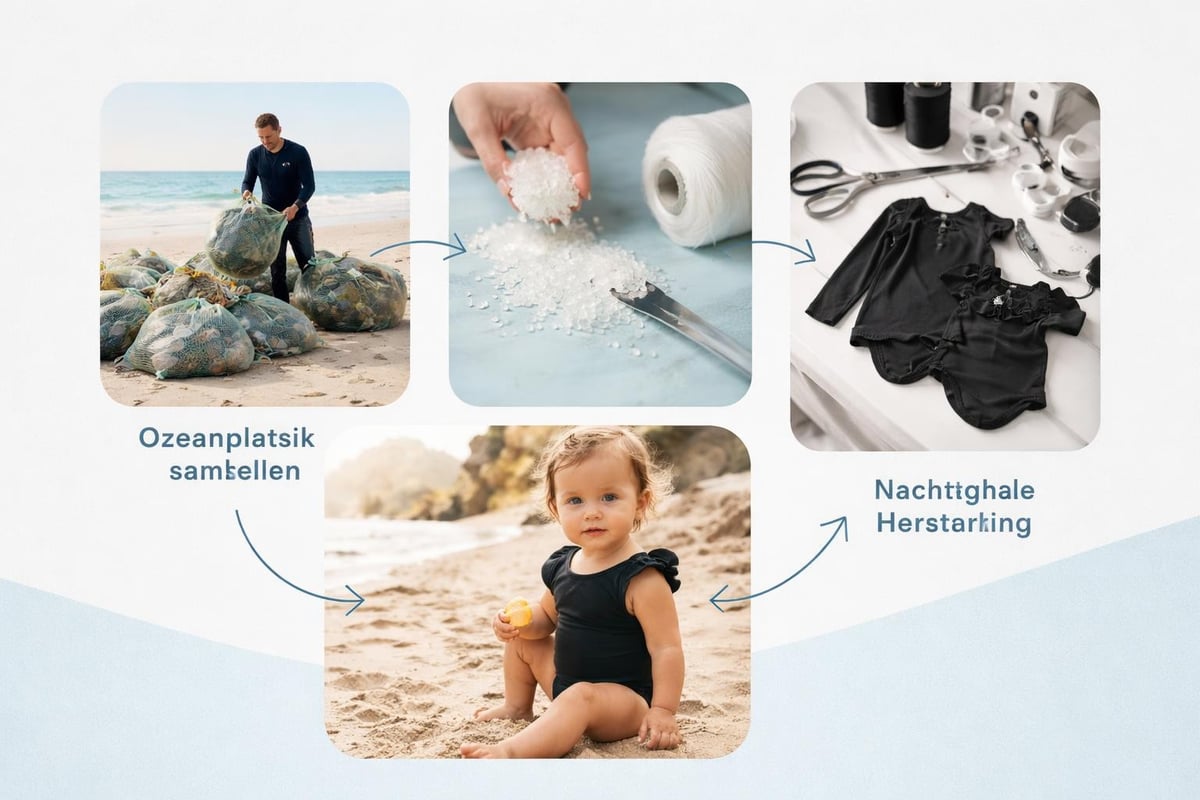
Infant swimsuits made from recycled materials are not a trend, but a matter of course. Every year, tons of plastic end up in the oceans. Some of it is recovered, processed, and made into new products. Sustainable baby swimwear made from environmentally friendly materials shows that quality and responsibility go hand in hand.
Why recycled fabrics are better
Recycled polyamide is made from fishing nets, carpet scraps, and other nylon waste. The process saves energy, reduces CO2 emissions, and prevents the production of more plastic. At the same time, the material is just as durable as new nylon – often even more so.
- Lower water consumption in production
- No new raw materials needed
- Shorter supply chains through local processing
- Longer lifespan due to high-quality manufacturing
More background on sustainability can be found on our Sustainability page, where we transparently explain how our products are made and what certifications they hold.
Water safety – what infant swimsuits can do
A swimsuit alone does not make a baby safe in the water. But it can help. Bright colors and eye-catching designs make it easier for parents to keep an eye on their little ones in the water. This is a real advantage, especially in busy swimming pools or on the beach.
Some infant swimsuits have integrated buoyancy aids or reinforced inserts. These do not replace a life jacket but offer additional buoyancy. Important: Babies should never be left unsupervised in the water – even with a buoyancy aid. More tips on water safety are available at Babypark.
Non-slip cuffs and clever details
Non-slip cuffs ensure that the suit stays in place. This is especially important for active babies who kick and splash. Some models also have reinforced seams at the shoulders or leg openings – areas that are particularly stressed. A buying guide for baby swimsuits explains what matters with these details.
- Flat seams to prevent chafing
- Double layers at chest and back for more coverage
- Adjustable straps for longer use
- Reinforced leg openings to prevent slipping
Care and longevity
Infant swimsuits last longer if cared for properly. Saltwater, chlorine, and sunscreen take their toll on the material. After each use, the suit should be rinsed with clear water – warm, but not hot. No washing machine, no dryer, no direct sunlight.
Hand washing is the gentlest method. A mild detergent is sufficient. The suit should dry flat, ideally in the shade. This preserves elasticity and prevents colors from fading.
When is a new swimsuit due?
Babies grow quickly. A swimsuit that fit last summer might be too tight this year. Signs for a change:
| Feature | Meaning |
|---|---|
| Tightness at the shoulders | Restricted movement, discomfort |
| Leg hem riding up | No longer the right size |
| Stretched straps | Loss of support function |
| Faded colors | Material fatigue, less UV protection |
Some parents intentionally buy one size larger so the suit lasts longer. This works as long as the fit remains secure. A swimsuit that is too loose can slip in the water and interfere with splashing.
Colors, patterns, and designs
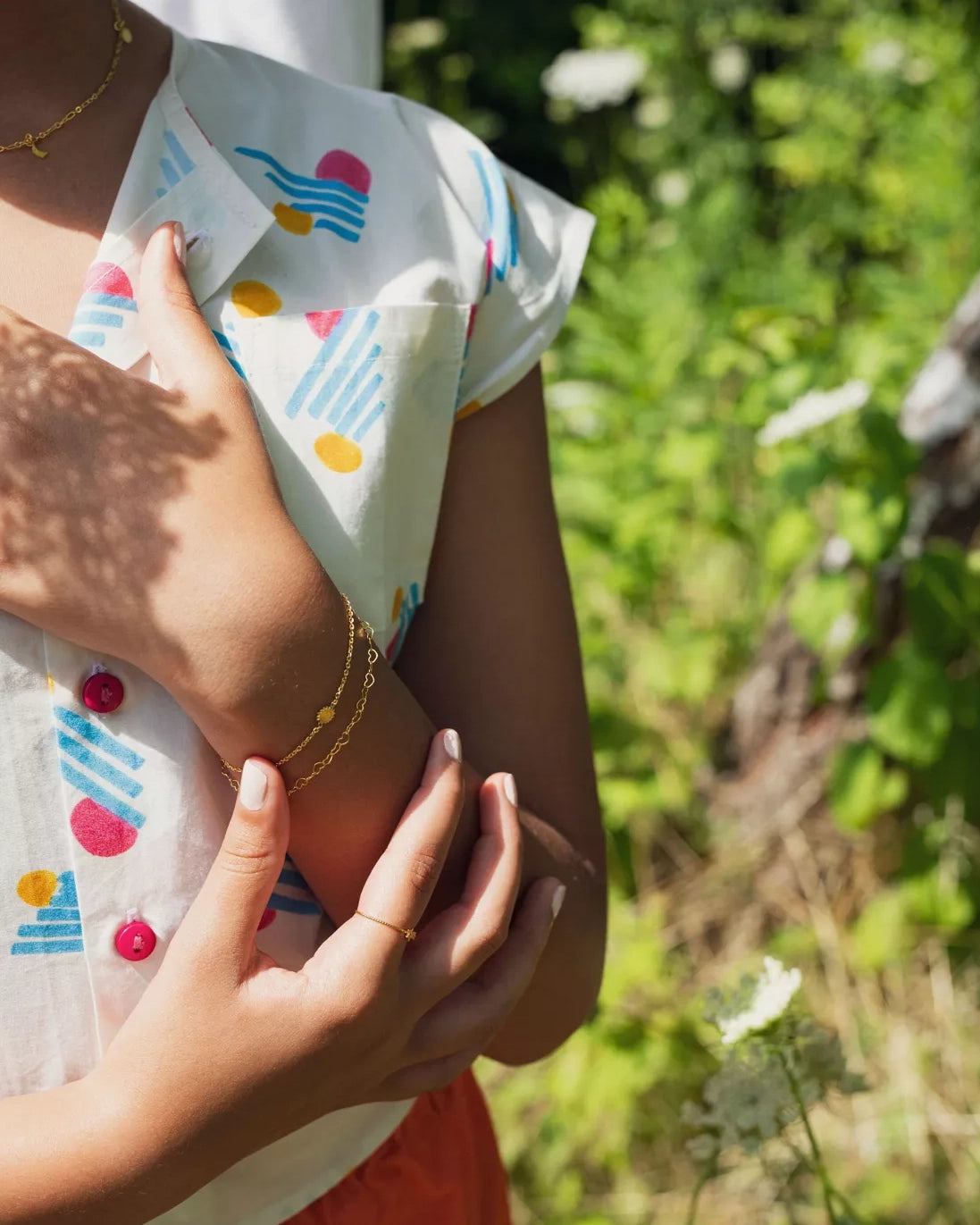
Infant swimsuits should be fun. Bright colors, playful patterns, colorful designs – all part of it. Many parents ensure that the swimwear matches the rest of the family's wardrobe. Collections that offer the same colors for adults and children make this easy.
At MAIN Mini Children's Swimwear, the designs match the adult collection – a nice detail for family photos and a sign of thoughtful design. At the same time, the patterns remain timeless and not too playful, so they appeal for several seasons.
Trends vs. Classics
Trends come and go. What's in vogue today might seem outdated tomorrow. Classic designs in muted colors – blue, green, sand, coral – always remain current. They combine well, suit any environment, and appear calm, not loud.
For those who still want something striking, details can be used: stripes, small patterns, contrasting colored seams. This brings life to the look without the suit quickly going out of style.
Combination possibilities for longer days outdoors
Infant swimsuits don't just work solo. On cooler days or in windy conditions, they can be combined well with a light poncho or kimono. This protects against cooling down after swimming and makes the transition from water back to land more pleasant.
Sun hats, UV protection shirts, and light beach shoes also sensibly complement the outfit. Especially for longer stays at the beach or lake, a well-thought-out ensemble is important. It's not about fashion, but about function – and making everyone feel comfortable.
Practical accessories for on the go
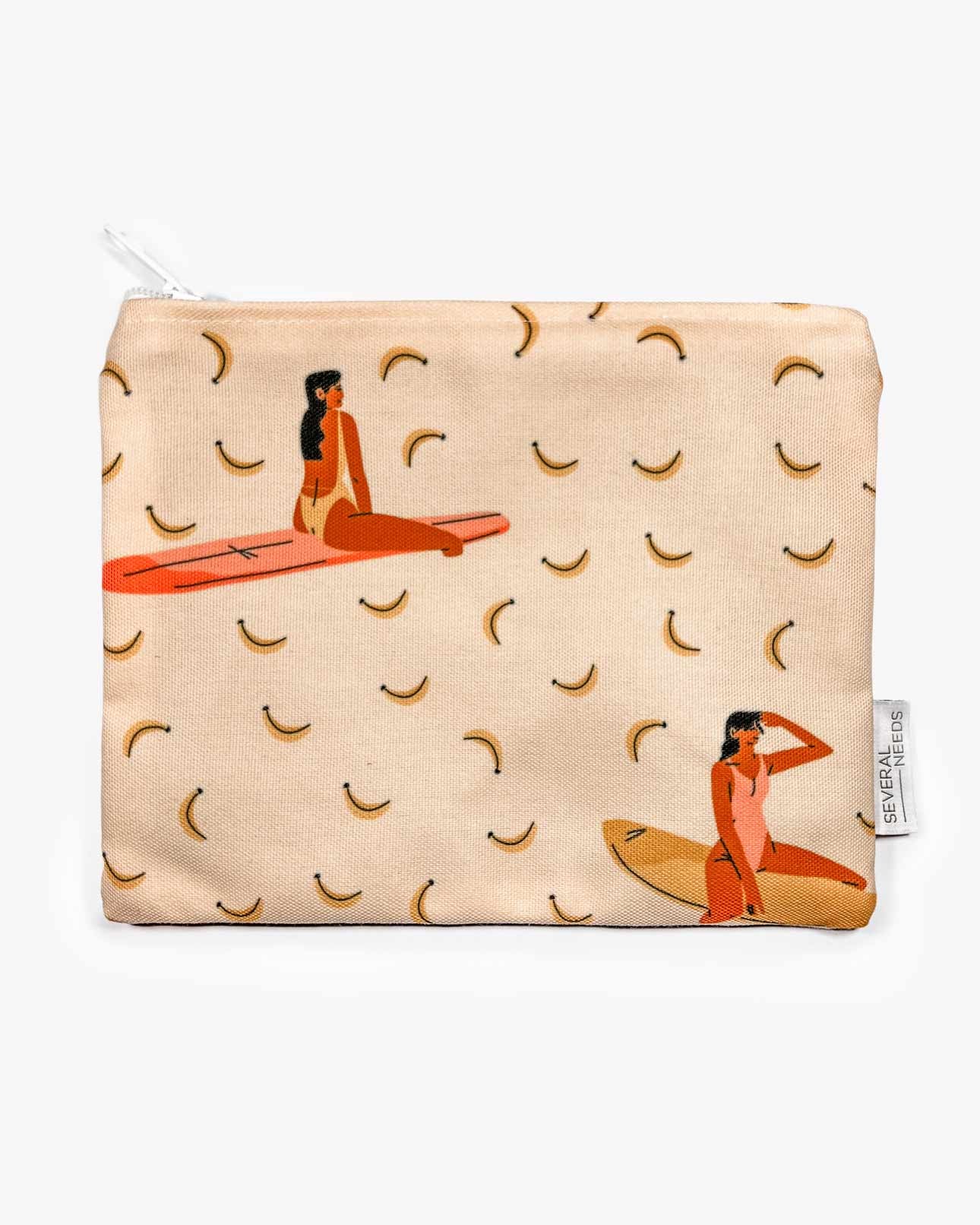
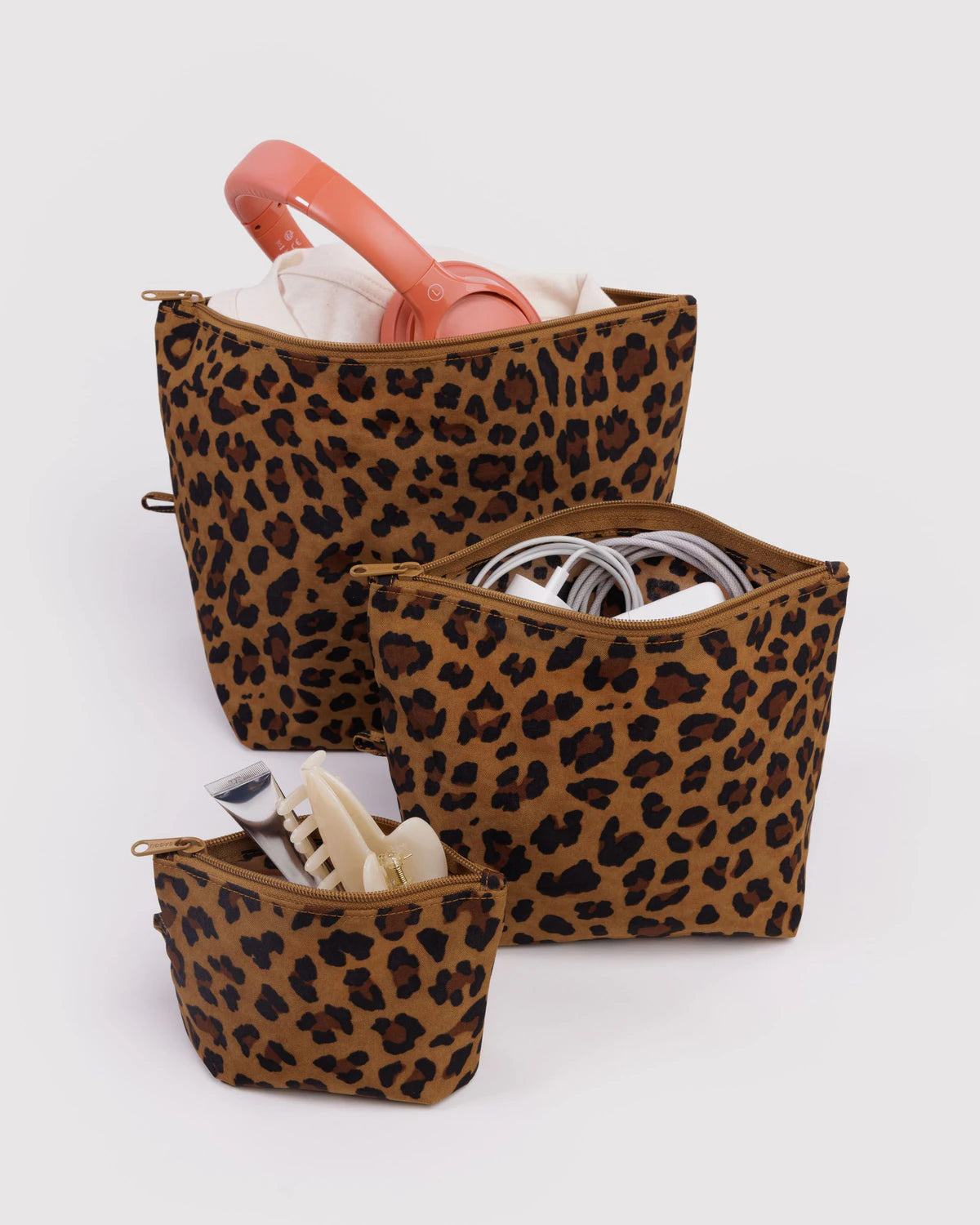
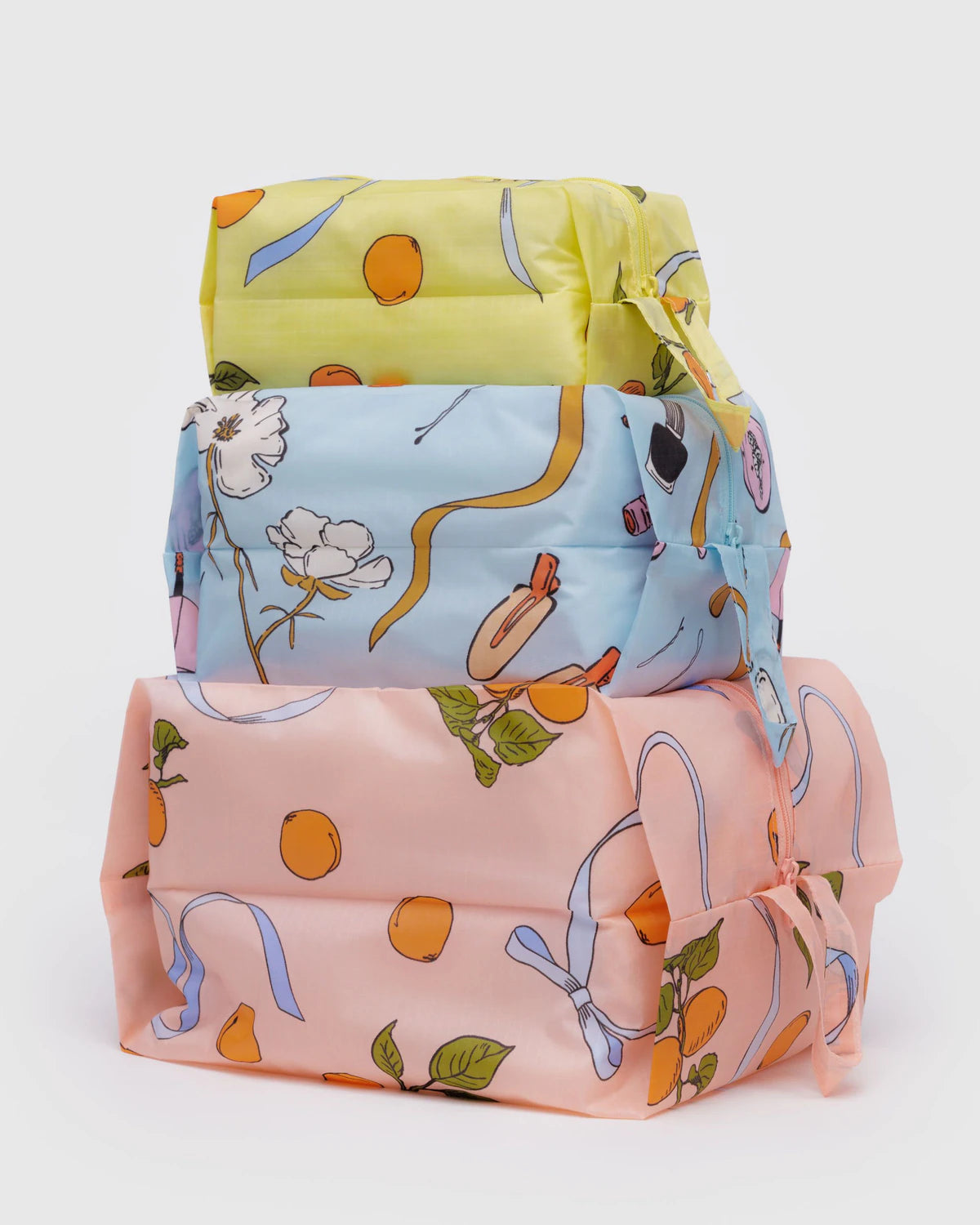
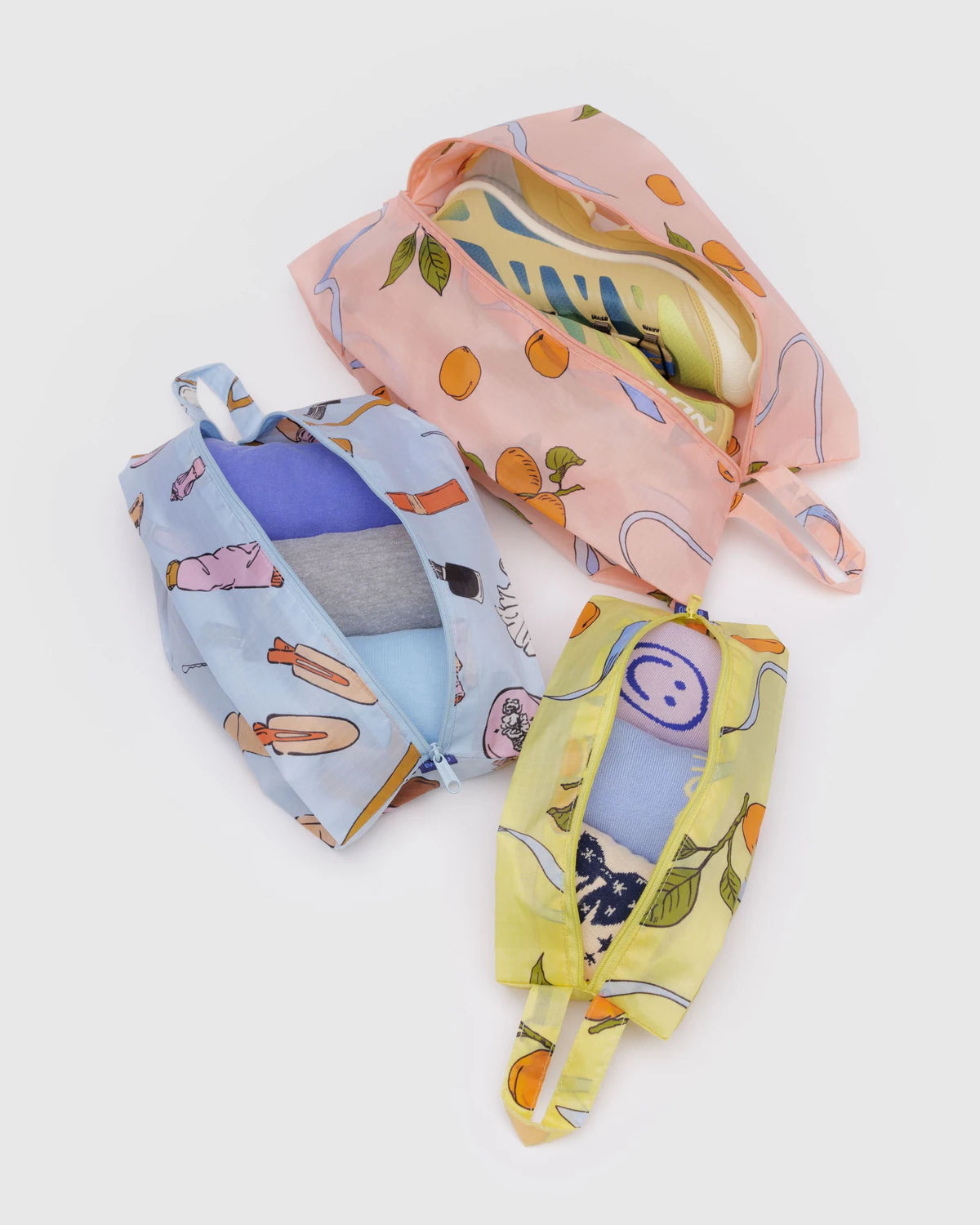
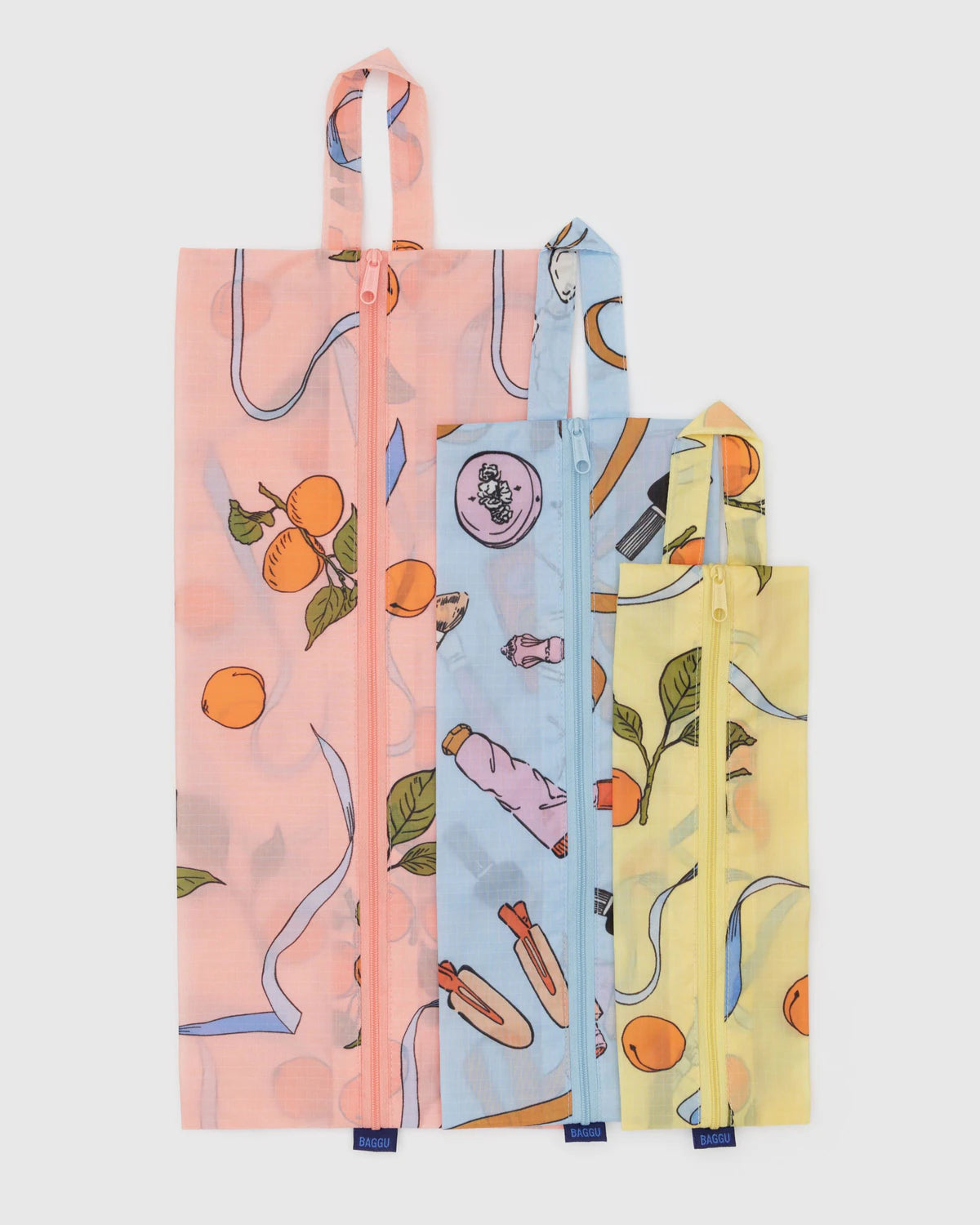
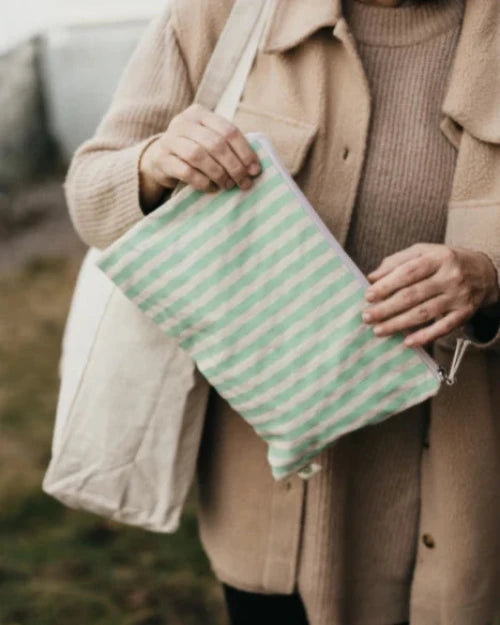
- Waterproof bags for wet suits and diapers
- Quick-drying microfiber towels
- Sun umbrellas with UV protection for breaks in the shade
- Light sandals with Velcro for safe steps
A good beach bag that holds everything and isn't too heavy makes everyday life much easier. At MAIN Design, you'll find sustainable options that are robust and stylish at the same time.
Buying decision: What really matters
When buying infant swimsuits, several factors count simultaneously. Price, quality, sustainability, design – everything plays a role. But in the end, it's about the baby feeling comfortable and protected.
A high price does not automatically mean better quality. Nor is the cheapest offer always the worst choice. A look at the material, workmanship, and certifications helps with the decision. Buying guides for baby swimsuits often offer useful checklists and comparisons.
Checklist for buying
- Material: Recycled, soft, quick-drying?
- UV protection: At least UPF50+
- Fit: Correct size, adjustable straps?
- Workmanship: Flat seams, stable seams at stress points?
- Care instructions: Easy to wash, durable?
- Sustainability: Certifications, transparent supply chain?
If you are unsure, you can refer to the FAQ or contact us directly to clarify individual questions.
The role of certifications and standards
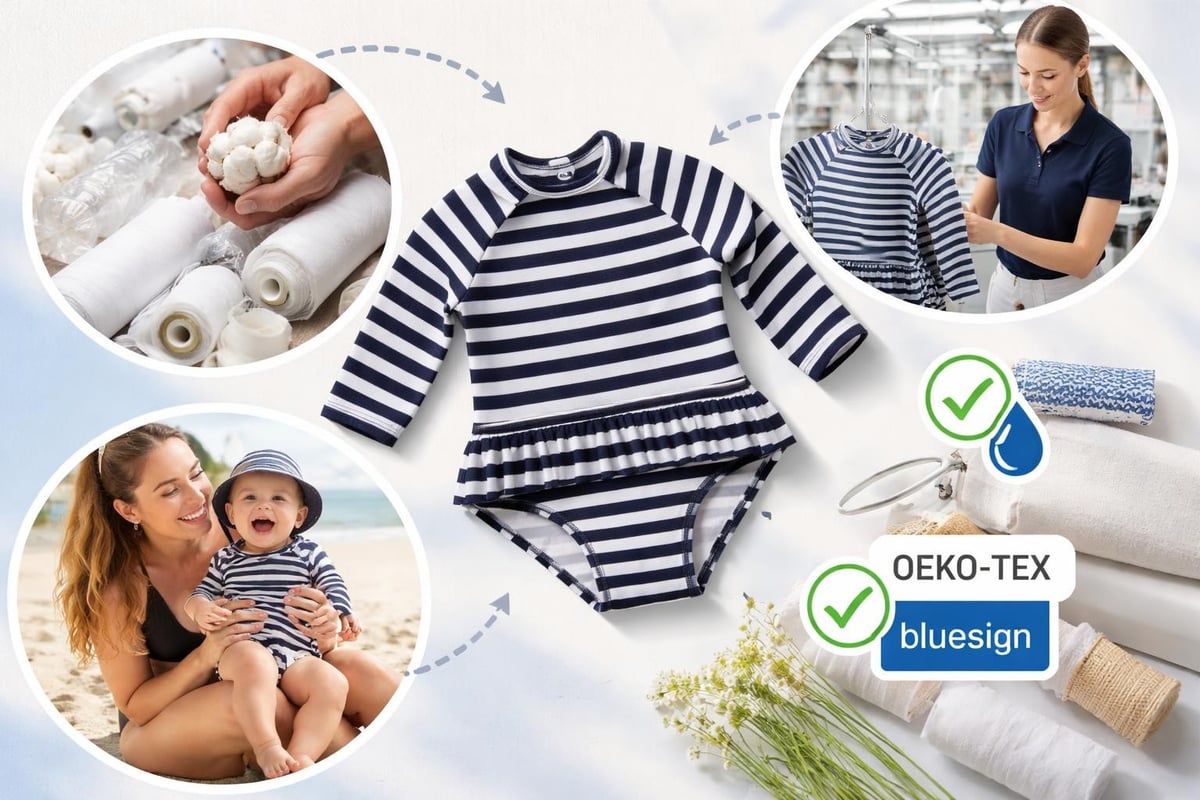
Not every swimsuit delivers what it promises. Certifications like OEKO-TEX®, GOTS, or Bluesign® provide security. They confirm that no harmful substances are contained in the material and that production has taken place under fair conditions.
For parents, this is an important signal. Baby skin is sensitive. What comes into contact with it should be harmless. More details on certifications and sustainability help make informed decisions.
What the labels mean
| Certificate | Meaning | Advantage |
|---|---|---|
| OEKO-TEX® | Tested for harmful substances, skin-friendly | Safe for sensitive baby skin |
| GOTS | Organic cotton, social standards | Sustainably and fairly produced |
| Bluesign® | Environmentally friendly production | Resource-saving, less chemicals |
| GRS | Proven recycled material content | Transparency about the origin of fabrics |
These standards are not just marketing. They make a real difference – for the health of the little ones and for the environment in which they grow up.
Perspective: Swimwear that grows with you
Some brands think further. They design infant swimsuits to fit longer. Adjustable straps, elastic cuffs, thoughtful cuts – all of this extends the lifespan. This saves money and conserves resources.
Second-hand is also becoming increasingly popular. High-quality swimsuits that have been well cared for can be passed on. Platforms like Vinted or local swap meets make it easy. This way, infant swimsuits get a second, third life – and contribute less to overproduction.
Conscious buying means investing in quality over quantity. A well-made swimsuit can last several summers, perhaps even several siblings. That is sustainable in the best sense.
Infant swimsuits combine protection, comfort, and responsibility. They accompany first water moments and shape the way we think about clothing – not as disposable items, but as part of a larger whole. At MAIN Design - Your Daily Dose Of Summer, you'll find sustainable swimwear for the whole family, made from recycled materials and with the knowledge that every purchase makes the oceans a little cleaner. Browse our collections and find the right one for your summer.