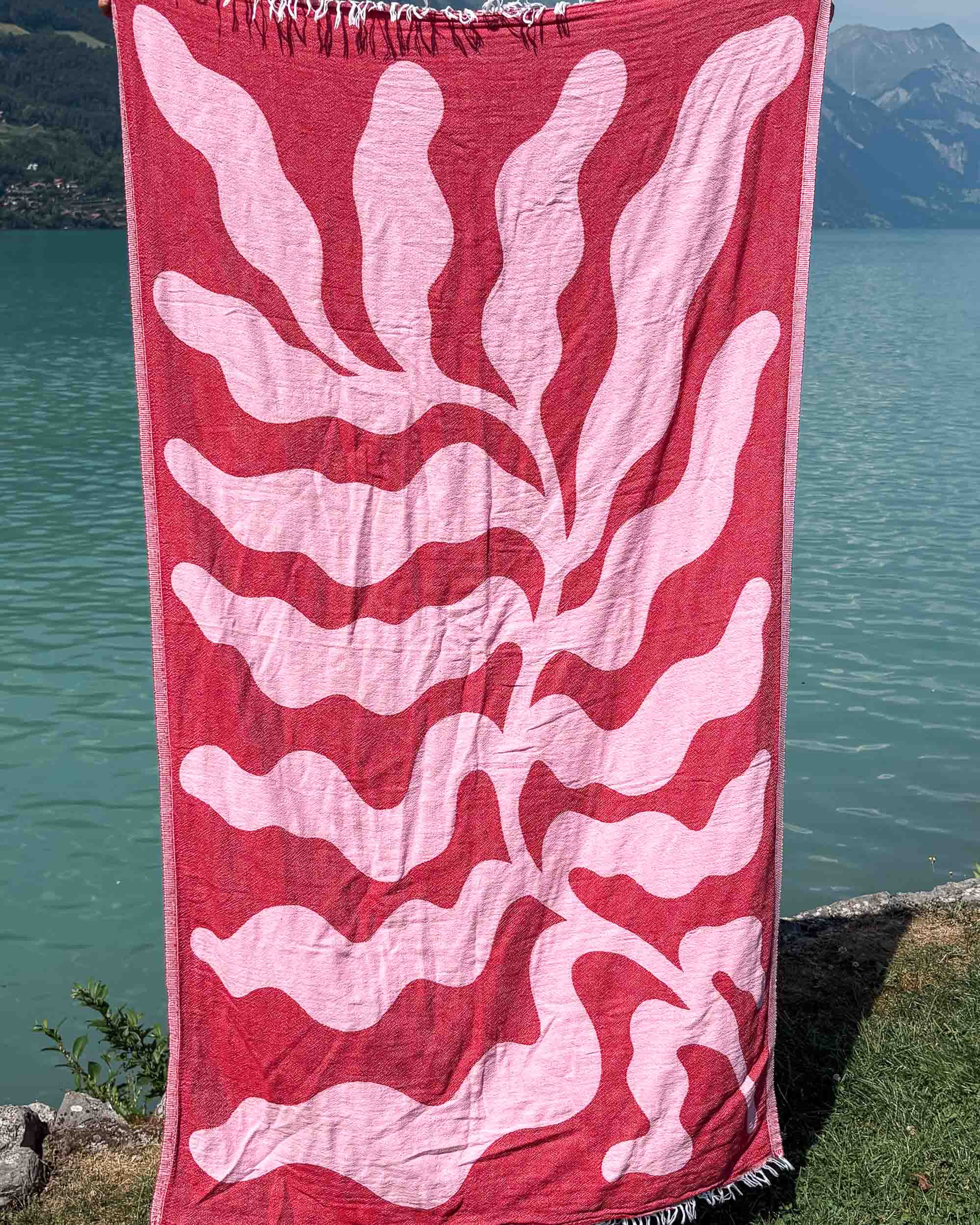


An organic cotton towel feels different. Softer. More authentic. As if you're diving into something natural right after a swim, something that understands your skin. It's not just about materials or labels, but about a conscious decision for quality you can feel, which also means less impact on our environment.
Why organic cotton makes a difference
The difference between conventional and organic cotton isn't immediately obvious. But your skin will notice it right away.
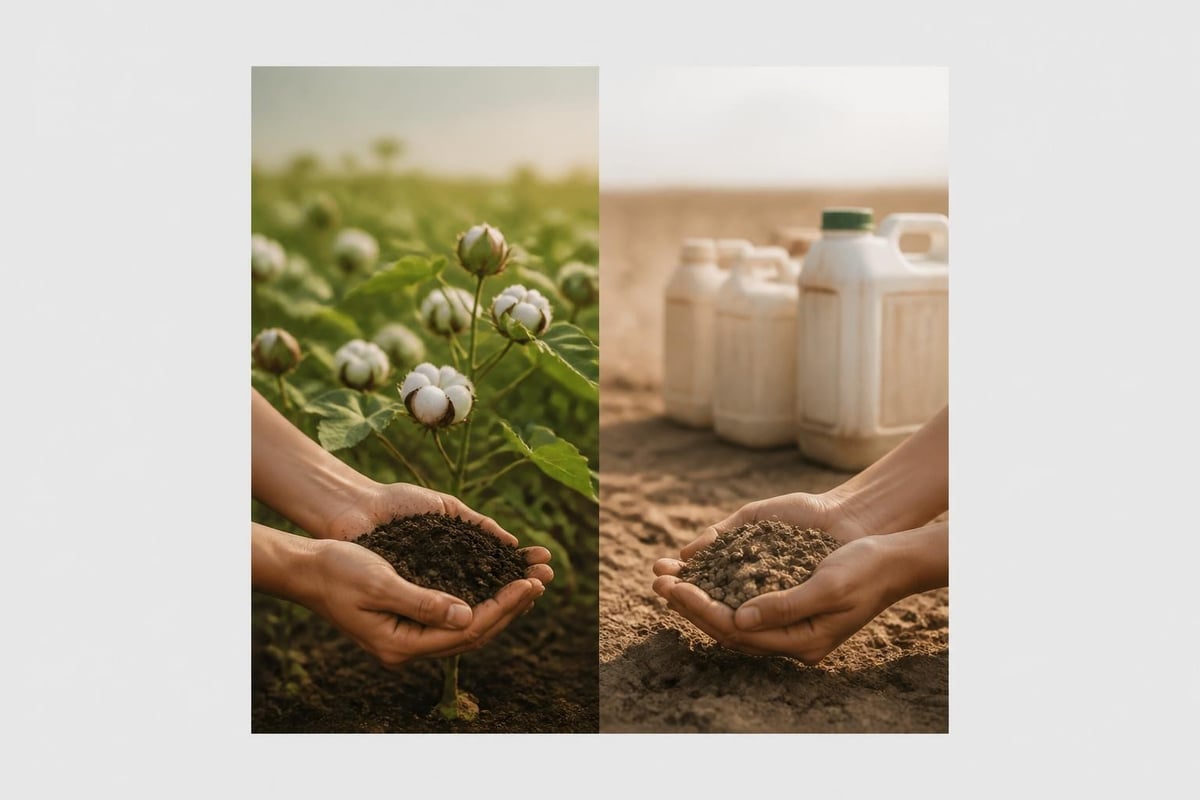
Cultivation without chemical pesticides
Organic cotton grows in fields that have been managed without synthetic pesticides or fertilizers for at least three years. This not only protects the soil and groundwater but also the people working in the fields. Conventional cotton cultivation consumes enormous amounts of chemicals and causes long-term damage to ecosystems.
With an organic cotton towel, you can be sure that the fibers are free from residues that could irritate your skin. Especially after swimming in the sea or pool, when the skin is sensitive, this difference becomes noticeable.
- No synthetic pesticides in cultivation
- No use of genetic engineering
- Soil-friendly crop rotation
- Water-saving cultivation using rainwater instead of irrigation
Skin-friendliness for all skin types
The fibers of an organic cotton towel are untreated and free from harsh bleaches or dyes that can cause allergies. This makes them an ideal choice for people with sensitive skin, neurodermatitis, or allergies. Cotton towels are generally skin-friendly, but organic quality elevates this benefit to a new level.
This aspect is particularly important for children. After a day at the beach or public pool, you want to wrap your child in something soft that gently absorbs the salty or chlorinated skin.
Recognizing quality features
Not every towel with an organic label delivers on its promise. It's worth taking a closer look.
Certifications as a guide
Different seals guarantee different standards. The most important ones for an organic cotton towel are:
| Certificate | What it means | Special feature |
|---|---|---|
| GOTS | Global Organic Textile Standard – controlled organic cultivation and social standards | Strictest textile seal worldwide |
| OEKO-TEX Standard 100 | Textiles tested for harmful substances | Tests end product for harmful substances |
| IVN BEST | Natural leather IVN certified BEST | Even stricter than GOTS |
| Fairtrade Cotton | Fair working conditions for cotton farmers | Focus on social justice |
A GOTS-certified organic cotton towel guarantees that at least 95% of the fibers come from controlled organic cultivation and that the entire supply chain is environmentally friendly and socially responsible.
Understanding weight and grammage
Grammage indicates how many grams of fabric per square meter have been processed. It directly influences absorbency and comfort.
- 400-500 g/m²: Lightweight towels, ideal for travel and the beach
- 500-600 g/m²: Medium weight, good all-rounder for home
- 600-700 g/m²: Heavy, luxurious quality with high absorbency
- 700+ g/m²: Premium range, very voluminous and fluffy
For the beach or public pool, an organic cotton towel with a medium grammage is particularly suitable. It dries faster but still absorbs enough moisture.
Care for a long lifespan
A high-quality organic cotton towel can last for years if you treat it correctly.
Washing without compromise
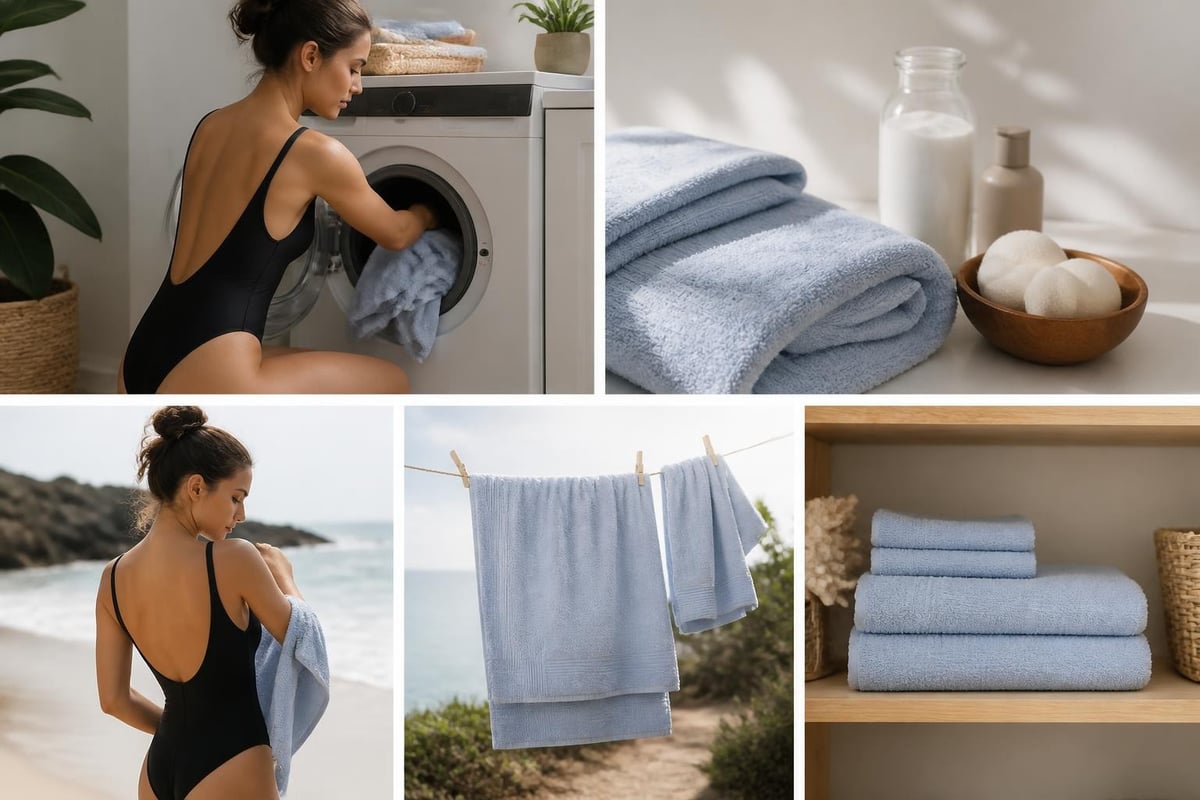
Temperature: 60 degrees is perfectly sufficient for normal soiling. Only go to 90 degrees for heavy soiling or illness.
Detergent: Use a mild, biodegradable detergent without optical brighteners. These attack the natural fibers and can leave residues.
Fabric softener: Avoid it completely. Fabric softener forms a film around the fibers and massively reduces absorbency. Vinegar in the fabric softener compartment provides natural softness without damaging the fibers.
- Wash new towels separately before first use
- Do not wash towels with zippers or rough clothing
- Do not overload the drum so the fibers have space
- Occasionally air dry outdoors for natural freshness
Drying for optimal fluffiness
The dryer is tempting, especially in winter. However, with an organic cotton towel, it should be used with caution. Low temperature and a drying ball provide volume without stressing the fibers.
Air drying is even gentler. Outdoors, the towel gets a natural scent and the fibers remain elastic. After drying, shake it briefly to make it soft.
Sustainable production from field to towel
The journey of an organic cotton towel begins in fields in India, Turkey, or Egypt and ends in your bathroom or beach bag.
Water consumption comparison
Conventional cotton is extremely thirsty. Up to 25,000 liters of water are needed for one kilogram, often through artificial irrigation in dry regions. Organic cotton relies on rainwater and soil-friendly methods, reducing water consumption by up to 90%.
Fair working conditions
GOTS-certified productions must adhere to minimum social standards. This means:
- No child labor
- Fair wages
- Safe working conditions
- Freedom of association
When you buy an organic cotton towel, you support a system that dignifies people instead of exploiting them.
Areas of application in everyday life
At the beach and public pool
After swimming in the sea or lake, you wrap yourself in your organic cotton towel and immediately feel the softness. The natural fibers absorb salt water and chlorine well without losing their structure.
The Breeze Poncho made of 100% combed organic cotton combines the advantages of a towel with the freedom of movement of a poncho. Perfect for switching between water and sand without having to completely change.
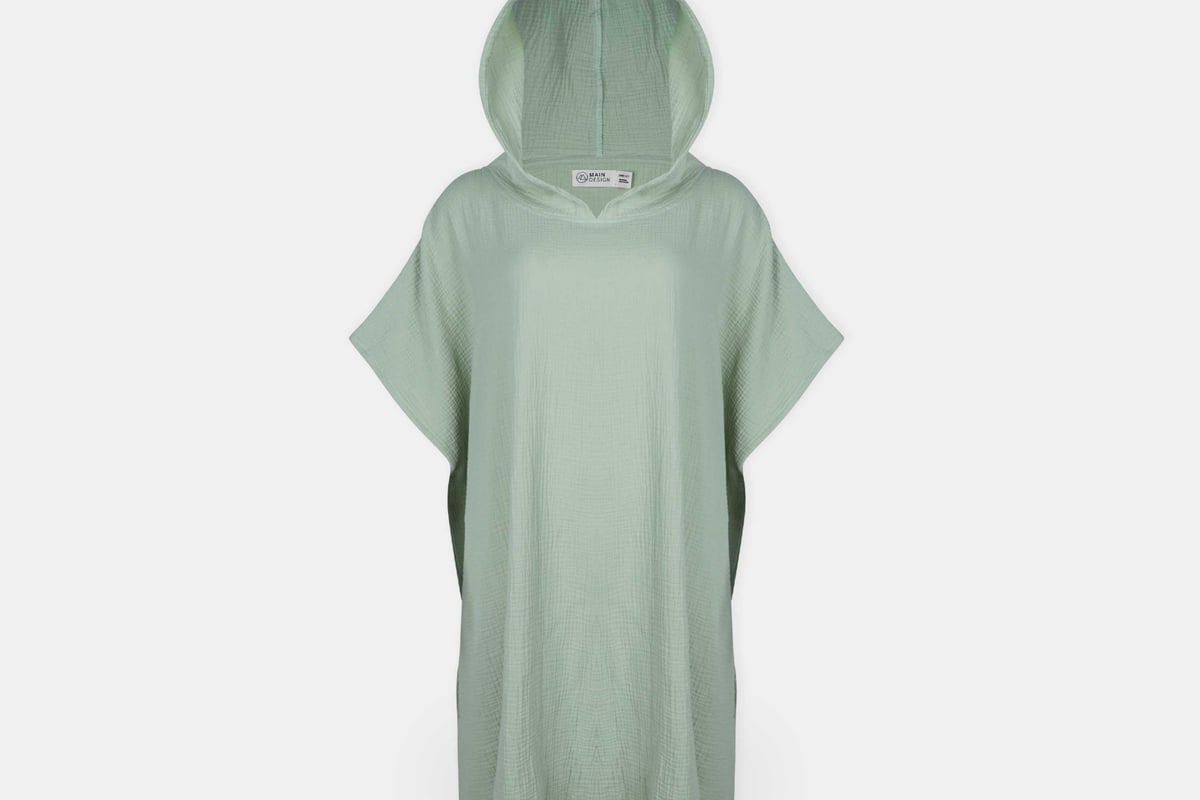
Its loose fit makes it an ideal companion for relaxing beach days where you want to move freely without constantly readjusting your towel.
At home and when traveling
For home, a heavier organic cotton towel with higher grammage is suitable. It feels more luxurious and dries you faster after a shower.
When traveling, the lighter version scores points. It takes up less space in your backpack and dries faster if you need to wash it on the go. The right choice depends on how you primarily intend to use the towel.
Investment in longevity
An organic cotton towel costs more than a conventional one. But this price difference quickly becomes relative.
Cost comparison over lifespan
On average, a high-quality organic towel lasts 5-7 years with good care, while cheap versions often fuzz, lose their color, or lose absorbency after just 1-2 years.
| Towel type | Purchase price | Lifespan | Cost per year |
|---|---|---|---|
| Conventional cheap | CHF 15 | 1-2 years | CHF 7.50-15 |
| Conventional medium | CHF 30 | 3-4 years | CHF 7.50-10 |
| Organic cotton GOTS | CHF 45-60 | 5-7 years | CHF 6.40-12 |
| Organic cotton Premium | CHF 70-90 | 7-10 years | CHF 7-12.85 |
The higher quality is not only financially noticeable. You produce less waste, wash newly bought towels less often, and enjoy consistently high comfort.
Calculating the environmental balance
Every organic cotton towel you buy saves:
- Several kilograms of CO₂ emissions compared to conventional products
- Thousands of liters of water through more sustainable cultivation
- Chemical pollution for soils and waters
- Health risks for cotton farmers
Especially if you value sustainability and already make other conscious choices – for example, with swimwear made from recycled materials – an organic towel is the perfect complement to your lifestyle.
What to look for when buying
Testing the feel
If possible, feel the organic cotton towel before buying. High-quality organic cotton feels soft without appearing flimsy. The loops should be dense and even, without loose threads.
Checking colorfastness
Organic towels are often dyed with natural or non-toxic dyes. They may lose some color during the first wash but should remain colorfast afterward. Check if the manufacturer provides information on colorfastness.
Transparently tracing origin
Reputable suppliers openly state where their cotton is grown and where the organic cotton towel was produced. Certificates should be clearly visible, ideally with a certificate number that you can check online.
Combinations with other sustainable textiles
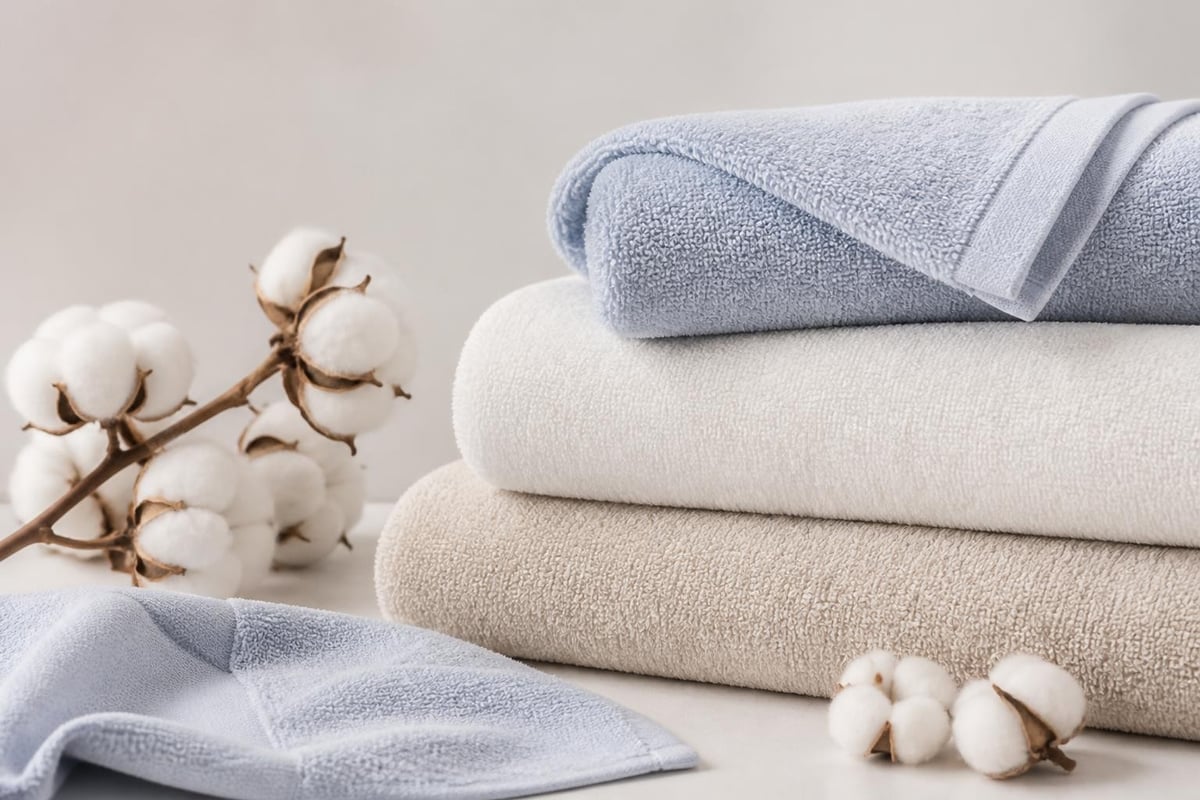
An organic cotton towel fits perfectly into a thoughtfully sustainable home. Combined with organic linen bedding, bath mats made from recycled materials, or ponchos made from certified cotton, it creates a harmonious overall picture.
In the bathroom, you can combine different sizes: large organic cotton bath towels for after the shower, smaller towels for face and hands, guest towels in matching colors. The natural color palette of organic textiles – beige, sand, terracotta, warm gray – harmonizes naturally.
Other sustainable accessories also fit well and create a conscious, natural look that feels right.
The right size for every purpose
Standard dimensions at a glance
- Guest towel (30 x 50 cm): For guest toilets or as a face towel
- Hand towel (50 x 100 cm): Classic hand towel for hands and face
- Shower towel (70 x 140 cm): For after showering or as a beach towel for children
- Bath towel (100 x 150 cm): Generous for after bathing or for the beach
- Beach towel (90 x 180 cm): Extra long for lying on the beach
For the public pool or the beach, an organic cotton towel in bath towel or beach towel size is ideal. You have enough space to lie down and can wrap yourself completely after swimming.
Consider packing size
Especially when traveling, size makes a difference. A folded organic cotton bath towel takes up more space than microfiber variants, but offers significantly more comfort and sustainability. For multi-day trips, a lighter organic cotton towel with 400-500 g/m² is the best choice.
Color choice and care
Prefer natural shades
Light and natural colors in organic towels are not only aesthetically pleasing but also practical. They require fewer dyes in production and can be washed at higher temperatures without the color suffering.
Dark organic cotton variants look elegant and hide stains better, but may lose more color when washed and should be washed separately.
Naturally removing stains
Sunscreen, sand, or algae from the sea sometimes leave traces. Natural stain removers are suitable for an organic cotton towel:
- Rinse stain with cold water
- Apply gall soap or bar soap directly
- Allow to soak and gently work with a brush
- Wash normally at 60 degrees
Aggressive bleaches harm natural fibers and should be avoided.
How organic cotton contributes to the circular economy
An organic cotton towel at the end of its life does not have to end up in the trash. The natural fibers are biodegradable and can be composted, provided they are not mixed with synthetic materials.
Many manufacturers now offer take-back programs where old towels are recycled and processed into new products. Used towels can also be repurposed as cleaning cloths in the household, dust cloths in the workshop, or as a base for plants.
The longevity and compostability make organic cotton a true circular material – unlike synthetic fibers, which remain in the environment as microplastics for decades.
The scent of nature
Something often overlooked: An organic cotton towel smells different. Not of artificial fragrances or chemical residues, but simply of clean cotton. Especially if you let it air dry, it absorbs the scent of sun and wind.
You feel this naturalness after showering or swimming. It's a small detail that contributes to the overall experience and reminds you that quality doesn't have to be loud.
An organic cotton towel is more than a practical accessory. It combines comfort with responsibility and accompanies you during the most beautiful moments – by the water, at home, on the go. If you value sustainable quality, you will find thoughtful essentials made from responsibly sourced materials at MAIN Design - Your Daily Dose Of Summer that convey exactly this feeling. From swimwear to organic cotton ponchos – for days that feel right.