

Sustainability is no longer just a trend, but an integral part of the fashion world – including swimwear. More and more people are looking for alternatives that are both stylish and responsibly produced.
2025 will be all about environmentally friendly swimwear, combining innovative materials and modern design with environmental awareness. New technologies and creative approaches are fundamentally changing the industry.
In this article, we present the seven most important sustainable swimwear trends for 2025. From recycled ocean plastic and natural dyeing processes to multifunctional designs – discover how sustainable swimwear is shaping the future and what you should look for when making your next purchase.
What does environmentally friendly swimwear mean today?
The term "environmentally friendly swimwear" now represents far more than just a trend. More and more people are paying attention to whether their swimwear is not only stylish but also responsibly produced. But what exactly constitutes environmentally friendly swimwear, and how does it differ from conventional swimwear?
Definition and criteria for sustainable swimwear
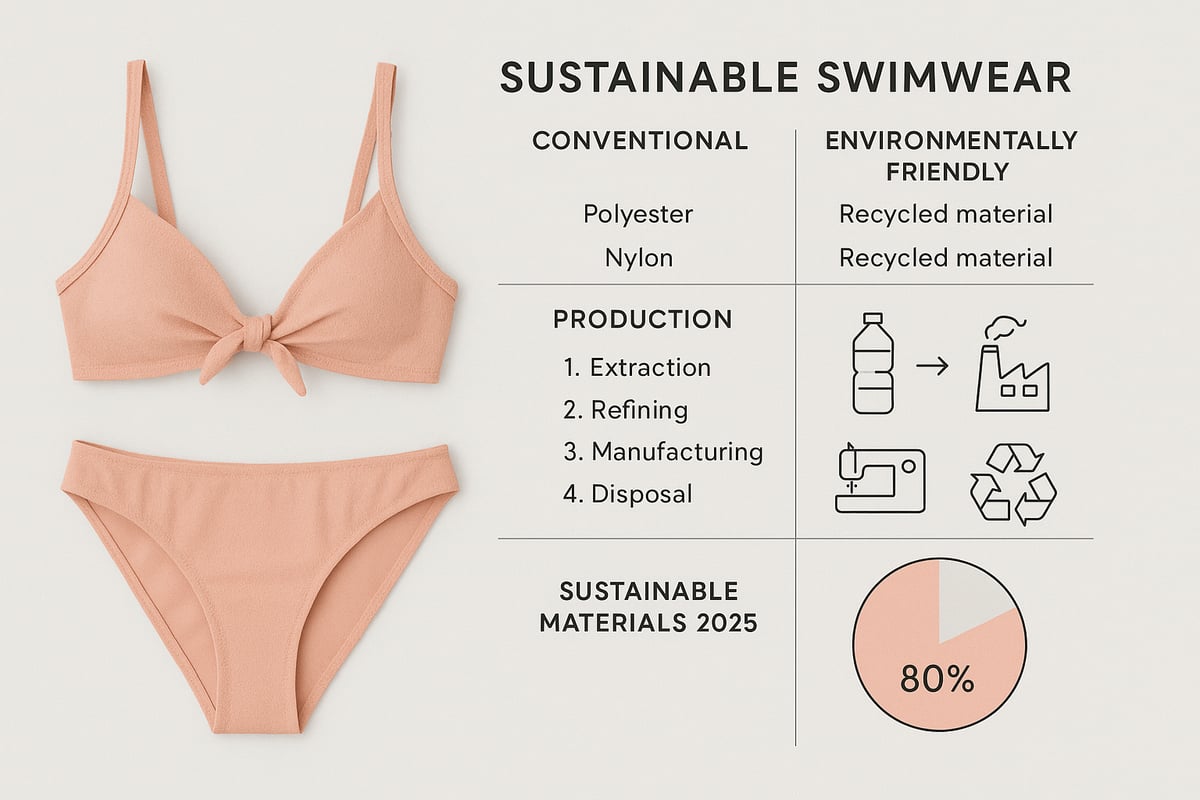
To define environmentally friendly swimwear, it's worth taking a look at the materials. Sustainable swimwear relies on recycled plastics like ECONYL® or SEAQUAL®, but also on innovative natural fibers like TENCEL™ or organic cotton. Crucially, the fabrics must be processed in a resource-efficient manner and with as few harmful chemicals as possible.
Another criterion is durability. High-quality workmanship and robust materials ensure that the swimwear lasts for many summers. In contrast, conventional swimwear often uses cheap plastics that wear out faster and release microplastics.
| criterion | Conventional swimwear | Environmentally friendly swimwear |
|---|---|---|
| material | Polyamide, Polyester | ECONYL®, recycled PET, natural fibers |
| production | High chemical usage | Environmentally friendly processes |
| longevity | Low to medium | High, repairable |
| circulatory system | Linear (disposable principle) | Circular economy, zero waste |
Important certifications that distinguish environmentally friendly swimwear include:
- GRS (Global Recycled Standard)
- OEKO-TEX® Standard 100
- ECONYL® label
These seals stand for transparency and certified sustainability. Circular economy and zero waste are particularly innovative: here, old materials are reused and production waste is minimized. Increasing consumer awareness shows that sustainability is becoming ever more important when buying swimwear. You can find a comprehensive overview of sustainable practices on the Sustainability page at MAIN Design .
Challenges and opportunities of the industry
The swimwear industry faces major challenges. Microplastics released when synthetic fibers are washed are polluting the oceans. Fast fashion leads to overproduction and short product lifecycles, increasing the environmental footprint. However, environmentally friendly swimwear offers solutions: New fiber production technologies, waterless dyeing processes, and digital designs are driving innovation.
The demand for sustainable swimwear is growing steadily. According to current market analyses, the share of environmentally friendly collections is increasing annually. At the same time, scaling up sustainable production remains a hurdle, as certified materials and fair working conditions often entail higher costs.
But opportunities are emerging: Young labels are focusing on eco-friendly swimwear, and established brands are revamping their collections. Consumers value transparency and prefer products that openly disclose their origin and production methods. The industry is undergoing a transformation towards greater responsibility and innovation.
Environmentally friendly swimwear demonstrates that sustainability, style, and functionality are not mutually exclusive. The more consumers demand sustainable options, the more the entire swimwear industry will move towards environmental awareness and durability.
The 7 innovative eco-friendly swimwear trends of 2025
The shift towards greater sustainability in the fashion world is particularly evident in swimwear. The seven key trends for environmentally friendly swimwear in 2025 combine innovative materials, technical solutions, and a new awareness of the environment and biodiversity. Each trend sets new standards for design, function, and sustainability. Be inspired and discover how these developments are revolutionizing the swimwear industry.
1. Swimwear made from recycled ocean plastic
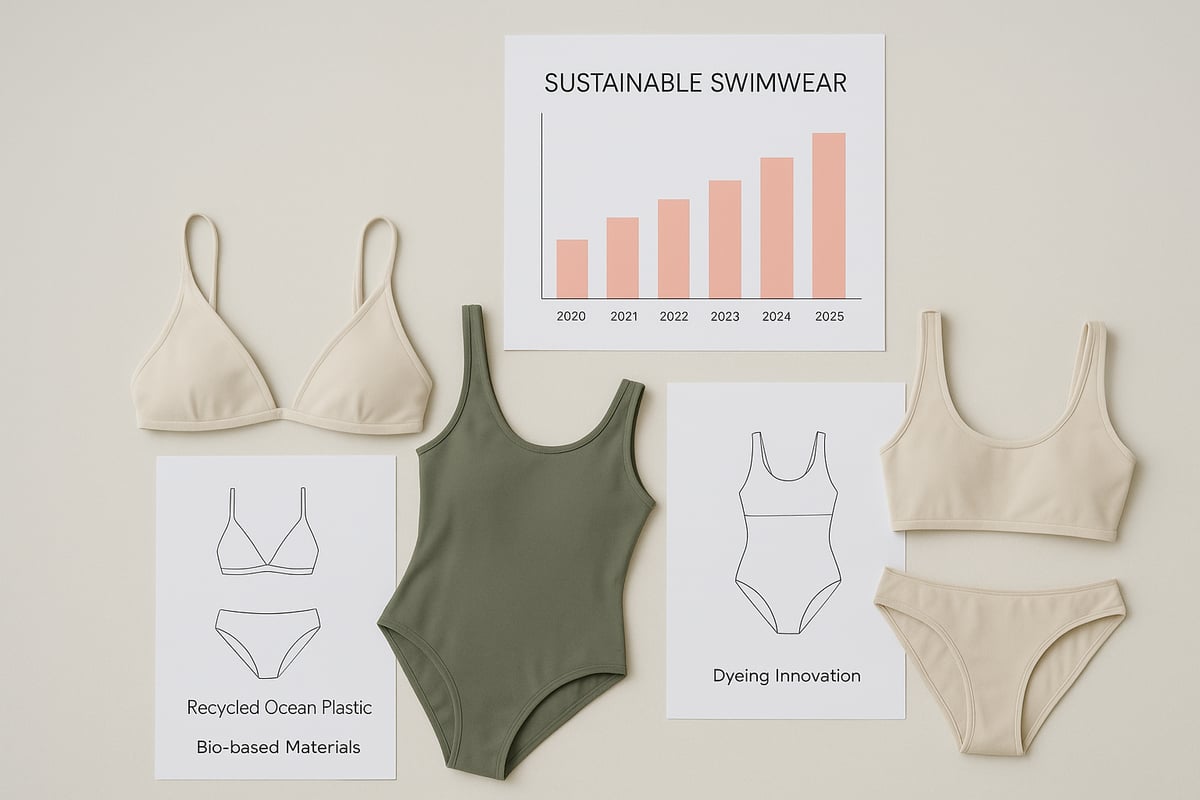
Environmentally friendly swimwear made from recycled ocean plastic will be one of the most important trends in 2025. Materials such as ECONYL® and SEAQUAL® are used, which are derived from old fishing nets, carpets, and plastic waste from the sea. These yarns make it possible to produce high-quality fabric for bikinis and swimsuits that is not only durable but also particularly resource-efficient.
The advantages are obvious: Every kilogram of recycled yarn reduces ocean waste and saves energy and CO2 compared to conventional nylon. According to current studies, a significant amount of marine plastic is already being recycled annually through sustainable swimwear. More and more labels are relying on these materials and presenting collections that are both visually appealing and environmentally friendly.
A prime example of this trend is surf bikinis made from recycled materials , demonstrating how innovative and stylish environmentally friendly swimwear can be today. Besides their ecological benefits, these products score points with high functionality, UV protection, and modern design.
However, there are also challenges: microplastic particles can be released during washing. Therefore, it is recommended to use special laundry bags that trap these particles. Overall, though, recycled swimwear solutions are setting new standards for environmentally friendly fashion and demonstrating that sustainability and style are not mutually exclusive.
2. Bio-based and compostable materials
Another milestone for environmentally friendly swimwear is the use of bio-based and compostable materials. These materials utilize fibers made from algae, bamboo, or corn. These fabrics are not only biodegradable but also particularly skin-friendly and comfortable to wear.
Compared to conventional plastics, bio-based materials require less energy and water in production. They conserve resources and enable a sustainable circular economy. By 2025, numerous brands will already be on the market offering swimwear made from PLA (polylactic acid), lyocell, or innovative algae blends.
Technically, there are still challenges, especially regarding durability and elasticity in water. However, new material blends and special coatings are constantly improving performance. The result is durable, comfortable products that simultaneously minimize the ecological footprint.
Environmentally friendly swimwear made from bio-based fibers offers a genuine alternative to conventional plastics. These fabrics are particularly ideal for allergy sufferers and those with sensitive skin. With each new collection, the range of compostable, sustainable swimwear grows – an important step for the future of the industry.
3. Innovative dyeing and printing technologies
The finishing of swimwear will also see numerous innovations in 2025. Innovative dyeing and printing technologies are a key component of environmentally friendly swimwear. Waterless dyeing processes and the use of natural dyes significantly reduce the use of chemicals and water consumption.
Digital printing technologies enable individual designs without large quantities of waste and with minimal resource consumption. The result is unique patterns that are applied directly to recycled or bio-based materials. These methods not only reduce environmental impact but also offer new creative freedom.
One advantage is that the colors remain vibrant even after prolonged exposure to sunlight and frequent washing. However, challenges remain regarding durability and color intensity, particularly with natural dyes. The industry is continuously working on improvements to optimize the balance between sustainability, functionality, and aesthetics.
The use of innovative dyeing technologies makes environmentally friendly swimwear even more resource-efficient and individual. This continues the trend towards sustainable production methods in all areas of swimwear.
4. Modularity & Multifunctionality in Swimwear
In 2025, modularity and multifunctionality will also be key themes. For environmentally friendly swimwear, this means mix-and-match pieces that can be flexibly combined. This allows for many different looks to be created from just a few items, reducing consumption and increasing versatility.
Another trend is swimwear that can be worn not only at the beach, but also for sports or leisure activities. Functional materials and well-designed cuts ensure that bikinis and swimsuits can also be used as yoga tops or sports bras. This extends the lifespan of each garment and makes sustainable consumption even easier.
Consumers appreciate the option of customizing their swimwear. Feedback is consistently positive: fewer pieces, more combination possibilities, and a more conscious use of resources. Multifunctional swimwear is also a real advantage for travel or spontaneous trips.
Environmentally friendly swimwear with modular designs helps reduce the amount of clothing purchased while still maintaining flexibility. This makes sustainability a natural part of everyday life.
5. Durability and repairability as a trend
A key element of environmentally friendly swimwear in 2025 is durability. More and more brands are focusing on particularly robust and repairable materials. Instead of a throwaway mentality, long-term use is paramount.
Many brands now offer repair services or replacement parts for closures and straps. This makes it easy to fix minor damage without having to replace the entire product. DIY repair kits and tutorials are also gaining popularity, allowing you to fix your favorite items yourself.
The advantages are clear: less waste, reduced environmental impact, and a more conscious approach to fashion. Durable swimwear saves money in the long run and conserves resources. This investment pays off especially for children and frequent swimmers.
Nevertheless, challenges remain, such as developing fabrics that are both elastic and durable. The industry is constantly working on new solutions to combine environmentally friendly materials with maximum lifespan. This makes environmentally conscious consumption increasingly attractive.
6. Transparent supply chains and local production
Transparency is becoming increasingly important in the fashion industry – especially for environmentally friendly swimwear. By 2025, many brands will be focusing on traceable supply chains. Using blockchain technology or QR codes, you as a consumer can track exactly where your product comes from and how it was produced.
Local production is another trend. More and more labels are manufacturing their swimwear directly in Europe or even in Switzerland. This ensures short transport routes, a smaller carbon footprint, and strengthens regional jobs. For consumers, this means more trust and control when shopping.
Certified production processes and transparent communication are crucial for building trust in environmentally friendly swimwear. Statistics show that more and more people are specifically seeking out brands that disclose how and where their products are made.
Transparent supply chains and local manufacturing make sustainable swimwear tangible and raise awareness of fair, ethical fashion.
7. Including various swimwear collections
The latest major trend in environmentally friendly swimwear for 2025 is inclusion. Swimwear for all body shapes, skin types, and lifestyles is becoming the standard. Many brands are developing collections that appeal to a broad target group and take individual needs into account.
Inclusive swimwear promotes greater well-being and reduces returns, as the fit is better tailored to different body types. This extends the lifespan of each garment and reduces unnecessary material consumption. Body positivity also plays a major role: everyone should feel comfortable in their own skin and in their swimwear.
Campaigns featuring diverse models and authentic stories demonstrate that environmentally friendly swimwear is for everyone. Families, people with special needs, and sports enthusiasts will find a wide range of sustainable, suitable solutions in 2025.
This trend makes sustainable swimwear not only more ecological, but also more socially just and diverse. In this way, swimwear of the future becomes a symbol of lived sustainability and inclusion.
MAIN Design: Sustainable swimwear for women & children
MAIN Design is considered a pioneer of environmentally friendly swimwear in Switzerland. The label uses recycled materials such as ECONYL and SEAQUAL for its collections, combined with a minimalist design approach and thoughtful functionality. Each piece is designed not only to look good, but also to be durable and support an active lifestyle.
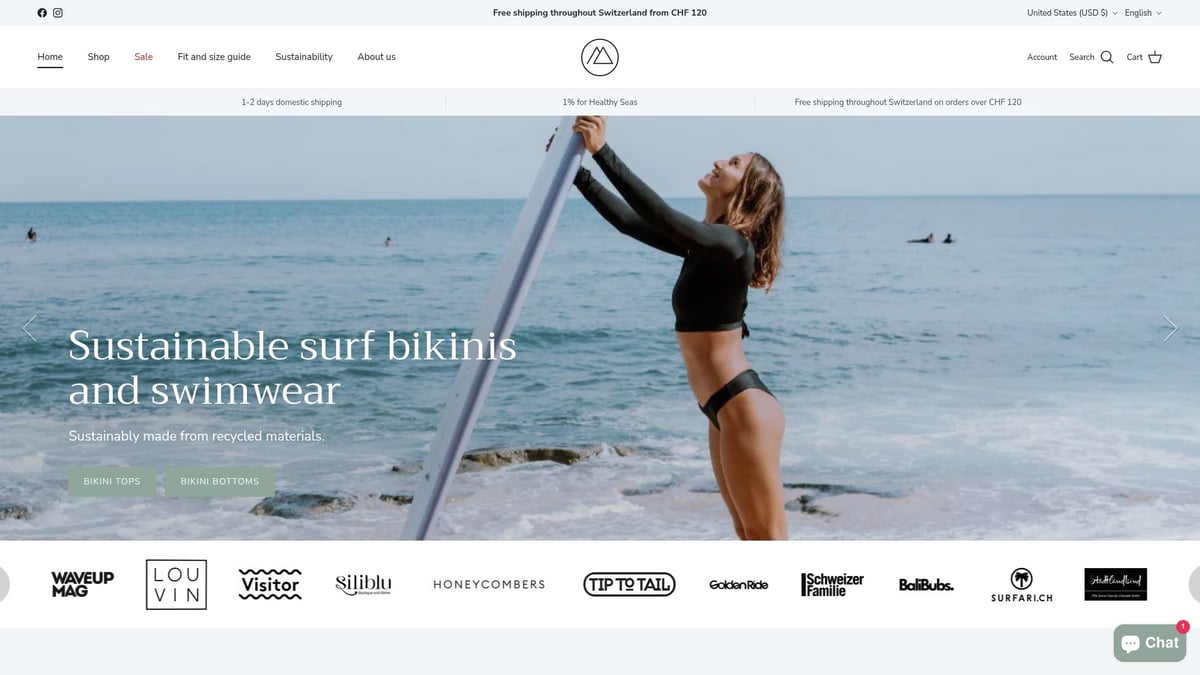
A particular highlight is MAIN Design's support of Healthy Seas, which allows them to actively contribute to ocean conservation. For families, the brand offers a dedicated children's line, MAIN Mini: children's swimwear with UPF 50+ sun protection and guaranteed comfort. Fast and free shipping within Switzerland further simplifies sustainable consumption.
The target group consists of environmentally conscious women, families, and anyone who values style and ethics. By combining ethical production, comfort, and timeless aesthetics, MAIN Design sets standards for environmentally friendly swimwear and is a prime example of swimwear trends for 2025. Positive customer feedback and a dedicated community confirm that sustainability and fashion consciousness go perfectly together.
How to properly care for sustainable swimwear & use it for longer
Proper care is crucial for environmentally friendly swimwear to fully realize its benefits. By consciously choosing sustainable swimwear, you not only protect the environment but also extend the lifespan of your favorite pieces.
Tips for caring for eco-friendly swimwear
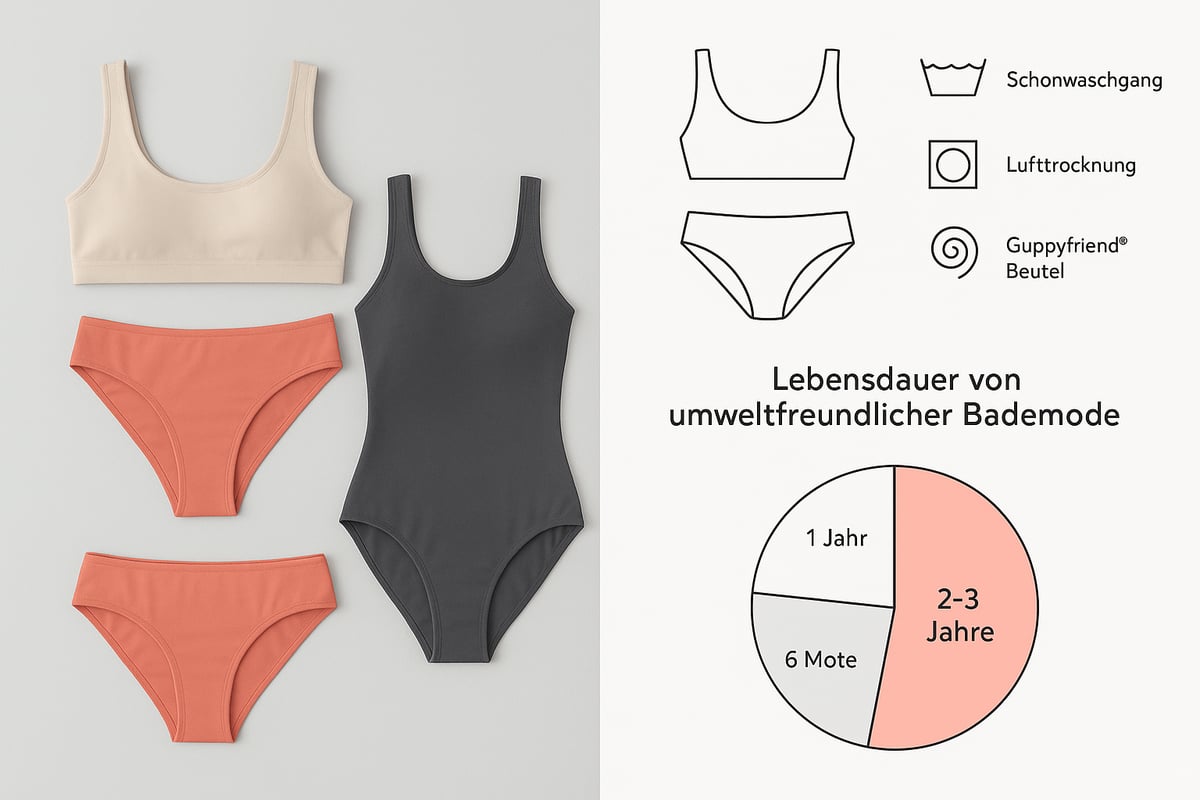
To keep your environmentally friendly swimwear looking its best for as long as possible, rinse it with clean water after every use. Chlorine, salt, and sunscreen can damage the fibers. Use mild, eco-friendly detergents and always wash swimwear on a gentle cycle at low temperatures.
Especially with recycled materials like ECONYL or SEAQUAL, we recommend using a laundry bag such as the Guppyfriend. This reduces the release of microplastics and protects the fabric at the same time. This way, your environmentally friendly swimwear stays in shape longer and has a smaller impact on the environment.
Let swimwear air dry and avoid direct sunlight to preserve color and elasticity. Store it flat and dry to prevent mold. Minor damage such as open seams or loose straps can often be repaired easily. Many brands now offer replacement parts or repair kits.
If you're unsure which fit is best for your body, our swimwear fit guide offers helpful tips for durable and well-fitting styles. This way, you can ensure that your environmentally friendly swimwear is not only sustainably produced but also worn with pleasure for a long time.
Conscious care is a key component of sustainable consumption and helps to conserve resources and minimize the ecological footprint.
Environmentally conscious consumer behavior when buying swimwear
When buying environmentally friendly swimwear, it's worth focusing on quality rather than quantity. High-quality materials and meticulous workmanship ensure that a bikini or swimsuit lasts for many seasons. Certifications such as GRS or OEKO-TEX provide additional assurance regarding the product's sustainability.
Second-hand platforms and swap meets also offer eco-friendly alternatives to extend the lifespan of swimwear. When buying, look for sustainable packaging and short delivery routes to reduce CO2 emissions.
Using resources consciously means only buying new, environmentally friendly swimwear when there is a real need. Many brands are now focusing on modular designs and repairable models that can be flexibly adapted, thus generating less waste.
The demand for sustainable swimwear is constantly growing, and consumers like you are actively contributing to the transformation of the industry. Every purchase decision influences how the market evolves and which innovations prevail.
Sustainable swimwear is far more than just a trend – it represents responsibility, innovation, and genuine style. If you're eager to try out the latest eco-friendly designs and value quality, comfort, and a good feeling, then MAIN Design is the perfect place for you. Here you'll find high-quality, recycled materials, minimalist designs, and the peace of mind that comes with every purchase, helping to protect the oceans. Get inspired and discover just how stylish sustainability can be in 2025 – explore more .