

Surfing means freedom – and the right bikini bottom makes the difference between an undisturbed flow and constant adjusting. Anyone who has ever looked for their bikini bottom after a wipe-out knows: not every cut is made for the line-up. The best bikini bottoms for surfing combine a secure fit, freedom of movement, and a material that can withstand salty water, sun, and action. Here you will learn what really matters – from the cut and fabric to care.
Why the cut makes all the difference
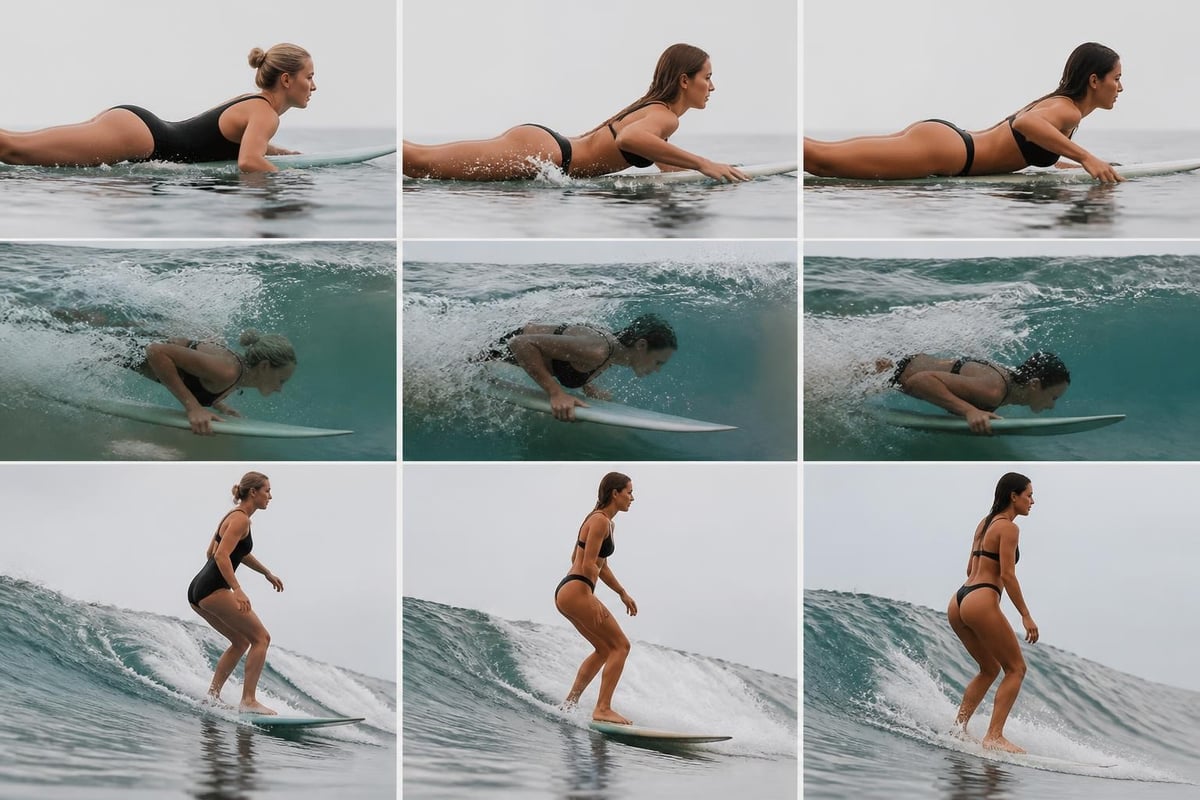
The fit is the foundation. A bikini bottom might sit perfectly on the beach, but as soon as you duck dive or lie on your board, you see whether it holds or slips.
Coverage: How much fabric makes sense?
Full coverage provides security and freedom of movement. Styles with more fabric in the front and back stay where they are supposed to – even in powerful waves. Those who have an active surf style and paddle a lot benefit from full-coverage cuts.
Moderate coverage offers a middle ground: enough material for support, but not so much that it constricts. Perfect for calmer sessions or when transitioning between surfing and sunbathing.
- Cheeky or Brazilian cuts look good but slip more easily. Rather impractical for surf beginners or longer sessions.
- High-leg cuts visually elongate the legs, but can slip during intense movement.
- Boy-short style protects more skin, provides additional UV protection, and sits firmly – ideal for long days in the water.
Waistband and ties: What really holds?
The waistband determines whether your bikini bottom stays in place after the first wave. Elastic waistbands with broad rubber lining distribute pressure evenly and do not dig into the skin. Ensure the fabric isn't too thin – otherwise, it will roll.
Side ties look casual but loosen in the water. If you choose side-ties, tie them tightly – double-knot if necessary. Better yet: choose models with additional inner rubber lining that holds regardless of the bow.
| Binding Type | Hold | Adjustability | Surf Suitability |
|---|---|---|---|
| Elastic Waistband | Very Good | None | High |
| Side-ties (string only) | Medium | High | Medium |
| Side-ties + Rubber | Good | High | High |
| Velcro | Very Good | Medium | Very High |
Some surfers swear by Velcro or hidden snaps at the hips. These systems combine adjustability with security – and can be operated even with wet fingers.
Material: What must withstand salt water and sun
Your bikini bottom's fabric fights against UV radiation, salt, chlorine, and sand every day. Recycled polyamide blends (often made from old fishing nets or PET bottles) are robust, quick-drying, and hold their shape. At the same time, they protect the oceans instead of burdening them.
Why recycled fabrics are the better choice
Conventional nylon and polyester release microplastics with every wash. Recycled fibers do not completely eliminate this effect, but significantly reduce it – especially if they are treated with special coatings. Brands like MAIN Design consistently rely on recycled materials and support projects like Healthy Seas with every sale, which retrieve ghost nets from the ocean.
Important: Sustainable fabrics also need care. Rinse your bikini bottom with clear fresh water after every surf. This extends its lifespan and keeps the colors fresh.
UV protection: How much does the fabric offer?
Most surf bikinis offer some UV protection, but not all are tested or certified. The UPF value (Ultraviolet Protection Factor) indicates how much UV radiation the fabric blocks. UPF 50+ is the gold standard and filters over 98% of UV radiation.
According to the ASTM standards for UV protection in textiles, fabrics must be tested in a reproducible manner to provide reliable UPF ratings. Look for labels from independent laboratories such as Hohenstein, which apply strict testing procedures.
Dark, densely woven fabrics protect better than light, thin materials. Anyone planning long surf sessions should combine their bikini with sunscreen on exposed areas – and perhaps wear a surf rashguard as well.
Fit and freedom of movement while surfing
A perfectly fitting bikini bottom feels like a second skin. It doesn't slip, dig in, or let you forget you're wearing it.
Finding the right size
Many surfers buy too big – for fear that it will be too tight. But a loose bikini collects water and pulls downwards. Choose your bottoms tight enough that they sit flush without gaps, but do not constrict anywhere. The fabric should stretch when you move, without becoming baggy.
Tip: Try different movements on dry land – squats, lunges, hip rotations. If the bottoms slip or pinch, it will get worse in the water.
Seams and lining: Details that count
Flat seams or seamless constructions prevent chafing – especially in areas prone to friction (hips, leg openings). According to a study on friction injuries in sports, blisters and skin irritations occur primarily where seams rub against damp skin.
A double-layered lining in the crotch provides additional comfort and support. Ensure the lining is also made of quick-drying material – wet cotton chafes and dries slowly.
Performance in the water: What defines the best bikini bottoms for surfing?
As soon as you are in the line-up, the quality shows. The best bikini bottoms for surfing remain invisible – they disappear from your consciousness because they simply work.
Water resistance and speed
Every detail on a bikini creates drag. Unnecessary bows, thick seams, or loose cuts slow you down minimally – but with every paddle stroke, it adds up. A study on the effect of swimsuit design on passive drag shows that smooth, tight-fitting cuts measurably reduce water resistance.
Practically, this means:
- Choose models without fluttering ribbons or attached decorations.
- Look for a smooth, streamlined fit.
- Test whether the fabric gets heavier in the water – high-quality materials remain light.
Anti-slip features and silicone grips
Some manufacturers sew thin silicone strips into the leg openings or the waistband. These adhere gently to the skin and prevent the bikini from riding up. This works well as long as the silicone remains elastic and does not turn hard after a few months.
Alternatively, elastic rubber waistbands with multiple layers ensure support. They are more durable and work even after many washes.
Care and durability: How to keep your bikini looking nice longer
The lifespan of your bikini bottom depends heavily on how you treat it. Salt water, chlorine, and UV light attack the fibers – but a few simple steps significantly extend its service life.
After surfing: Rinse immediately
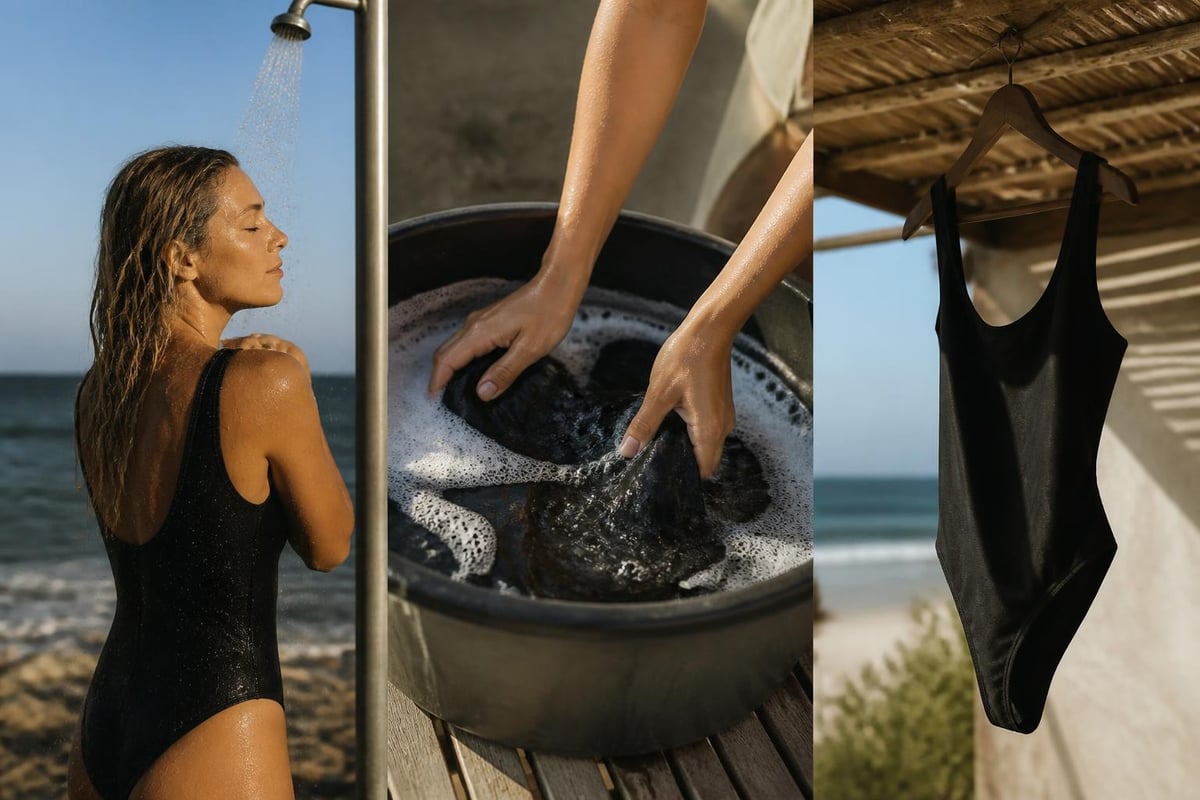
Rinse your bikini bottom immediately after being in the water with cold fresh water. This removes salt, sand, and residue before they set in. Wring it out gently – never wring or twist aggressively, or the seams and elastics will loosen.
Washing and drying: The basics
- Hand washing is gentler than machine washing. If you do use a machine, use a laundry bag and the delicate cycle (max. 30 °C).
- Avoid fabric softener – it coats the fibers and reduces elasticity.
- Air dry in the shade: Direct sun bleaches colors and makes the fabric brittle.
According to Consumer Reports, it helps to hang up the bikini bottom loosely after wearing instead of bundling it up while wet – this avoids mold and unpleasant odors.
| Care step | Why it is important | Errors to avoid |
|---|---|---|
| Fresh water rinse | Removes salt/chlorine | Leaving it rolled up in salt water |
| Hand wash / delicate cycle | Protects elastane fibers | Hot water or spin cycle |
| Shade drying | Retains color and elasticity | Direct sun or heating |
| Storage | Prevents deformation | Folding it while wet |
The most common buying mistakes and how to avoid them
Many surfers buy their bikini bottoms based on looks – and then regret it in the water. Here are the typical traps:
Placing too much value on trends
Cut-outs, ruffles, rings look good on Instagram but get in the way while surfing. They collect sand, snag, and loosen faster. Stick to clean, functional designs.
Choosing the wrong size due to uncertainty
Either too big (slips) or too small (digs in). Measure yourself before buying and compare with the brand's size chart. Every brand fits differently – what fits in one can be tight in the next.
Ignoring material and origin
Cheap bikinis made of conventional polyester quickly lose their shape and color. Invest instead in recycled, certified fabrics that last longer and release fewer microplastics. Brands that are transparent about production and materials are usually more reliable.
If you are looking for a sporty, secure cut that holds up even during intense sessions, the Sassy Bikini Top is a good example of thoughtful design: seamless, with stable support, and made of recycled material – ideal for surfers who value function and sustainability.
Checklist: How to identify the best bikini bottoms for surfing
Before you buy, go through these points:
- Cut: Full or moderate coverage? Avoid models cut too narrowly.
- Waistband: Elastic and wide, not just string ties.
- Material: Recycled, quick-drying, with UPF protection.
- Seams: Flat or seamless, no rough chafing.
- Lining: Double-layered, quick-drying.
- Anti-slip features: Silicone or multi-layered rubber.
- Care instructions: Clear and realistic – shows that the manufacturer knows what its product can handle.
A good surf bikini bottom fulfills all points – and lasts for several seasons if you maintain it properly.
What do surfers and tests say?
Anyone in the water daily has clear favorites. According to The Inertia, one of the leading surf media platforms, the following characteristics rank at the top:
- No slipping during the duck dive
- Quick-drying and light
- Durability even with daily use
- Environmentally friendly materials
Many surf schools and athletes rely on brands that combine not only style but also performance and sustainability. Serious surfers don't buy new items every season – they invest properly once.
The Sports Medicine resources for swimmers emphasize that well-fitting equipment prevents injuries. A bikini that is too loose or too tight distracts, causes skin irritation, and reduces concentration.
Sustainability: Why the material matters
Surfing and ocean protection go together. Anyone who is in the ocean every day feels the changes – plastic on the beach, nets in the water. Recycled swimwear is more than a trend: it is a statement.
How recycled fibers are created
Ghost nets, PET bottles, and old textiles are collected, cleaned, and spun into new yarn. This process saves crude oil, reduces CO₂, and removes waste from the cycle. The quality is identical – often even better, because the fibers are processed more precisely.
What you achieve with your purchase
Brands like MAIN Design donate a portion of every sale to Healthy Seas, an organization that retrieves and recycles ghost nets from the sea. Your bikini therefore actively helps to make the oceans cleaner.
Styling tips: Combining bikini bottoms
The best bikini bottoms for surfing work not only in the water but also on land. A sporty high-waist cut fits perfectly under shorts or kimonos – ideal for the way to the pool or relaxed beach days.
Mix-and-match is the name of the game: combine different tops with your favorite bottom. This way, you get more out of your wardrobe and reduce the number of pieces you need.
For more inspiration on how to combine bikini bottoms stylishly and practically, check out which bikini bottom suits which figure.
Performance comparison: Surf bikini vs. fashion bikini
Not every bikini is made for surfing. Here are the most important differences:
| Characteristic | Fashion Bikini | Surf Bikini |
|---|---|---|
| Hold in water | Low | High |
| Material | Often not recycled, thin | Recycled, robust, quick-drying |
| Seams | Decorative, thick | Flat or seamless |
| UV protection | Usually none | UPF 50+ possible |
| Durability | 1 season | Several seasons |
| Price | Lower | Higher, but usable longer |
A fashion bikini might be cheaper, but if it stretches out or slips after three surfs, you end up paying more in the end.
Frequently asked questions answered
How tight should a surf bikini bottom be?
Tight enough so that no gaps occur, but without constricting. The fabric should stretch when you move.
Do I need UPF protection if I use sunscreen?
Sunscreen is important, but UPF fabric provides constant protection – even after hours in the water. A good combination is the safest choice.
How often should I wash my bikini?
Rinse after every surf, wash only when necessary (e.g., if there is an odor or stains). Washing too frequently damages the fibers.
What to do if the bikini smells like salt?
Soak thoroughly in cold water (30 min.), then rinse. If the smell persists, wash briefly by hand with a mild detergent.
Can I wear my bikini in chlorinated water?
Yes, but chlorine attacks the fibers more than salt water. Rinse extra thoroughly afterwards.
The right bikini bottom makes every session better – it stays in place, provides protection, and lets you enjoy the moment instead of constantly readjusting. If you value quality, sustainability, and genuine surf performance, MAIN Design is the perfect choice for you: recycled materials, thoughtful cuts, and a contribution to cleaner oceans with every purchase. Discover swimwear that delivers on its promises – and simply makes you feel good.