

Anyone who has ever caught a wave and then had to search for their bikini top knows the problem. A surf bikini that stays on is not a luxury, but a pure necessity. The combination of saltwater, strong currents, and quick movements places the highest demands on swimwear. What fits perfectly in the pool can become a challenge in the ocean. That's why special features, well-thought-out cuts, and the right materials are needed so you can fully concentrate on the waves.
What makes a surf bikini truly secure
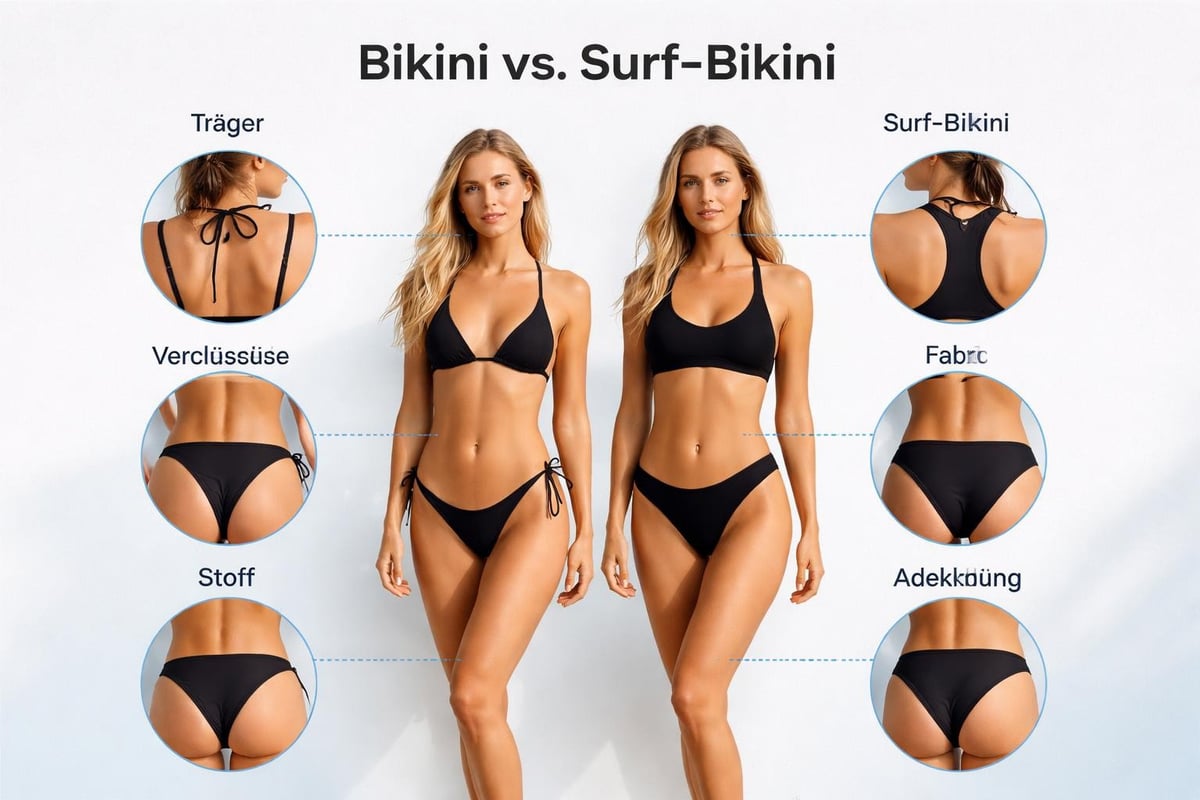
The question of the perfect surf bikini that stays on begins with the design. Unlike normal swimwear, a surf bikini must withstand extreme stress. When you're tossed through the washing machine of a breaking wave, every inch of fabric and every seam counts.
The most important features at a glance:
- Wide, adjustable straps for optimal support
- Multiple closure systems instead of simple tie-strings
- Snug-fitting cuts without too much loose fabric
- Elastic but shape-retaining materials
- Reinforced seams at critical points
A high-quality surf bikini combines these elements so that nothing slips or twists. The right fit determines whether you can surf relaxed or constantly have to adjust your swimwear.
Why regular bikinis fail
Classic bikinis are designed for sunbathing or leisurely swimming. But as soon as you get on your board and paddle into the waves, the requirements change completely. The water pressure during a wipeout can be enormous.
Thin straps cut in or come undone. Triangular cups offer too little support. Simple knots open under strong strain. These are not design flaws, but simply the wrong tools for the job.
Material and workmanship: The basis for security
A surf bikini that stays on stands and falls with the material. Recycled nylon or polyester with a high elastane content offers the best combination of stretch and recovery. These fabrics adapt to your body without stretching out.
| Material | Advantages | Disadvantages |
|---|---|---|
| Recycled Nylon | Durable, quick-drying, environmentally friendly | Can fade with inferior quality |
| Polyester Blend | Shape-retaining, chlorine-resistant, colorfast | Sometimes less elastic |
| Compression Lycra | Extremely snug, maximum hold | Can feel very tight initially |
Sustainability plays an increasingly important role here. Materials made from recycled fishing nets or PET bottles combine performance with environmental protection. At MAIN Design, only recycled or responsibly produced materials are used, so you can go into the water with a clear conscience.
Seams and workmanship
Flat seams prevent chafing and increase stability. During intense sessions in the water, weak points are mercilessly exposed. A high-quality surf bikini that stays on is characterized by:
- Double seams at stress points
- Reinforced edges at leg openings
- Seamless transitions for greater comfort
- Special flatlock seams against skin irritation
These details make the difference between a bikini that lasts a season and one that accompanies you for years.
Finding the right fit
Even the best material is useless if the size isn't right. A surf bikini that stays on must fit snugly without cutting in. This sounds contradictory but is the art of the perfect fit.
Step-by-step to the right size:
- Measure your bust at the fullest part
- Measure your underbust for the band size
- Determine your hip width for the bikini bottom
- Compare with the manufacturer's size chart
- If in doubt, order one size smaller
When trying it on, the bikini should fit snugly without leaving pressure marks. When you put it on and move, nothing should slip. A good test: Jump up and down. What wobbles now will be even more of a problem in the water.
Top styles for maximum hold
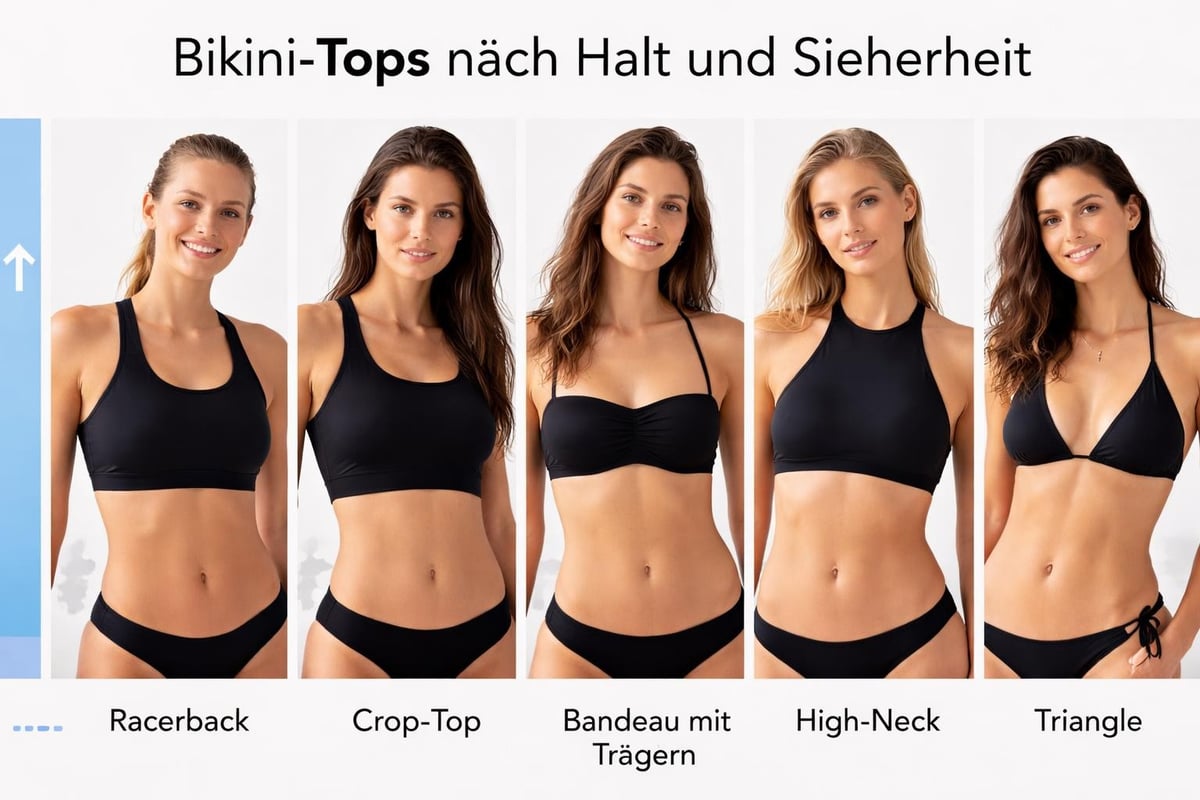
Not every bikini cut is suitable for surfing. Some designs inherently offer more security than others. The Sassy Bikini Top, for example, combines a sporty design with four back straps and seamless finishing, making it an ideal choice for active watersports enthusiasts.
The most important cuts in comparison:
- Racerback: Wide criss-cross straps at the back, maximum stability
- Crop-Top Style: Full torso coverage, like a sports bra
- Bandeau with Straps: Added security with removable straps
- High-Neck: High neckline, no slipping down
Bikini bottom: Underestimated, but crucial
While many focus on the top, the bottom is also critical for a surf bikini that stays on. String bikinis are practically unsuitable for surfing. What you need is coverage and support.
The best bottom styles for surfers
Hipster cut: Sits on the hips, offers moderate coverage and slips less than low-cut models. The wider sides provide additional support.
High-Waist: Reaches the navel, cannot slip down. Perfect for intense sessions and also offers UV protection for more skin area.
Boyshort: Cut similarly to small shorts, maximum coverage and no riding up. Ideal for beginners or particularly powerful waves.
The leg openings should fit snugly without cutting in. Elastic cuffs at the legs provide additional support. Some models even have elastic bands in the waistband, which function like board shorts.
Additional features that make the difference
A truly well-designed surf bikini that stays on comes with clever details. These extras may seem small, but their value becomes apparent in the water.
Must-have features:
- Built-in pads: Prevent the cup from twisting
- Adjustable closures: Allow for individual adjustment
- UV protection: UPF 50+ protects the skin during long sessions
- Quick-drying material: Prevents cooling down between sets
- Reinforced back hooks: More stable than simple cords
Some manufacturers also offer removable padding. This is practical as you can then use the bikini for other activities too. The MAIN Design collections combine such functional details with minimalist design.
Closure systems in detail
| Closure Type | Security | Comfort | Adjustability |
|---|---|---|---|
| Hook-and-eye | Very high | Medium | High |
| Criss-cross straps | High | High | Medium |
| Zipper | Very high | Very high | Low |
| Cords (multiple) | Medium | High | Very high |
Ideally, a surf bikini that stays on uses a combination of different systems. For example, adjustable straps plus a hook closure at the back.
Color and design: More than just aesthetics
The choice of color may seem secondary, but it has practical aspects. Light colors reflect sunlight and keep you cooler. Darker tones conceal sand and algae better.
Visibility in the water also plays a role. Neon colors or striking patterns make you more visible to other surfers. This increases safety, especially in crowded lineups or unclear conditions.
Practical color choice:
- Black/Dark Blue: Timeless, easy to care for, conceals discoloration
- Neon/Bright colors: High visibility, modern look
- Earth tones: Natural look, less prone to fading
- Patterns: Conceal small irregularities in the fabric
Sustainable swimwear combines timeless designs with environmentally friendly dyeing processes. This ensures the color stays beautiful longer and has less impact on the environment.
Care: How to keep your bikini secure for a long time
Even the best surf bikini that stays on will eventually lose its shape if you don't care for it properly. Saltwater, sand, and UV radiation take their toll on the material. With proper care, you can significantly extend its lifespan.
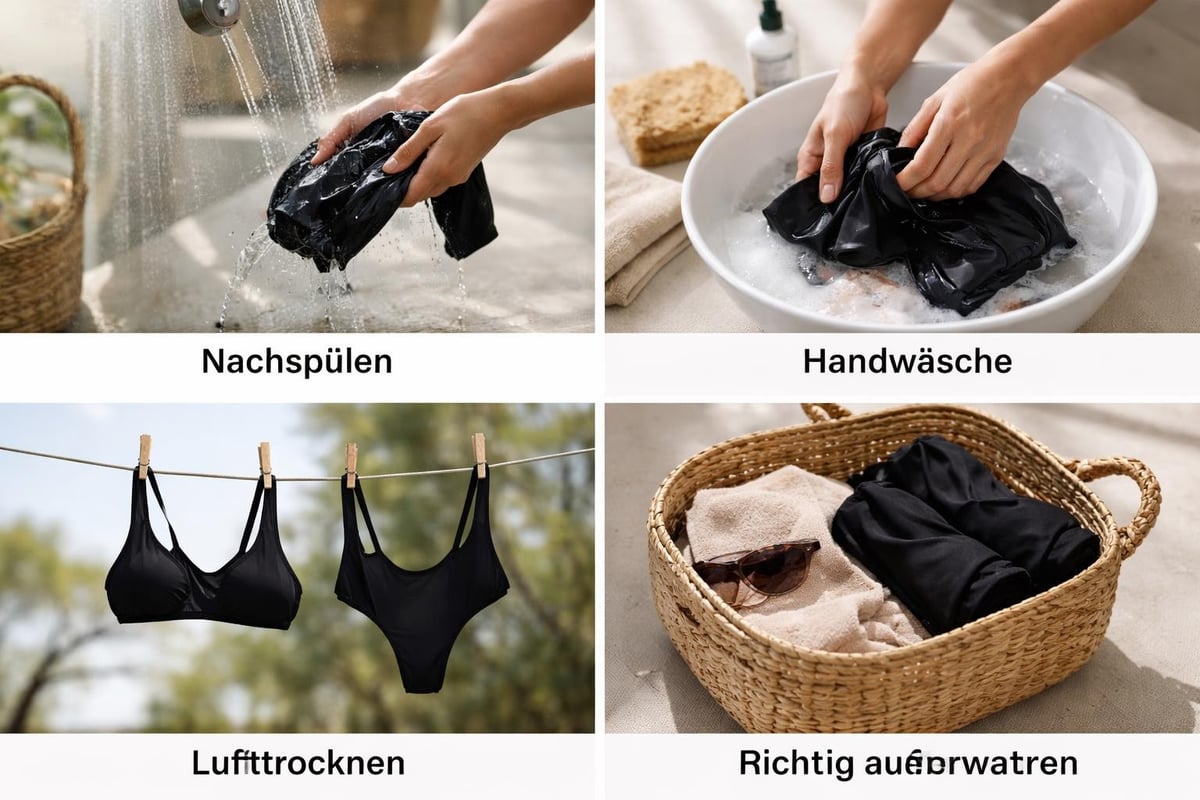
The golden rules of care:
- Rinse immediately in fresh water after surfing
- Never wring, but gently squeeze out excess water
- Hand wash with pH-neutral detergent
- Air dry in the shade, never in direct sunlight
- Do not tumble dry or place on a heater
Thoroughly rinsing out saltwater and sand is especially important. Salt crystals can roughen and weaken the fibers. Sand acts like sandpaper on the seams.
Storage between sessions
Loosely roll your bikini instead of folding it. This prevents creases in the material. Store it in an airy bag, not plastic. This allows any remaining moisture to evaporate and prevents mold.
During longer breaks between surf trips, you should air out the bikini and check for damage. Small holes or unraveling seams can be easily repaired if caught early.
Avoiding common mistakes
Many surfers make the same mistakes when choosing their surf bikini that stays on. You can avoid these pitfalls from the start.
Typical misconceptions:
- "Looks good, it'll hold": Aesthetics must not trump function
- "One size bigger is more comfortable": Too loose is dangerous
- "All bikinis are the same anyway": The differences are enormous
- "Cheap will do": Quality literally pays off
- "I'll try it on later": Nothing works without testing
Beginners, in particular, often underestimate the forces in the water. What holds in the first small shorebreak will fail in the first proper wave. Experts advise testing the bikini in a pool or calm sea before the first real surf session.
Sustainability and performance combined
The days when sustainable swimwear was less performant are over. Modern recycled materials are in no way inferior to conventional ones. Often, they even surpass them in durability and functionality.
A surf bikini that stays on can and should be environmentally friendly. The oceans we surf deserve our protection. Brands that produce from fishing nets or recycled plastic close the loop.
Sustainability is not just about materials. Fair production conditions, local manufacturing, and longevity also play a role. A bikini that lasts several seasons is more sustainable than three cheap ones that are discarded after one summer.
Certifications and standards
Look for labels like OEKO-TEX, GOTS, or Bluesign. These guarantee pollutant-free materials and responsible manufacturing. Many brands are also members of initiatives like 1% for the Planet or donate directly to marine conservation organizations.
MAIN Design, for example, supports Healthy Seas, an organization that retrieves ghost nets from the oceans. With every purchase, you directly contribute to protecting the seas.
Learning from pros: What surf athletes wear
Professional female surfers have no time for bikini mishaps. Their demands on a surf bikini that stays on are maximal. We can learn a lot from them.
Most pros rely on:
- Sporty cuts with full support
- Compression-like fit
- Minimalist design without unnecessary details
- Tested brands with proven performance
Interestingly, many pros also wear surf suits or rashguards instead of pure bikinis. These offer even more protection and stability. For recreational surfers, however, a well-fitting bikini is perfectly sufficient.
It's all about the mix
Many combine a secure bikini top with surf shorts instead of classic bikini bottoms. This provides maximum freedom of movement and protection. Or they use a sporty bikini under a wetsuit for colder waters.
This flexibility shows: There isn't one perfect surf bikini that stays on for everyone. The solution depends on your skill, the wave conditions, and personal preferences.
Testing and adapting: The path to the perfect fit
Even with all the tips, one truth remains: Every body is different. What fits your surf buddy perfectly might look different on you. Therefore, trying it on is indispensable.
Your test protocol:
- Order 2-3 different models in your size
- Wear each for 30 minutes at home
- Move intensely: Jumping jacks, burpees, stretches
- Check if anything slips or cuts in
- Test in water (pool or calm sea)
- Only keep what truly fits
Good online shops offer generous return policies. Use them. A surf bikini that stays on is an investment in your safety and your fun in the water.
The future of surf swimwear
Development continues. New materials, innovative closure systems, and smart designs are constantly coming onto the market. In 2026, we'll see trends like:
- Adaptive Fits: Materials that adapt even better to the body
- Integrated Technology: UV sensors that indicate sunburn risk
- Modular Systems: Mix-and-match with different closure options
- Even more sustainable materials: Algae-based fabrics, biodegradable
The best brands listen to their community. Feedback from real surfers flows directly into new designs. This creates bikinis that truly work, instead of just looking good.
Regionally adapted: Swimwear for different surf spots
Depending on where you surf, the requirements for your surf bikini that stays on change. Tropical spots with warm water allow for minimal designs. Colder regions demand more coverage.
Europe (Atlantic):
- Often colder, thicker materials are useful
- Changing conditions, robust workmanship is important
- Combination with neoprene is common
Mediterranean:
- Warm water, light fabrics
- Strong UV exposure, UPF protection is crucial
- Often rocky beaches, non-slip soles for shoes are important
Tropical Destinations:
- Maximum UV radiation, consider long-sleeved options
- Very warm water, breathability is important
- Saltwater can be more aggressive, high-quality materials needed
The versatile collections cover various conditions and can be combined depending on the destination.
A surf bikini that stays on is more than just swimwear: It's your confidence in the water, your freedom on the board. The right choice considers material, fit, function, and your personal needs. If you understand and apply these basics, you are guaranteed to find your perfect surf companion. At MAIN Design, you'll find sustainable, well-thought-out swimwear that delivers on its promises – in the water, on land, and for our oceans.