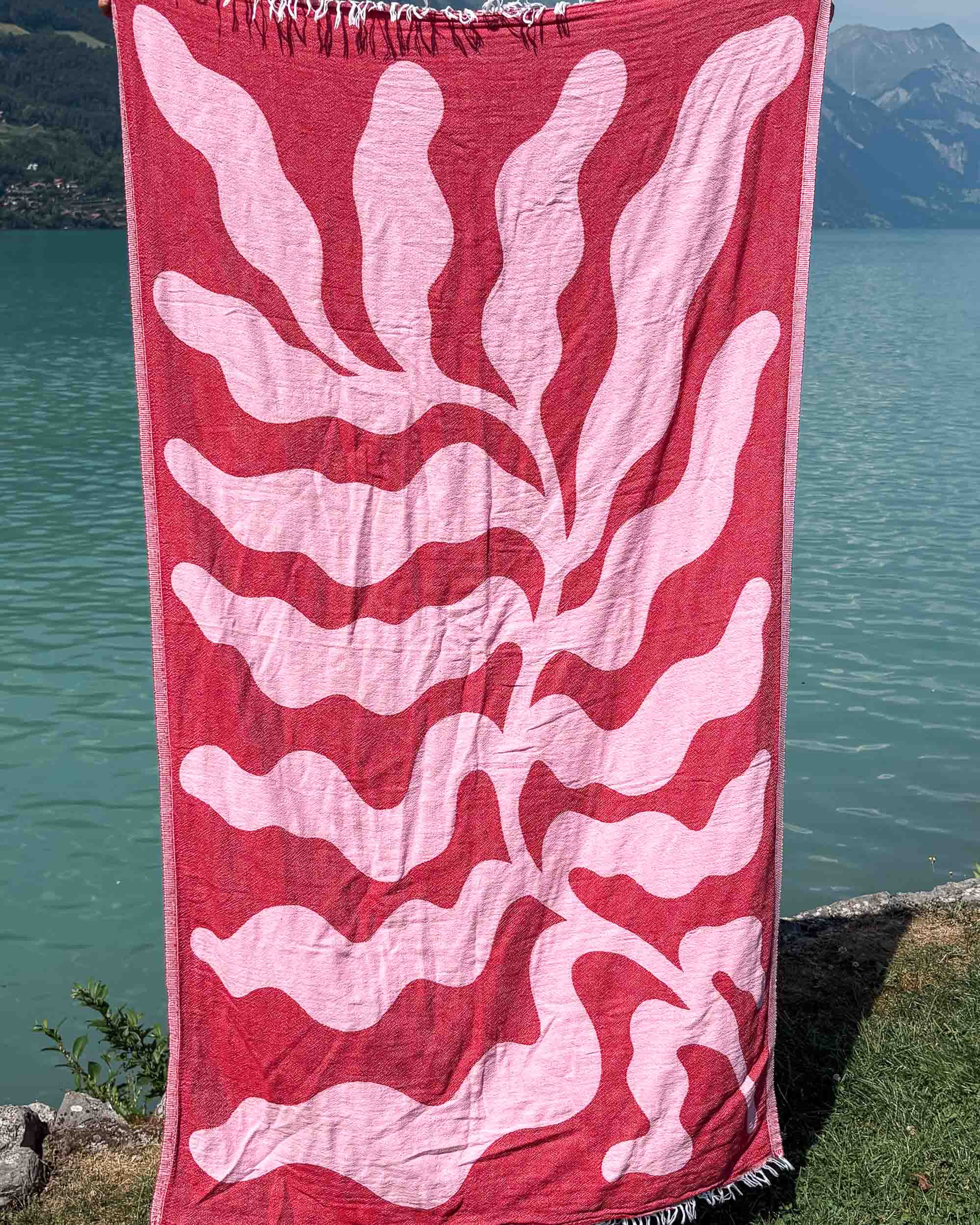


A cotton beach towel is as much a part of summer as sand between your toes and the sound of the waves. It's more than just a practical accessory – it's a piece of quality of life that accompanies us on hot days, warms us after swimming, and finds a place wherever we want to relax. Cotton, as a natural material, possesses qualities that have made it the first choice for generations. But in a time when we consume more consciously and question the impact of our choices, this classic is worth a closer look.
Why cotton is so appealing on the beach
Cotton feels good. On the skin, in the hands, when it's freshly washed and taken out of the cupboard. This sensual quality is no accident, but is inherent in the fiber structure of the material.
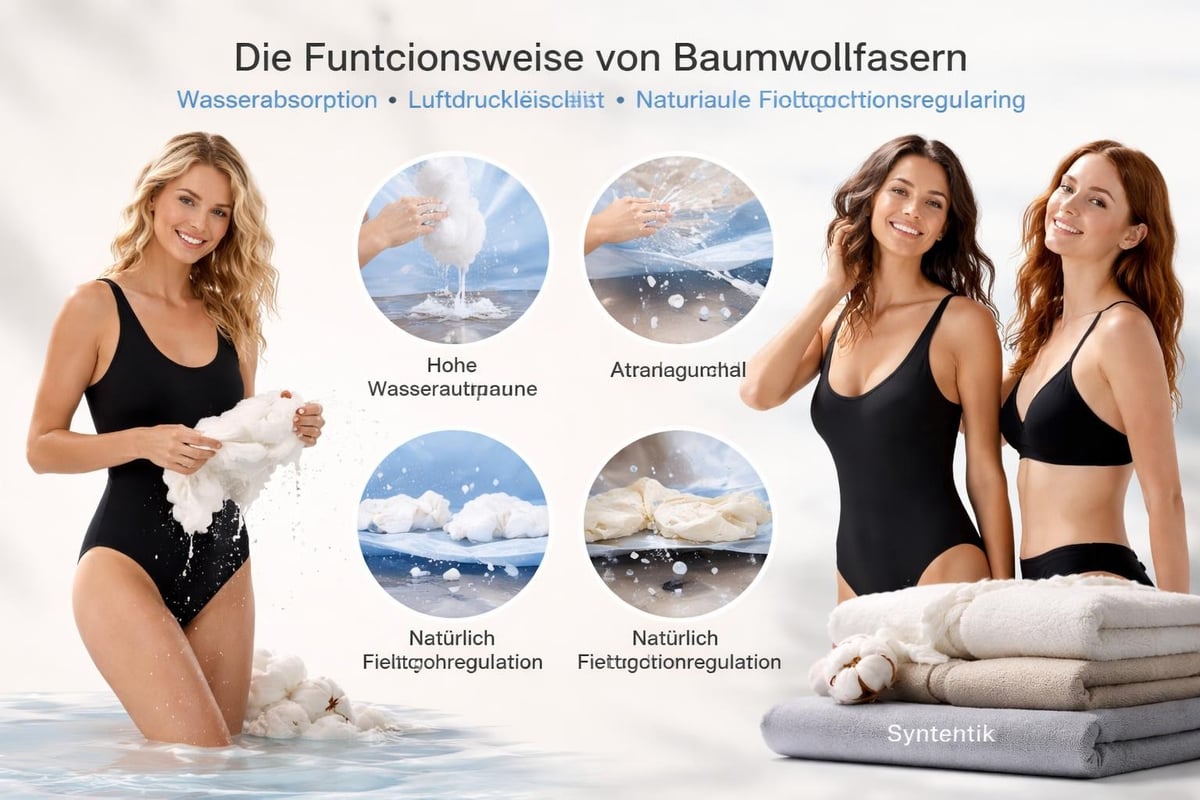
Natural absorbency and breathability
A cotton beach towel can absorb up to 20 times its own weight in water. This impressive absorbency makes it the ideal companion after swimming or for long days at the beach. The hollow fibers absorb moisture directly and transport it to the outside, where it can evaporate.
At the same time, air circulation is maintained. Cotton breathes, even when damp. This prevents the sticky feeling that often occurs with synthetic materials and ensures that you feel comfortable even on hot days.
Skin-friendly and suitable for allergy sufferers
For sensitive skin, or after a long day in the sun, salt, and wind, a soft towel is invaluable. Cotton is naturally hypoallergenic and barely irritates even sensitive skin. The smooth fibers don't chafe, and high-quality beach towels largely avoid chemical additives.
Organic cotton goes even further. It's grown without pesticides and usually treated with more environmentally friendly dyes. You'll not only feel the difference on your skin, but you'll also be contributing to a healthier farming system.
Understanding the different quality levels
Not all cotton beach towels are created equal. The quality varies considerably, and this is reflected in both the price and the durability.
| Quality feature | Standard cotton | Premium cotton | organic cotton |
|---|---|---|---|
| Fiber length | Short to medium | Long (Long-Stack) | Long, gentle harvesting |
| Softness | Good | Very good | Unusual |
| Suction power | Medium | High | High |
| durability | 1-2 years | 3-5 years | 4-6 years |
| Environmental pollution | High | Medium | Low |
Fiber quality and weave density
The length of the cotton fiber is a key factor in determining quality. Long-staple cotton produces smoother, firmer yarns and therefore softer, more durable towels. Egyptian cotton and Pima cotton belong to this category.
The weave density, given in grams per square meter (g/m²), provides information about the fabric thickness:
- 350-450 g/m² : Lightweight beach towels, quick-drying, ideal for travel
- 450-600 g/m² : Medium weight, good compromise between absorbency and packing volume
- 600-800 g/m² : Luxuriously thick, very absorbent, takes longer to dry
Terry cloth vs. flat weave
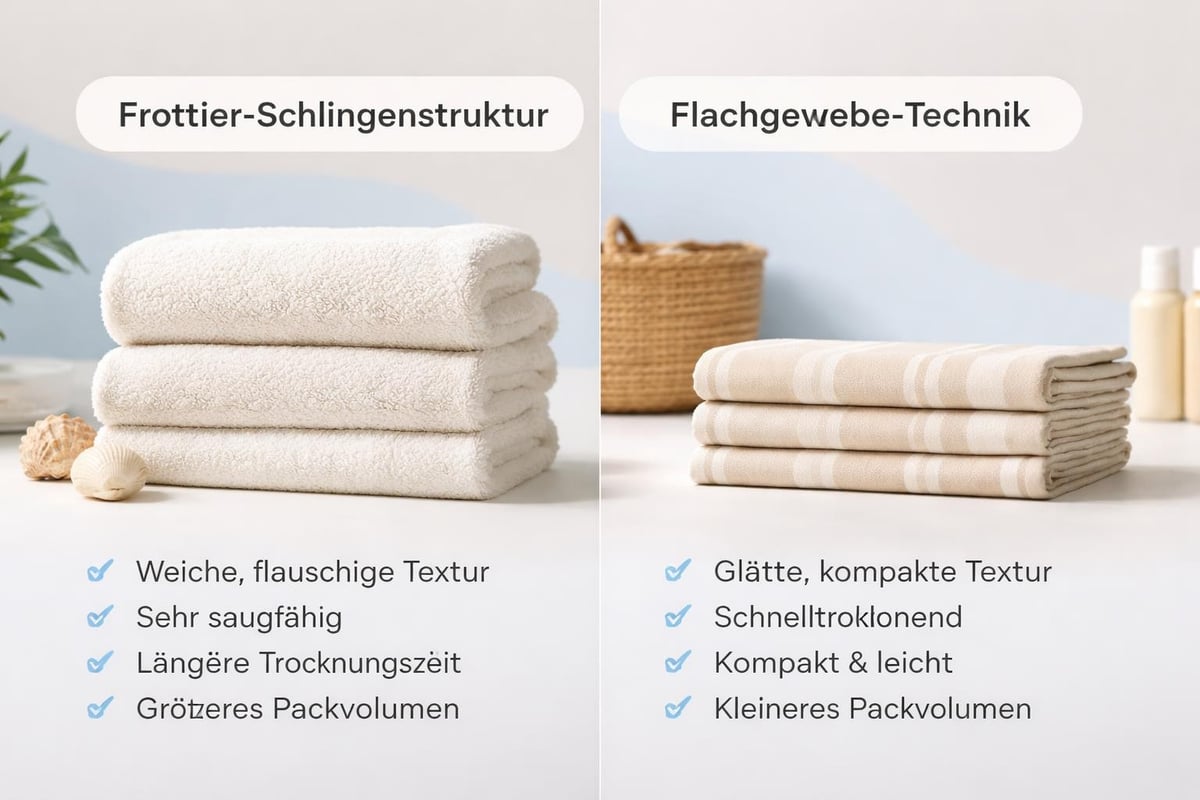
Most people automatically think of terry cloth when they think of cotton beach towels – those characteristic loops that absorb water so well. But there are also woven versions like hammam towels (pestemal), which are made of tightly woven cotton without loops.
Advantages of terry cloth:
- High suction power due to large surface area
- Soft and fluffy
- Familiar towel feeling
Advantages of flat weave fabrics:
- Significantly lighter and more compact
- Dries faster
- Sand adheres less
Rethinking sustainability
A cotton beach towel initially seems like the environmentally friendly choice. Natural, biodegradable, renewable. But cotton cultivation is one of the most water-intensive agricultural processes worldwide.
The ecological footprint of cotton
On average, 10,000 to 20,000 liters of water are needed to produce just one kilogram of conventional cotton. Add to that pesticides, fertilizers, and the energy consumption during processing and transport. This doesn't mean you should forgo your beach towel – but it's worth choosing more consciously.
Organic cotton significantly reduces the ecological footprint:
- 91% less water consumption through rainwater irrigation
- No synthetic pesticides
- Healthier soils through crop rotation
- Fair working conditions (often GOTS-certified)
At MAIN Design, we focus on responsible materials – not only for swimwear, but for all products that accompany you through the summer.
Recycled alternatives are gaining in importance
Beach towels made from recycled materials go a step further. Recycled cotton utilizes textile waste, thus saving water, energy, and arable land. Recycled polyester from PET bottles is also increasingly used – often in blended fabrics that combine the advantages of both.
A beach towel made from recycled materials can be just as soft, absorbent, and durable as a conventional one. The difference lies in the story it tells – one of a circular economy rather than linear consumption.
Proper care prolongs life
A high-quality cotton beach towel can last for years if you treat it properly. Care is straightforward, but a few details make all the difference.
Washing without causing damage
-
First wash separately: New cotton towels often bleed color. Wash them alone or with similar colors the first time.
-
Keep the temperature moderate: 40-60°C is perfectly sufficient. Higher temperatures weaken the fibers and cause colors to fade.
-
Reduce detergent: Too much detergent builds up in the fibers and reduces absorbency. Half the dosage is usually sufficient.
-
Avoid fabric softener: It seals the fibers and makes the towel less absorbent. Instead, add a splash of vinegar to the fabric softener compartment – this softens the cotton and removes detergent residue.
-
Rinse out salt and sand: After a day at the beach, briefly rinse the towel under clean water before putting it in its bag. Salt crystals can damage the fibers over time.
Dry for maximum fluffiness
Air drying is the gentlest method. Hanging it in the shade prevents the sun from fading the colors. A light breeze fluffs up the fibers and makes the towel wonderfully soft.
If you use a dryer, choose medium temperatures and don't leave the towel in for too long. Wool dryer balls further loosen the fibers and shorten the drying time.
The beach towel as a companion throughout the year
A cotton beach towel is by no means just for the beach. Its versatility makes it a quiet hero in many situations.
beach, swimming pool, lake
Of course, that's the classic place to use it. But even here there are differences: At the beach, you might want a larger towel that offers enough space and also works as a mat. At the pool, a more compact size is often sufficient.
Size guide:
- 70 x 140 cm : Compact, ideal for children or as a travel towel
- 90 x 160 cm : Standard size for adults
- 100 x 180 cm or larger : Luxurious, for long days at the beach or as a blanket
Yoga, picnic, outdoor
The soft cotton is perfect as a mat for outdoor yoga or meditation. At picnics, it protects against damp grass, and when camping, it becomes a cozy extra layer.
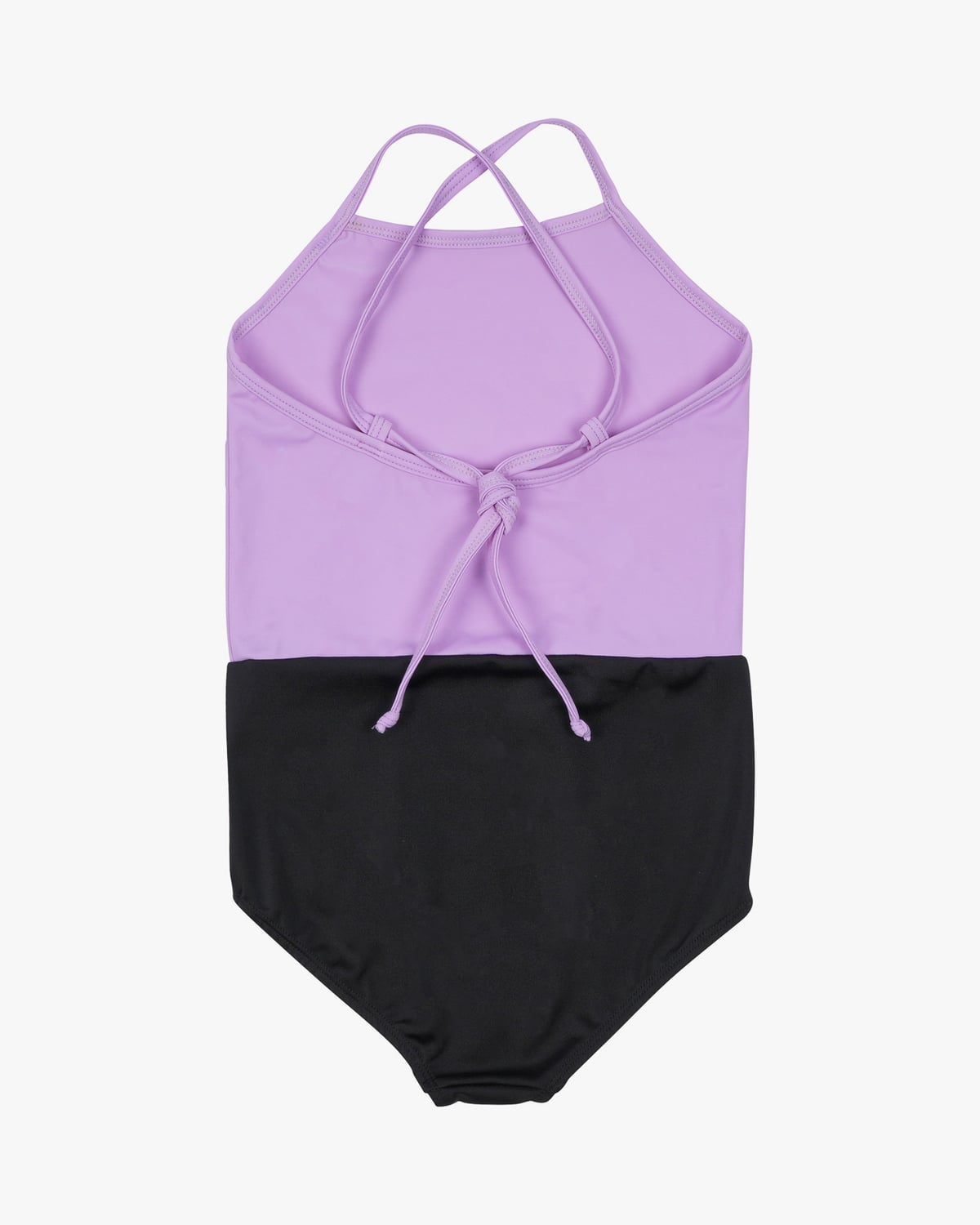
For families with children, a sturdy cotton beach towel is a true all-rounder. It cushions falls on hard surfaces, doubles as a play mat, dries after splashing around, and provides warmth in a cool breeze. The Lena girls' swimwear collection demonstrates how thoughtfully designed products for little ones can be – and the same applies to a good family towel.
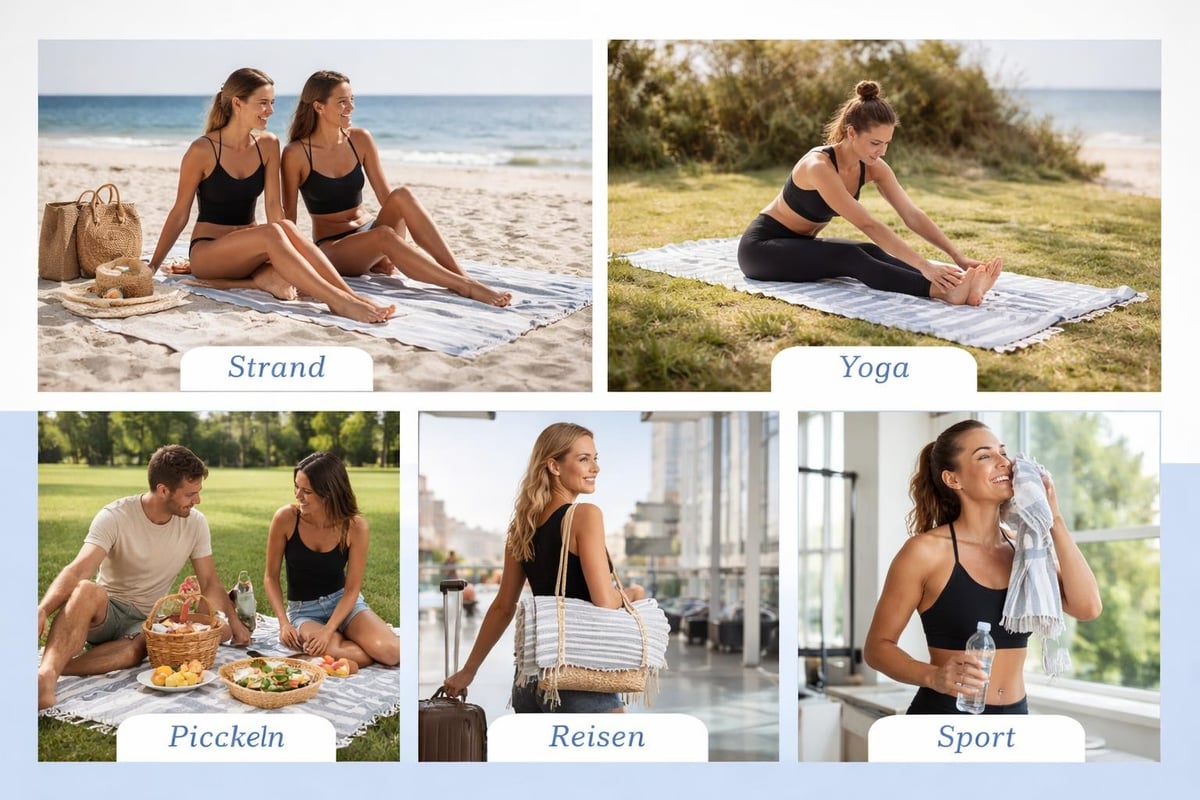
Travel with ease
Anyone who travels a lot knows: every gram counts. This is where thinner cotton towels or blends shine. They can be rolled up small, dry quickly, and take up hardly any space.
A tip for backpackers: Invest in a high-quality, lightweight towel. It will become your daily companion – after showering, at the beach, as a pillow on the night train. Quality is worth it.
What you should pay attention to when buying
The market is flooded with beach towels. The selection can be overwhelming. These criteria will help you decide.
Materials and certifications
GOTS (Global Organic Textile Standard) is the strictest certification for organic cotton. It covers the entire production process, from fiber to finished product, and guarantees social and environmental standards.
OEKO-TEX Standard 100 confirms that the textile has been tested for harmful substances and is skin-friendly – especially important for children and allergy sufferers.
Fair Trade shows that the cotton was grown and traded under fair conditions.
| certificate | What it means | Important for |
|---|---|---|
| GOTS | Organic farming + fair production | Environment & People |
| OEKO-TEX | Free of harmful substances | Health & Skin |
| Fair Trade | Fair pay | Social justice |
| BCI | Improved cultivation practices | Water consumption |
workmanship and details
Look for double-stitched hems – they last significantly longer. A hanging loop is practical and should be securely sewn on, not just pinned on.
You often only notice the colorfastness after several washes. High-quality towels retain their color for years, while cheaper versions quickly fade or become stained.
Design with meaning
A beach towel is also an expression of your style. Minimalist designs are timeless and suitable for many occasions. Bold patterns create a cheerful atmosphere and are easy to spot on the beach.
At MAIN Design , we believe in designs that don't need to be loud to make an impact. Clean lines, natural colors, and high-quality materials speak for themselves – whether in sustainable swimwear or other summer essentials.
The price and what's behind it
A high-quality cotton beach towel costs more than a discount store model. But there are reasons for this difference.
What accounts for the price difference?
Cheap towels (10-20 CHF):
- Conventional cotton, often short fibers
- Low weave density
- Chemical dyes
- Production under unclear conditions
- Shelf life: 1-2 years
Mid-range (30-50 CHF):
- Better cotton quality
- Solid workmanship
- Often the first sustainability certificates
- Shelf life: 3-4 years
Premium (60-100+ CHF):
- Organic or premium cotton
- High-quality workmanship and design
- Full transparency and certifications
- Shelf life: 5+ years
Over its lifespan, a more expensive towel is often cheaper in the long run. Added to that is the reduced resource consumption, since you don't have to buy a new one every two years.
Cotton in the context of modern materials
The question is also perfectly fair: Are there better alternatives now? The answer is nuanced.
Microfiber towels are extremely lightweight, compact, and dry incredibly fast. Perfect for athletes and minimalists. But they're made of polyester, which releases microplastics, and they feel different—more technical, less natural.
Lyocell/Tencel is a sustainable alternative made from wood fibers. Soft, absorbent, and environmentally friendly to produce. Still rarely found in beach towels, but becoming increasingly common.
Linen is robust, breathable, and has a lovely feel. It absorbs moisture slightly slower than cotton but dries very quickly. Worth considering for anyone who likes the slightly coarser texture.
The best choice for you
There is no single perfect material. A cotton beach towel remains the most balanced option for most people – familiar, tried and tested, versatile. With the right choice (organic, fair trade, high-quality), you minimize the drawbacks and enjoy all the advantages.
Small details, big impact
Sometimes it's the inconspicuous things that make everyday life with a beach towel easier.
Color and function: Light-colored towels show dirt more quickly but can be washed at higher temperatures. Darker shades hide stains but tend to fade in the sun. Medium tones are often the best compromise.
Weight and volume: For a beach holiday by car, weight hardly matters. For air travel or hiking, every gram counts. Think about where you'll be using the towel beforehand.
Several towels in different sizes: a large one for the beach, a medium one for the pool, a small one for your sports bag. This way you're prepared for every situation without always having to lug around the bulkiest one.
Living with cotton
Ultimately, a cotton beach towel is more than the sum of its parts. It's the scent of sun and salt that clings to it. The soft fibers that welcome you after your first dip in the cold water. The years it accompanies you – to lakes, seas, and quiet spots.
It's a part of everyday life that embodies summer. And that's precisely why it's worth choosing consciously. A towel that suits you. That fits well with the world. That will last.
You feel the quality every day. And the sustainability too, when you know your choice makes a difference. With over 2 billion towels produced worldwide each year, every single decision for a better product is a small but important step.
You can find more information about sustainable beach living on our beach towel page , where we show how quality and responsibility go hand in hand.
A cotton beach towel combines tradition with awareness – it feels good and does good when you make the right choice. At MAIN Design , we understand that true quality comes from within: sustainable materials, fair production, and designs that last. Discover how swimwear and beach and everyday essentials complement each other – and with every purchase, support the protection of our oceans through Healthy Seas.