

A Balinese sarong is far more than just a piece of fabric. It embodies centuries-old tradition, cultural identity, and a timeless elegance that's now a staple in modern wardrobes around the globe. Whether on the beach, at a temple, or as a casual everyday piece, this versatile wrap has a fascinating history and countless ways to enhance your style. Let's delve into the world of the Balinese sarong and discover why this traditional garment remains so relevant today.
The cultural significance of the Balinese sarong
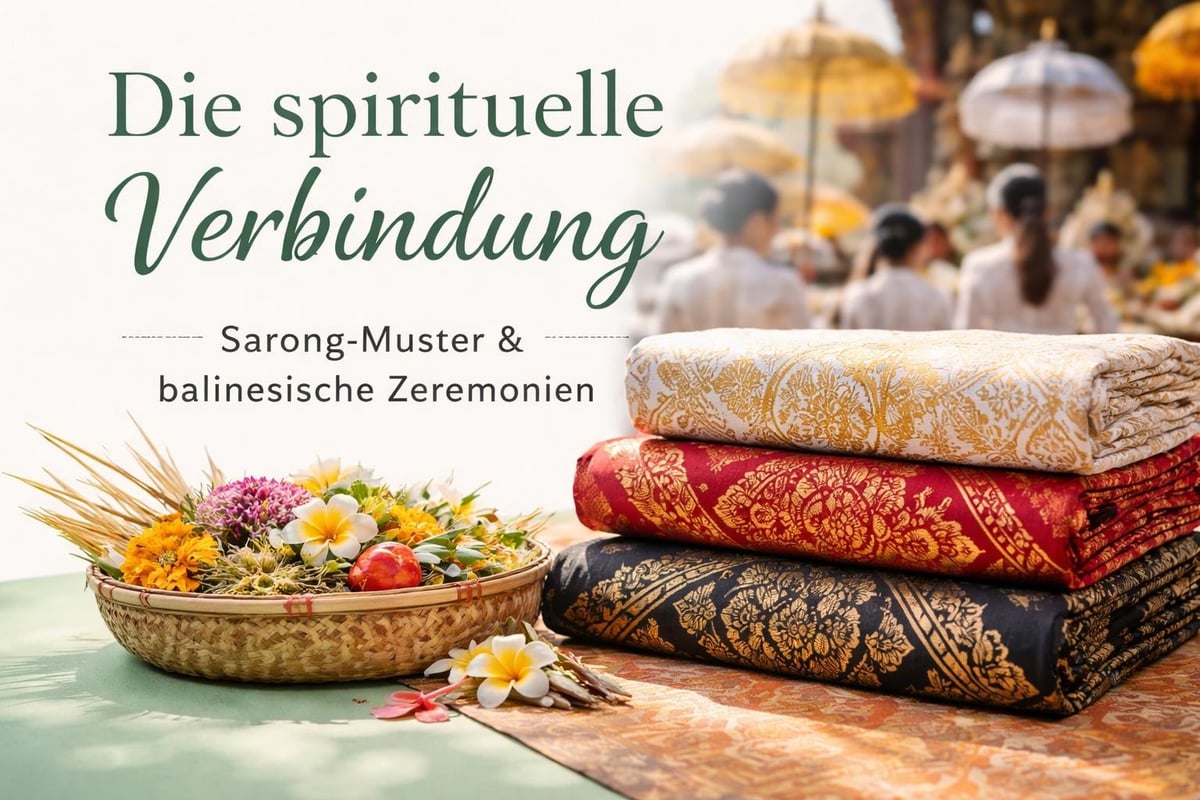
The sarong holds deep spiritual and cultural significance in Bali , extending far beyond its practical function. On the Indonesian island, the sarong – also known there as a "kamen" – is an essential garment for religious ceremonies and temple visits.
Spiritual dimension and ceremonies
In Balinese Hindu culture, wearing a sarong symbolizes respect for the gods and the community. It is obligatory when visiting temples, often combined with a belt (selendang) tied around the waist. This tradition demonstrates the profound connection between clothing and spiritual practice.
The patterns and colors of a Balinese sarong carry special meanings:
- Black and white checkered patterns represent the balance between good and evil.
- Golden and red tones are preferred for festive ceremonies.
- Batik patterns often tell stories from Hindu mythology.
- Floral motifs symbolize joy of life and fertility.
The traditional use of the sarong is so deeply rooted in Balinese culture that children learn at an early age how to tie it correctly and in what contexts it is worn.
Materials and craftsmanship
The quality of a Balinese sarong is reflected in its craftsmanship. Traditional sarongs are made from various materials, each with its own unique properties and advantages.
Traditional materials
| material | Characteristics | use |
|---|---|---|
| Cotton | Breathable, soft, durable | Everyday life, beach, light ceremonies |
| silk | Luxurious, cool, glossy | Festive occasions, weddings |
| Rayon | Soft case, affordable | Modern everyday versions |
| viscose | Flowing, cool, easy to care for | Beachwear, travel |
The craftsmanship of Balinese weavers is particularly impressive. Many sarongs are still made on traditional looms, with techniques passed down from generation to generation.
Batik and Ikat
Two main techniques shape the design of a Bali sarong:
Batik is a wax-resist dyeing technique in which wax is applied to the fabric before it is dyed. The result is complex, multicolored patterns with characteristic depth. The process can take weeks and requires enormous skill.
Ikat, on the other hand, is a technique in which the yarn threads are dyed before weaving. The threads are bundled, tied, and then dyed, resulting in blurred, dreamlike patterns when woven. This technique is particularly widespread in eastern Indonesia and is considered one of the most demanding weaving techniques in the world.
Styling options for modern everyday life
A Bali sarong is a true chameleon. Its versatility makes it the perfect companion for travel, beach days, and more.
At the beach and pool
The classic use: as a wrap over swimwear. This is where the Bali sarong shows its true strength.
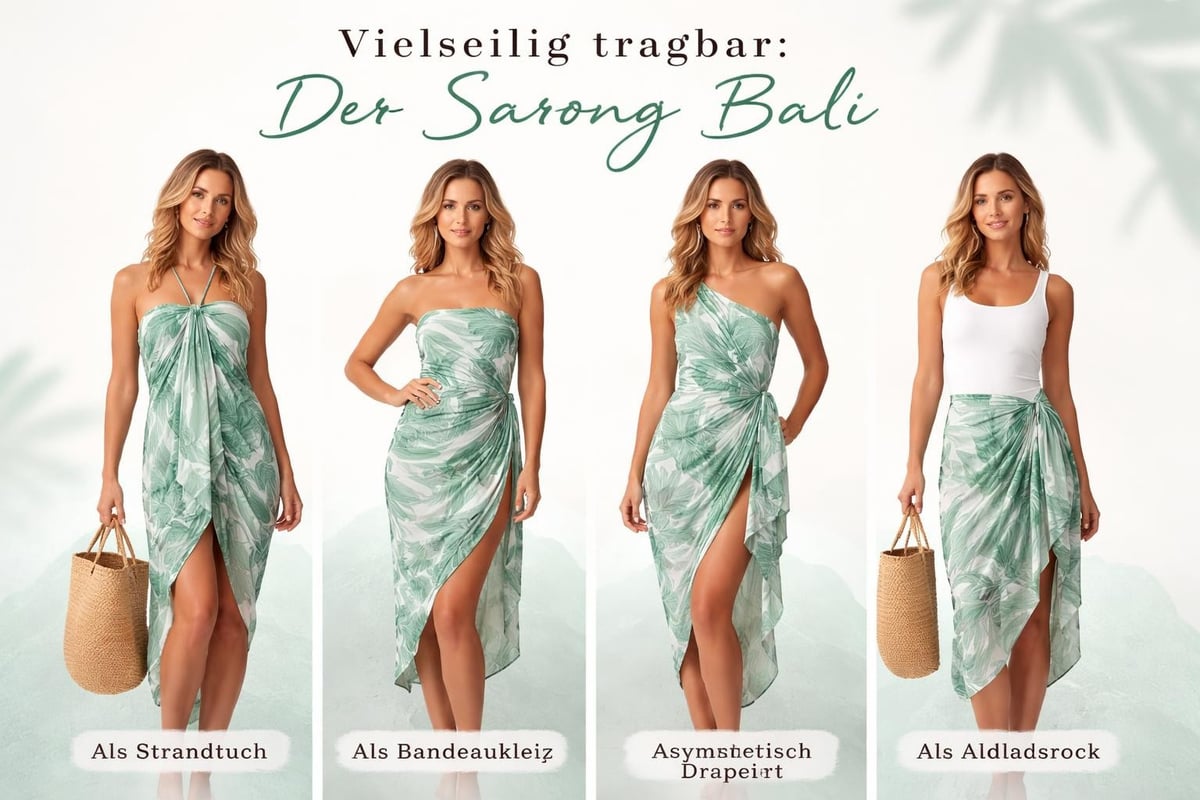
- As a classic wrap skirt : Wrapped around the hips and knotted at the side.
- As a bandeau dress : tied under the arms, elegant and airy.
- As an asymmetrical dress : Draped over one shoulder for a sophisticated look.
- As a throw : Casually draped over the shoulders
The lightweight, quick-drying fabrics are perfect for transitioning from the water to the beach café. Combined with sustainable swimwear , they create a well-thought-out beach look that unites style and comfort.
In everyday life
Beyond the beach, a Bali sarong offers a surprising number of styling options:
- As a long skirt with a tight top for a boho look
- As a scarf or shawl on cooler evenings
- As a picnic blanket or beach towel (practical and beautiful at the same time)
- As wall decoration or tablecloth for an exotic ambience
The key lies in experimentation. A single sarong can create completely different looks depending on the tying technique and combination.
Sustainability and conscious consumption
In a time when fast fashion is increasingly being questioned, the Bali sarong is gaining new significance as a sustainable garment. Its durability and versatility make it a valuable counterpoint to the throwaway culture.
Why sarongs are sustainable
A traditional Balinese sarong embodies several principles of sustainable fashion:
Durability : High-quality sarongs, when properly cared for, can last for decades. The robust natural fibers and traditional dyeing techniques ensure longevity.
Versatility : One piece, countless uses. Instead of buying ten different garments, a single sarong can fulfill many functions.
Handmade : Many sarongs are made in small workshops or by individual artisans. This supports local communities and preserves traditional knowledge.
Natural materials : Traditional sarongs are made from cotton, silk, or other natural fibers that are biodegradable.
Modern sustainable alternatives
While traditional sarongs are already sustainable, there are now also versions made from recycled materials. These combine the best of both worlds: traditional design with modern environmental standards.
Brands committed to sustainability now offer beach essentials made from recycled fibers. This way, you stay true to the spirit of the sarong while actively contributing to ocean conservation.
Buyer's guide: What you should pay attention to
Not all sarongs are created equal. If you want to invest in a high-quality piece, these criteria will help you choose.
Identifying quality characteristics
Fabric quality : Feel the fabric. High-quality cotton is soft yet sturdy. It shouldn't be too thin or see-through. With silk, look for a natural sheen without any synthetic luster.
Finishing the hems : The edges should be neatly sewn. On handwoven sarongs, the fringes are often part of the design and should be even.
Color quality : Gently rub the fabric between your fingers. Lower-quality fabric will bleed color. Genuine batik dyes are lightfast and won't run.
Pattern symmetry : In high-quality ikat or batik sarongs, the patterns are precisely and thoughtfully placed.
Authenticity vs. mass-produced tourist goods
The variety of designs can be overwhelming. Here are some clues to help you recognize genuine Balinese handicrafts:
- Irregularities in the pattern indicate handwork (positive!).
- The price reflects the amount of work involved: genuine batik or ikat cost more.
- Information about the origin and stories of the artisans are a good sign.
- Local markets and specialized shops often offer more authentic pieces than tourist shops.
Care and maintenance of your Bali sarong
To ensure your Bali sarong lasts a long time, it needs proper care. The treatment depends on the material and the dyeing technique.
Washing and drying
The following applies to most cotton sarongs:
- Hand washing is preferable , especially for the first few washes, to gently remove excess dye.
- Cold or lukewarm water : Hot water can fade colors and weaken fibers.
- Use mild detergent : Avoid harsh bleach or optical brighteners.
- Do not wring : Gently squeeze out the water and let the sarong air dry.
- Prefer shade : Direct sunlight fades colors.
For silk or particularly delicate batik work, dry cleaning is often the safest option.
storage
Store your Bali sarong folded or loosely rolled. Do not hang it up permanently, as the weight of the fabric can stretch the fibers. It will keep best in a cool, dry place.
The Bali sarong as a travel companion
For travelers, a Bali sarong is an indispensable essential. Its compact size and versatility make it the ideal piece of luggage.
Practical travel hacks
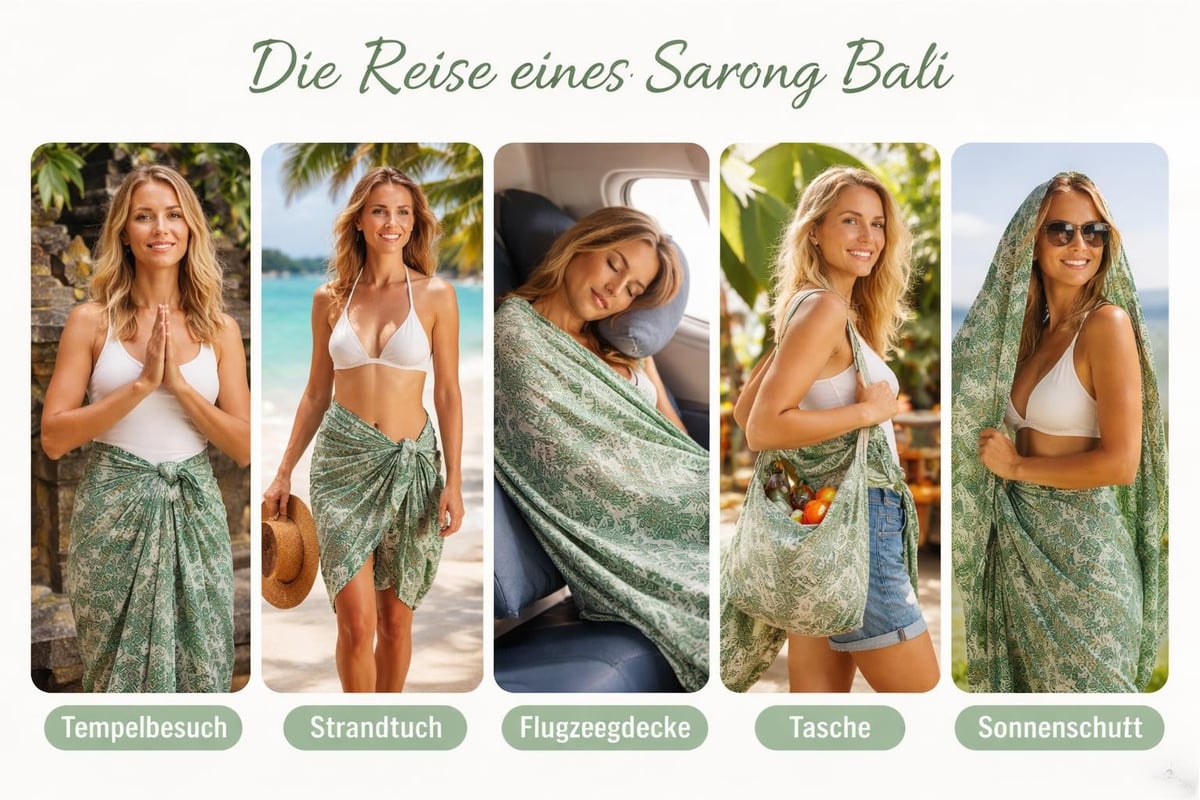
A rolled-up sarong takes up hardly any space, but can fulfill countless functions on the go:
- Emergency clothing : Forgotten beach dress? No problem.
- Privacy screen : Ideal for changing clothes on the beach or as a curtain replacement in basic accommodations.
- Blanket : In an air-conditioned airplane or bus
- Headwear : Protection from intense sun
- Tote bag : Can be tied to create an improvised beach bag
In many Asian countries, wearing a sarong when visiting temples is not only respectful but often mandatory. Those who bring their own save themselves the trouble of renting one on site.
From tradition to contemporary design
Modern designers draw inspiration from the history and art of the Balinese sarong, creating contemporary interpretations. These new versions preserve the essence of the original while incorporating modern aesthetics and functionality.
Hybrid Designs
Some innovative approaches combine the sarong with modern cuts:
- Sarong skirts with a sewn-in waistband for easier wearing.
- Dresses with sarong patterns and structured cuts
- Beach cover-ups that combine sarong fabrics with modern silhouettes
- Accessories such as bags or scarves made from sarong materials
These hybrids make the beauty of Balinese textile art accessible to a wider audience without diluting the tradition.
Colors and patterns for every personality
The range of sarong designs is endless. From earthy natural colors to vibrant batik patterns and minimalist, modern prints – there's a perfect Bali sarong for every taste.
For minimalists : Plain sarongs in natural tones such as sand, white or navy blue offer timeless elegance.
For pattern lovers : Traditional batik or ikat designs in vibrant colors bring joy and cultural depth.
For nature lovers : Plant-dyed sarongs in shades of green, brown, and ochre create an organic connection.
Integration into a sustainable lifestyle
The Bali sarong is a perfect fit for a conscious, nature-connected lifestyle. It embodies values such as slowness, quality, and cultural appreciation.
Practicing slow fashion
Instead of constantly buying the latest trendy items, you invest in a timeless piece that tells a story. A handmade Bali sarong embodies the energy and skill of the person who created it. This makes it more than just clothing – it becomes a keepsake, a companion.
If you take care of your sarong, repair it instead of throwing it away, and constantly combine it in new ways, you are living slow fashion in its purest form.
connection to nature
Natural materials, plant-based dyes, handcrafted production – all of this connects the Bali sarong to nature. When you sit on the beach, barefoot in the sand, the sarong tied around your hips, you feel this connection immediately. It's a feeling of freedom and lightness, of simplicity and beauty.
This philosophy is also shared by sustainable brands committed to marine conservation. A sarong is just one element of a larger picture: a life lived in harmony with the environment, making conscious choices, and finding beauty in simplicity.
At MAIN Design, for example, sustainable swimwear and beach essentials complement each other to create a well-thought-out beach lifestyle that combines style and responsibility.
Balinese Sarong for Families
There are also beautiful, smaller sarongs for children. They learn early on how versatile a piece of fabric can be and develop an appreciation for quality and craftsmanship.
Shared beach experiences
When the whole family wears sarongs, it creates a feeling of togetherness. Little ones love experimenting with how many different looks they can create from a single piece of fabric. This fosters creativity and independence.
For girls who love playing in the water, a sarong is also the perfect complement to a colorful swimsuit. Simply wrap it around after swimming, and the outfit is complete – practical and beautiful at the same time.
The Bali sarong is far more than just an accessory. It's an expression of culture, craftsmanship, and a lifestyle that unites freedom, nature, and sustainability. Whether you wear it traditionally or with a modern twist, it enriches your everyday life with versatility and beauty. If you're looking for other sustainable essentials for the beach and everyday life, discover the thoughtfully curated collections at MAIN Design - Your Daily Dose Of Summer – for a life that feels good and does good.