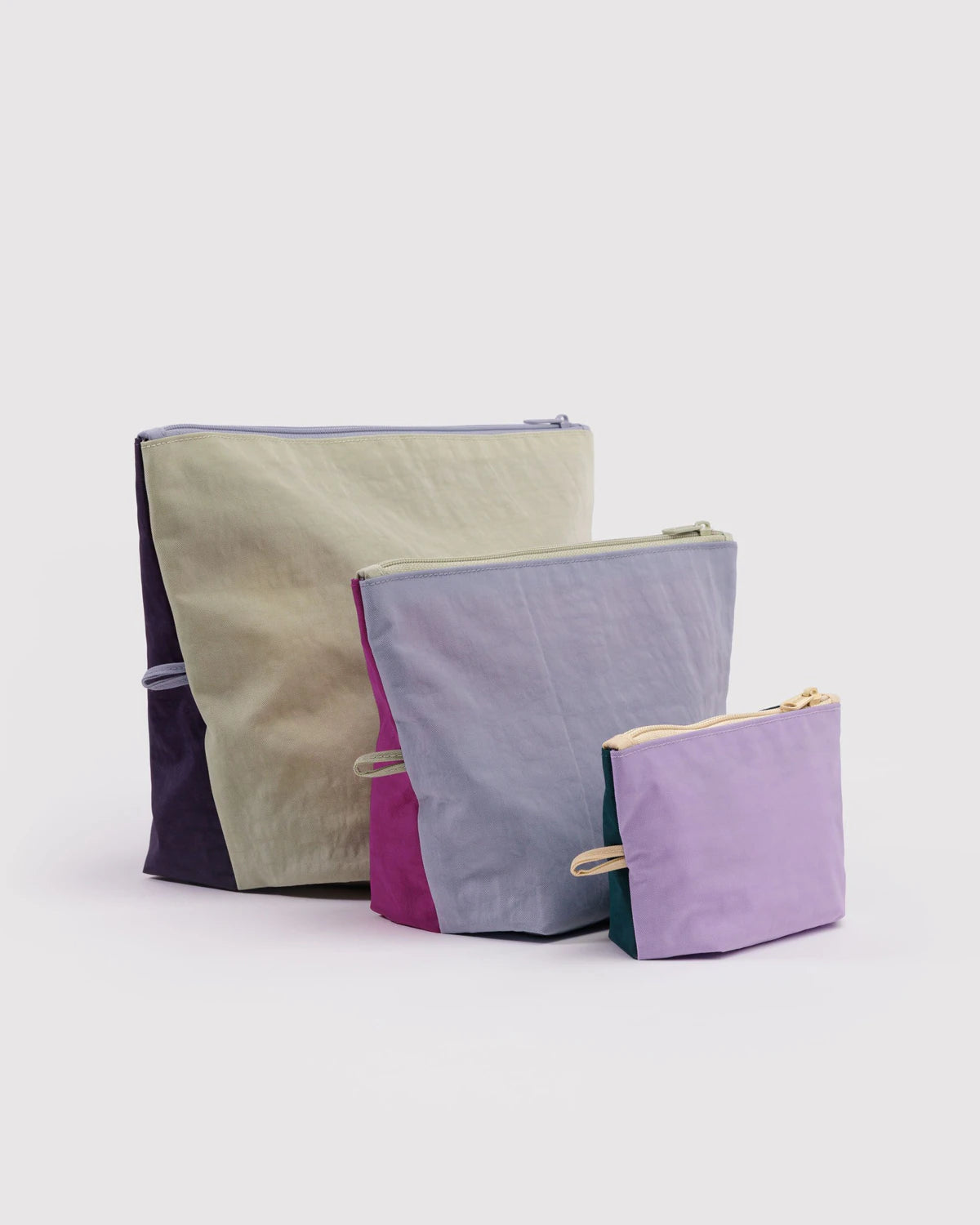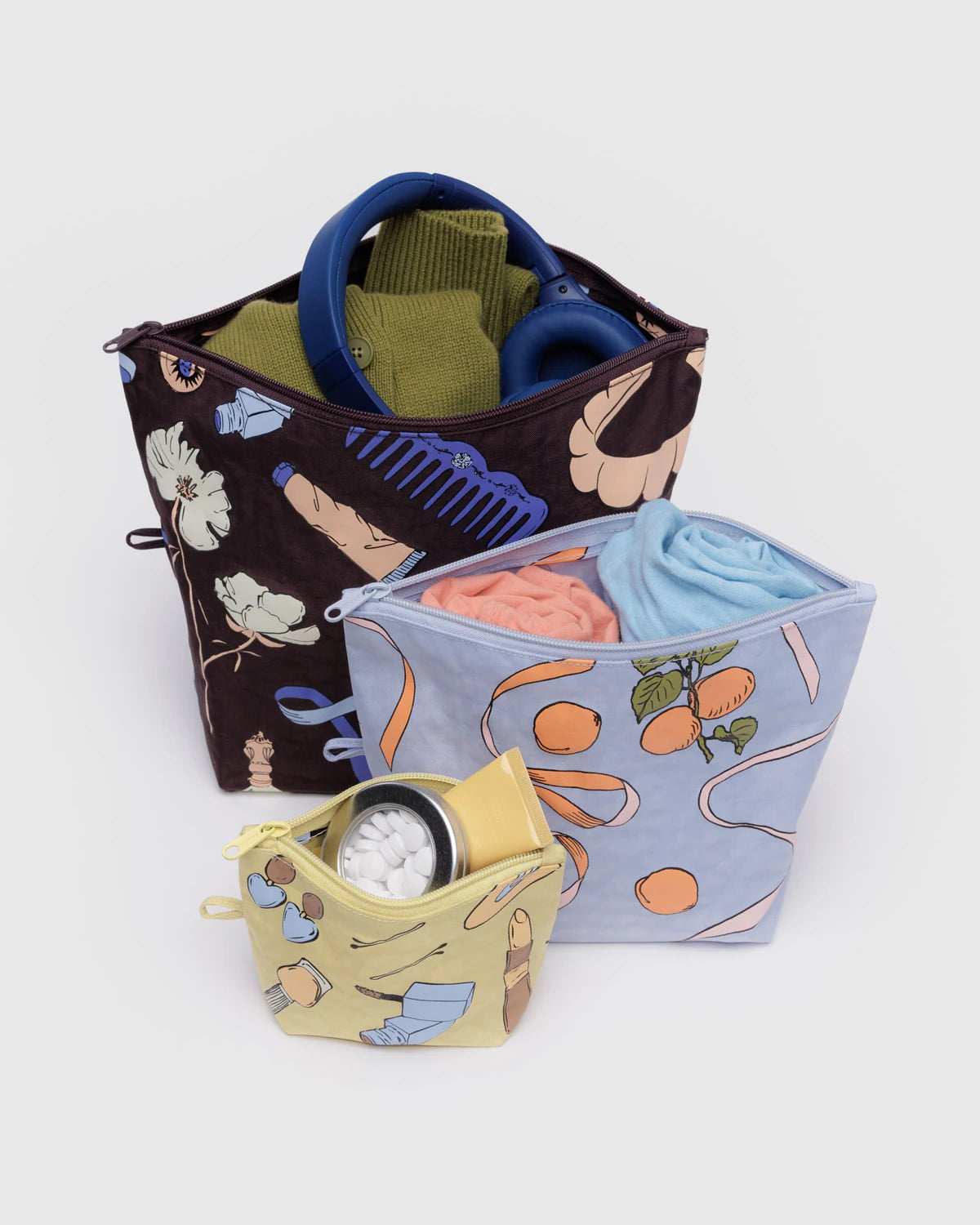


In 2026, the fashion industry will face a decisive change. Fast fashion will continue to dominate the streetscape, but at the same time, slow fashion will rapidly gain in importance.
More and more people are asking themselves how sustainable their purchasing decisions are. The topic of fast fashion versus slow fashion is therefore moving into the spotlight.
Those who want to consume responsibly today don't want to sacrifice style, but rather want to know the impact of their choices. The choice between fleeting trends and conscious fashion is more important than ever.
This article explains how the two approaches differ in terms of sustainability, environment, ethics, costs and consumer behavior, and how this will specifically affect your clothing choices in 2026.
What is Fast Fashion? Definition, characteristics & development
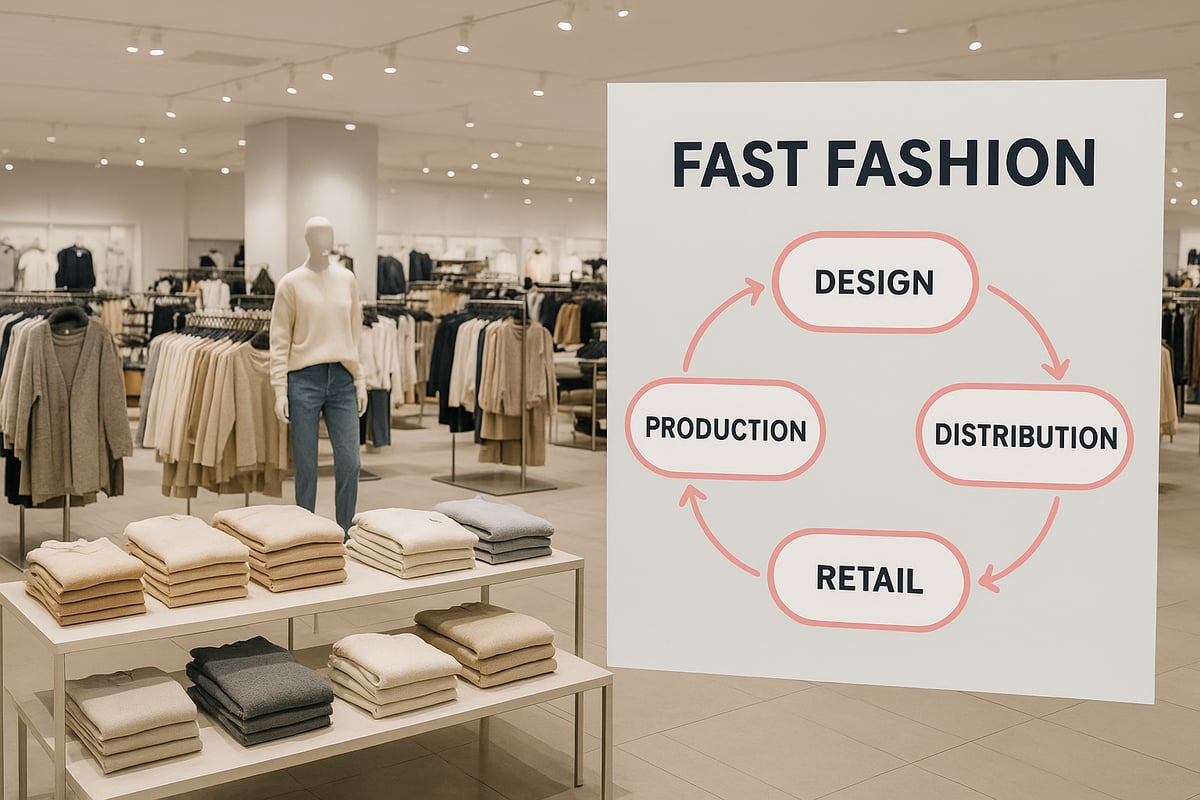
Fast fashion versus slow fashion is at the heart of the current fashion debate. But what exactly is meant by the term "fast fashion," and how did this phenomenon develop? The origins of fast fashion date back to the early 2000s, when large fashion chains began making current trends accessible to the masses at breakneck speed. The goal was to bring new designs from the catwalk to the stores within a few weeks, thus enabling constantly changing collections.
Production cycles became increasingly shorter, allowing consumers to regularly buy new clothes at low prices. Major players like H&M, Zara, and Primark shaped this trend and made fast fashion popular worldwide. The principle is based on high availability, low prices, and the rapid implementation of current fashion trends. This gave rise to a fashion industry that focuses on mass production and speed.
The origins and principles of fast fashion
A central element in the fast fashion vs. slow fashion discourse is the origin of fast fashion. The term became popular when fashion houses realized how lucrative it was to produce new styles for the masses at lightning speed. This allowed trends that were previously exclusive and expensive to suddenly become affordable for everyone.
Production cycles shortened drastically: from the initial design to the finished product in the store, often only a few weeks pass. Fashion companies like Zara and H&M perfected these processes and became global market leaders. The high frequency of collections led to constant consumer pressure, which fundamentally changed the fashion industry.
Fast fashion prioritizes low production costs and maximum availability. The goal is to sell as many garments as possible in a short time and to constantly cater to new trends. This has created a system that prioritizes quantity over quality and laid the foundation for the later comparison between fast fashion and slow fashion.
Typical characteristics of fast fashion
The debate between fast fashion and slow fashion becomes particularly clear when considering the typical characteristics of fast fashion. Here, the throwaway mentality is paramount: products are often intended for only one season and are quickly discarded. The materials used are usually cheap and not very durable.
Fast fashion is characterized by:
- Very short product life cycles
- Production in huge quantities
- Strong focus on current fashion trends
- Little transparency in supply chains
- Focus on low prices and fast availability
These characteristics lead to fashion becoming a mass-produced commodity that loses its value. In contrast to slow fashion, which prioritizes quality and durability, fast fashion is dominated by rapid consumption. This promotes overproduction and resource waste, underscoring the need for a more conscious approach to fashion.
Impact of Fast Fashion in 2026: Status Quo
In 2026, a comparison of fast fashion versus slow fashion shows that fast fashion still holds a high market share despite growing criticism. The trend is even further amplified by ultra-fast fashion providers like Shein, which launch collections daily. Digitalization and social media are further accelerating these trends, meaning consumers are constantly exposed to new stimuli.
Statistics show that the average German buys around 60 items of clothing per year (as of 2023). At the same time, companies are responding to criticism with sustainability promises, which, however, are not always kept. According to the Greenpeace report "Fast Fashion versus Green Fashion: Questions and Answers," many of these promises are suspected of being mere greenwashing rather than bringing about real change.
While slow fashion is gaining in importance, fast fashion will remain a dominant factor in fashion consumption in 2026. The focus on quick trends and low prices makes sustainable change difficult, even though societal pressure on the industry is growing.
Criticisms and challenges
A direct comparison of fast fashion and slow fashion reveals numerous criticisms of fast fashion. The industry is under scrutiny due to serious environmental and social problems. A pivotal moment was the collapse of the Rana Plaza factory in 2013, which exposed the deplorable conditions in production.
The biggest challenges include:
- Use of child labor and precarious working conditions
- Wage dumping and lack of occupational safety
- Overproduction and huge amounts of textile waste
- High consumption of water, energy and chemicals
- Low appreciation for clothing and consumerism
These problems demonstrate the urgent need for a fundamental shift in thinking within the fashion industry. Fast fashion promotes short-term consumption and burdens both the environment and society. The sustainable approach of slow fashion offers important solutions, but the transition is proving difficult. Education and transparency are crucial for establishing fair and environmentally friendly standards in the long term.
Slow Fashion: Origin, Principles & Development
Slow fashion is more than just a trend – it's a counter-movement to fast fashion, characterized by sustainable values and conscious consumption. In contrast to fast fashion, the focus here is not on rapid availability, but on durability and quality. This philosophy was coined in 2008 by British academic Kate Fletcher and has since become established worldwide.
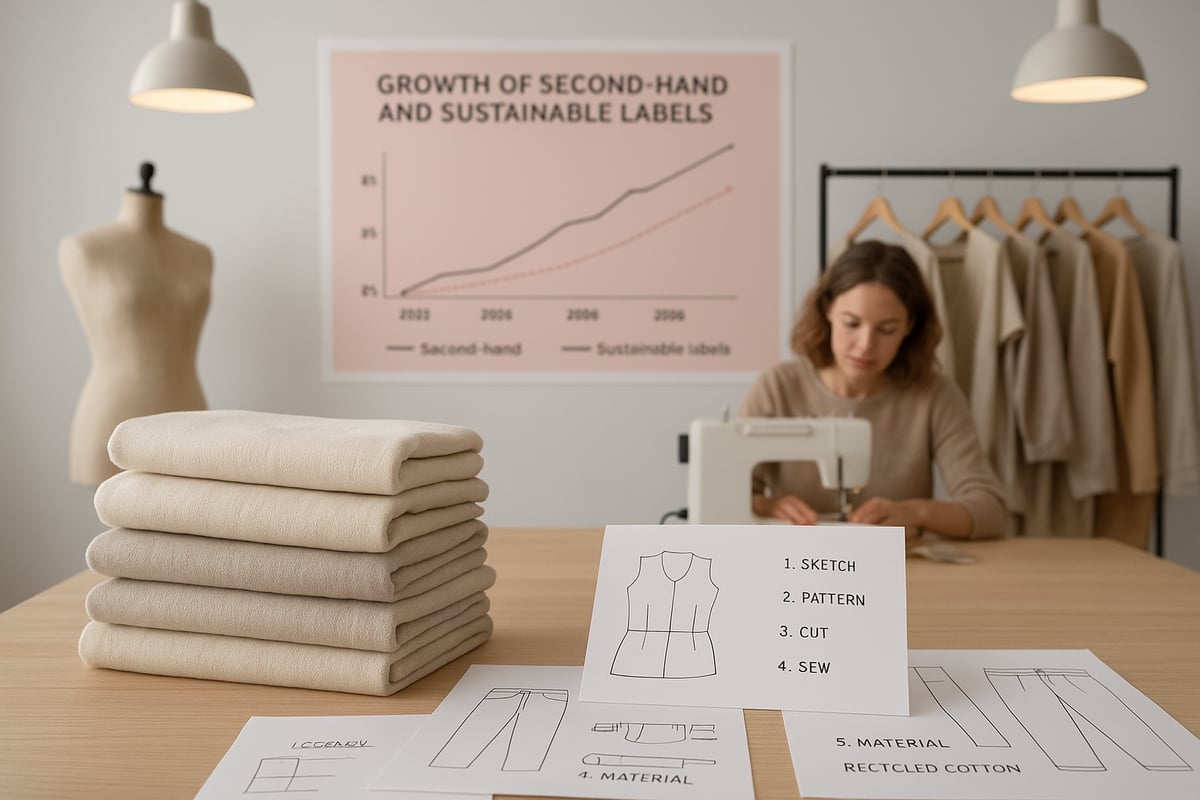
The philosophy behind Slow Fashion
Slow fashion prioritizes quality over quantity. Clothing is viewed as a valuable asset, not a disposable product. The movement emerged as a conscious counterpoint to fast fashion versus slow fashion, aiming to make fashion more sustainable and socially just.
The approach is based on timeless design, durable materials, and a respectful use of resources. Slow fashion is inspired by the Slow Food movement and focuses on conscious consumption. Consumers deliberately choose select pieces that will last a long time.
The aim is to initiate sustainable change in the fashion industry. The focus is on individuality, responsibility, and the value of one's own clothing.
Key characteristics of slow fashion
Slow fashion is characterized by several key features that clearly distinguish it from fast fashion vs. slow fashion:
- Fair production and social responsibility
- Transparent supply chains
- Environmentally friendly materials such as organic cotton or recycled fabrics
- Lower production volumes and longer production cycles
- Promoting second-hand goods, repair and upcycling
These characteristics ensure that slow fashion is not only more sustainable but also more diverse. Instead of mass-produced goods, individual designs are created that stand out from the mainstream. Transparency is particularly important: consumers can trace where and how their clothing was produced.
The Slow Fashion Movement 2026: Trends and Innovations
In 2026, slow fashion will experience a significant upswing. More and more small labels will focus on local production and sustainable materials. Digital platforms for secondhand clothing and clothing swaps will boom, while influencers will promote sustainable consumption on social media. According to the Slow Fashion Report 2024, the secondhand market is growing by 15 percent annually.
Innovative business models such as jeans leasing, sustainable subscription models, and sharing services make it easier to consume more consciously. The debate surrounding fast fashion versus slow fashion is also shaped by the growing importance of transparency and digital tools. Consumers want more information and are actively advocating for sustainable alternatives.
Challenges and criticisms of slow fashion
Despite all its advantages, slow fashion faces several challenges. The higher prices resulting from quality and fair wages make sustainable fashion less accessible to many people. Compared to fast fashion, the selection is often still limited.
Greenwashing is also a problem: even sustainable labels are under pressure to credibly fulfill their promises. Low market penetration and a lack of awareness among many consumers are hindering growth. Education and awareness campaigns are crucial to raising awareness of the benefits of slow fashion and achieving real change.
Sustainability in comparison: Ecological impacts
A direct comparison of fast fashion versus slow fashion shows how differently the two approaches impact the environment and resources. Anyone who wants to consume more sustainably should be aware of the ecological consequences of both models and critically examine them.
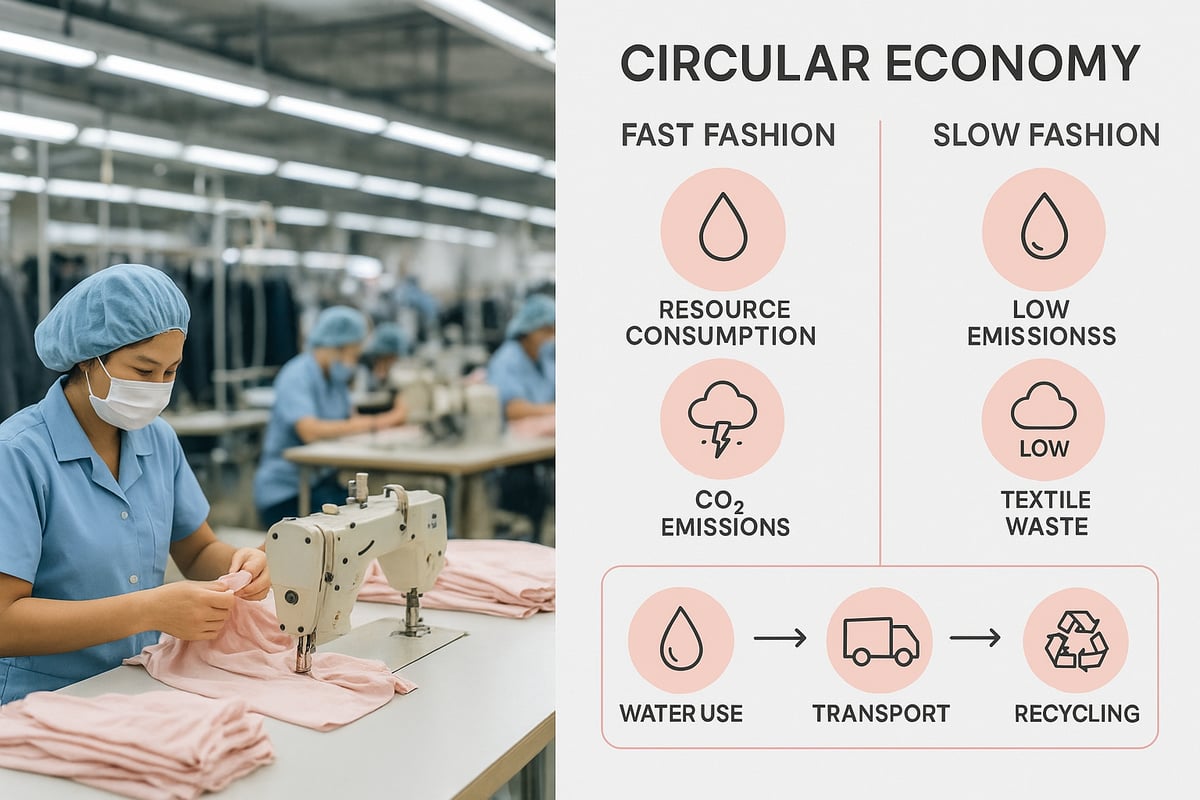
Resource consumption and emissions
When it comes to resource consumption, fast fashion and slow fashion are clearly contrasting. Fast fashion often requires up to 2,700 liters of water for a single T-shirt. Enormous amounts of energy are also used for production and transport. Slow fashion, on the other hand, focuses on durable products and efficient processes, which significantly reduces resource consumption per garment.
A difference is also evident in CO2 emissions: According to the UN, the textile industry is responsible for approximately 10 percent of global CO2 emissions, with fast fashion contributing a large share. Slow fashion minimizes emissions through local production and reduced transportation. Supply chains are shorter, and the overall climate footprint improves.
Chemical use and environmental damage
A key aspect of the fast fashion vs. slow fashion debate is the use of chemicals. Fast fashion often uses pesticides, synthetic dyes, and synthetic fibers that release microplastics. This pollutes waterways and soils worldwide.
Slow fashion, on the other hand, favors natural and recycled materials. Organic cotton requires fewer pesticides, and modern certifications like GOTS or Fairtrade ensure it is free of harmful substances. Nevertheless, the challenge remains to further reduce the use of chemicals, even in the sustainable sector.
Waste and circular economy
The comparison between fast fashion and slow fashion reveals significant differences in textile waste. Fast fashion produces approximately 92 million tons of textile waste annually (Ellen MacArthur Foundation). Most garments are discarded after a short time.
Slow fashion focuses on repair, recycling, and upcycling. Second-hand and sharing models are gaining importance in conserving resources. You can find out more in the article "Recycling and Circular Economy in Fashion ," which explains how a circular economy can reduce textile waste.
Transport, packaging and logistics
Fast fashion and slow fashion also differ significantly in terms of transport and packaging. Fast fashion relies on global supply chains and intensive logistics, which increases CO2 emissions from transportation. Garments are often shipped around the world multiple times before they arrive in stores.
Slow fashion prioritizes local or regional production. Shorter supply chains mean fewer emissions and less packaging. Many sustainable brands use recyclable or reusable packaging to further improve their environmental footprint.
Innovations for more sustainable fashion 2026
In 2026, the debate between fast fashion and slow fashion also represents a race for innovative solutions. New materials like Tencel or hemp reduce the ecological footprint. Digital tools ensure transparency and traceability, giving consumers greater peace of mind.
Circular economy and closed-loop systems are becoming increasingly established. Start-ups and collaborations with environmental organizations are driving this development. Forecasts predict that sustainable fashion could reach a market share of around 25 percent by 2026.
Challenges in implementation
Despite all the progress, many hurdles remain in the fast fashion vs. slow fashion debate. The transition to sustainable processes is costly and requires investment. Consumers need to rethink their approach and adapt their consumption habits, which takes time and education.
Political guidelines and global standards are necessary to prevent greenwashing and enforce genuine sustainability. Environmental goals can only be achieved through international cooperation. Education and transparency remain key factors.
Social and ethical aspects: working conditions & fairness
The debate surrounding fast fashion versus slow fashion in 2026 will be shaped not only by environmental concerns, but above all by social and ethical issues. Working conditions in the global fashion industry, fair wages, and transparency are increasingly coming into focus. Those who want to make responsible purchasing decisions should be aware of the differences and challenges of both approaches.
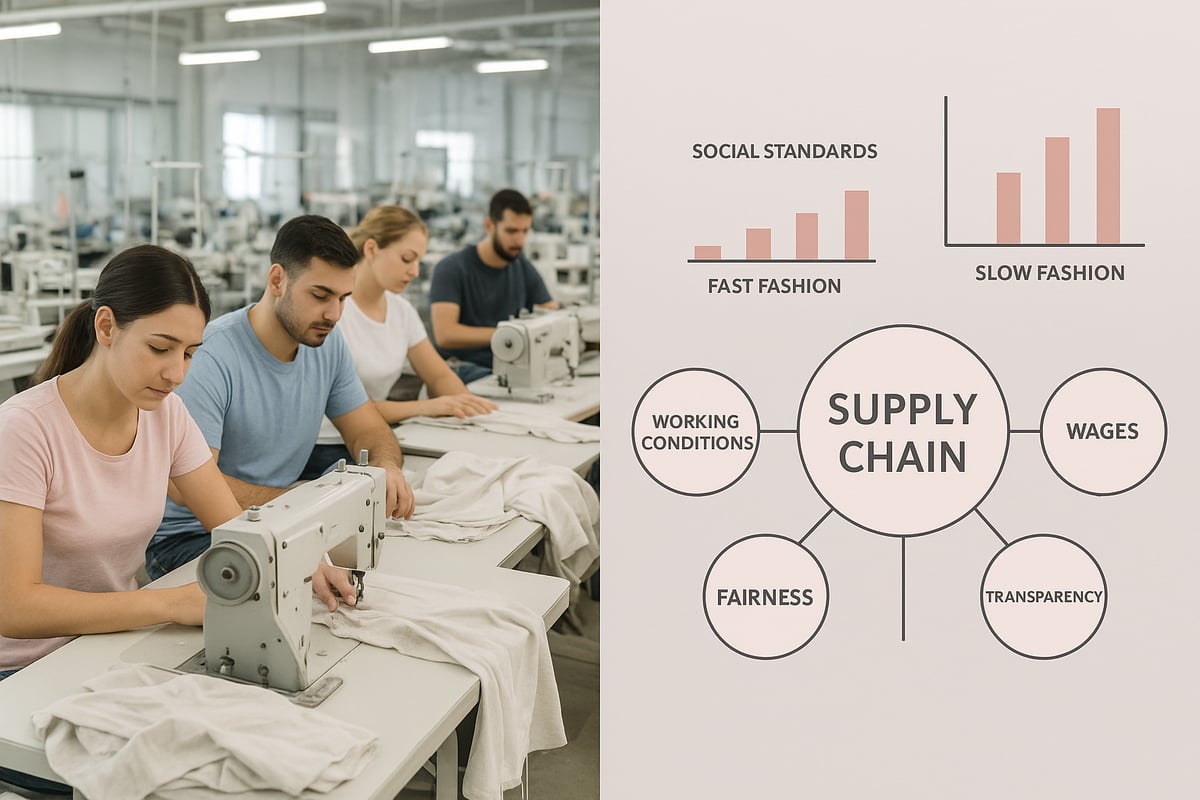
Working conditions in the fast fashion industry
Fast fashion versus slow fashion symbolizes the contrast between fleeting trends and social responsibility. In the fast fashion industry, low wages, overtime, and a lack of workplace safety remain commonplace. Factory disasters like the Rana Plaza tragedy in 2013 have exposed the precarious conditions for millions of workers.
Child labor, discrimination, and a lack of union rights are still widespread in many manufacturing countries. Transparency issues hinder effective supply chain monitoring. While many brands rely on audits and social initiatives, implementation often remains incomplete.
The challenge lies in actually improving production conditions and establishing sustainable changes. This illustrates how crucial the difference between fast fashion and slow fashion is for the world of work.
Slow fashion and social responsibility
In contrast to fast fashion, slow fashion focuses on fair wages, safe working conditions, and transparent supply chains. Certifications such as those from the Fair Wear Foundation and collaborations with NGOs are important tools in this regard. Many slow fashion labels specifically promote women and minorities in production.
Examples like Armedangels, Veja, and Knowledge Cotton Apparel demonstrate that social responsibility can be an integral part of a business model. Smaller labels often work closely with local communities to achieve direct improvements.
For consumers who value ethics, the comparison between fast fashion and slow fashion offers a clear guide. You can learn more about ethical responsibility and sustainable consumption in the article "Feel Good, Do Good: Sustainability" .
Consumer behavior and societal impact
Consumer behavior is a crucial factor when comparing fast fashion and slow fashion. Fast fashion encourages impulse purchases, fleeting trends, and a low appreciation for clothing. This leads to a cycle of overconsumption and a throwaway mentality.
Slow fashion, on the other hand, focuses on conscious purchasing, careful care, and longer-lasting use of clothing. Second-hand shops and repair cafés are gaining in importance. Education and awareness act as drivers for sustainable social change.
According to Statista, 70 percent of consumers want more transparency in the fashion industry. While the influence of social media and advertising on purchasing decisions remains significant, more and more people are actively seeking information about the impact of fast fashion versus slow fashion.
Challenges for social sustainability
Social sustainability faces complex challenges. Controlling global supply chains remains difficult, as many production steps are outsourced and involve opaque subcontractors. Cost and price pressures make it harder for brands to enforce fair conditions.
Greenwashing is a growing problem, including with social promises. Not all consumers have access to fair fashion, whether for financial or geographical reasons. Policymakers are responding with laws like the Supply Chain Act, but their effectiveness depends on strict enforcement.
Fast fashion versus slow fashion also reflects the contrast between short-term profit and sustainable change in social issues. Real improvements can only be achieved through collaboration between businesses, policymakers, and society.
Future prospects: Social innovations 2026
By 2026, social innovations will gain in importance. Digital tools such as blockchain and QR codes will create greater transparency in supply chains. Educational opportunities and empowerment programs will strengthen workers' rights and promote participation.
New business models such as co-ownership and community-based brands are emerging. International initiatives are advocating for fair fashion and global minimum standards. The demand for ethical fashion continues to rise, accelerating the shift from fast fashion to slow fashion.
The future of the fashion industry will be shaped by technological advancements, political engagement, and a more conscious consumer culture. In this way, fashion can be not only beautiful but also fair.
Cost, value, and consumer behavior: Fast vs. slow fashion in everyday life
The decision between fast fashion and slow fashion affects not only your style, but also your everyday life, your budget, and your consumption habits. Those who think long-term ask themselves: What does fashion really cost, and how does my choice impact the environment and society?
Pricing and life cycle of clothing
A direct comparison reveals a fundamental price and value paradox between fast fashion and slow fashion. Fast fashion entices consumers with low prices and frequent repurchases, but its lifespan is usually short. Slow fashion costs more initially but pays off through its durability. For example, a fast fashion T-shirt costs an average of €10 and lasts about 20 washes, while a slow fashion T-shirt, costing €40, often survives 100 washes. This puts the cost per wear into perspective.
| criterion | Fast Fashion | Slow Fashion |
|---|---|---|
| Purchase price | 10 € | 40 € |
| life | 20 washes | 100 washes |
| Cost per wear | €0.50 | €0.40 |
Second-hand and rental models also offer alternatives that further increase the value of sustainable fashion. You can find more details about the comparison in the article "Sustainable, stylish, and affordable ."
Consumer behavior and psychological effects
Fast fashion versus slow fashion also influences our purchasing behavior on a psychological level. Fast fashion relies on reward effects, fleeting trends, and the feeling of getting a lot for little money. This often leads to impulse purchases and overconsumption. Slow fashion, on the other hand, encourages conscious choices and a stronger connection to individual pieces. Minimalism and capsule wardrobes are trends that help focus on what's essential.
Social media intensifies the pressure to consume fast fashion, while more and more influencers are embracing sustainable style in the slow fashion sector. Studies show that 40 percent of Germans plan to buy less clothing by 2026. Those interested in learning more about consumer behavior and target groups will find fascinating insights in the study "The End of Fast Fashion?"
Access to and availability of sustainable fashion
A key factor in the fast fashion vs. slow fashion debate is availability. Fast fashion is almost ubiquitous, with a huge selection in stores and online shops. While slow fashion is growing steadily, it's not yet easily accessible in every city or for every budget. Online shops, local boutiques, and temporary pop-up stores are expanding the range of options.
Second-hand platforms and innovative subscription models like MUD Jeans' are making sustainable fashion increasingly attractive and inclusive. Initiatives promoting diversity and inclusion are gaining importance and ensuring that sustainable fashion becomes accessible to more people.
Arguments for and against higher prices in slow fashion
Price is a key argument in the fast fashion vs. slow fashion debate. Slow fashion is more expensive because it prioritizes quality, fair wages, and sustainable materials. However, the longer lifespan of slow fashion often offsets the higher price. Second-hand purchases and upcycling also make slow fashion more affordable.
Critics view sustainable fashion as a luxury product that is not accessible to everyone. Support programs, subsidies, and sharing models could help lower these barriers, making sustainable fashion more affordable and appealing to a wider audience.
Tips for sustainable fashion consumption in everyday life
How can you make more sustainable choices in everyday life when it comes to fast fashion versus slow fashion? Here are some practical tips:
- Buy less, but buy more consciously and with more purpose.
- Take care of and repair your clothes to extend their lifespan.
- Take advantage of second-hand offers and clothing swap parties.
- Pay attention to certifications and transparency when choosing brands.
- Question your needs and don't follow every trend.
You can achieve a lot with small steps and make your wardrobe more sustainable.
The role of consumers and future outlook 2026
The debate between fast fashion and slow fashion is more relevant than ever in 2026. As a consumer, you have more influence on the fashion world today than ever before. Every purchase decision sends a signal to brands and manufacturers about the direction the market should take. Social media offers you the opportunity to stay informed, educate yourself, and actively shape these changes.
Petitions, boycotts, and the conscious support of sustainable labels also have an impact. Education is a key factor in driving change. Studies such as the impact of slow fashion communication demonstrate that conscious information and transparency can have a lasting effect on consumer behavior.
Political and social trends 2026
Politics is playing an increasingly important role in the debate between fast and slow fashion. The EU strategy for sustainable textiles sets new standards for transparency, recycling, and environmental regulations. The Supply Chain Act obliges brands to disclose their entire production chain and adhere to social standards.
NGOs and activists are driving social change, while companies must adapt their processes. Forecasts show that stricter standards and greater transparency will become the new industry standard by 2026. This will change what products you find in stores and how they are produced.
Challenges and opportunities for the future
The debate between fast fashion and slow fashion will remain complex in the future. Technological innovations such as blockchain are increasing transparency, while rising raw material prices and energy scarcity are challenging the industry. The climate crisis is bringing sustainable solutions even more sharply into focus.
At the same time, new business models are emerging that make fashion more sustainable and accessible. Global collaboration between businesses, policymakers, and society is necessary to achieve real change. This presents opportunities for startups and innovative brands that focus on sustainability.
Practical recommendations for consumers:
Want to get involved in the fast fashion vs. slow fashion debate? Here are some tips:
- Buy consciously and inform yourself before you buy.
- Care for and repair your clothes to extend their lifespan.
- Take advantage of second-hand offers and clothing swap parties.
- Support brands that produce transparently and fairly.
- Critically question trends and reflect on your own needs.
Every conscious decision contributes to making the fashion industry more sustainable. Your power as a consumer is greater than you think.
Sustainability and conscious consumption are more important than ever in 2026 – and you have the power to shape the fashion world. If you want to show that style and environmental awareness aren't mutually exclusive, take a look at innovative brands that take responsibility. MAIN Design combines timeless design, high-quality recycled materials, and a genuine commitment to ocean conservation. Get inspired and discover how sustainable swimwear not only looks great in everyday life but also makes a positive impact. Visit our website to learn more: discover more