

Imagine yourself standing on the bank of a wild river, ready to embark on an adventure. Sudden rain, crashing waves, or damp forests pose real challenges to your gear. A reliable dry bag is your most important companion right now, keeping your clothing and equipment safe from water, dirt, and damage.
Whether hiking, paddling, or camping – the right dry bag is crucial for comfort and safety. This guide will show you how to choose the perfect dry bag, use it correctly, and care for it. You'll also get an overview of current trends, materials, sizes, applications, and new products for 2025.
Read on to discover how to permanently protect your outdoor equipment and enjoy your next adventure with peace of mind.
What is a dry bag and how does it work?
Dry clothing and protected equipment are essential for outdoor adventures. A dry bag is the solution for anyone who values safety in changeable weather or during water sports. But what exactly is a dry bag, and how does it differ from other dry bags?
Definition and basic principles
A dry bag is a waterproof dry bag specifically designed for outdoor use, water sports, or travel. Its primary purpose is to reliably protect equipment and clothing from water, dust, sand, and dirt.
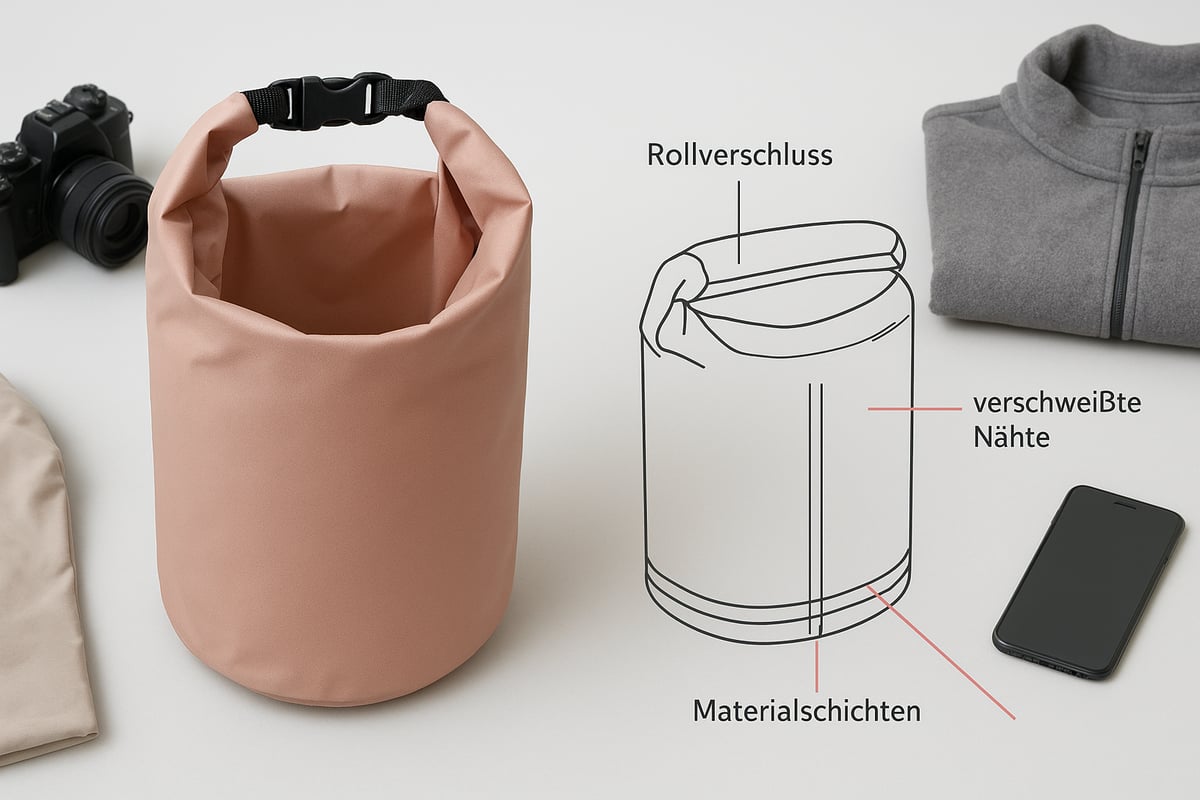
Typical dry bags feature a roll-top closure and welded or glued seams. This construction prevents moisture from penetrating from the outside. Compared to conventional packing bags, which are usually only splash-proof, a dry bag offers significantly better protection.
Practical examples of using a dry bag include canoeing trips, trekking, or a day at the beach where valuables and clothing should remain dry.
How it works in detail
The key element of a dry bag is the roll-top closure system. To properly close a dry bag, roll the opening tightly at least three times and then secure it with the buckle. This creates a waterproof barrier that prevents water from entering.
The materials used, such as nylon with TPU coating or PVC, ensure complete waterproofness. The roll-top system allows the volume of the dry bag to be individually adjusted by pressing out excess air before closing it.
Many models are buoyant because the air trapped inside the dry bag provides lift. The protection offered to sensitive electronics such as mobile phones or cameras is particularly practical, as they remain safe in the dry bag even in heavy rain or if dropped into water.
Advantages & limitations of dry bags
A dry bag offers reliable protection even in heavy rain or brief submersion. Compressing the contents allows for better organization of luggage and space-saving storage in a backpack.
The limitations of a dry bag become apparent during extended underwater storage, as no model remains waterproof indefinitely. There are differences between waterproof and water-repellent versions. For particularly sensitive equipment, a dry bag with a high protection rating is recommended.
Outdoor enthusiasts report from experience that a dry bag has often prevented moisture damage on multi-day trips or during water sports. This keeps sleeping bags, clothing, and equipment ready for use.
Statistics and market development
Demand for dry bags is steadily increasing. According to the Dry Bags Market Report 2025, the market is projected to experience annual growth of 6.5 percent from 2025 to 2031.
According to user surveys, the most popular uses are hiking, kayaking, and travel. Common problems such as soaked clothing or damaged electronics can be effectively avoided with a dry bag. The trend shows that more and more outdoor enthusiasts are relying on the safety and versatility of dry bags.
Selection criteria: How to find the perfect dry bag
Choosing the right dry bag is crucial for optimally protecting your equipment and clothing. Several criteria determine which dry bag best suits your needs. The most important aspects are explained systematically below.
Size and volume
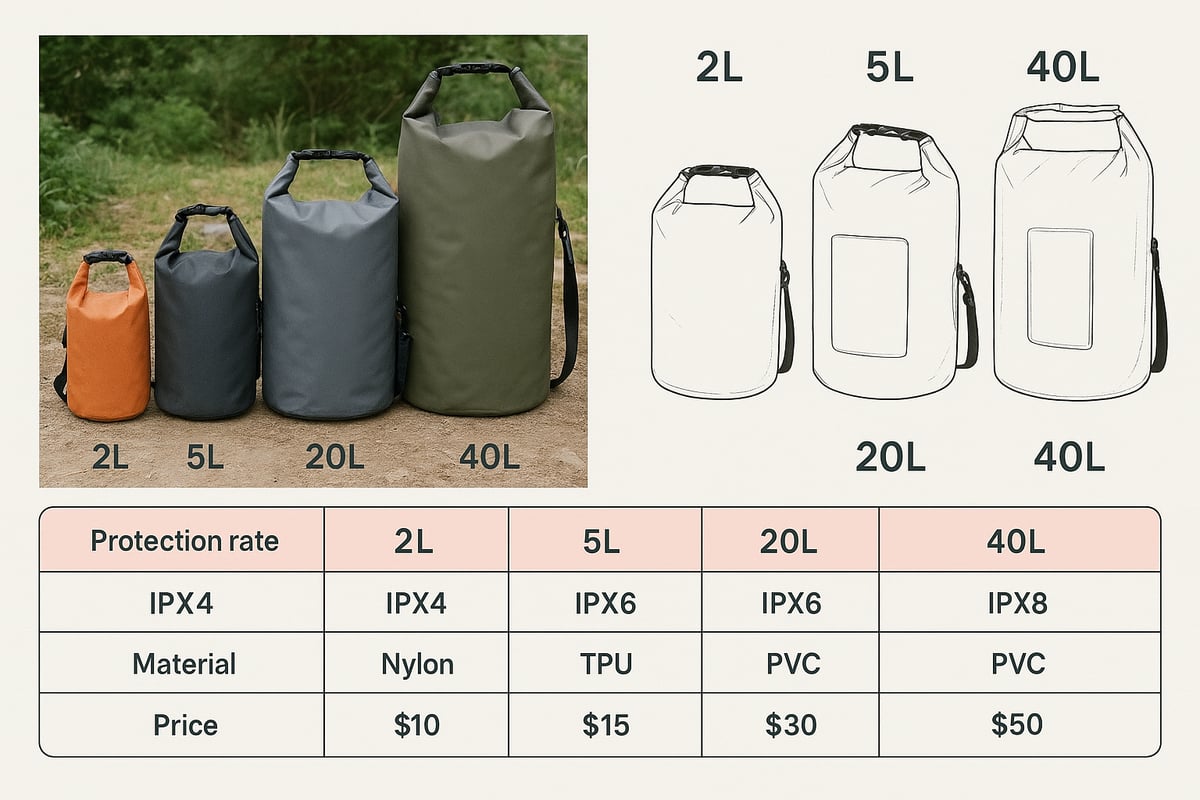
The size of the dry bag is crucial for its intended use. Typical sizes range from 2 liters for valuables to 80 liters for extensive expeditions. A 5-liter dry bag is often sufficient for day trips, while a 20-liter or 30-liter model is more suitable for multi-day tours.
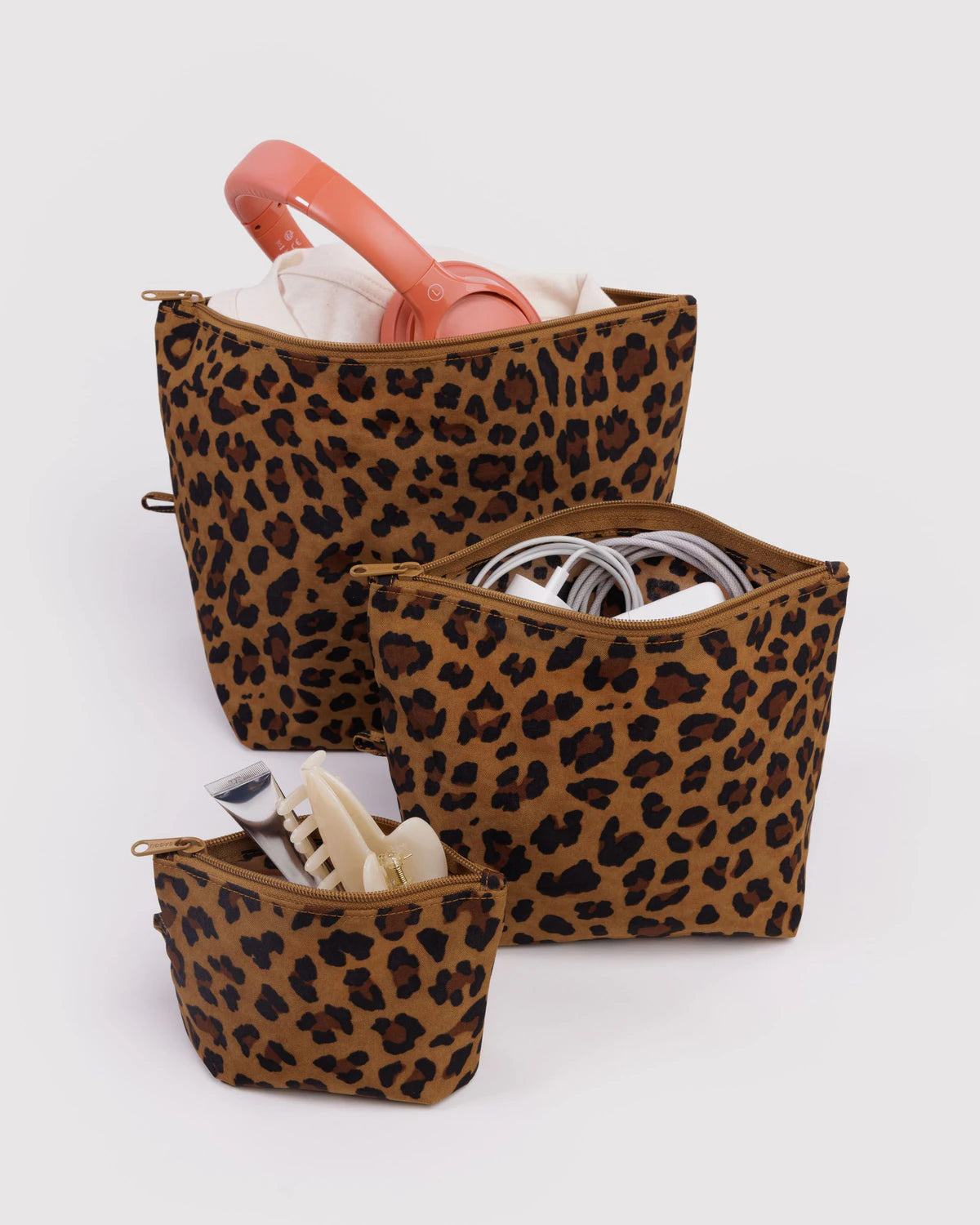
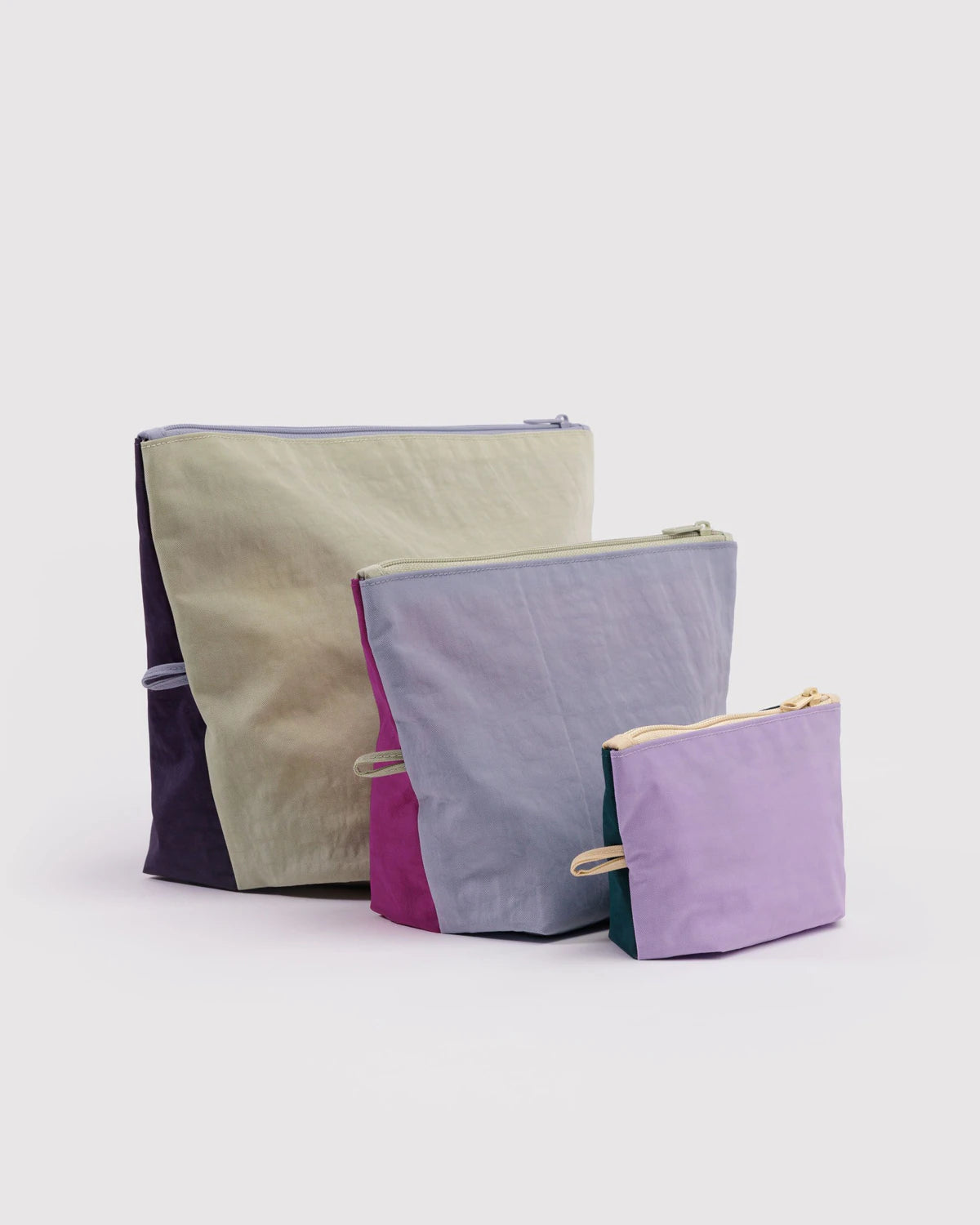
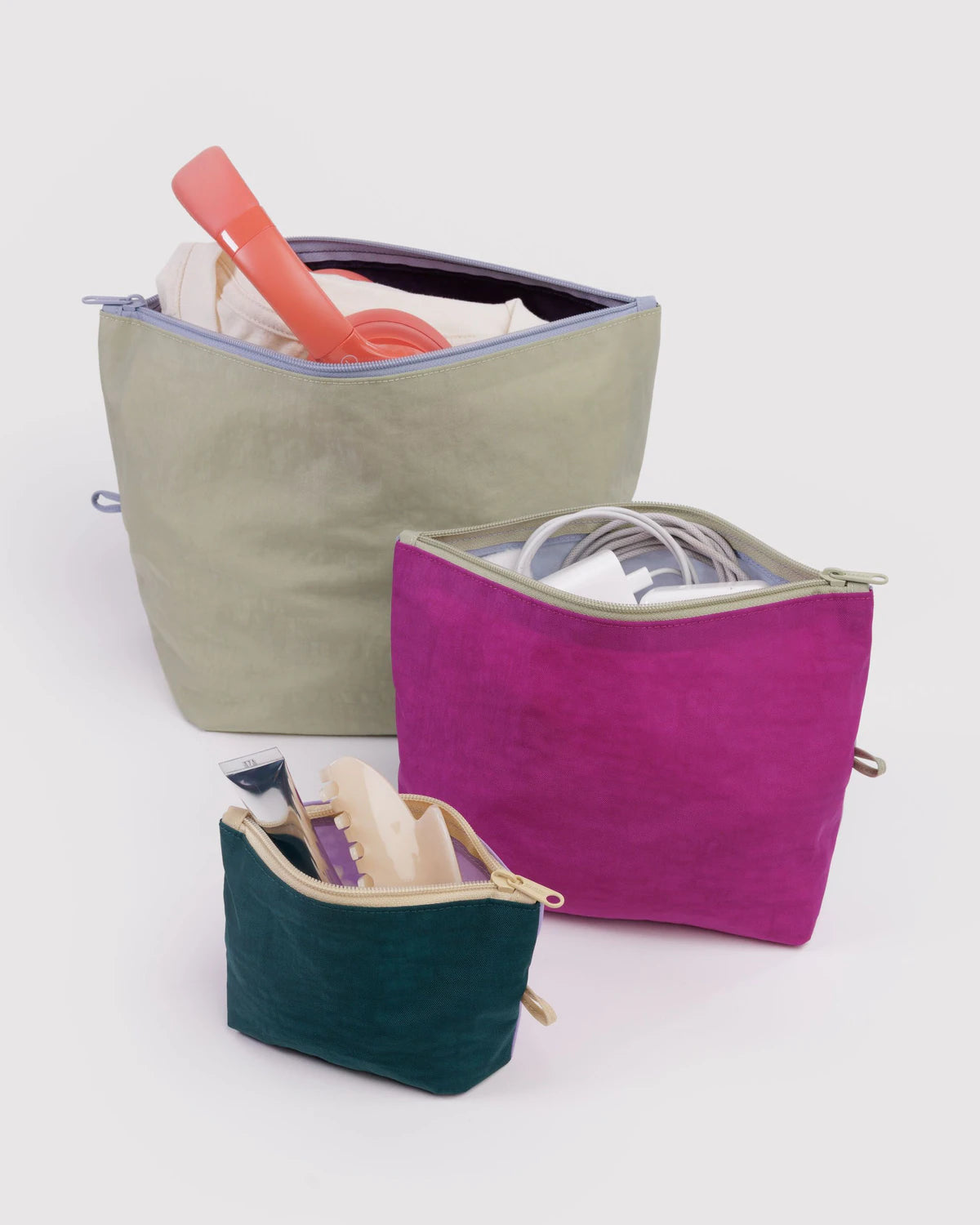
Sets with multiple dry bags in different sizes offer flexibility, for example for separating clothing, electronics, and provisions. For a trekking tour, a 10-liter dry bag for clothing and a smaller model for documents are recommended.
Table: dry bag sizes and usage examples
| volume | Typical use |
|---|---|
| 2–5 liters | Valuables, mobile phone, wallet |
| 10–20 liters | Clothing, shoes |
| 30–80 liters | Sleeping bag, tent, large equipment |
This is how you find the optimal volume for your next tour.
Material and workmanship
The material of your dry bag affects its weight, durability, and environmental impact. Common materials include nylon, TPU, PVC, and polyester. Nylon is lightweight and robust, while TPU coatings provide high water resistance and are often more environmentally friendly than PVC.
Look for welded or glued seams, as these are essential for a high-quality dry bag to protect against moisture. Particularly sustainable models, like the Meraki Dry Bag (see product details) , rely on recycled fabrics and certified processes. This combination offers you reliable protection and peace of mind during your outdoor adventures.
Locking Systems & Features
The closure system is the heart of every dry bag. The classic roll-top closure provides reliable protection against moisture when rolled at least three times and properly closed. Zip closures offer convenience but are usually less waterproof.
Many dry bags have additional features such as air release valves, carrying straps, or attachment points for a backpack. Transparent windows or internal pockets make organization easier. Reflective elements increase safety at dusk or at night.
Choose a dry bag with features that suit your activities to maximize comfort and functionality.
Waterproofing & Protection Classes
Not all dry bags are equally waterproof. The protection class is usually indicated by the IPX scale. IPX4 protects against splashing water, while IPX7 or IPX8 offer protection even during brief immersion.
For electronics or important documents, a dry bag with a high IPX rating and an additional inner sleeve is recommended. Pay attention to the manufacturer's specifications and test the water resistance of your model before use.
Tip: A dry bag with a transparent window makes it easier to check the contents without having to open the bag.
Price-performance ratio & brand comparison
The price range for dry bags is from €13 to €52, depending on the material, size, and brand. High-quality models from Tatonka, Ortlieb, Sea to Summit, or Meraki offer reliable protection, durable materials, and good customer service.
Before buying, compare quality features such as seam workmanship, material thickness, and closure system. User reviews and test results can help you make your decision.
Pay attention to warranties, sustainable production, and customer service. This way you can find a dry bag that optimally combines price and performance.
Materials science: Which materials and technologies offer the best protection?
Choosing the right material is crucial for protection and comfort on your trip when choosing a dry bag. Modern dry bag models utilize a selection of innovative fabrics that differ in weight, durability, and environmental friendliness. For outdoor enthusiasts in particular, the optimal balance between reliable protection from moisture and sustainable properties is paramount.

Overview of common materials
Four materials dominate dry bag products: nylon, TPU, PVC, and polyester. Nylon is valued for its light weight and high flexibility. 420D and 70D versions are particularly common to guarantee stability. TPU coatings offer environmentally friendly protection against moisture and are durable. PVC scores points for its extreme waterproofness but is heavier and less sustainable. Polyester is considered a cost-effective alternative with moderate robustness.
| material | Weight | Waterproof | sustainability | flexibility |
|---|---|---|---|---|
| nylon | light | high | medium | high |
| TPU | light | high | high | medium |
| PVC | difficult | very high | low | small amount |
| polyester | medium | medium | medium | medium |
Modern alternatives such as rTex Cover Eco and T-Light Tex Eco also set standards in terms of sustainability for dry bag solutions.
Processing and seam technologies
The construction is a key factor in determining how waterproof a dry bag truly is. Welded seams ensure that no moisture can penetrate. In comparison, sewn or merely glued seams offer less protection and can give way under stress. The roll-top closure is particularly important; multiple rolls and secure closures prevent water from entering.
Some manufacturers, such as Tatonka and Meraki, use innovative seam technologies in their dry bag models. For example, the WP Stuffbag Valve combines welded seams with a valve for optimal compression and tightness.
Environmental aspects & sustainability
Sustainability is playing an increasingly important role in the dry bag market. Many brands now offer PFAS- and PFC-free models to reduce environmental impact. Recycled materials are significantly more common in the 2025 collections. Durability is also a key factor: a robust dry bag often remains in use for many years, thus conserving resources.
Manufacturers are increasingly focusing on transparent production chains, upcycling, and certifications. Those interested in a particularly eco-friendly dry bag can find detailed information on sustainable manufacturing practices and material selection atSustainability at Dry Bags .
Care and lifespan
Proper care significantly extends the lifespan of any dry bag. Cleaning should be done by hand with a mild detergent. After washing, it is recommended to turn the dry bag inside out and dry it in a shady, well-ventilated place. For storage, it should be kept dry, loosely rolled or folded.
Minor damage such as holes can often be repaired using repair kits. Regular checks for material fatigue are recommended to ensure the dry bag remains waterproof.
Application scenarios: Dry bags for every outdoor challenge
Outdoor adventures demand reliable protection for gear and clothing. A dry bag is indispensable in various scenarios, ensuring safety, organization, and convenience – whether hiking, on the water, or in everyday life. Below, we'll show you just how versatile a dry bag can be.
Hiking, Trekking & Camping
When hiking or trekking, a dry bag protects your equipment from rain, fog, and damp ground. Clothing, sleeping bag, and electronics stay dry even during river crossings or heavy downpours. Various sizes make organization in your backpack easier.
- 5L dry bag: valuables and electronics
- 10–20 liters: change of clothes, sleeping bag
- 30l+: complete equipment for multi-day tours
Outdoor forums report that a dry bag helps keep things organized, especially on multi-day tours, and significantly minimizes the risk of water damage.
Water sports: kayaking, stand-up paddleboarding, canoeing
In water sports, a dry bag is a must. It reliably protects equipment from splashes, rain, and even in the event of capsizing. Thanks to its buoyancy, the contents remain easily locatable even in the water.
- Attachment to the boat with loops
- Special dry bags for mobile phone, camera, GPS
- Waterproof phone cases for navigation
User reports from canoe trips, for example on the Mecklenburg Lake District, show that a dry bag remains watertight even after hours on the water and is easy to handle.
Beach, Travel & Everyday Life
A dry bag also proves its versatility at the beach and while traveling. It protects against sand, saltwater, and sunscreen, is suitable for transporting wet clothes, and can be used as a daypack alternative.
- Families use dry bags for wet swimwear.
- Backpackers appreciate the light weight
- City trips: Protection for technology and documents
Anyone who wants to compare different models will find a wide selection for every purpose in the overview of bags and pack sacks .
Protect electronics and valuables
Sensitive devices such as smartphones, tablets, or cameras require special protection. A dry bag with a high IPX protection rating protects electronics from damage even in heavy rain or if dropped into water.
- Special cases for mobile phones and tablets
- Additional protection for important documents
- Backup dry bag for emergencies
In everyday outdoor use, it is recommended to protect devices with double protection and to pay attention to tested locking systems.
Innovative application areas 2025
The applications for dry bags are evolving. Ultralight models that can be integrated into modular packing systems are in demand for bikepacking and trail running.
- Combination with MOLLE or backpack
- Multifunctional dry bags with compression straps or GPS tracker
- Urban Outdoor: Protection for laptop and documents
According to recent data, the use of dry bags in the bikepacking segment increased by 10 percent in 2024. Trends indicate a growing demand for smart and sustainable solutions.
Dry Bag Innovations & Trends 2025
The dry bag industry will experience a surge in innovation in 2025. New technologies, sustainable materials, and sophisticated features will shape its development. Anyone who regularly plans outdoor adventures should be aware of the latest dry bag trends to enjoy optimal protection and comfort.
New Technologies & Materials
By 2025, dry bag manufacturers will increasingly focus on ultralight textiles and improved TPU coatings. These ensure low weight and maximum waterproofness. Recycled fibers and biodegradable components, which minimize the ecological footprint, are particularly in demand.
Manufacturing processes are also evolving: welded seams and innovative roll-top closures increase safety. Examples such as the T-Light Tex Eco material or the new rTex Cover Eco technology demonstrate how robust and sustainable a modern dry bag can be.
Design and feature trends
Visibility and personalization are key to dry bag design. By 2025, many models will offer eye-catching colors, reflective elements, and transparent windows. Users will benefit from enhanced features such as compression straps, air release valves, and modular packing systems.
According to user surveys, outdoor enthusiasts want multifunctional dry bag solutions that can be adapted to different activities. Transparent elements facilitate organization, while smart features like GPS trackers are showing initial signs of market readiness.
Sustainability and environmental awareness
Sustainability is one of the most important criteria when buying a dry bag. More and more manufacturers are relying on PFAS- and PFC-free materials by 2025. Recycled fabrics, plastic-free packaging, and upcycling initiatives are gaining in importance.
An outdoor study shows that 60 percent of consumers prefer sustainable products. Durability and repairability are increasingly cited as quality features. Certifications and initiatives like Healthy Seas strengthen confidence in the new generation of dry bags.
Top brands and product recommendations 2025
The dry bag market in 2025 will be dominated by established brands such as Tatonka, Ortlieb, Sea to Summit, and Meraki. Bestsellers will include ultralight models, versatile sets, and specialized cases for electronics. Price-performance winners will impress with innovative features and high-quality materials.
A recent dry bag test and comparison from 2025 reveals which models are particularly impressive in terms of waterproofness, comfort, and sustainability. Expert opinions and user reviews help you find the right product.
Dry Bag from Meraki Supply: Sustainability meets function
The Meraki Dry Bag stands for sustainable manufacturing and versatile functionality. Made from recycled, waterproof fabric, it features a robust roll-top closure and welded seams. This model is suitable for the beach, water sports, and travel.

What makes this bag special is the collaboration with MAIN Design and the support of Healthy Seas. Families, outdoor enthusiasts, and environmentally conscious travelers benefit from its durability and thoughtful design. The Meraki Dry Bag is available online in Switzerland and receives consistently positive user feedback.
Care, usage tips & error prevention
A dry bag will only remain reliable if you use and care for it correctly and avoid common mistakes. The following tips will extend the lifespan of your dry bag and optimally protect your gear – whether you're paddling, hiking, or enjoying a beach vacation.
Proper packing and sealing
Proper packing is crucial to ensure your dry bag remains watertight. Place heavy or hard items at the bottom and sensitive equipment like electronics on top. Leave some air inside the dry bag to increase buoyancy and cushion the contents.
To securely close the dry bag, tightly roll the top edge at least three to four times. Make sure that no clothing or straps get caught in the closure. Then close the buckles securely.
Checklist for closure:
- Do not overfill content
- Squeeze out the air before sealing.
- Fold the roll closure over at least three times.
- Fasten buckles securely.
A properly sealed dry bag reliably protects against moisture and dirt.
Cleaning and storage
Your dry bag should be thoroughly cleaned after each use. Rinse it with clean water and avoid harsh cleaning agents that could damage the material. For heavy soiling, a mild soapy solution and a soft brush are usually sufficient.
To dry, turn the dry bag inside out and hang it in a shady, well-ventilated place. Direct sunlight can make the material brittle. Before storing, make sure the dry bag is completely dry to prevent mold growth.
Store the dry bag loosely rolled or folded in a dry, dark place. If unpleasant odors develop, rinse it with vinegar water and then air it out well.
Repair and extend lifespan
Small holes or tears in a dry bag can usually be repaired yourself. Use special repair kits suitable for the specific material. Apply the patch material to the clean, dry area and allow it to harden completely.
If any fasteners or buckles are defective, check if replacement parts are available. Some manufacturers offer an exchange service. For more extensive damage, professional repair may be worthwhile, especially for high-quality models.
The average lifespan of a dry bag is three to eight years, depending on the intensity of use and care. Environmentally friendly materials and careful maintenance contribute significantly to its longevity.
Common mistakes and how to avoid them
Many damages to dry bags result from user error or improper storage. Common mistakes include an incompletely rolled closure, overfilling the bags, or storing them while damp.
Practical tips for avoiding mistakes:
- Always roll the closure at least three times.
- Never overload
- Dry completely after each tour
- Do not store in direct sunlight for extended periods.
Experience from the outdoor community shows that regular checks and careful use are crucial for the proper functioning of a dry bag. This ensures your gear remains protected over time.
FAQ: Frequently Asked Questions about Dry Bags
Despite their simple design, dry bags often raise many questions among outdoor enthusiasts. Below you will find the most important answers, valuable tips, and a concise buying guide for your next trip.
Answers to the most important user questions
How waterproof is a dry bag really? High-quality models offer reliable protection if the roll-top closure is properly sealed. Most versions are splash-proof, and many are submersible up to one meter. However, dry bags are not certified as buoyancy aids; while they will float, they do not provide reliable buoyancy for people.
Dry bags are suitable for food storage, provided they are made of food-safe materials. Material fatigue can be recognized by cracks, brittle surfaces, or leaking seams. In case of leaks, a repair kit or replacing the bag often helps.
Tips for specific requirements
For winter tours, a dry bag made of flexible material that doesn't become brittle in the cold is recommended. In saltwater, regular cleaning is essential to protect the material. For children: choose small sizes, easy-to-use bags, and bright colors for better visibility.
If you want to combine a dry bag with other outdoor gear, look for attachment options such as loops or MOLLE systems. Always check the IPX protection rating, especially for electronics.
Buying guide (compact)
What size is right? For valuables, 2 to 5 liters are usually sufficient, while 10 to 20 liters are better for clothing. When buying a dry bag online, it's advisable to check the return policy and warranty. Look for tested quality, robust seams, and sustainable materials.
For more in-depth questions, further information can be found in the FAQ section on outdoor equipment . Starter sets are a good option for beginners, while professionals choose specialized models for their intended use. User reviews and test reports offer additional guidance.
Whether you're planning an extended trekking tour, a family trip to the beach, or embarking on your next watersports adventure – the right dry bag reliably protects your gear from moisture and dirt. Our guide explained what really matters when it comes to selection, care, and sustainable materials. If you're now eager to discover even more sustainable and stylish essentials for the beach, everyday life, and the outdoors, feel free to visit our website and get inspired: discover more