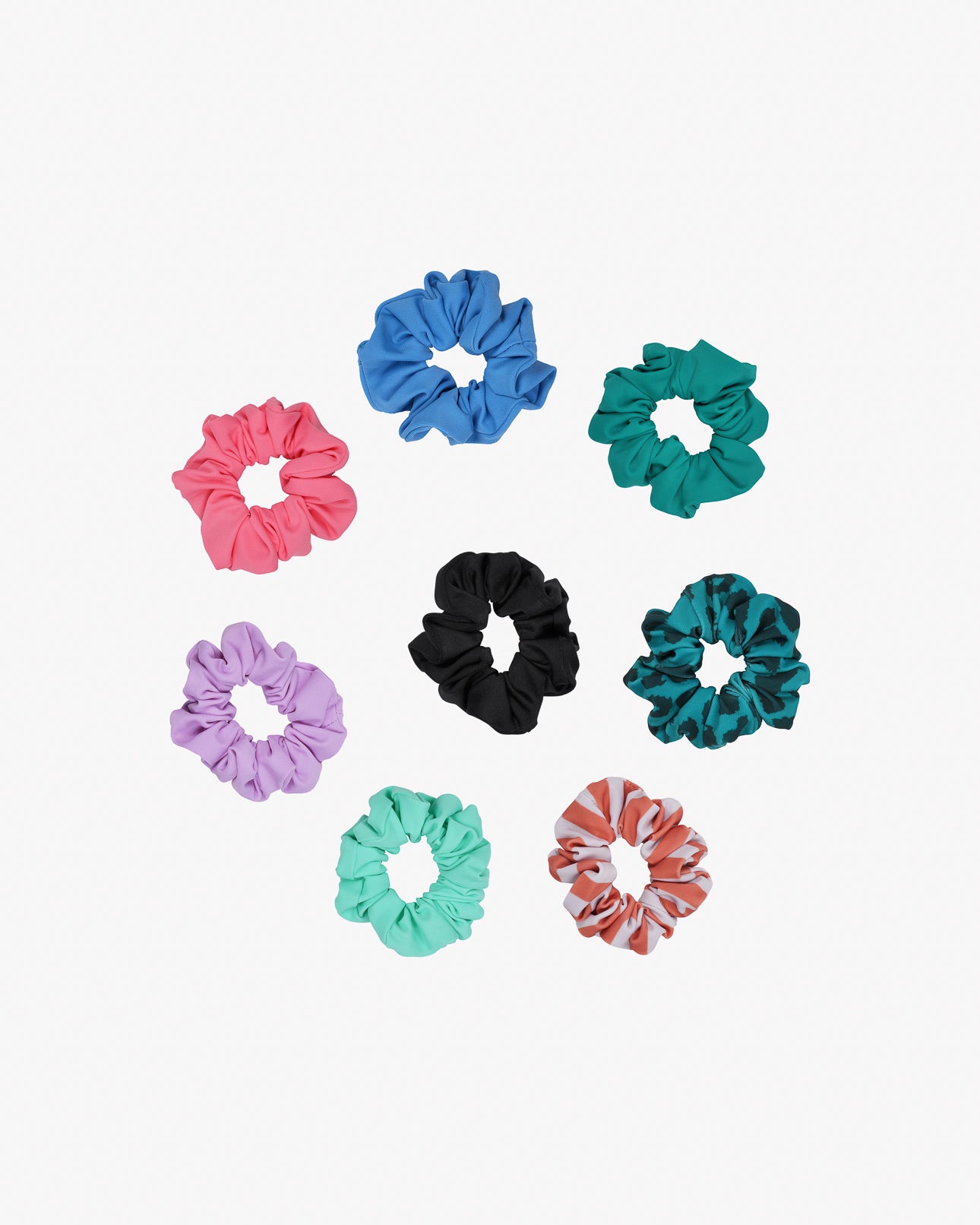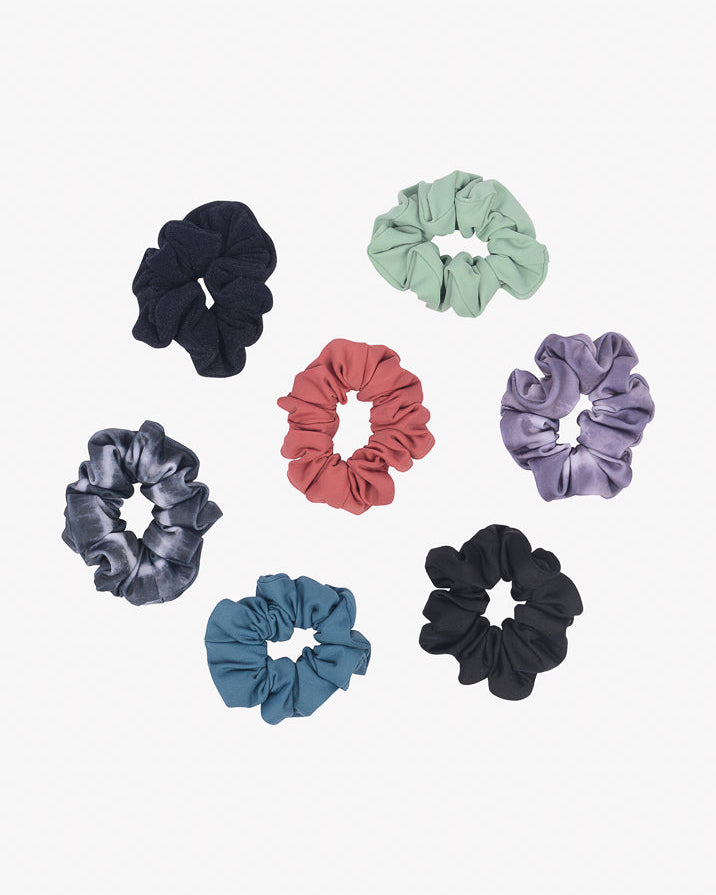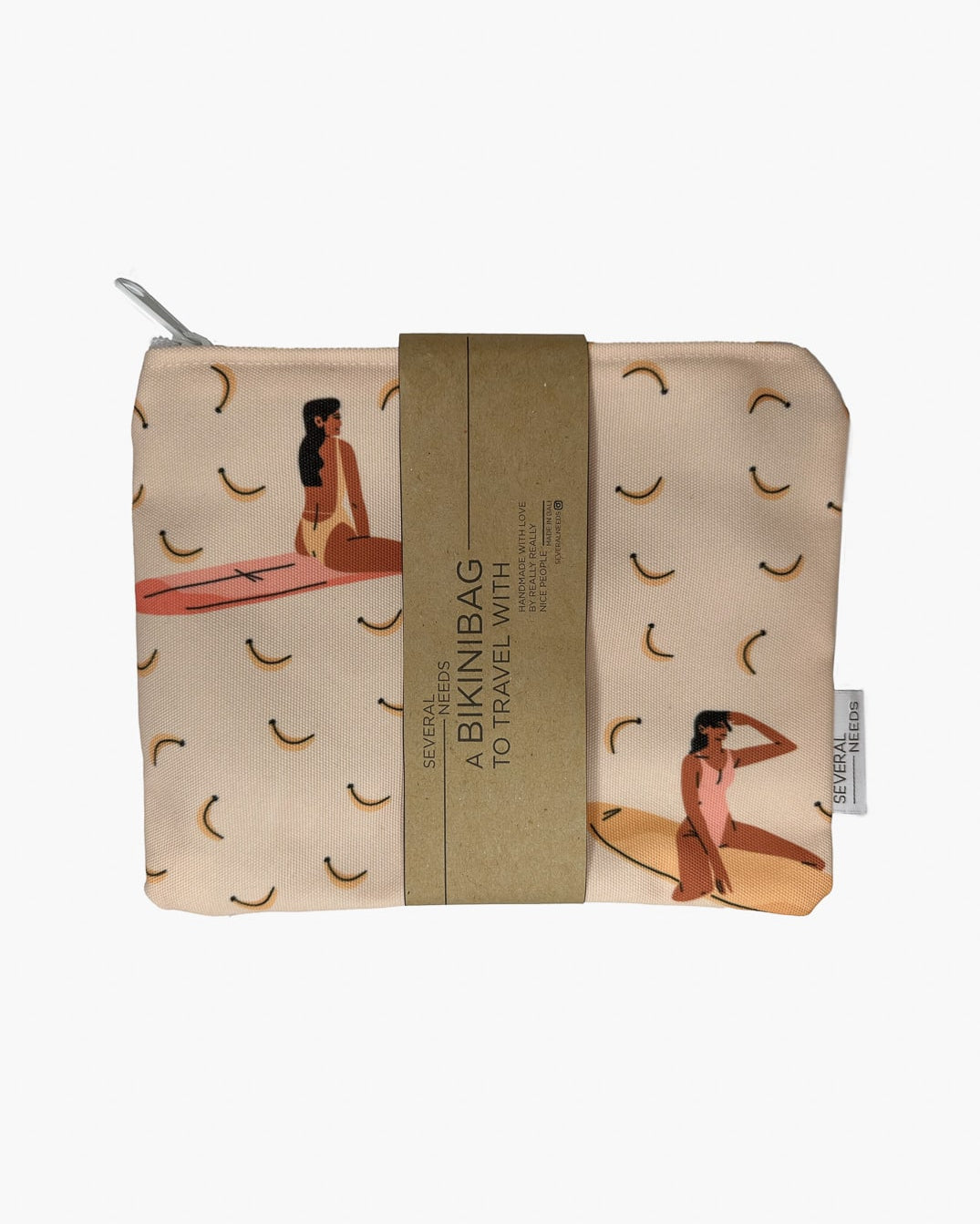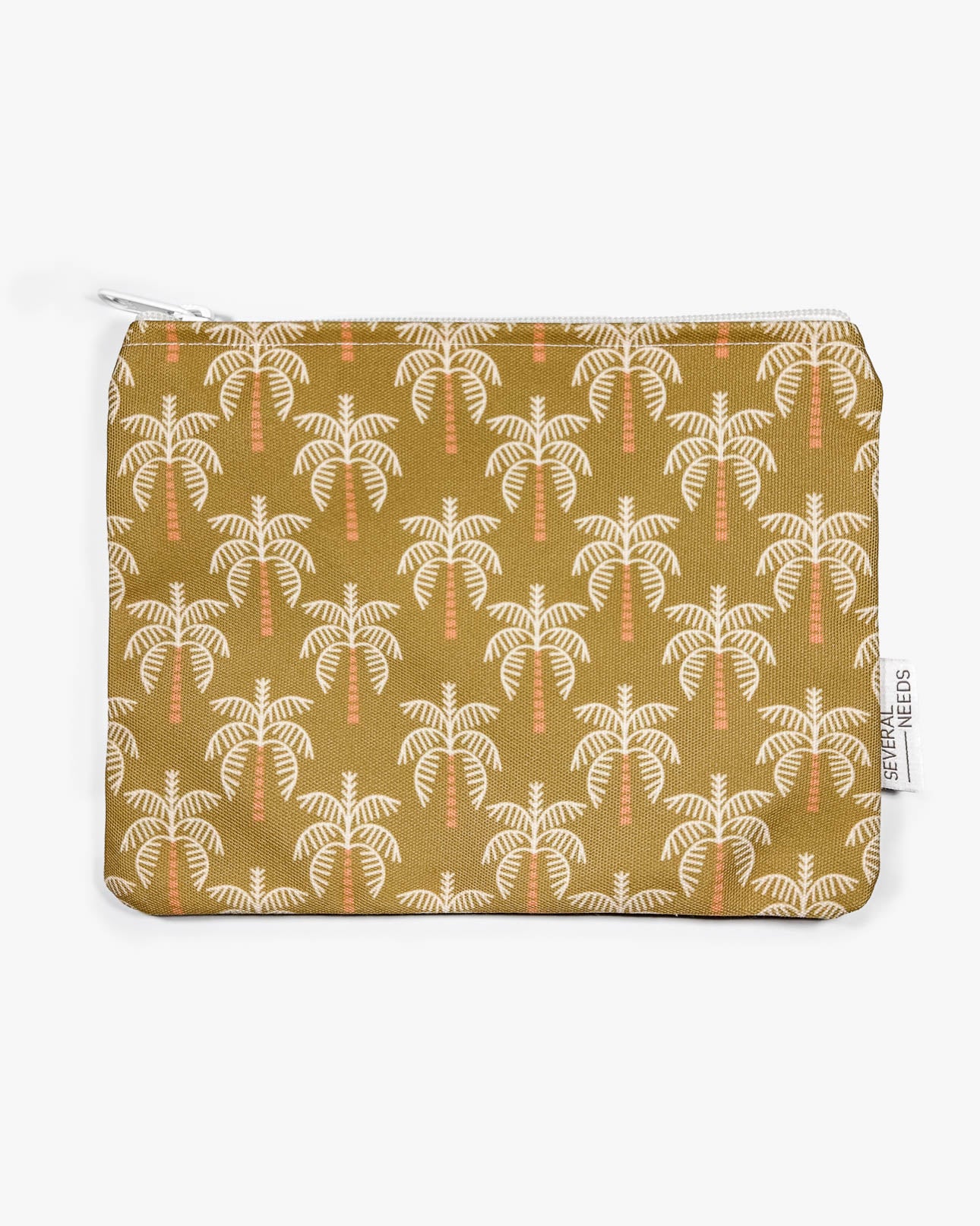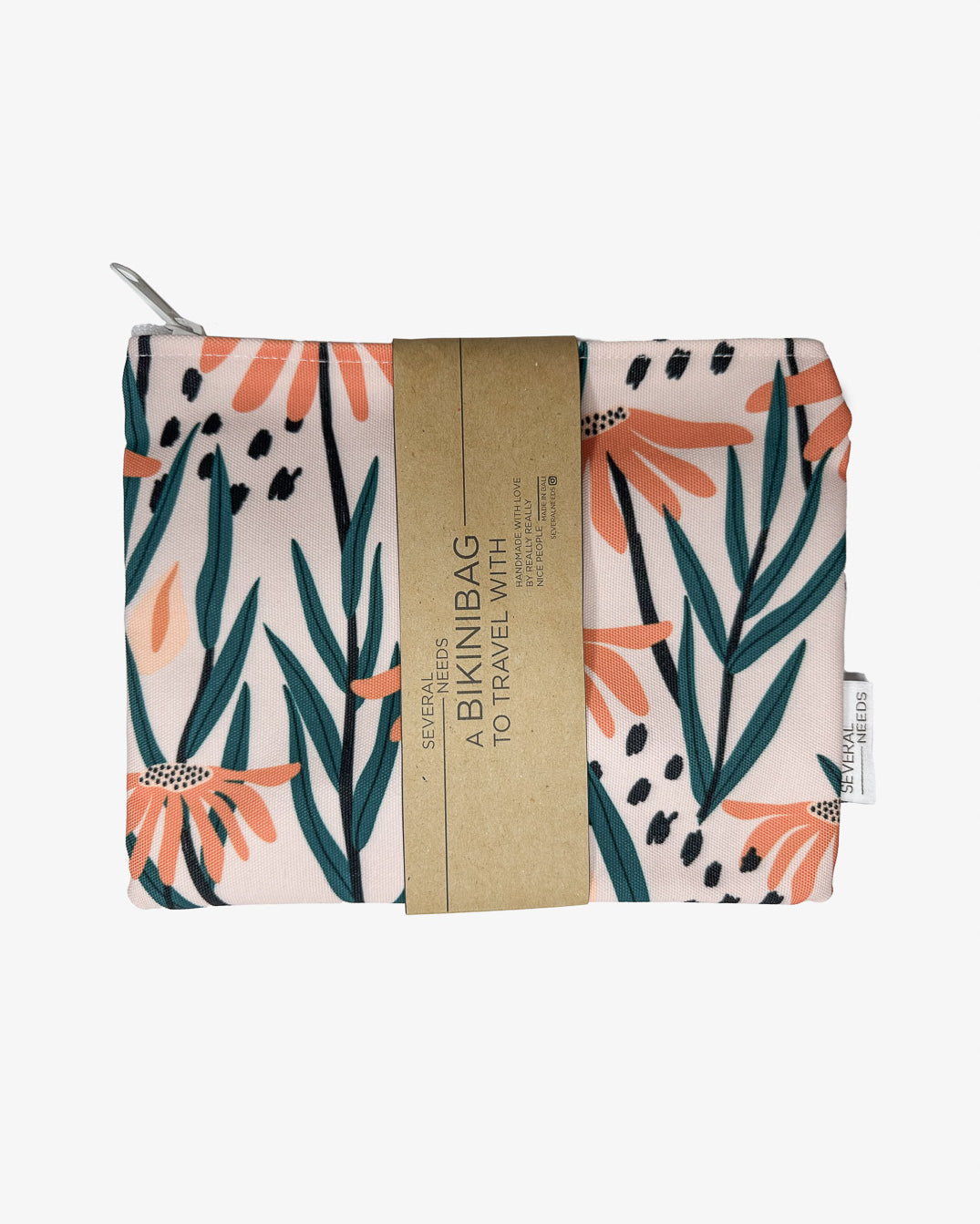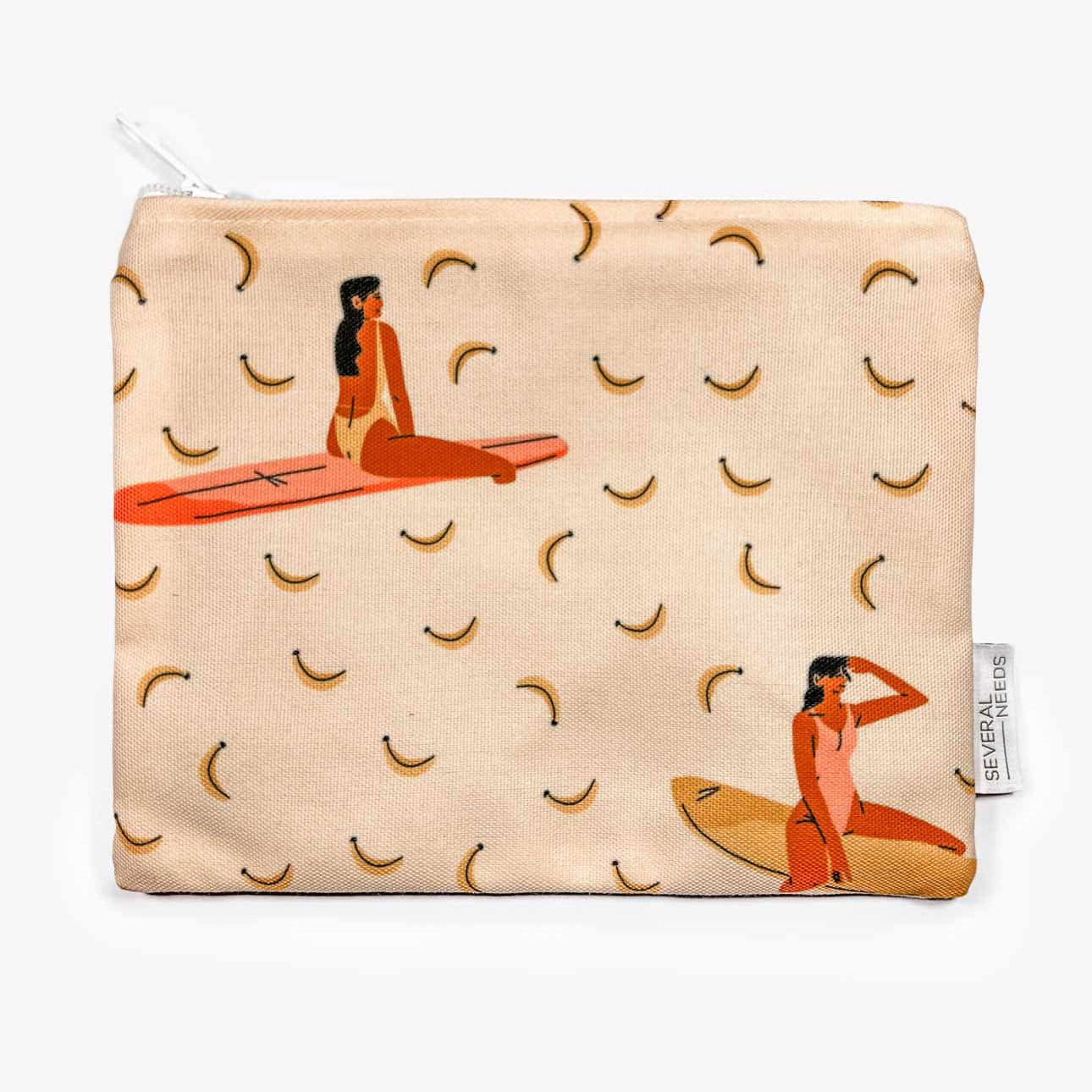


A good bath and beach towel is more than just a piece of fabric. It's your companion by the water, during sports, while traveling – and sometimes even at home on the sofa. But what makes a truly good towel? Which materials suit your everyday life, what size do you really need, and how do you find sustainable options that not only look good but also last a long time? In this article, we'll look at what matters when you're looking for a bath and beach towel that suits you.
Material: What feels best to you?
The choice of material determines how your towel feels, how quickly it dries, and how long it stays with you.
Cotton and Terry Cloth
Cotton is the classic. Soft, absorbent, comfortable on the skin – especially terry beach towels are popular because they absorb a lot of water and offer a cozy feel. They are perfect for relaxing days by the pool or when you simply want to wrap yourself in something soft after swimming.
The downside? They take longer to dry and are often heavier to pack. Those who travel a lot might look for alternatives.
Microfiber: Lightweight and practical
Microfiber beach towels are a practical choice for anyone who values compactness. They dry quickly, are feather-light, and take up hardly any space. Sand adheres less to them, which is a real advantage at the beach.
However, they feel different from cotton – smoother, sometimes cooler. Some people like this, others miss the fluffy texture. This is where your personal preference counts.
Linen and thin towels
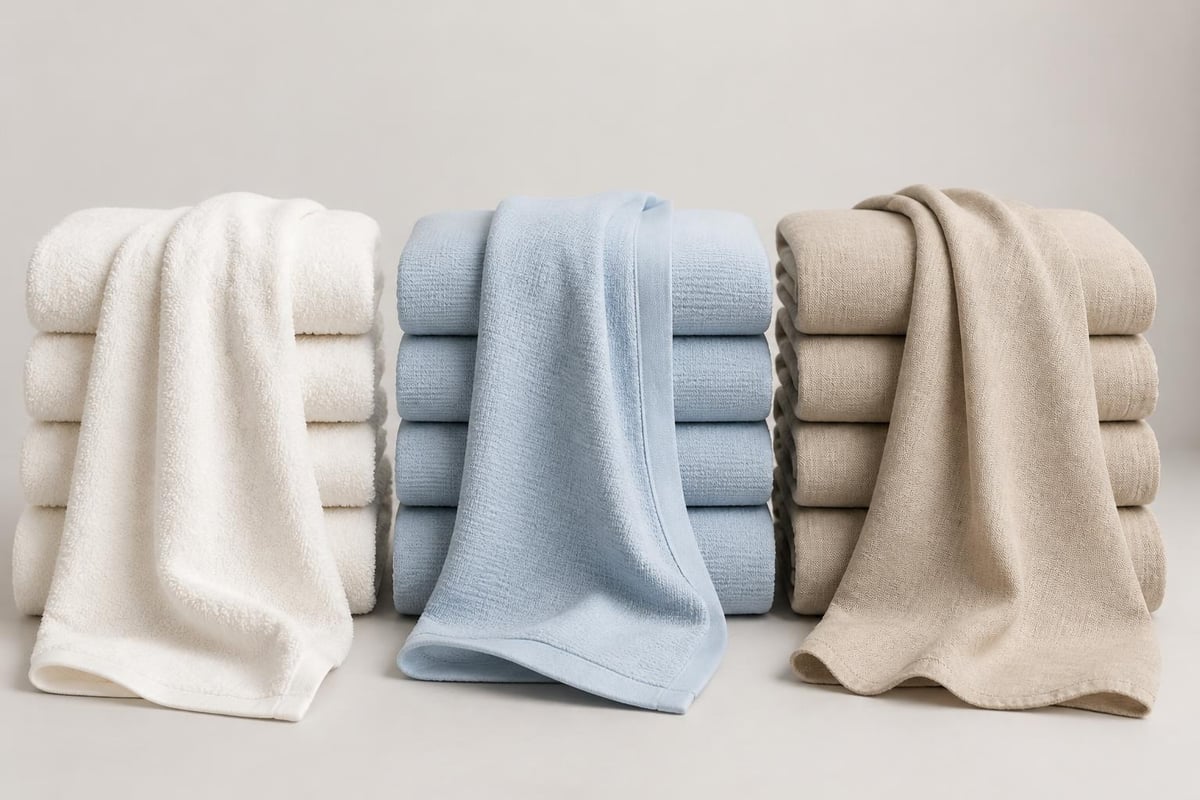
Thin beach towels made of linen or light cotton blends are true all-rounders. They dry quickly, are breathable, and can be folded small. Perfect for travel, spontaneous excursions, or when you want to travel light.
While they absorb less water than terry cloth, they are more versatile: as a sarong, picnic blanket, scarf, or light blanket for the evening. Functionality meets freedom.
Size and shape: What suits your life?
The right size makes the difference between "it'll do" and "perfect."
Standard, XL or compact?
| Size | Dimensions (approx.) | Ideal for |
|---|---|---|
| Compact | 70 × 140 cm | Fitness, backpacking, children |
| Standard | 80 × 160 cm | Beach, pool, everyday use |
| XL | 100 × 200 cm | Lying on the beach, sharing, plenty of space |
If you like to stretch out or use your towel as a base for two, XL is the better choice. For day trips or if you have limited space, the standard size is often sufficient.
Round, rectangular or square?
Rectangular towels are the classic – they fit on any lounge chair, fold well, and dry evenly. Round towels look nice but take up more space and are a bit more impractical to hang. Square formats are rare but practical as a scarf or blanket.
Shape is a matter of taste. Choose what feels right to you.
Sustainability: Towels that do good
Sustainability begins with material selection and ends with care. A bath and beach towel that lasts a long time saves resources – and gives you a good feeling.
Recycled materials
Towels made from recycled fibers – such as recycled cotton or recycled polyester – protect the environment. They consume less water and energy in production and give already produced materials a second life.
Many brands committed to sustainability rely on such materials. This shows that style and responsibility go hand in hand.
Longevity instead of fast fashion
A cheap towel quickly breaks. A high-quality one accompanies you for years. Look for:
- Double seams at the edges
- Colorfast prints that do not fade
- Robust fibers that do not pill or warp
Quality pays off – for you and for the environment.
Care: How to keep your towel like new
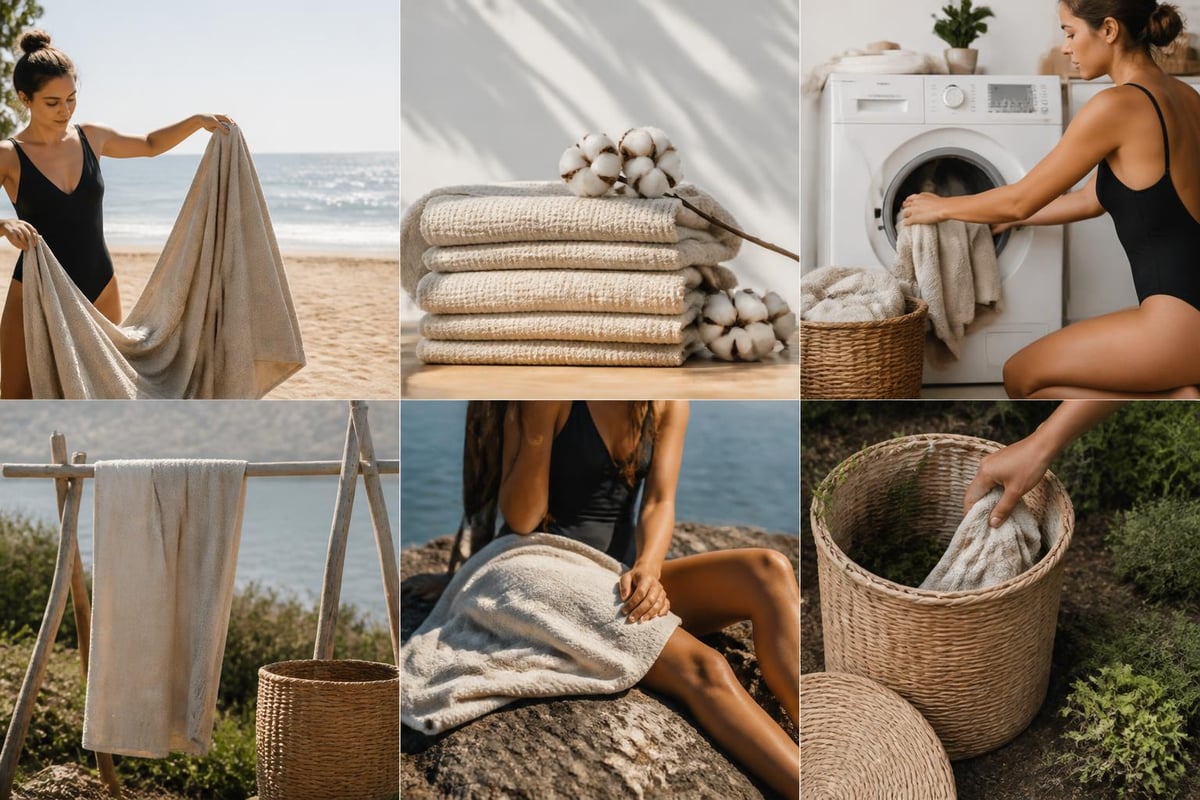
A good bath and beach towel doesn't need much. But proper care makes all the difference.
Washing without stress
- Wash once before first use – this sets the colors and makes the towel more absorbent.
- Low temperatures (30–40°C) protect fibers and colors.
- Use little detergent – too much accumulates in the fibers and reduces absorbency.
- Skip fabric softener – it clogs the fibers and reduces absorbency.
Drying: Outdoors or indoors?
Air drying is always the best choice. Fresh air, sunshine – your towel dries naturally and smells good. Quick-drying beach towels are particularly practical here, especially when traveling.
If you use a dryer, choose low heat. Too much heat damages the fibers and fades colors.
Stains and odors
- Sunscreen stains: Pre-treat with gall soap, then wash normally.
- Saltwater: Rinse briefly after the beach before the salt soaks into the fibers.
- Odors: A splash of vinegar in the water neutralizes unpleasant odors.
Versatility: More than just the beach
A bath and beach towel can do much more than you think.
By the water
Whether by the sea, lake, or pool – your towel is your base. It dries you after swimming, protects you from hot sand or stones, and becomes a cozy base.
On the go
Light, compact towels are perfect for:
- Hiking (as a seat pad)
- Picnics (as a blanket)
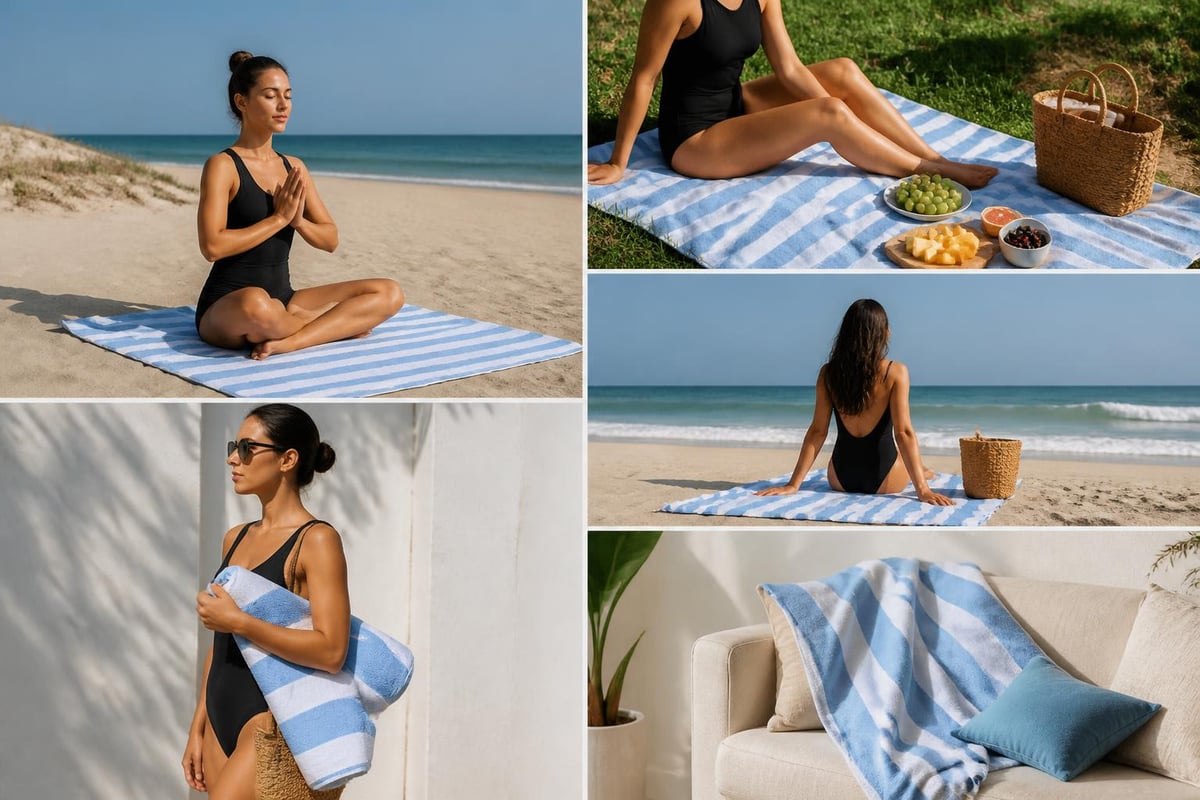
- Outdoor yoga (as a mat)
- Festivals (as a scarf or blanket)
At home
Even in everyday life, a versatile towel is practical. As a throw, cozy blanket, or simply as a beautiful accessory that brings a summer feeling into your home.
Bath towel vs. Beach towel: Is there a difference?
Often the terms are used synonymously. But there are subtle differences that can be relevant when buying.
| Feature | Bath Towel | Beach Towel |
|---|---|---|
| Main Purpose | Drying after shower/bath | Lying, drying at the beach/pool |
| Size | Mostly more compact (70–100 cm) | Often larger (up to 200 cm) |
| Material | Softer terry cloth | More varied: terry cloth, microfiber, linen |
| Weight | Heavier, more absorbent | Lighter, faster drying |
The line is fluid. A good bath and beach towel combines both worlds: absorbent enough for drying, large and light enough for the beach.
Design and colors: Show who you are
Your towel is more than functional – it's an expression. Whether minimalist, colorful, or patterned, choose what appeals to you.
Timeless classics
Solid-colored towels in natural tones – sand, white, grey, navy – always fit. They are versatile, combinable, and have a calming effect. Perfect if you like clarity.
Patterns and Prints
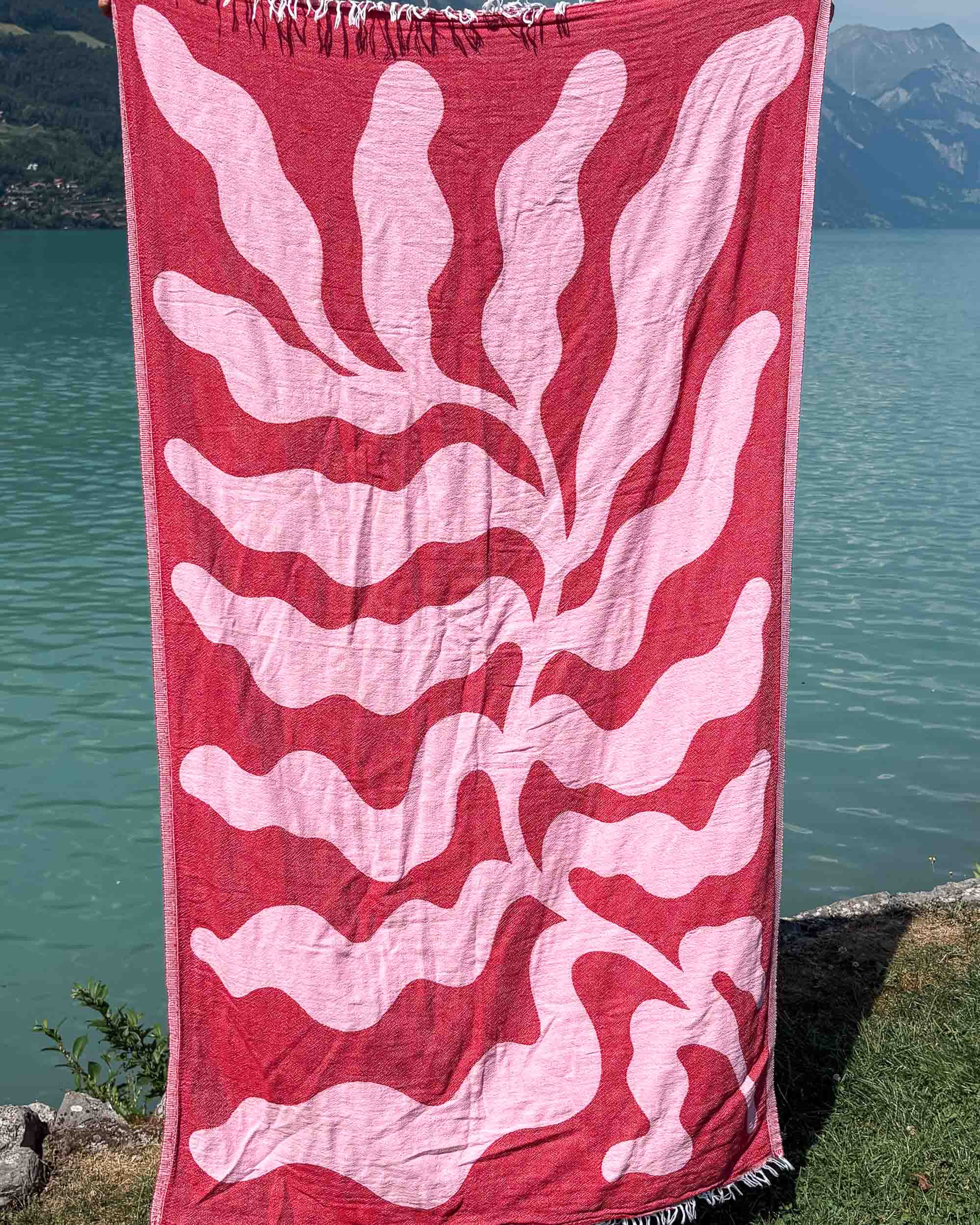
Strips, geometric shapes, tropical prints – patterns bring vibrancy. They show personality and create a desire for summer.
Sustainable prints
Make sure that prints are applied with environmentally friendly dyes. Some manufacturers use water-based or plant-based inks that are less polluting.
For families: Towels that grow with you
If you're traveling with children, other things matter.
Robustness
Children are not squeamish. Towels must withstand sandcastles, ice cream stains, and wild romping. High-quality materials and good workmanship are worth their weight in gold here.
Size and Weight
Small children need smaller towels that they can carry themselves. Larger families benefit from XL formats that offer space for everyone.
For the little ones, there's also special UV-protective swimwear that combines perfectly with a good beach towel. For example, the Kai Baby Swimsuit offers all-round protection, quick diaper changes thanks to a zipper, and sustainable materials. So the little ones are not only safe but also stylish by the water.
Colors that make fun
Children love color. Bright tones, fun patterns, or their favorite colors make the towel a favorite item.
Buying tips: What you should look for
Before you decide, check the following points:
- Material: What feels right for you?
- Size: Does it fit your plans?
- Weight: Do you carry it often or does it stay at home?
- Ease of care: How much effort do you want to invest?
- Sustainability: Where does the towel come from, how was it made?
A few more euros for quality pay off. A good towel lasts for years, a cheap one perhaps for a summer.
Trends 2026: What's currently in vogue
Sustainability is no longer a trend – it's the standard. More and more people are paying attention to where their things come from and how they were produced.
In addition, we see:
- Minimalism: Clean lines, subtle colors, timeless design
- Multifunctionality: Towels that can do more than just dry
- Local production: Short distances, fair conditions
- Recycled materials: From plastic bottles, old textiles, fishing nets
These developments show that people want to live consciously without sacrificing style.
Traveling with a bath and beach towel: Packing list essentials
If you travel a lot, every gram counts.
What belongs in your luggage
- Compact, quick-drying towel (microfiber or thin cotton)
- Sand-free material (saves time and nerves)
- Versatile (towel, blanket, scarf in one)
How to save space
- Roll the towel instead of folding it – this saves space and prevents creases
- Use it as padding for delicate items in your suitcase
- Pack it within reach, in case you spontaneously want to go to the water
A good travel towel quickly becomes an indispensable companion.
For active people: Sports and movement
A good towel is important not only on the beach. It also counts in sports.
Yoga, fitness, outdoor
Whether as a mat for yoga in the park, as a towel after a run, or as protection during outdoor training – a light, absorbent towel is practical. It absorbs sweat, protects against cool ground, and can be quickly stowed away.
Water sports
Surfing, stand-up paddling, swimming – those who spend a lot of time in the water need a towel that dries quickly and doesn't get heavy. Microfiber or thin cotton are ideal here.
A good bath and beach towel combines function, feel, and responsibility – it suits your life, lasts a long time, and doesn't harm the environment. If you value quality, sustainability, and timeless design, you'll find exactly that at MAIN Design - Your Daily Dose Of Summer: well-designed essentials for the beach, everyday life, and family, made from recycled materials – so you feel good and do good at the same time.